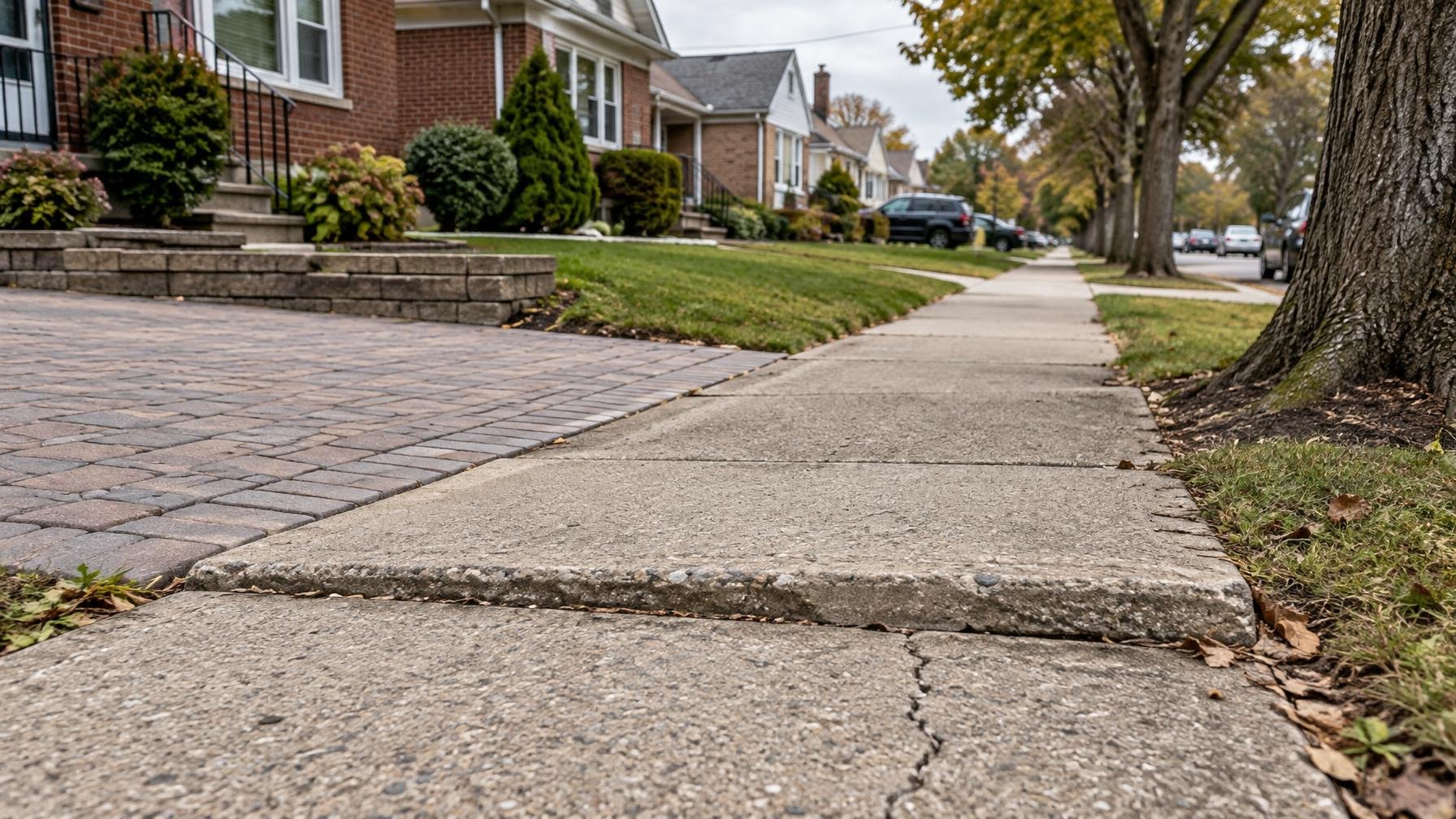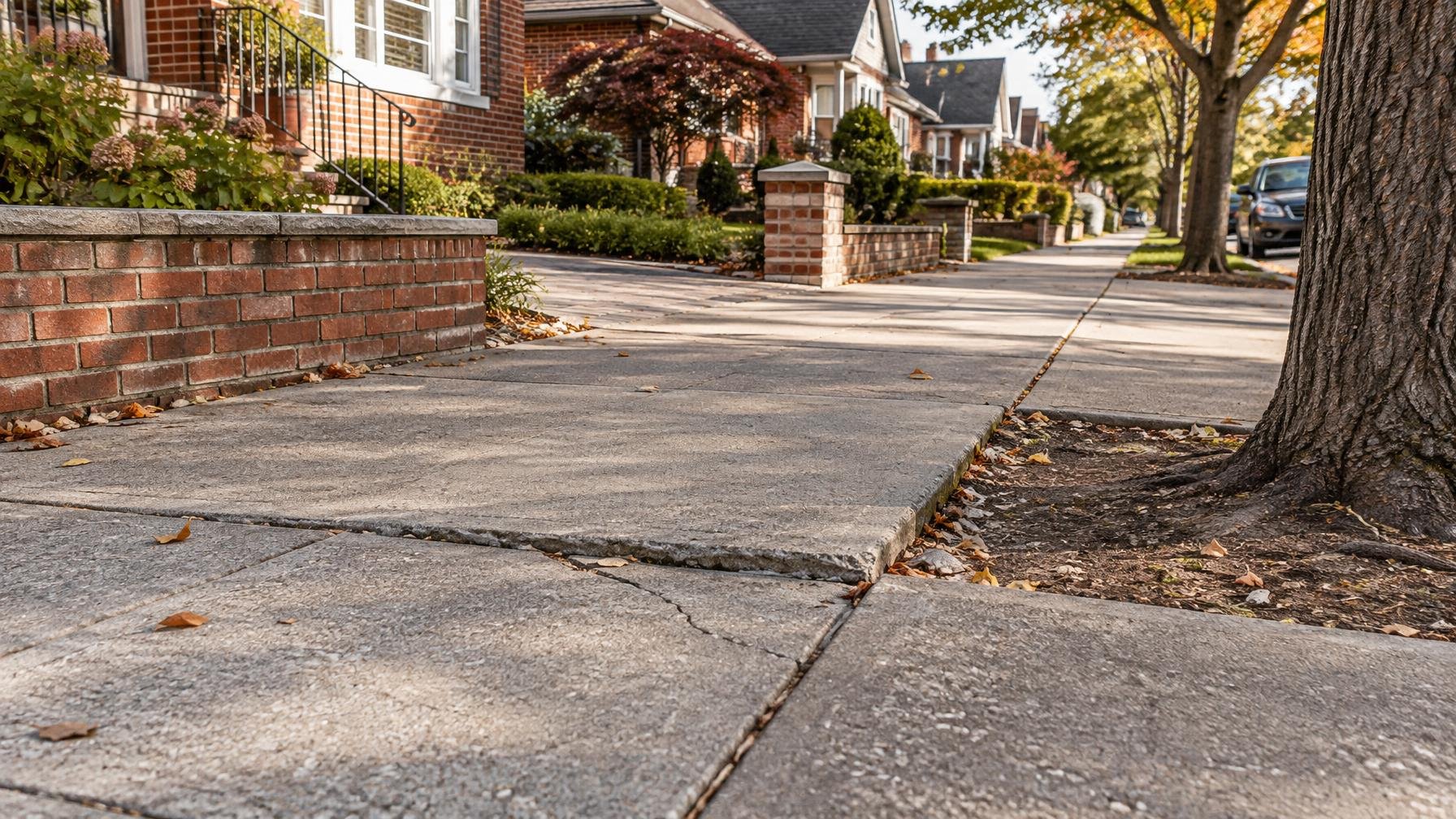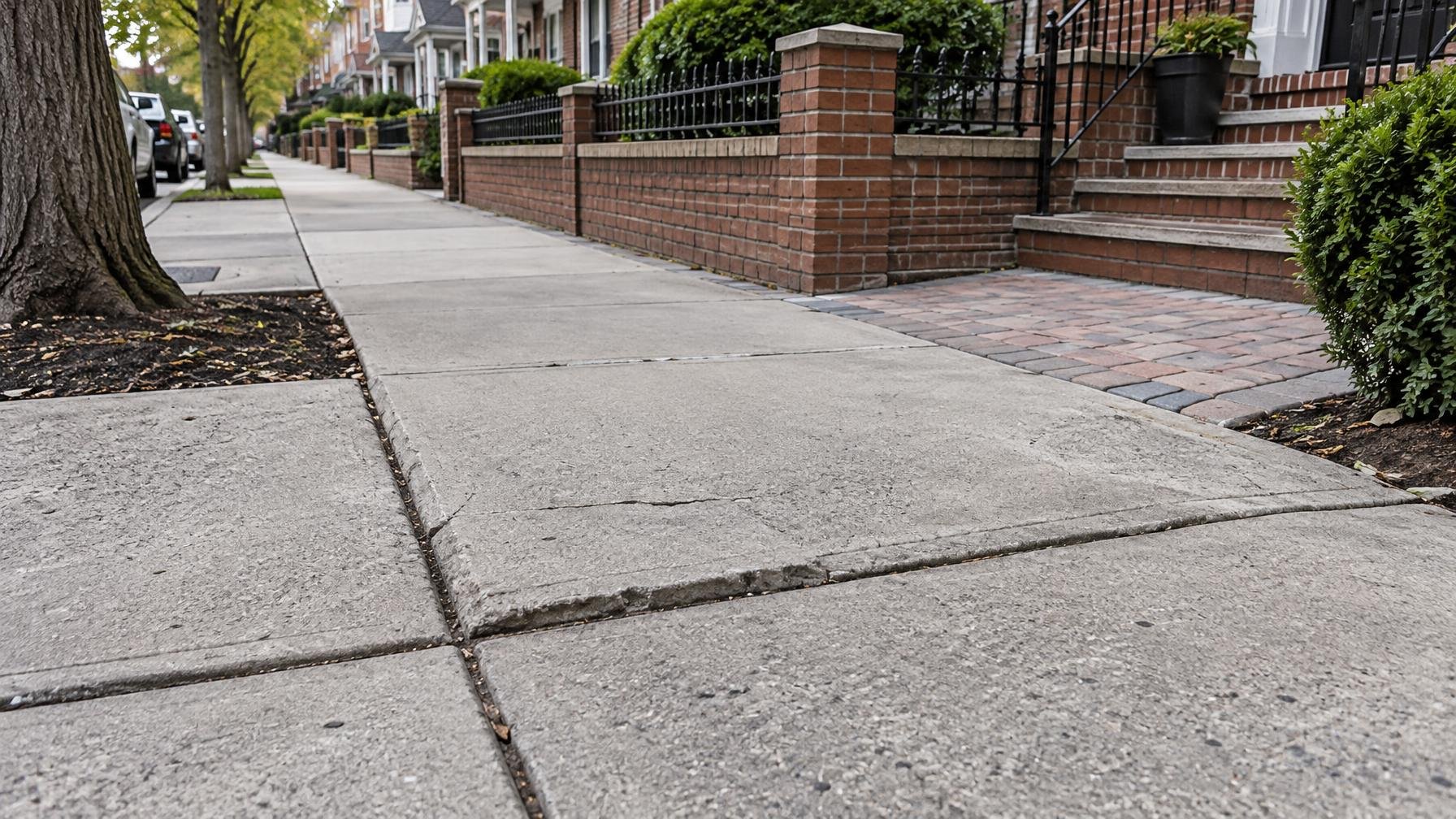
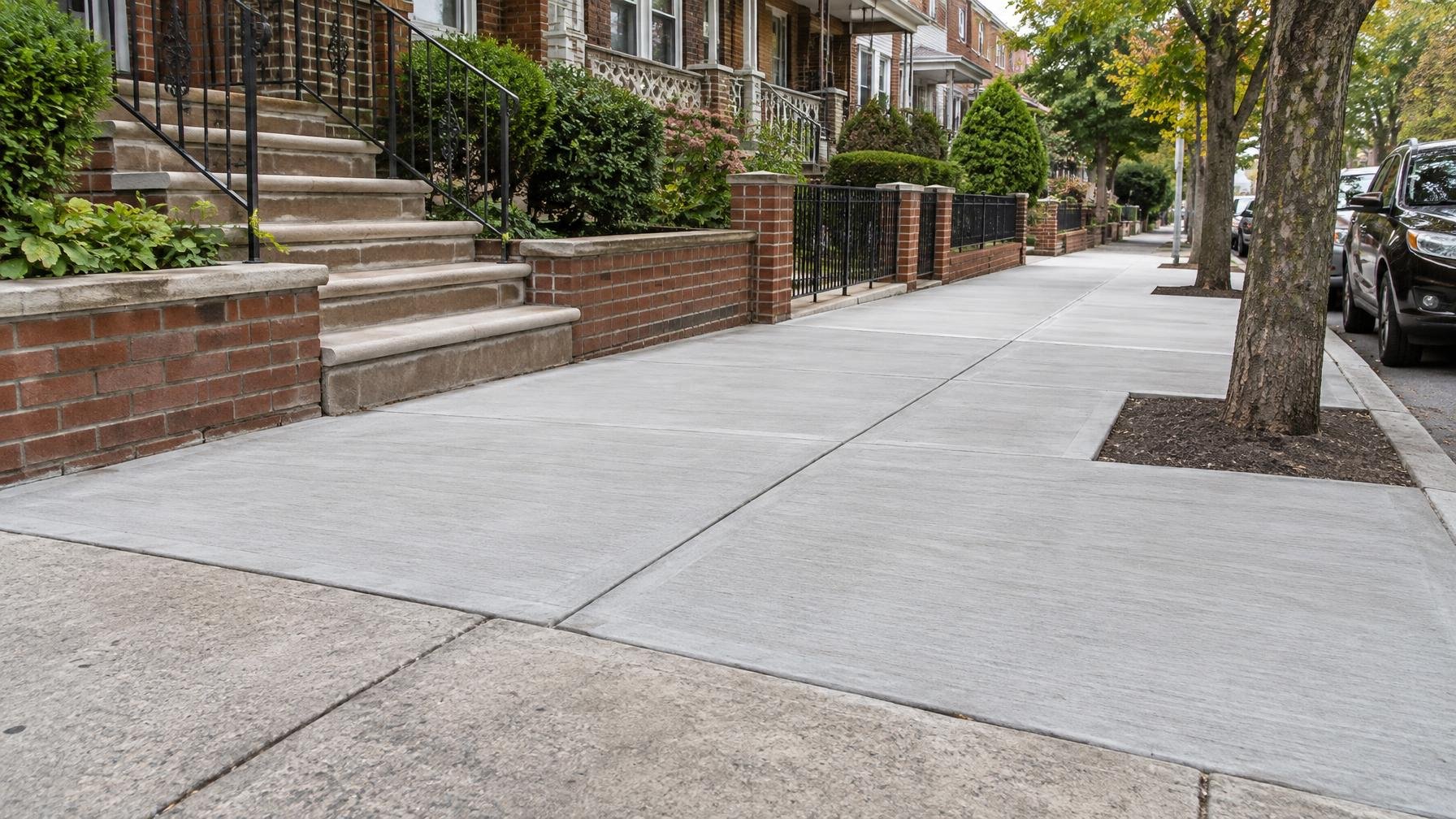
Sidewalk replacement in Queens, NY is worth considering when concrete flags—the individual sidewalk sections—are badly cracked, displaced, sunken or deteriorated beyond a practical repair. A useful estimate should identify which sections need replacement, what caused the damage and how the work will address pedestrian access, drainage and any applicable NYC requirements.
StoneSky Pavers & Masonry offers sidewalk repair and replacement in Queens, including free on-site estimates to assess the existing surface and discuss the work.
When Does a Sidewalk Need Replacement?
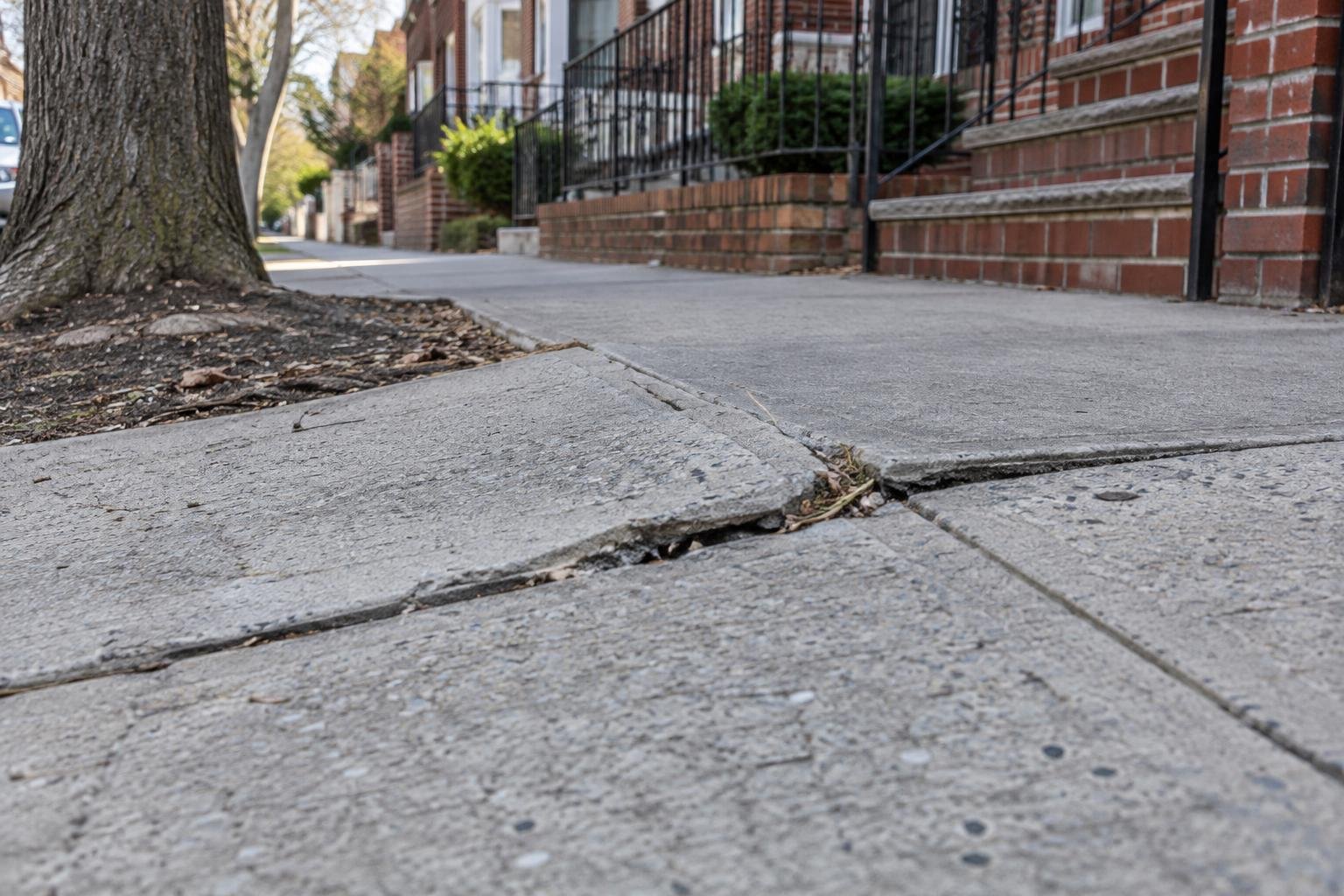
Not every surface mark calls for demolition. A shallow blemish on otherwise sound concrete is different from a broken flag that rocks underfoot or has a raised edge across the walking path. The decision should come from the condition of the slab and its support, not appearance alone.
Signs that replacement deserves a closer look
- Cracks with vertical movement: The edges no longer sit at the same height, creating an uneven crossing.
- Multiple broken pieces: A flag has fractured in several directions rather than developing one fine surface crack.
- Settlement and recurring puddles: A low section collects water or no longer meets adjoining concrete properly.
- Extensive surface loss: Concrete is breaking apart deeply enough that a thin patch would not provide a sound walking surface.
- Repeated patch failure: Previous repairs have separated while the underlying movement remains.
A localized repair may make sense when the damage is limited and the remaining concrete is sound. Replacement is generally the stronger option when the slab itself has failed or the supporting material needs correction. For a closer look at repair decisions on neighborhood properties, see StoneSky’s sidewalk repair guide for Astoria property owners.
Identify the Cause Before Replacing the Concrete
New concrete will not resolve an underlying problem by itself. During an assessment, the contractor should examine the damaged flags together with nearby tree pits, driveway crossings, entrance steps and drainage patterns.
Tree roots and lifted flags
Street trees can lift sidewalk sections as roots grow. If roots are involved, do not assume they can simply be cut away during excavation. Work affecting a city street tree may require NYC Parks guidance or authorization. Confirm the appropriate process before demolition, and ask whether any current city tree-related sidewalk assistance applies to your property.
Water, soil movement and winter exposure
Queens sidewalks face rain, snowmelt and repeated freezing and thawing. Water entering cracks or collecting beneath poorly supported concrete can contribute to movement. Downspouts, low spots and soil washing out along an edge are clues worth investigating, though an on-site assessment is needed to determine the actual cause.
Vehicle use at driveway crossings
A sidewalk section across a driveway must accommodate a different use than a pedestrian-only section. In Bayside, Whitestone and Fresh Meadows, driveway crossings are an important part of many residential sidewalk projects. Identify where vehicles actually travel so the replacement specification matches the use and applicable requirements.
Check NYC Requirements and Any Sidewalk Violation
A public sidewalk is not the same as a private backyard path. NYC sidewalk work generally requires a DOT sidewalk construction permit, and the applicable specifications and procedures should be checked before work starts. Additional coordination may be needed where a project affects trees, curbs, driveways or other street features.
If you have received a sidewalk violation, bring the complete notice and any accompanying diagram to the estimate. The contractor needs to understand the cited defects rather than relying only on the most obvious broken slab.
- Confirm the repair limits: Match the proposed work to the identified defects and actual site conditions.
- Clarify permit responsibility: Establish who will obtain the required permit and what the proposed scope covers.
- Discuss inspection and dismissal: Ask what follow-up is required under the current NYC DOT process.
- Keep project records: Save the notice, written scope, permit information and completion documentation.
Replacing concrete does not automatically mean a violation has been dismissed. Follow the applicable city process and confirm the status afterward. Also, do not assume Queens procedures are interchangeable with those in Nassau County or elsewhere on Long Island; the responsible jurisdiction matters.
What a Clear Sidewalk Replacement Scope Should Cover
A proposal should explain more than “remove and replace concrete.” It should identify the work boundaries and describe how the new surface will connect to the portions that remain.
Removal limits and adjoining surfaces
Ask which flags will be removed and where the new work will stop. Replacing complete sections to appropriate joints often produces a more coherent result than leaving narrow strips of damaged concrete. The final limits should account for the condition of neighboring flags and applicable city requirements.
Point out nearby stoops, fences, gates, basement entrances and utility covers. These features can restrict access or create difficult transitions. Utility structures should not be casually altered or buried to make a new surface fit.
Base preparation and concrete specification
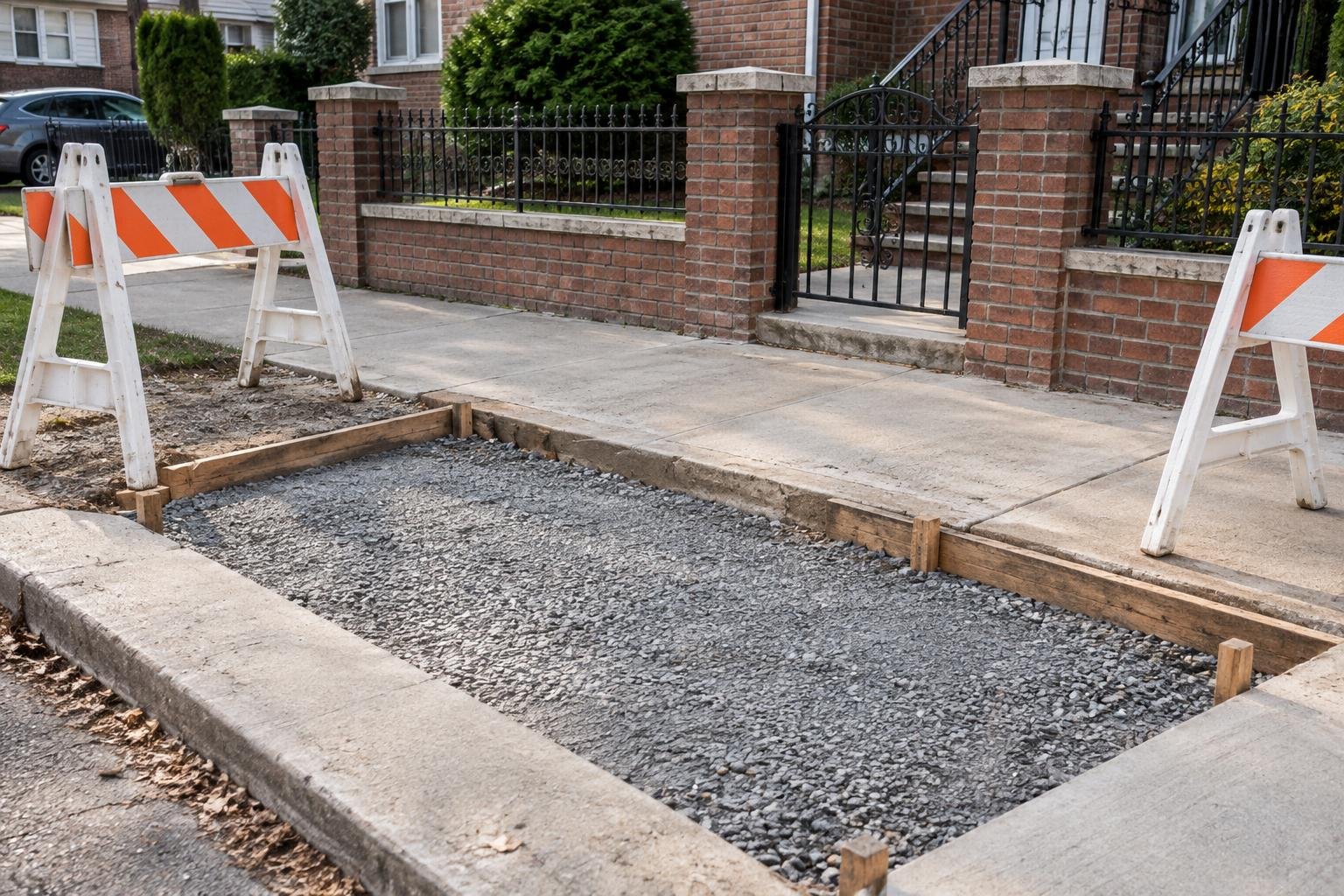
After removal, the supporting material must be evaluated. Soft areas, voids and disturbed fill need attention before concrete placement. Ask how the contractor will prepare and compact the base and whether the proposal allows for conditions that cannot be confirmed until the old slab is removed.
The scope should also identify the concrete specification, slab thickness appropriate to the location, joint layout and finish. Avoid choosing thickness from a generic online recommendation: pedestrian sections and driveway crossings may have different requirements.
Grade, transitions and drainage
The finished sidewalk should connect properly to adjoining surfaces without creating a new abrupt edge. Its grade must balance drainage with applicable pedestrian accessibility requirements. Simply tilting a slab more sharply to eliminate a puddle can create another problem.
Discuss water movement near the building, driveway and curb before forms are set. If the surrounding elevations limit what can be achieved, that should be explained before placement rather than after the concrete hardens.
Plan Access Around Your Queens Property
Site access can shape the work as much as slab condition. In parts of Astoria and Flushing, closely spaced entrances and busy sidewalks can complicate material deliveries and pedestrian routing. On a residential block in Douglaston or Forest Hills, driveway access, landscaping and street trees may be the main constraints.
Before scheduling, walk through these practical questions:
- How will residents reach the front entrance during demolition and concrete placement?
- Will a driveway be unavailable, and when should vehicles be moved?
- How will the work area be separated from pedestrians under applicable requirements?
- Where can debris and materials be handled without obstructing neighboring entrances?
- Do deliveries, trash collection or mobility needs require special scheduling?
Do not improvise a pedestrian detour into the street. Access and work-zone protection need to be planned as part of the job. If an entrance has no practical alternative route, tell the contractor at the estimate rather than on demolition day.
Weather, Curing and Returning the Sidewalk to Use
Concrete placement depends on conditions, not just an available date. Cold weather, freezing temperatures, heavy rain and hot, drying conditions can affect placement, finishing and curing. A responsible schedule leaves room to adjust when weather threatens the work.
Curing is the controlled retention of moisture and suitable temperature as concrete develops strength. A surface that looks dry is not necessarily ready for traffic. Ask for clear instructions on when pedestrians can return and, at driveway crossings, when vehicles can cross.
Keep barriers in place as directed and prevent people, pets and deliveries from marking fresh concrete. Ask about early maintenance and deicer restrictions for the particular concrete used. Avoid assuming that a product suitable for an older sidewalk is appropriate for a newly placed surface.
Prepare for a Useful On-Site Estimate
Gather photographs of the damage, especially any puddling after rain, and note whether the unevenness has changed over time. Bring any violation paperwork and explain previous patching, known tree-root issues or recurring water problems.
Request a written scope that distinguishes included work from possible additional work discovered during removal. Permit handling, debris removal, base preparation, access arrangements and violation follow-up should be discussed explicitly rather than assumed.
StoneSky provides concrete installation and repair, sidewalk repair and replacement, and related masonry services. If a damaged sidewalk meets a failing stoop or private walkway, identify those connections during the same assessment so the proposed transitions can be considered together.
Request a Free On-Site Estimate in Queens
Whether you have broken sidewalk flags, recurring puddles or a sidewalk violation to address, start with an assessment of the damage and its cause. StoneSky Pavers & Masonry serves Queens, Nassau County and Long Island.
Request a free on-site estimate or call (929) 528-1205 to discuss sidewalk replacement at your property.
Frequently Asked Questions
Can I replace only the damaged sections of my Queens sidewalk?
Often, replacement can be limited to damaged flags when adjacent sections are sound and suitable transitions can be maintained. An on-site assessment should establish the boundaries and account for any violation notice and applicable NYC requirements.
Do I need a permit for sidewalk replacement in Queens?
NYC sidewalk replacement generally requires a DOT sidewalk construction permit. Confirm the current requirements for your scope before starting, including any additional coordination involving street trees, curbs or driveway features.
What if street-tree roots have lifted the sidewalk?
Do not cut street-tree roots without confirming the appropriate NYC Parks guidance or authorization. Have the root-related damage assessed and check whether any current city tree-related sidewalk assistance applies to your property.
Does replacing the sidewalk automatically clear a violation?
No. Completing the concrete work and having a violation dismissed are separate steps. Follow the current NYC DOT inspection and dismissal process, retain the project documentation and confirm the violation status afterward.
How soon can I walk or drive on new sidewalk concrete?
Timing depends on the concrete, weather, curing conditions and intended use. Get project-specific instructions from the contractor. A driveway crossing may need to remain closed to vehicles longer than a pedestrian section remains closed to foot traffic.
Does StoneSky offer free sidewalk replacement estimates?
Yes. StoneSky Pavers & Masonry offers free on-site estimates in Queens, Nassau County and Long Island. Call (929) 528-1205 or use the contact page to request an assessment.