If you need sidewalk repair in Whitestone, NY, start by identifying whether the problem is surface damage, a displaced concrete flag or movement underneath the walkway. The right scope depends on the cause, the condition of neighboring sections and whether the work involves a public sidewalk or a private path. StoneSky Pavers & Masonry offers concrete and sidewalk repair and replacement in Whitestone, with free on-site estimates.
Start With the Location and Type of Damage
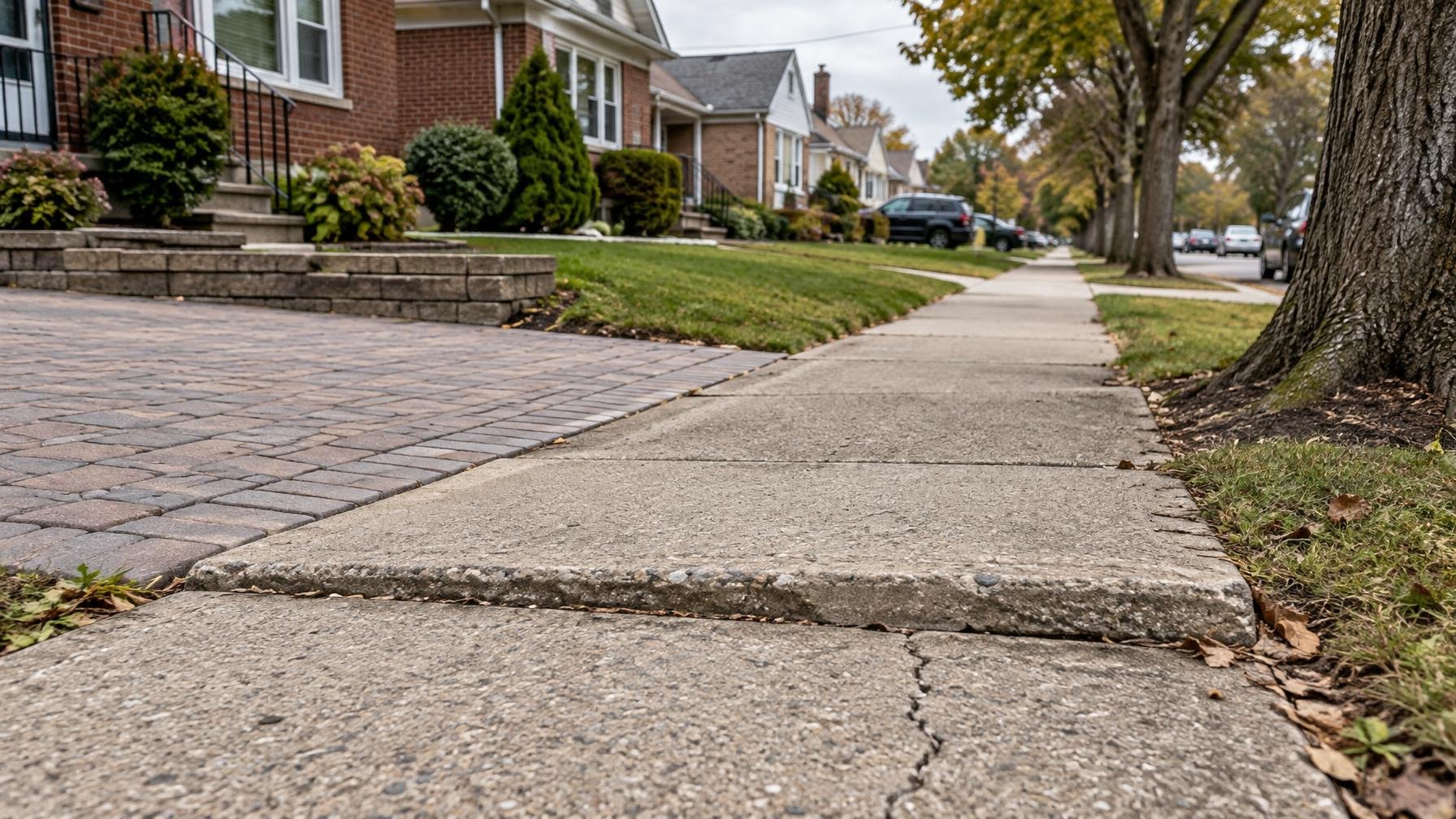
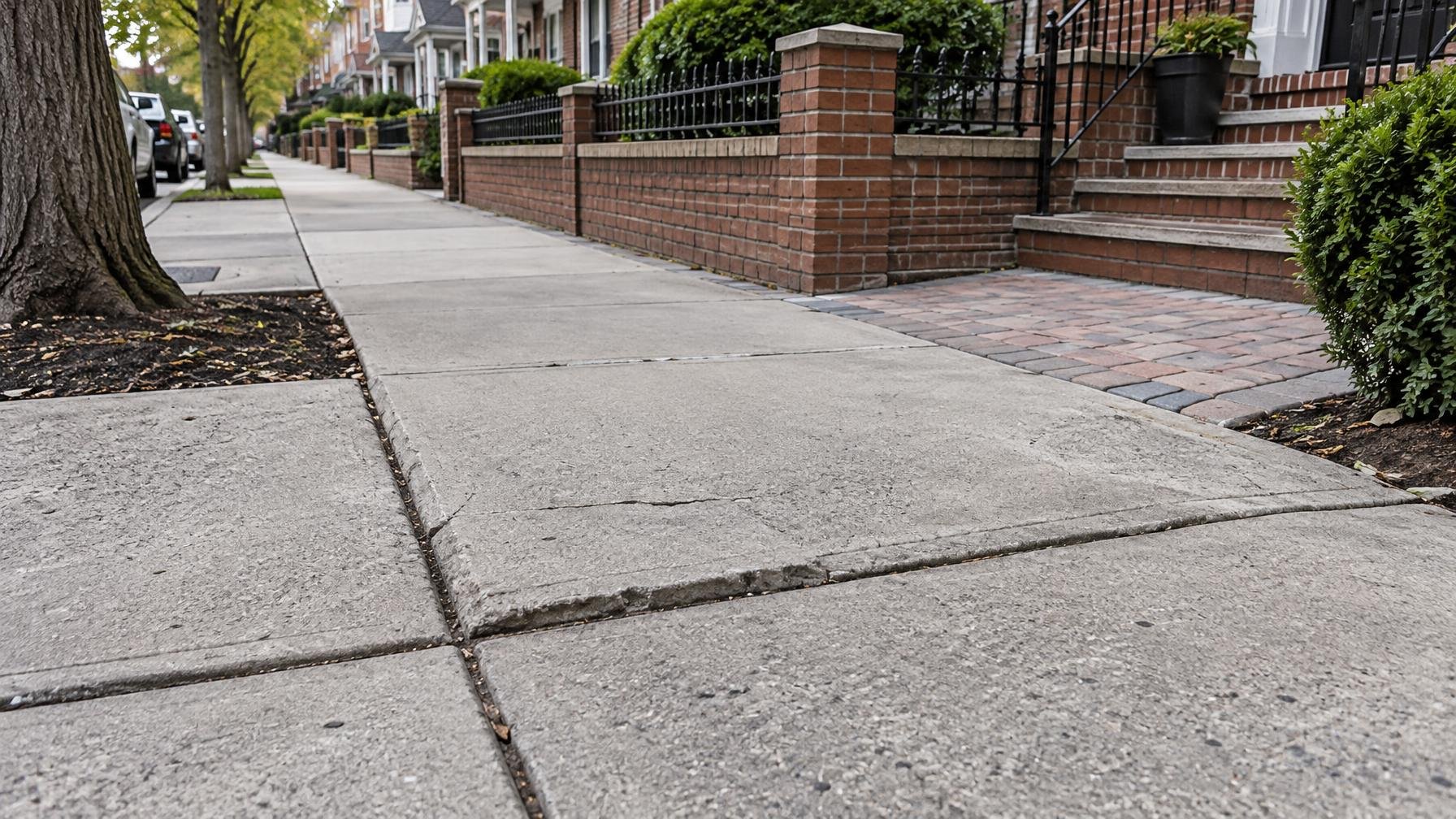
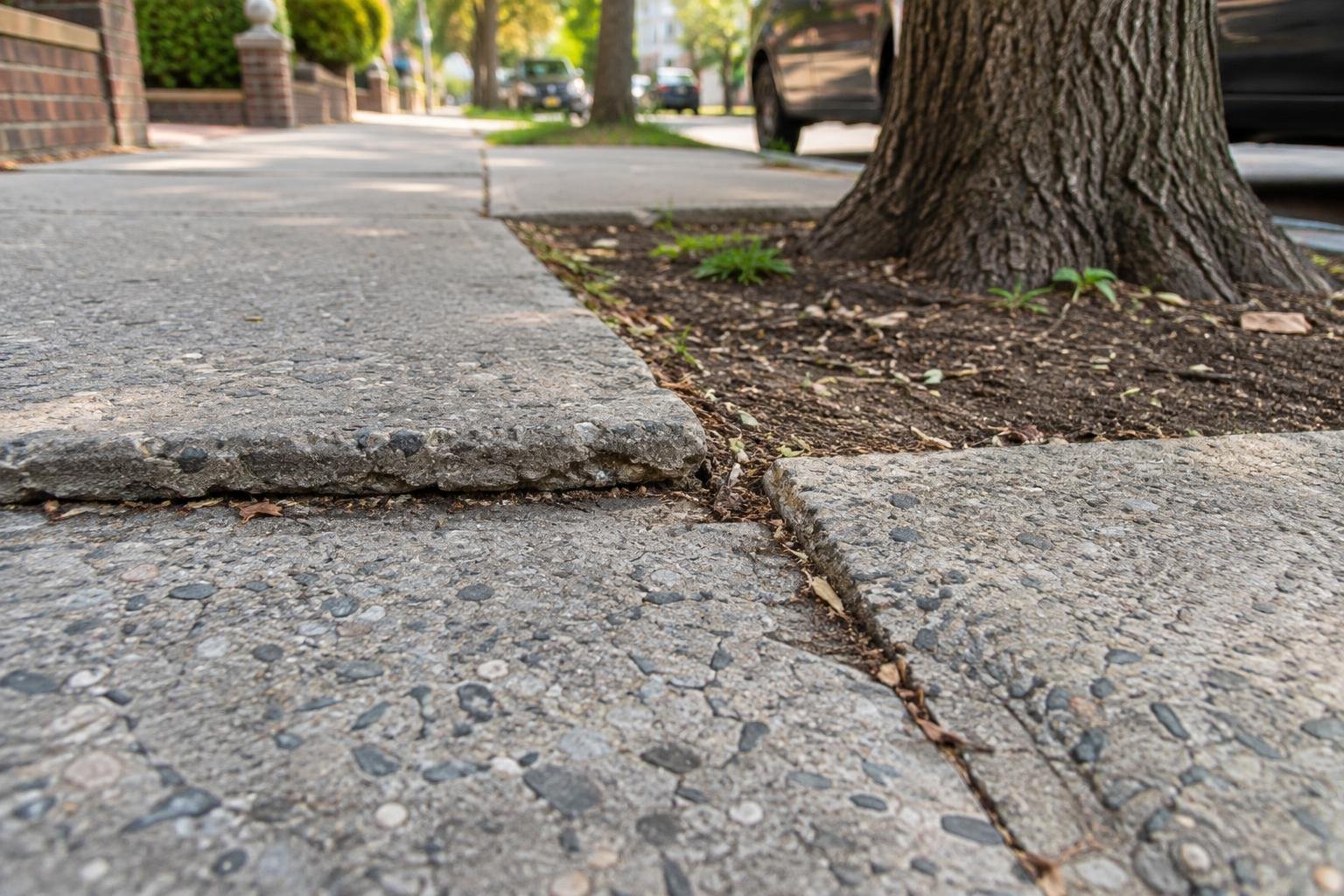
A sidewalk flag is an individual concrete panel separated from neighboring panels by joints. On a Whitestone residential frontage, one raised flag can create a trip hazard even when most of the sidewalk looks sound. Near a driveway crossing, several cracked sections may point to a different problem: repeated vehicle loading or inadequate support.
Before requesting an estimate, walk the frontage without entering traffic and note what you see. Include the route between the public sidewalk, driveway and front steps, but distinguish those areas when describing the job.
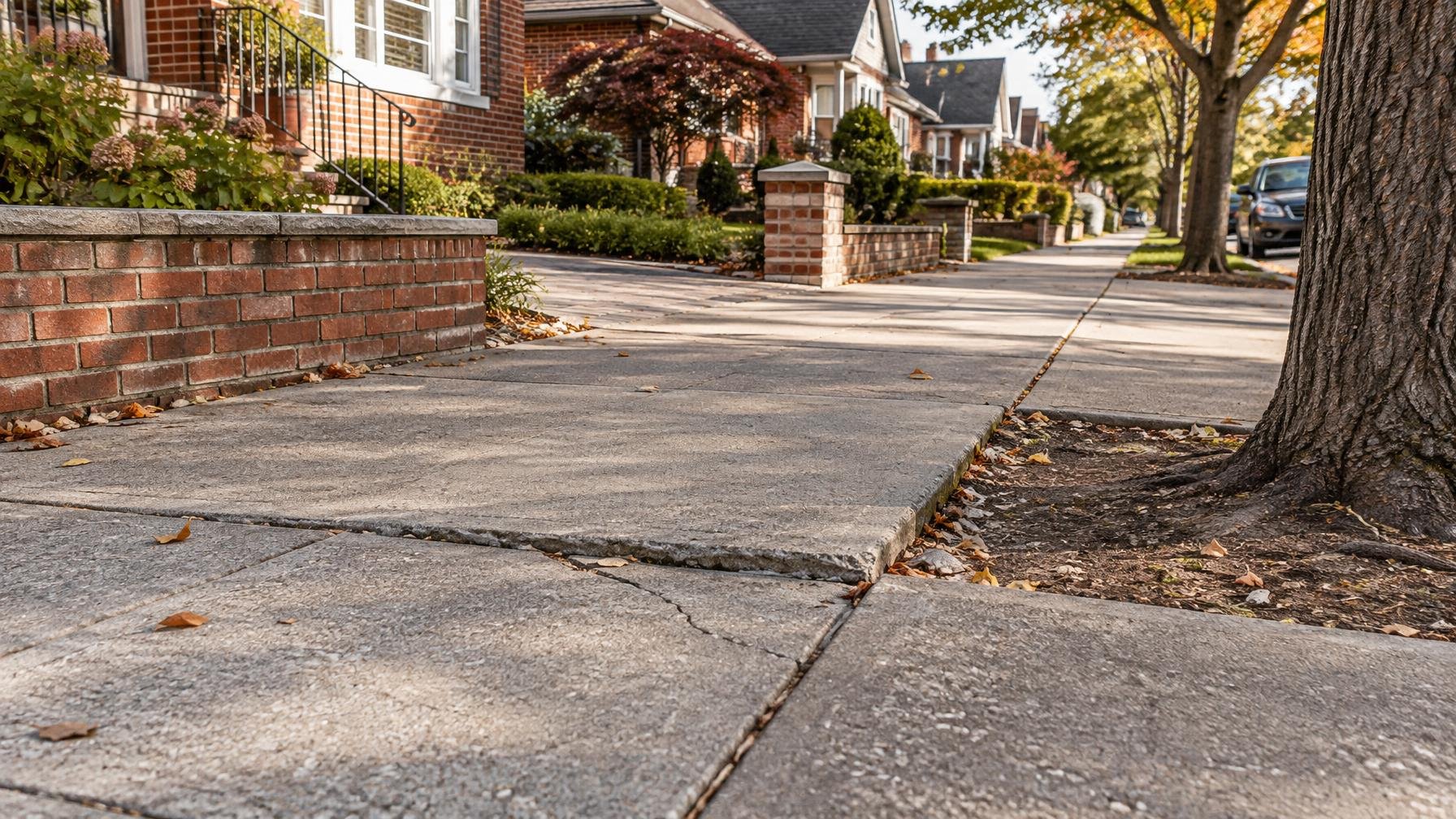
- Uneven joints: One panel sits higher than the next, leaving an exposed edge.
- Cracked or broken flags: Concrete has separated, shifted or developed loose pieces.
- Surface scaling: The top layer is flaking away, sometimes exposing aggregate.
- Low spots: Water remains after surrounding pavement has dried.
- Movement near trees: Raised concrete or widening joints appear close to a tree pit.
Photograph the overall area and individual defects. If you received a sidewalk notice, keep it with those photos so the estimate can address the documented locations rather than relying on a verbal description.
What Causes Sidewalk Problems in Whitestone?
Winter moisture and freeze-thaw cycles
Queens winters bring periods when wet pavement freezes and thaws. Water entering cracks and weak concrete can contribute to deterioration, while poorly drained soil beneath a flag can make movement more likely. A repair should address how water reaches and leaves the area, not simply hide the visible crack.
Tree roots and restricted growing space
Where street trees grow close to sidewalks, roots can lift or displace concrete. Replacing a raised flag without considering the tree may leave the underlying conflict unresolved. Do not cut roots or alter a street-tree pit on your own; work affecting NYC street trees may require NYC Parks review or authorization.
Driveway crossings and weak support
The sidewalk across a driveway carries pedestrian traffic and vehicle loads. If concrete there repeatedly breaks, the assessment should consider the intended loading, the supporting base and the transitions to adjacent flags. A thin cosmetic patch cannot correct a section that moves under load.
When Is Repair Enough, and When Is Replacement Better?
Repair is not one standard treatment. A limited surface defect on stable concrete is different from a panel that has settled, tilted or broken through. The first question is whether the existing concrete and its support are sound enough to retain.
Localized surface repairs may be worth evaluating where deterioration is shallow and the panel remains stable. However, patching over a displaced edge does not remove the movement that caused it. Thin patches at exposed joints can also be vulnerable to weather and foot traffic.
Replacement is often the more appropriate option when a flag is substantially broken, has moved out of alignment or needs removal to correct the supporting base. That does not automatically mean replacing the entire frontage. Ask which flags need attention, why each is included and how the new work will meet the sections that remain.
Public Sidewalks, Private Walkways and NYC Notices
A public sidewalk along the street is not the same project as a private walkway leading to your door. Public sidewalk work in Whitestone falls within New York City’s regulatory framework. Property owners are generally responsible for maintaining adjoining sidewalks, but responsibility, exceptions and potential city programs depend on the circumstances.
If you have received an NYC Department of Transportation sidewalk violation notice, read the notice and accompanying information before arranging work. Confirm the listed defects, applicable deadlines and current requirements directly with the agency. A violation should not be treated as a general instruction to replace every piece of concrete on the property.
- Confirm the work limits: Match the proposed scope to the locations identified in the notice and other observed defects.
- Clarify permits: Ask what permits or approvals apply and who will obtain them before work begins.
- Identify tree involvement: Ask whether NYC Parks coordination is needed before disturbing roots or tree-pit areas.
- Understand closeout: Ask about the current inspection or dismissal process; completing concrete work does not by itself confirm that a violation has been cleared.
For a broader overview of replacement planning, see StoneSky’s Queens sidewalk replacement guide. Requirements can change, so project-specific agency instructions should guide the work.
What a Useful On-Site Assessment Should Cover
The full frontage, not just the worst crack
The assessment should look at adjacent flags, driveway transitions, curb-side conditions and connections to the entrance. Repairing one low section without checking neighboring elevations can move the problem instead of solving it. The proposed layout should preserve a practical pedestrian route and avoid abrupt transitions.
Base condition and drainage
Some conditions beneath concrete cannot be confirmed until removal. Ask how soft areas, voids or unsuitable supporting material would be handled if uncovered. The estimate should distinguish visible work from conditions that may require a revised scope.
Point out where water collects during rain and where downspouts discharge nearby. Photos taken after a storm are useful when the estimate happens on a dry day. Drainage planning should not simply redirect runoff toward a neighbor or create another low spot at the edge of the repair.
Nearby masonry and access points
Concrete beside a stoop, retaining wall or driveway apron needs careful transitions. If a loose step or damaged private walkway is also present, identify it separately so it is not confused with public sidewalk work. StoneSky provides steps, stoops and other masonry services alongside concrete repairs, allowing related concerns to be discussed during the visit.
Plan Access, Concrete Placement and Reopening
Sidewalk replacement affects how people reach the property while work is underway. On Whitestone residential blocks, parked cars, narrow frontages and driveway entrances can limit the available working space. Discuss access before scheduling, especially if someone in the household uses a walker, wheelchair or stroller.
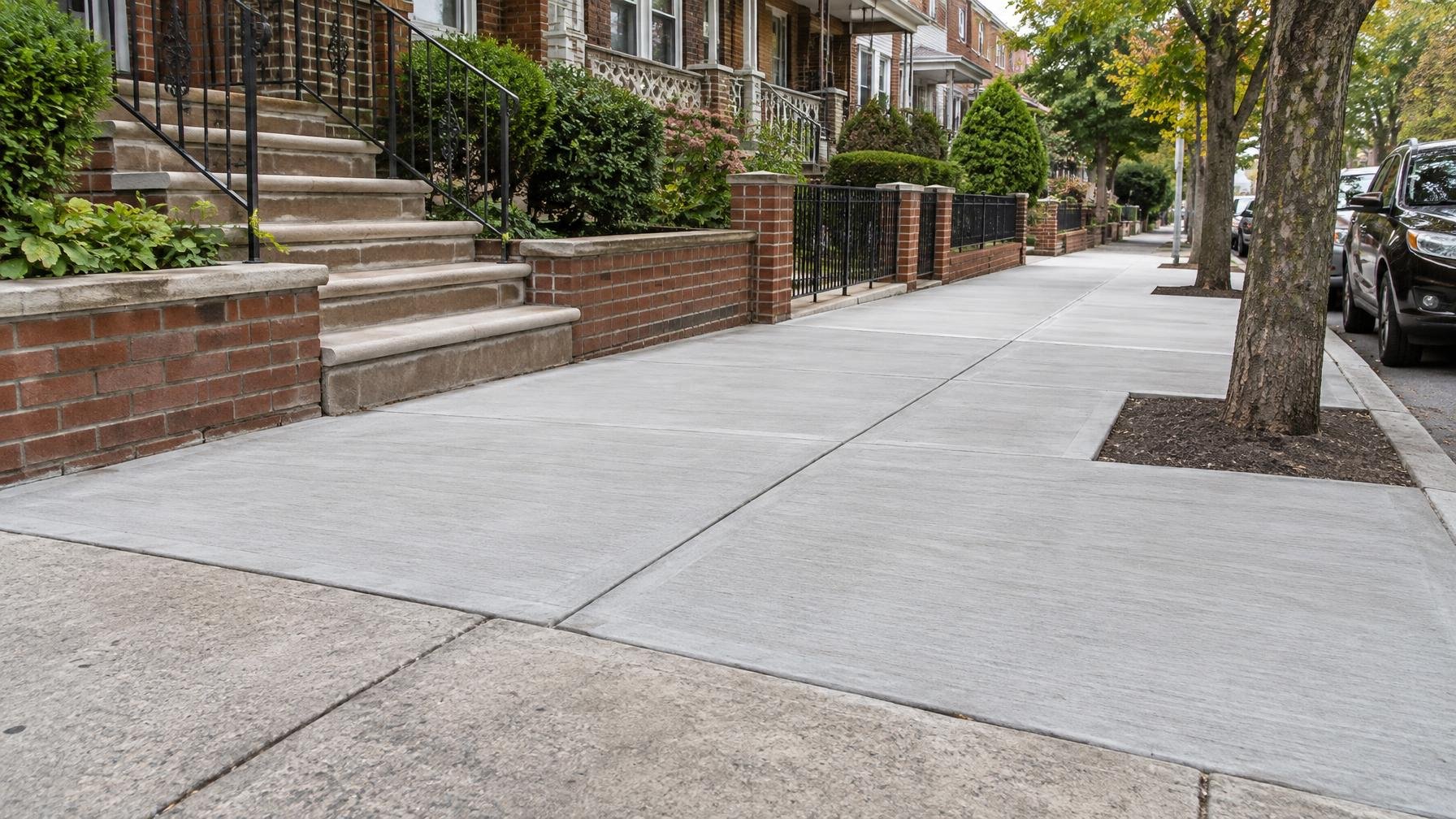
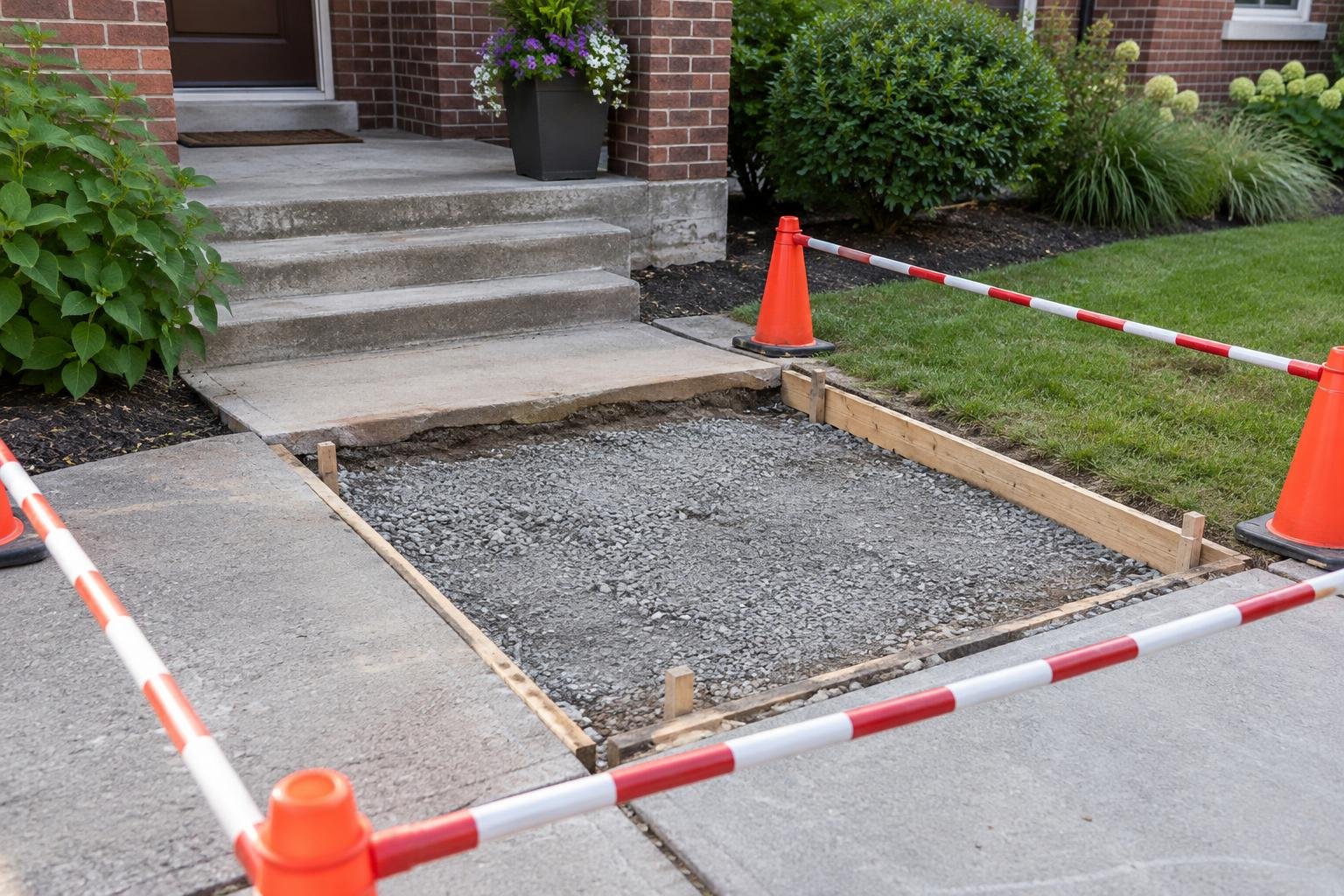
A typical replacement scope involves removing designated concrete, preparing the support, setting forms and elevations, placing concrete, finishing the surface and protecting it during curing. The exact sequence depends on site conditions and applicable requirements.
- Pedestrian access: Establish how residents, visitors and delivery workers will reach the entrance safely.
- Driveway access: Move vehicles before demolition if the work blocks the driveway crossing.
- Work-area protection: Clarify how open excavations and fresh concrete will be separated from pedestrian traffic.
- Weather planning: Ask how rain, freezing conditions or summer heat could affect placement and curing.
- Reopening instructions: Get separate guidance for walking and driving over the new concrete.
Do not assume concrete is ready for vehicles because its surface looks dry. Reopening depends on the concrete, site conditions and intended loading. Follow the project-specific instructions rather than a general timeline found online.
Questions to Ask Before Approving the Scope
A clear proposal helps you understand what is being corrected and where the work stops. For sidewalk repair in Whitestone, ask these questions before approving the job:
- Which concrete flags will be repaired or replaced, and what condition justifies each choice?
- Does the scope include removal, disposal, base preparation and restoration of disturbed edges?
- How will new sections meet the existing sidewalk, driveway and entrance?
- What permits, tree-related approvals or agency follow-up apply?
- What happens if concealed roots, voids or poor soil are found after removal?
- How will access be maintained, and when can each repaired area reopen?
If the uneven surface is actually a private paver walkway, describe it that way. Individual pavers may need lifting and resetting rather than concrete replacement. StoneSky’s paver repair and resetting services address that separate type of surface.
Request a Free On-Site Estimate in Whitestone
StoneSky Pavers & Masonry serves Whitestone and surrounding Queens neighborhoods with sidewalk repair and replacement, concrete work and masonry services. Have photos, any NYC notice and a list of access concerns ready for the visit so the discussion starts with the actual conditions.
Request a free on-site estimate or call (929) 528-1205 to discuss your Whitestone sidewalk project.
Frequently Asked Questions
Can one damaged sidewalk flag be replaced instead of the whole sidewalk?
Sometimes. An isolated damaged flag may be replaced if the surrounding concrete is sound and suitable transitions can be maintained. An on-site assessment should check adjacent elevations, drainage, support and any defects listed in an NYC notice.
Do I need a permit for sidewalk repair in Whitestone?
Public sidewalk work can require NYC permits and must meet applicable requirements. Confirm the requirements for your exact scope and establish who will obtain any permits before work begins. Private walkway work should be evaluated separately.
What if a street-tree root has lifted my sidewalk?
Do not cut the root or change the street-tree pit yourself. Work affecting NYC street trees may require NYC Parks review or authorization. The repair plan should consider both the sidewalk damage and the tree before demolition.
Does replacing the concrete automatically clear an NYC sidewalk violation?
No. Completing the physical work does not by itself confirm that a violation has been cleared. Follow the current NYC DOT instructions for any required inspection or dismissal process and keep project documentation.
How soon can I use a repaired sidewalk or driveway crossing?
Follow the project-specific reopening instructions. Pedestrian and vehicle access may resume at different times, depending on the concrete, weather, curing conditions and loading. A dry-looking surface is not proof that concrete is ready for vehicles.
Does StoneSky offer free sidewalk repair estimates in Whitestone?
Yes. StoneSky Pavers & Masonry offers free on-site estimates in Whitestone. Call (929) 528-1205 or use the contact page to discuss sidewalk repair, replacement or related concrete concerns.