Sidewalk repair in Bayside, NY starts with identifying why the concrete cracked, lifted or settled—not simply covering the damage. StoneSky Pavers & Masonry provides concrete and sidewalk repair and replacement, including sidewalk violation repairs, with free on-site estimates for Bayside property owners. Before scheduling work, check the affected panels, drainage conditions, nearby trees and any NYC Department of Transportation notice.
What Sidewalk Damage Needs Attention?
A narrow surface crack and a raised slab edge are different problems. On residential blocks in Bayside, sidewalks often meet short front walks, driveway aprons, landscaped strips and stoops. Damage at any of these connections can interrupt the walking surface or direct water toward the property.
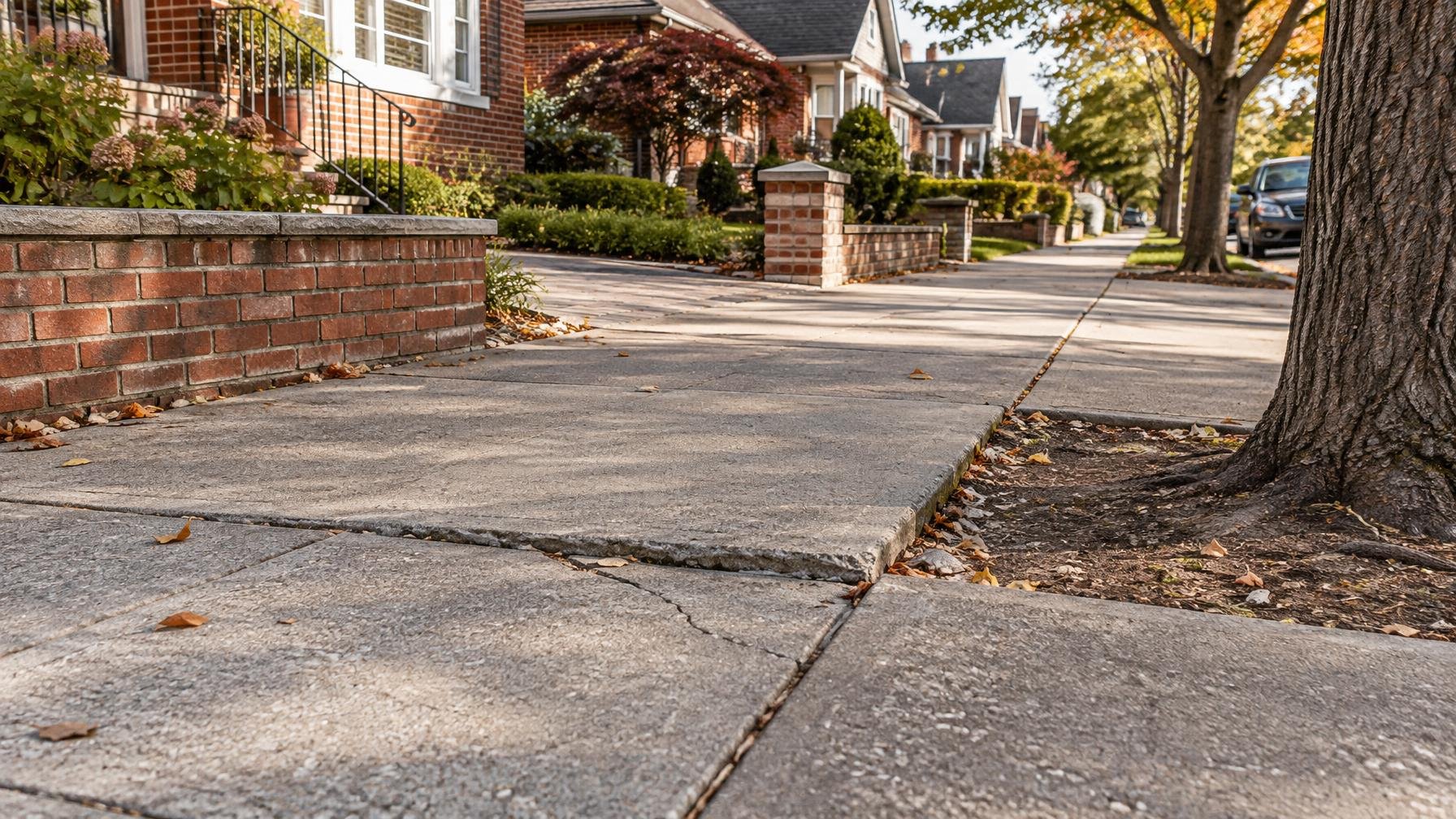
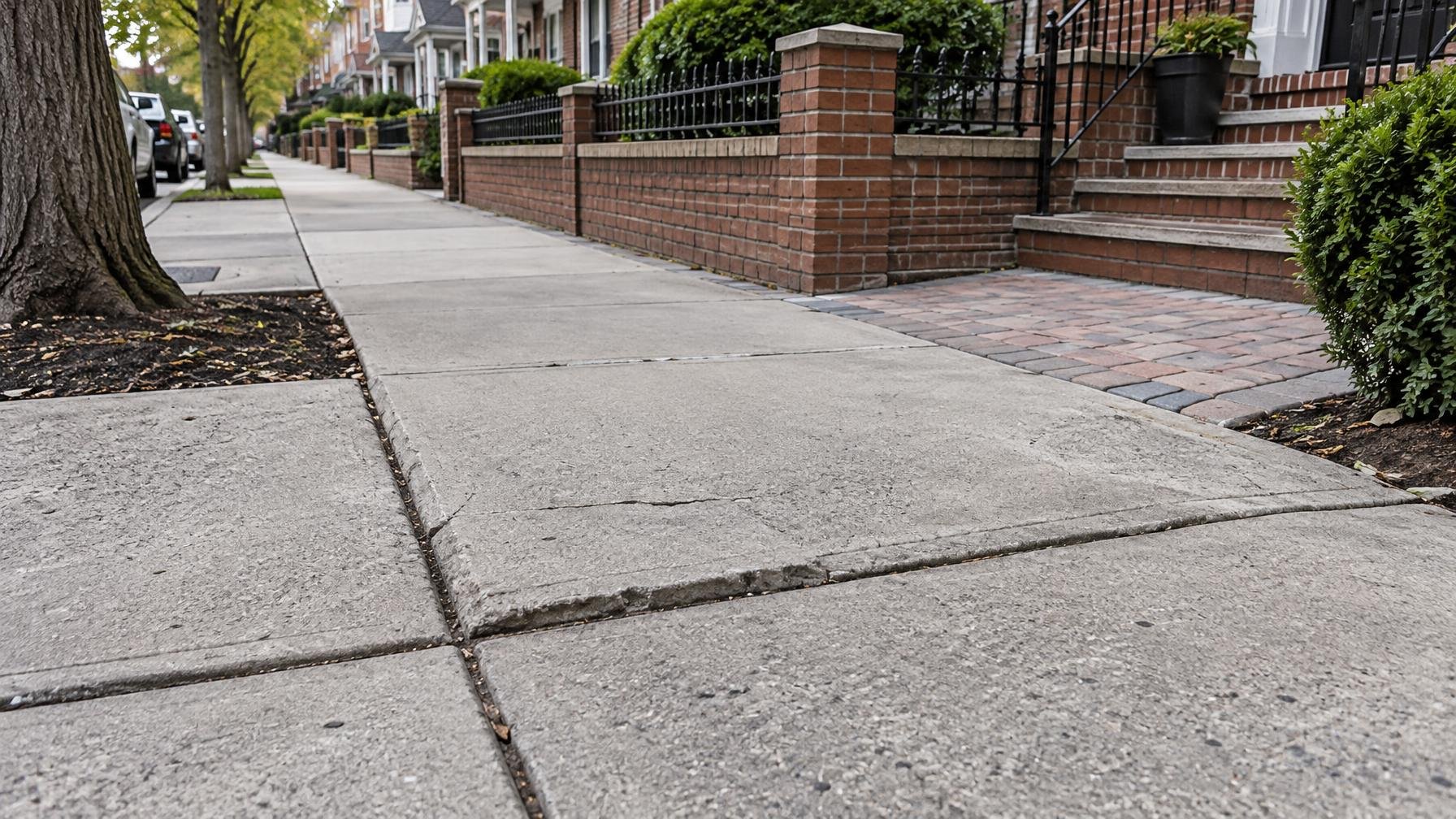
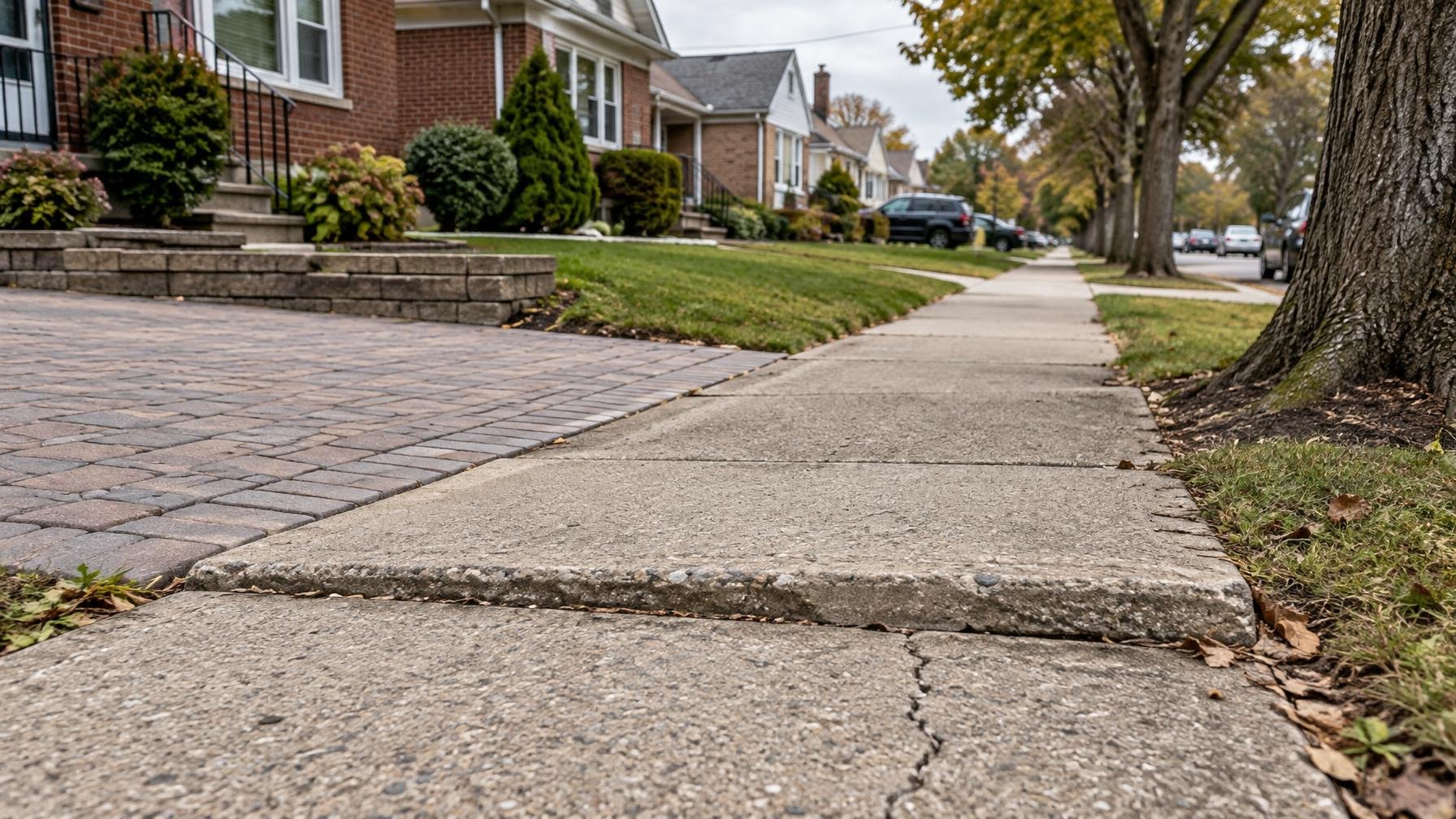
Lifted edges and uneven joints
Where one panel sits above the next, pedestrians can catch a shoe, stroller wheel or mobility aid on the edge. Tree roots, movement in the supporting soil and repeated freezing and thawing can contribute to uneven concrete. The repair should address the cause where feasible; replacing a panel without considering what lifted it can leave the underlying problem unresolved.
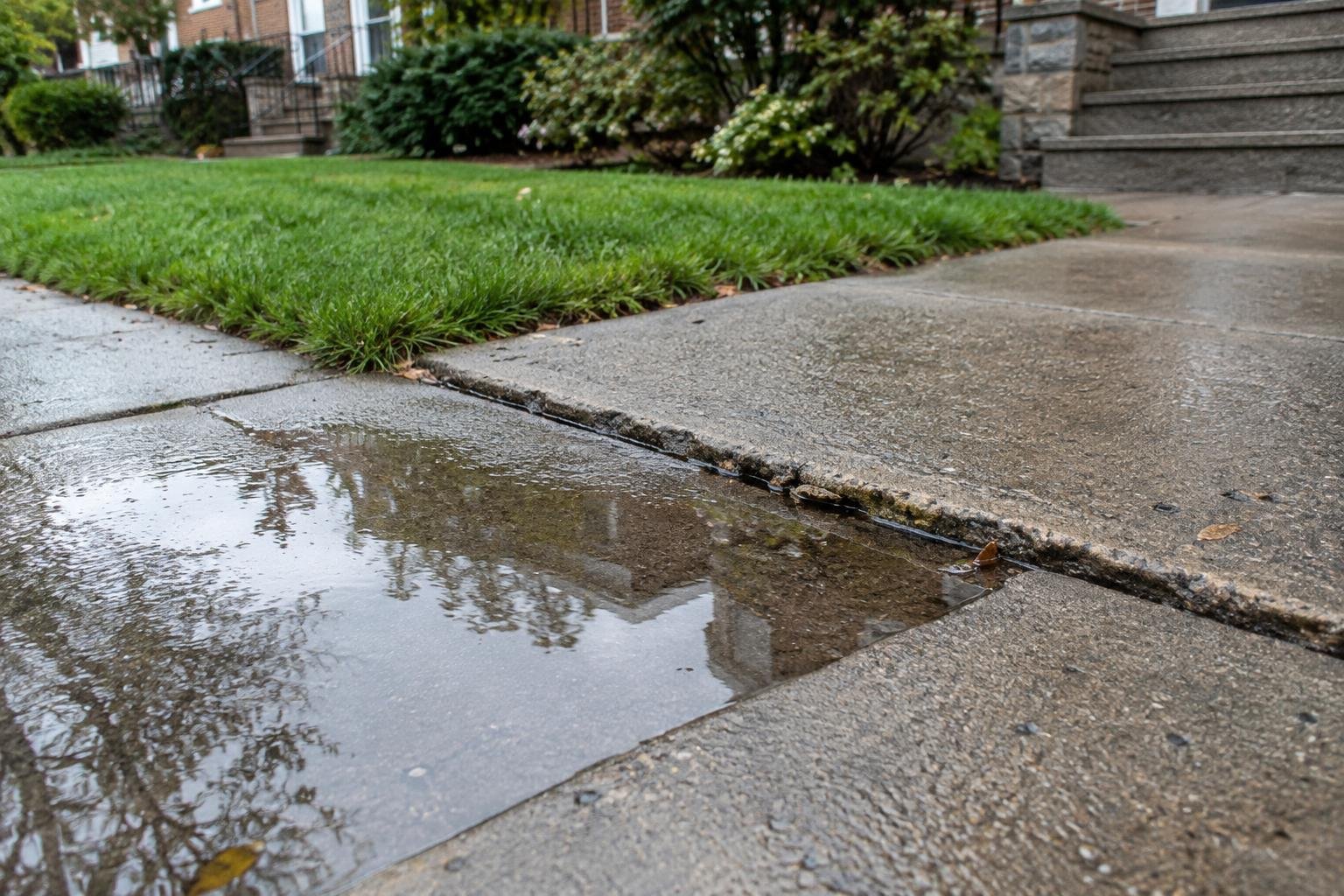
Sunken panels and standing water
A low panel may collect runoff or create an abrupt drop at an adjoining slab. Look for puddles after rainfall, sediment along joints and soil washing out beside the walkway. Water entering beneath concrete can contribute to further movement, while standing water can become an icy patch during winter.
Cracks, crumbling edges and surface scaling
Not every crack requires full replacement. The important questions are whether the slab remains stable, whether the edges have separated vertically and whether deterioration extends through the concrete. Widespread flaking or crumbling deserves closer inspection, especially where it leaves a rough walking surface. Photographs help document damage, but an on-site assessment is needed to define the repair.
Repair or Replace: How to Choose the Right Scope
The useful distinction is between a localized surface issue and a failed panel. A limited concrete repair may be appropriate when the slab is sound and the defect can be addressed without leaving an uneven surface. A thin patch over moving, broken or badly settled concrete is unlikely to resolve the underlying condition.
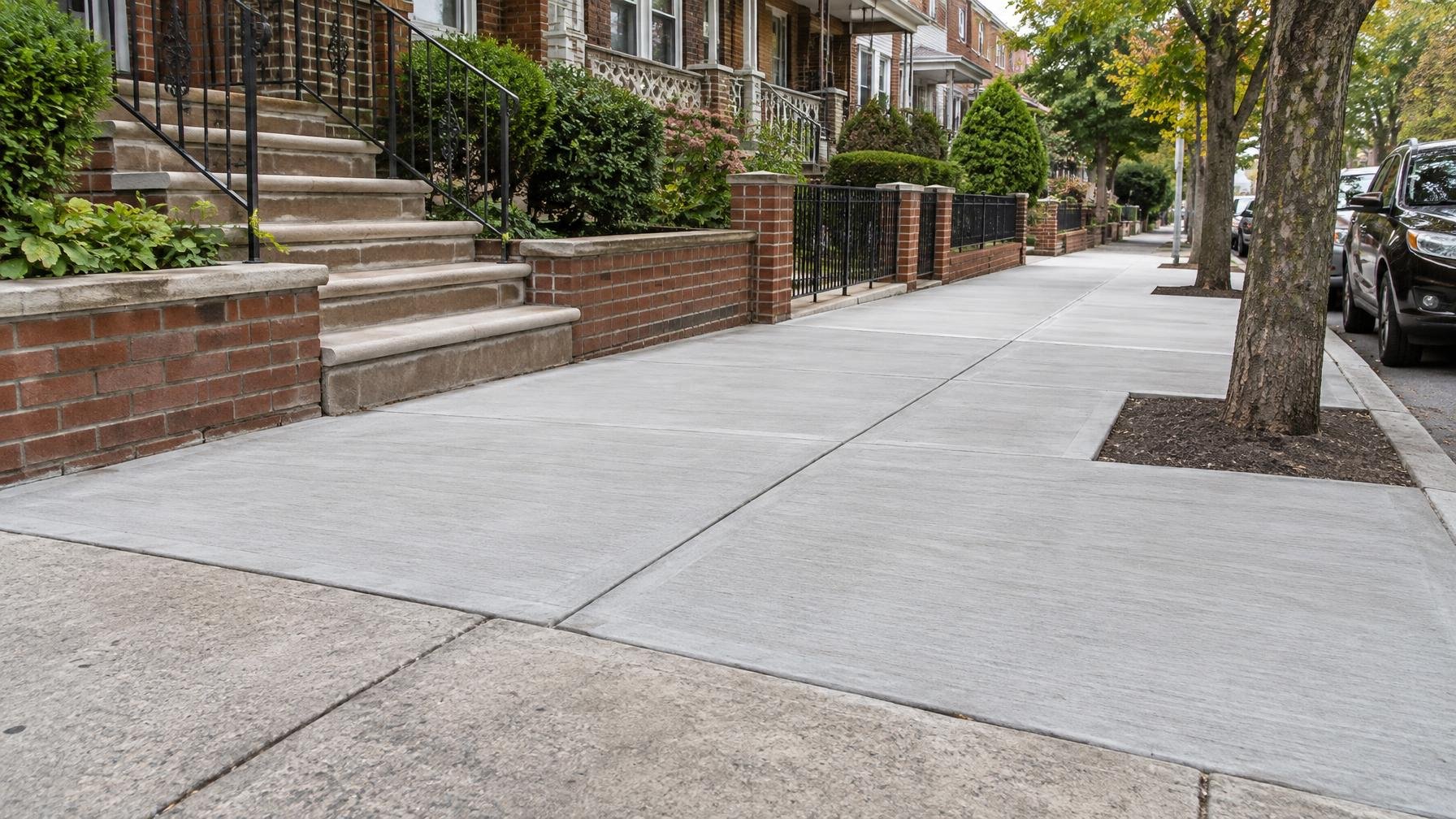
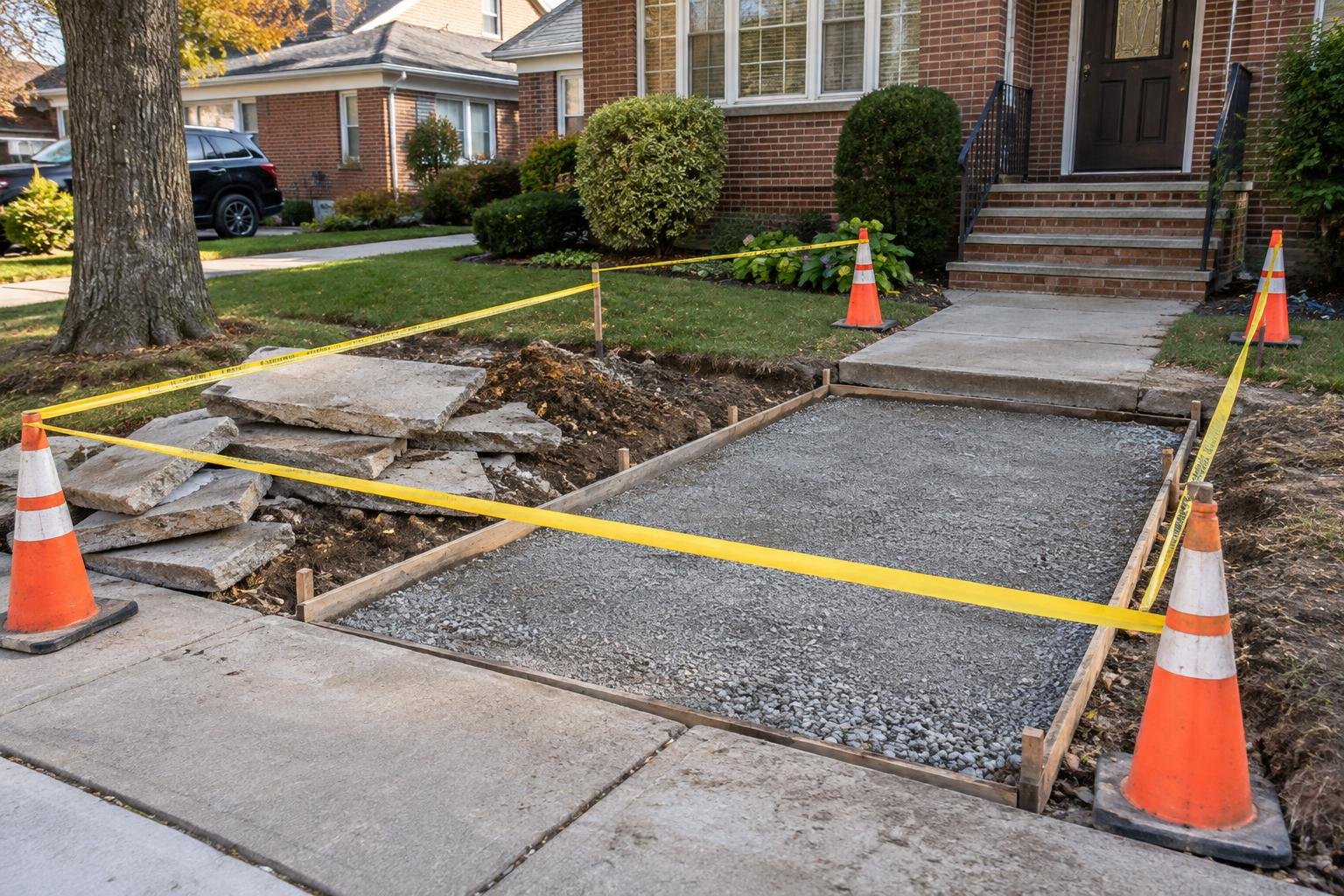
Panel replacement may be the more appropriate approach when concrete is fractured through its depth, substantially displaced or deteriorated across a broad area. Removing affected sections also allows the supporting material to be inspected and prepared before new concrete is placed.
- Check adjoining panels: A repaired section still needs to meet the surrounding sidewalk without creating new raised edges.
- Review the drainage path: The finished surface should not introduce a low spot or redirect runoff toward an entrance.
- Separate pedestrian and vehicle areas: Sidewalk sections crossed by vehicles require a construction approach suited to that use.
- Define removal limits: Ask which panels are included and why, rather than relying on a vague description such as “fix the front sidewalk.”
For a broader look at planning replacement work, see StoneSky’s Queens sidewalk replacement guide.
Plan Around Bayside’s Trees, Driveways and Front Entrances
Street trees need a separate review
Mature trees are a feature of many Bayside residential streets, but roots can complicate sidewalk work. Do not assume a root can be cut simply because it sits beneath damaged concrete. Work involving street trees or their roots may require coordination with NYC Parks and specific approvals. Ask how the tree condition will be evaluated before removal begins.
Driveway crossings need more than a cosmetic match
Where a sidewalk crosses a driveway, inspect both the pedestrian route and the vehicle transition. A new panel should not leave an awkward lip at the apron or an unnecessary dip in the walking path. The estimate should distinguish ordinary sidewalk panels from areas subject to vehicle loading and identify any related apron work.
Private walks and stoops affect the finished elevation
Replacing the public sidewalk can expose an existing height mismatch at a private walkway or the bottom of a stoop. Check these connections before setting the scope. If adjacent pavers are loose or sunken, discuss them separately rather than assuming the sidewalk work includes resetting them. StoneSky also offers paver repair and resetting for those adjoining surfaces.
Handling an NYC Sidewalk Notice in Bayside
Bayside is within New York City, so public-sidewalk requirements should be checked through the relevant city agencies rather than Nassau County procedures. If you received a sidewalk violation notice, keep the complete notice and any accompanying diagram available for the estimate. Those documents help identify the cited conditions, but the contractor should also inspect the actual sidewalk.
NYC generally assigns sidewalk maintenance responsibilities to property owners, although exceptions and city programs can affect individual situations. Tree-related damage and the type of property may matter. Confirm current responsibilities and available options with NYC DOT and, when relevant, NYC Parks before authorizing work.
- Match the notice to the site: Identify the cited panels and note any additional damage nearby.
- Confirm permits: Ask which permits or approvals apply and who will obtain them.
- Clarify the repair scope: Make sure the proposed work addresses the listed defects rather than only the most visible crack.
- Ask about closeout: Confirm the current inspection or dismissal process with NYC DOT after repairs.
Completed concrete work does not, by itself, establish that a violation has been dismissed. Keep copies of the notice, work documentation and agency correspondence until the matter is resolved.
What a Sidewalk Repair Estimate Should Cover
A useful estimate connects the visible damage to a defined construction scope. During the site visit, walk the full frontage with the contractor, including driveway crossings and transitions to neighboring panels. Point out puddles that may not be visible on a dry day.
Removal and base preparation
Ask how the damaged concrete will be removed and what preparation is included beneath it. Soft areas, voids or unsuitable supporting material can affect the replacement. Some conditions become clear only after demolition, so establish how any newly discovered work will be documented and discussed.
Concrete placement and finishing
The scope should account for the intended use, finished elevations, joints and a walking surface suitable for exterior pedestrian traffic. Ask how the new sections will meet existing concrete and how water will move across them. New concrete may differ in color from older panels; a localized repair should not be presented as an invisible match.
Access, protection and cleanup
On Bayside properties with a short front setback, sidewalk work can affect the main entrance and driveway at the same time. Discuss safe pedestrian access, delivery access and protection around fresh concrete. Confirm who handles debris removal and when the area can reopen. Avoid assuming that a surface which looks dry is ready for foot or vehicle traffic.
Weather, Scheduling and Care After Repair
Queens winter conditions can turn a small drainage issue into a recurring ice problem. Wet ground, freezing temperatures and hot summer weather also affect concrete placement and curing. Schedule around suitable conditions rather than treating a calendar date as the only requirement.
Before work begins, relocate vehicles as needed and make arrangements for anyone who relies on the front entrance. Follow the contractor’s instructions on reopening the sidewalk and driveway crossing; timing depends on the concrete, weather and use.
After repair, watch the area during the next rainfall. Report unexpected ponding or drainage changes promptly. Keep soil and mulch from spilling onto the walkway, and follow guidance on deicing products, especially for new concrete. Routine observation helps catch developing problems before they become another uneven panel.
Request a Free On-Site Estimate in Bayside
StoneSky Pavers & Masonry serves Bayside and surrounding Queens neighborhoods with concrete installation and repair, sidewalk repair and replacement, and related masonry services. Have your sidewalk notice, photos and concerns about drainage or tree roots ready for the site visit so the proposed work can be clearly defined.
Request a free on-site estimate or call (929) 528-1205 to discuss your Bayside sidewalk repair.
Frequently Asked Questions
Does a cracked sidewalk in Bayside always need replacement?
No. A stable slab with limited surface damage may be suitable for repair. Concrete that is displaced, fractured through its depth or extensively deteriorated may require panel replacement. An on-site inspection helps determine the appropriate scope.
What should I do if I receive an NYC sidewalk violation notice?
Keep the notice and any accompanying diagram, identify the cited sections and arrange an inspection. Confirm applicable permits and the current repair and dismissal procedures with NYC DOT. Completing repairs does not automatically confirm that the violation has been dismissed.
Can tree roots be cut to repair a raised sidewalk?
Do not assume roots can be cut during sidewalk demolition. Street-tree and root work may require NYC Parks coordination and approvals. Have the tree-related condition reviewed before deciding how to repair the affected panels.
How soon can I walk or drive on replacement sidewalk concrete?
Reopening time depends on the concrete, curing conditions and whether the area carries pedestrians or vehicles. Follow the contractor’s instructions and keep traffic off the new concrete until it is ready for the intended use.
Does StoneSky offer free sidewalk repair estimates in Bayside?
Yes. StoneSky Pavers & Masonry offers free on-site estimates in Bayside for sidewalk repair and replacement and other listed concrete and masonry services. Call (929) 528-1205 or use the contact page to request an estimate.