If you need sidewalk repair in Flushing, NY, start by identifying whether the problem is damaged concrete, an uneven slab, or movement caused by roots or drainage. The right scope may involve a localized repair or replacement of affected sidewalk panels—not simply covering the defect. StoneSky Pavers & Masonry offers concrete and sidewalk repair and replacement in Queens, including Flushing, with free on-site estimates.
What Should You Check Before Requesting a Repair?
Walk the full frontage of your property, not just the spot that first caught your attention. A raised joint beside the entrance may be the most noticeable hazard, while a sunken panel near the driveway or crumbling concrete around a utility cover also needs attention.
Flushing properties range from detached homes with short front walks to apartment buildings and storefronts with busy pedestrian access. The repair plan should account for how people reach the building, where vehicles cross the sidewalk, and what lies alongside the concrete.
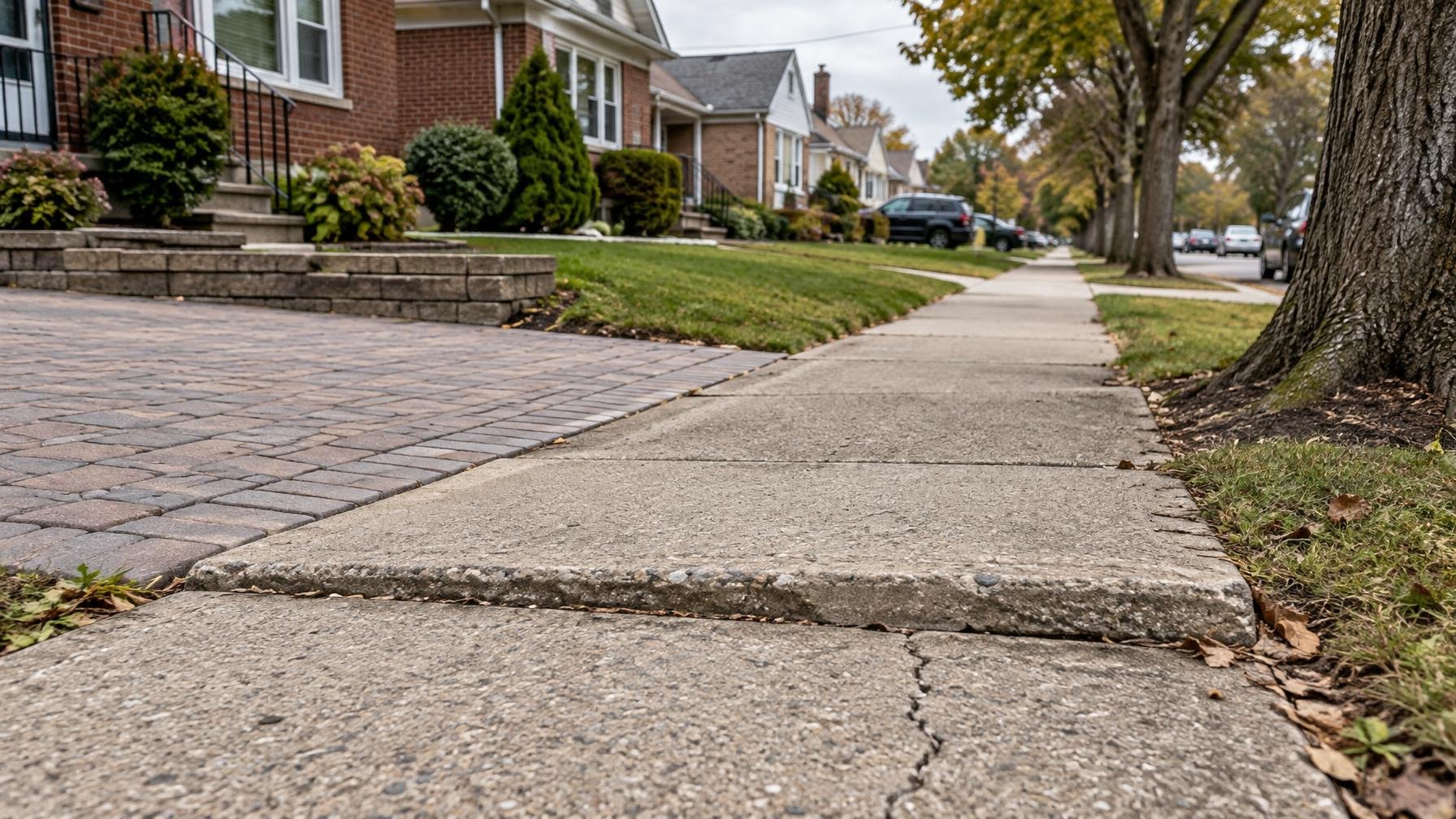
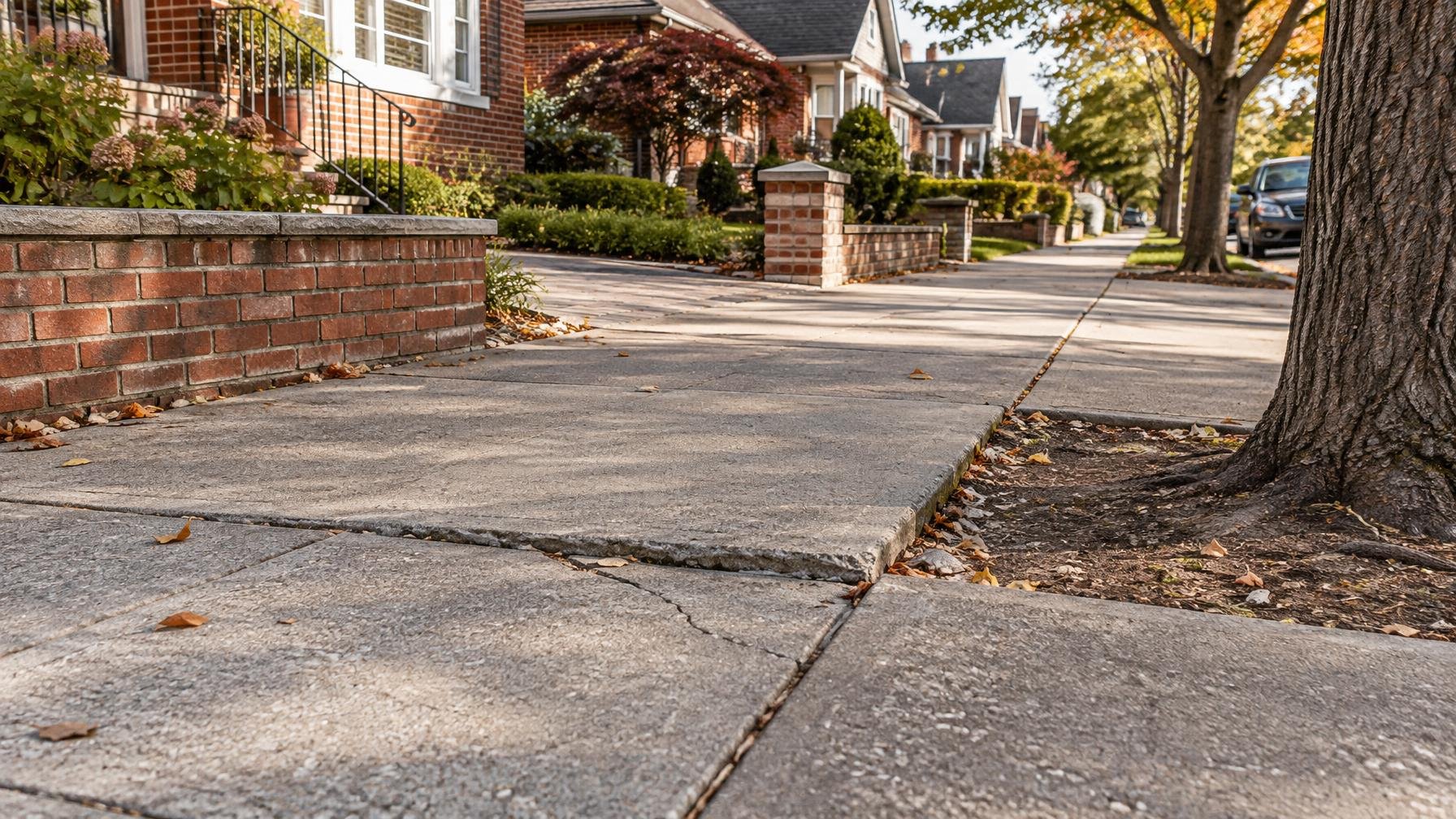
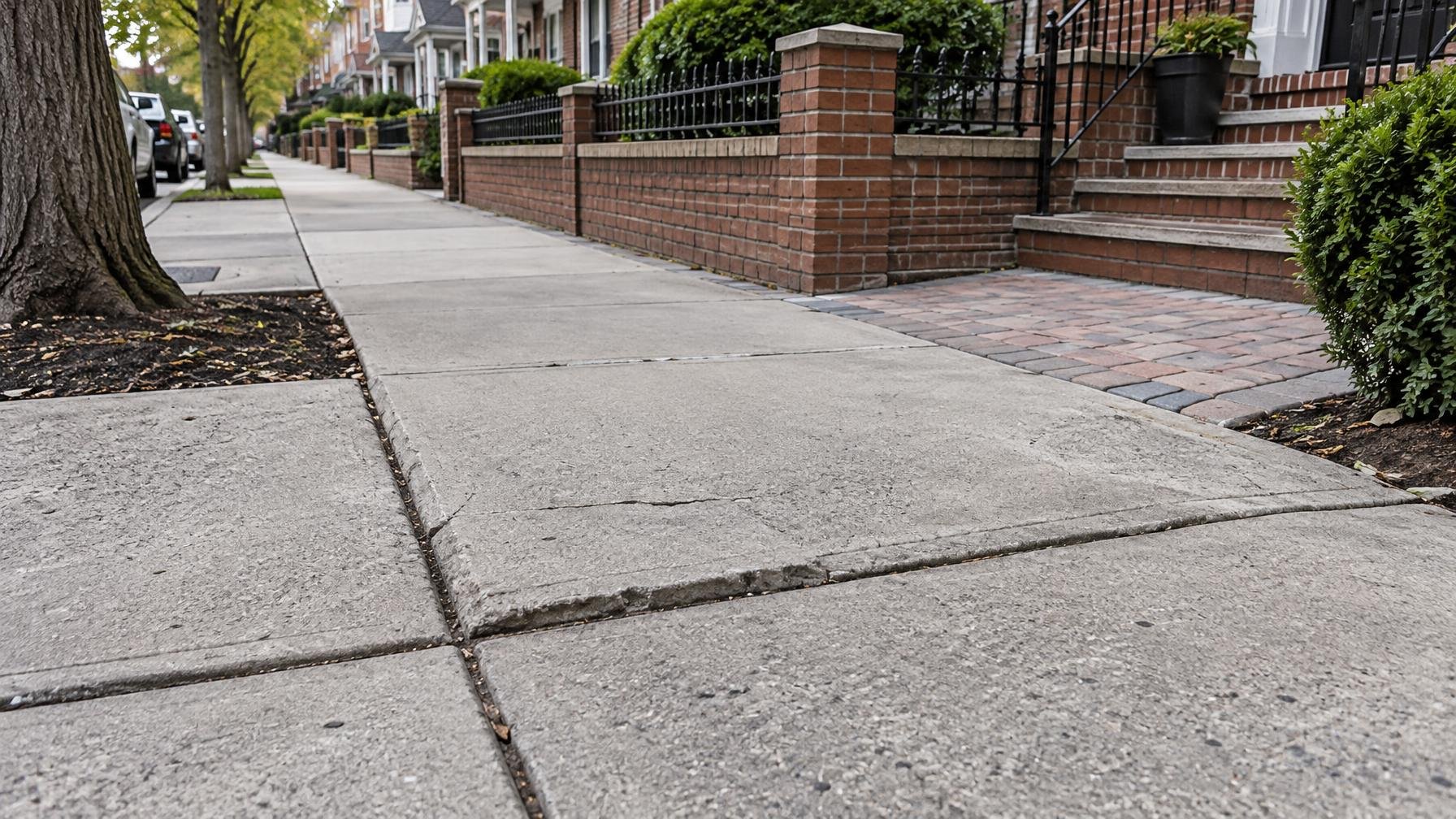
- Raised or settled panels: Look for abrupt changes in height at joints and edges.
- Cracked concrete: Note whether cracks are narrow and level or accompanied by movement and loose pieces.
- Surface deterioration: Check for flaking, exposed aggregate and areas that break apart under normal use.
- Standing water: Photograph puddles after rain, especially near entrances and low joints.
- Nearby features: Identify tree pits, basement stairs, utility covers, driveway aprons and downspouts.
Take both close-up photographs and wider views. A close-up shows the defect; a wider photograph helps explain whether it sits beside a tree, crosses the main entrance, or connects to another damaged panel.
Concrete Repair or Panel Replacement?
When a localized repair may make sense
A limited surface defect may be repairable if the surrounding concrete is sound and the panel is stable. The important questions are whether the repair material can bond properly, whether the damaged area can be prepared adequately, and whether the finished surface will remain suitable for pedestrian traffic.
Not every crack requires replacing the whole sidewalk. However, filling a crack does not correct a height difference, stabilize a moving slab, or resolve soil washing out beneath the concrete. Ask what the proposed repair fixes—and what it leaves unchanged.
When replacement deserves a closer look
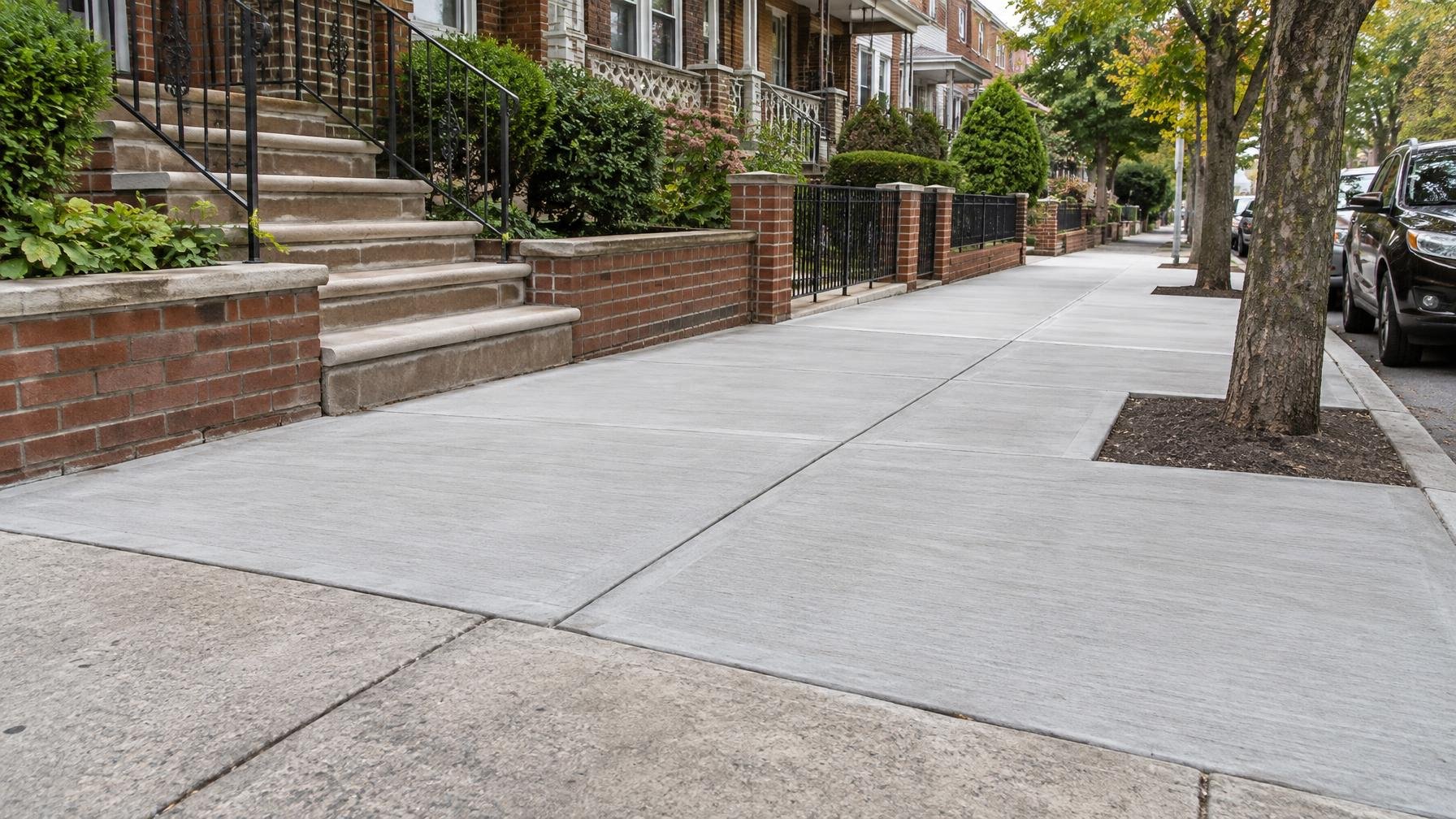
Replacement is often worth considering when panels are displaced, extensively fractured, deeply deteriorated, or sloped in a way that holds water. Removing the affected concrete also allows the supporting material underneath to be examined and prepared before new concrete is placed.
The scope should follow actual site conditions. One damaged section does not automatically justify replacing the entire frontage, but replacing only the most obvious panel can leave adjacent hazards unresolved. For a broader look at planning removal and new concrete work, see our Queens sidewalk replacement guide.
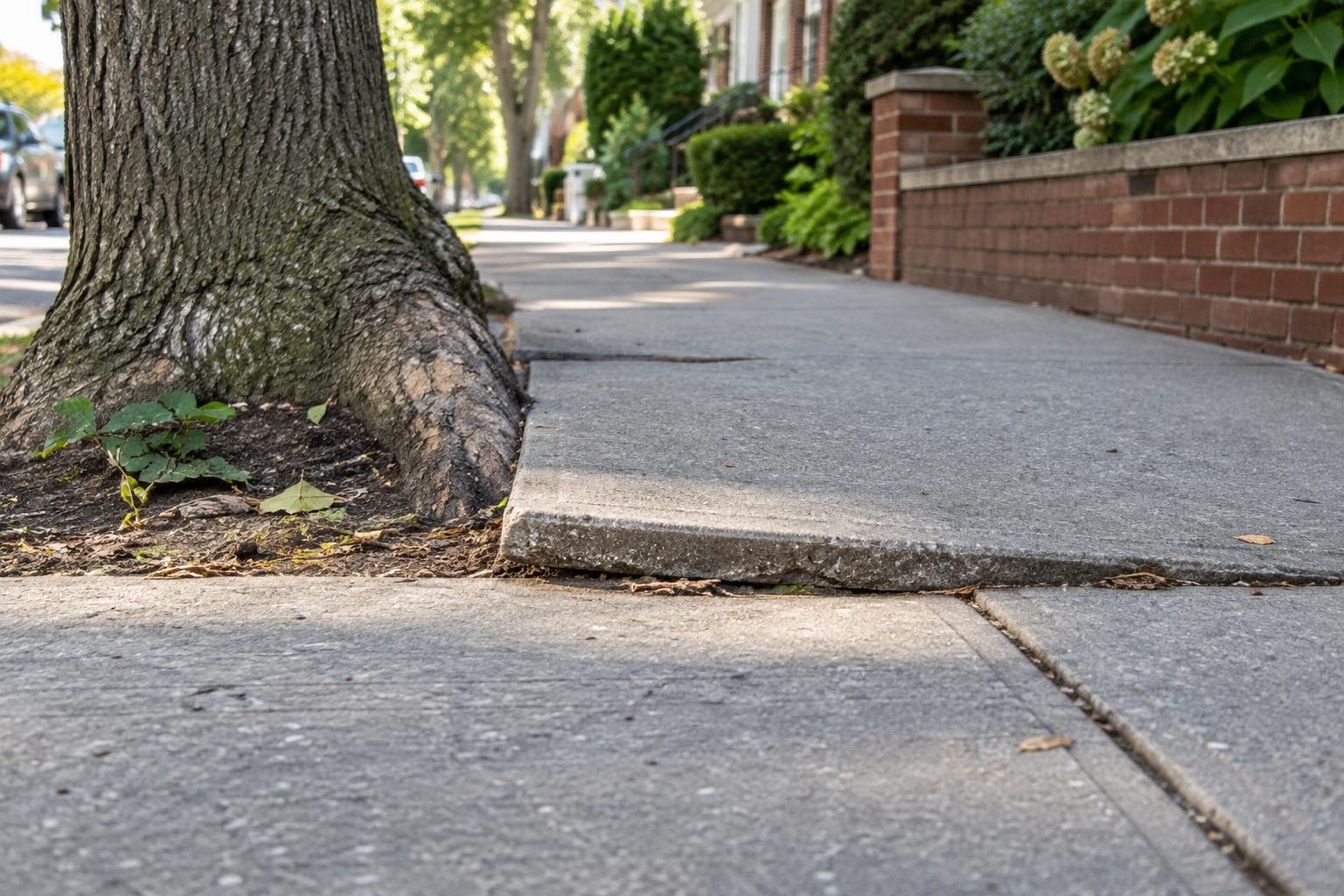
Find the Cause Before Covering the Damage
Tree roots and nearby street trees
A lifted slab beside a tree pit needs a different assessment from concrete that has settled over poorly supported ground. Roots may contribute to movement, but cutting them without authorization can damage the tree and create additional problems.
When a street tree is involved, check with NYC Parks about applicable requirements and whether any city sidewalk repair assistance applies to your property. Eligibility and responsibility depend on the circumstances. Do not assume a contractor can remove roots or change a tree pit as part of ordinary concrete work.
Water and unsupported concrete
Look at where water arrives and where it can leave. A downspout discharging toward the walk, runoff from a sloped driveway, or a low spot between panels can keep an area wet. Water can also carry supporting material away, leaving concrete vulnerable to settlement.
The replacement plan should address surface elevations and transitions without simply pushing runoff toward a neighboring property. If water consistently collects near basement stairs or a below-grade entrance, point that out during the estimate rather than treating it as a separate cosmetic issue.
Winter exposure and vehicle crossings
Queens sidewalks face freezing weather, thawing conditions and winter maintenance. Moisture entering damaged concrete can contribute to further deterioration through freeze-thaw cycles. A new surface still needs appropriate curing and maintenance; replacement alone does not eliminate seasonal wear.
Where a driveway crosses the sidewalk, vehicle loading also matters. Tell the estimator how that crossing is used so the concrete section and supporting base can be evaluated for its actual purpose and applicable requirements.
Handling a NYC Sidewalk Violation in Flushing
If you received a sidewalk violation notice, bring the complete notice and any accompanying diagram to the site visit. The repair discussion should address the listed defects, not only the panel you originally planned to fix.
A sidewalk violation is a city compliance matter as well as a construction project. Physical repairs and administrative closeout are separate steps. Completing concrete work does not, by itself, mean the violation has been removed from city records.
- Review the notice: Confirm the property information, identified defects and any stated deadlines.
- Compare it with the site: Locate the affected sections and identify any surrounding conditions that could influence the work.
- Confirm permit requirements: Before work begins, establish which NYC DOT permits or other approvals apply and who will obtain them.
- Clarify the closeout process: Ask what inspection or dismissal request is required after repairs and who is responsible for submitting it.
- Keep records: Retain the scope, permits, photographs and completion paperwork.
Use current NYC DOT guidance to confirm procedures for your property. If a street tree or utility structure affects the repair, additional coordination may be necessary. Ask the contractor to identify these constraints before demolition rather than assuming they are included.
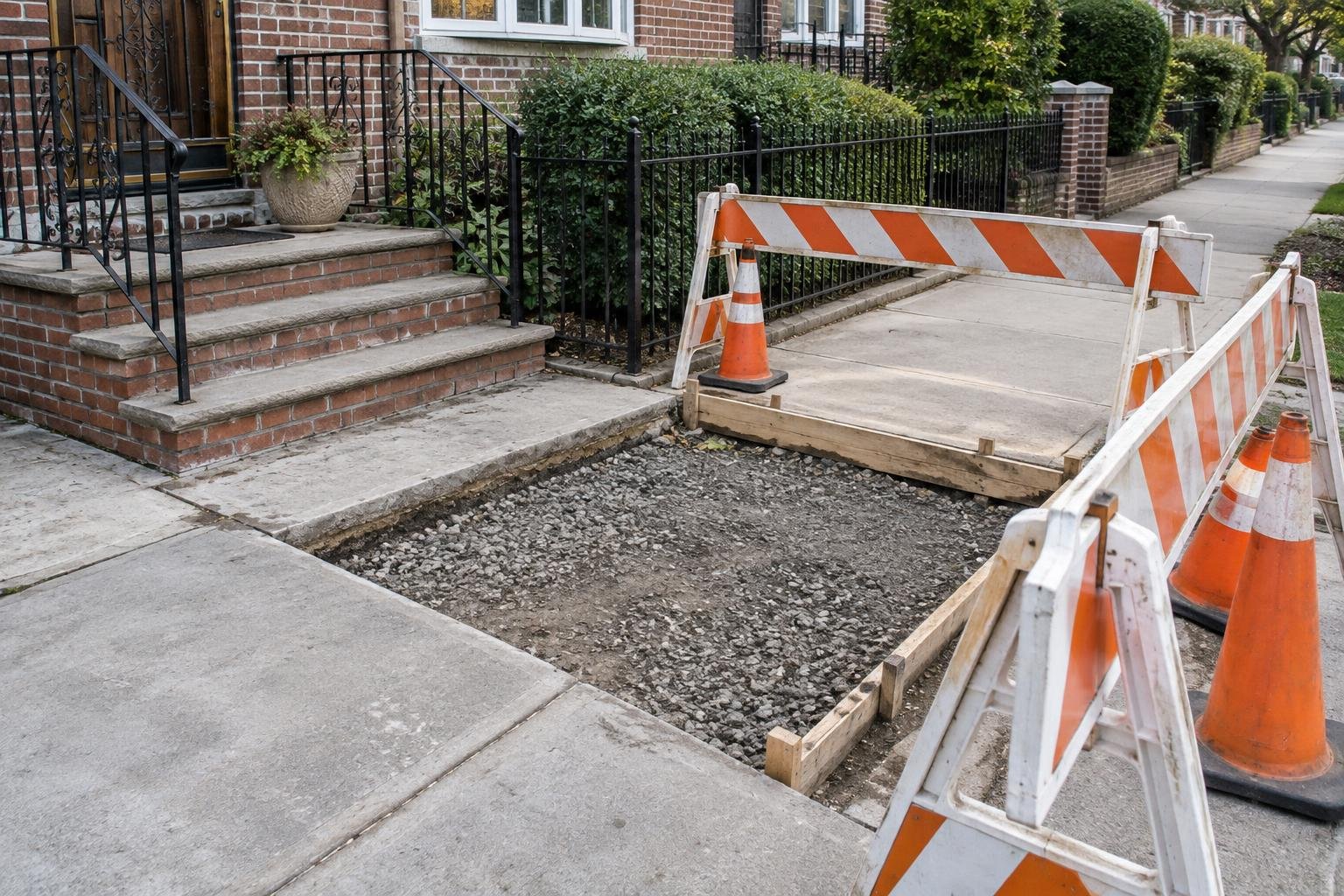
What a Useful Sidewalk Repair Estimate Should Explain
An estimate should do more than say “repair sidewalk.” It should make clear which areas are included and how the work will connect to concrete that remains. StoneSky’s free on-site estimate gives you an opportunity to review the visible damage and discuss the proposed scope at your Flushing property.
- Work boundaries: Which panels will be repaired or replaced, and where will removal stop?
- Preparation: How will damaged concrete be removed and the exposed support evaluated?
- Concrete details: What thickness, joint layout and finish are proposed for the location and use?
- Elevations: How will new sections meet adjoining sidewalks, entrances and driveway crossings?
- Site constraints: Are trees, utility covers, fences or basement entrances affecting the work?
- Access and cleanup: How will the work area be protected, debris removed and building access handled?
- Permit and inspection responsibilities: Which tasks belong to the contractor and which remain with the owner?
New concrete may differ in color and texture from older panels. Discuss the visual transition beforehand, but keep safe elevations, drainage and a suitable walking finish ahead of an exact color match. Our guide to concrete repairs and replacement in Queens explains additional considerations for evaluating existing concrete.
Plan Access, Weather and Aftercare
On a busy Flushing block, even a small repair can affect residents, delivery workers and customers. Discuss pedestrian access and building entry before scheduling. A storefront entrance, shared apartment doorway or narrow frontage may require a different work sequence from a detached home with another usable entrance.
Concrete scheduling also depends on weather and curing conditions. Ask how rain, cold temperatures or excessive heat could affect the planned work. Do not assume that concrete is ready for use simply because its surface looks dry.
Before the crew leaves, obtain clear instructions for pedestrian access, vehicle access where applicable, and protection of the new surface. Keep barriers in place as directed and avoid dragging bins or equipment across fresh concrete. For winter care, follow the contractor’s recommendations and any applicable product guidance rather than immediately applying aggressive deicing products.
Request a Free On-Site Estimate in Flushing
StoneSky Pavers & Masonry provides concrete installation and repair, sidewalk repair and replacement, and sidewalk violation repairs in Queens. Whether you are dealing with a raised panel, deteriorated concrete or a city notice, start with a site assessment and a clearly defined repair scope.
Request a free on-site estimate or call (929) 528-1205. Have your Flushing property address, photographs and any sidewalk violation paperwork ready so the visit can focus on the areas that need attention.
Frequently Asked Questions
Can one damaged sidewalk panel be replaced without replacing the entire sidewalk?
Often, yes. The scope depends on the condition of adjacent panels, their elevations, drainage and any defects identified in a city notice. An on-site assessment helps determine whether a limited replacement will address the problem without leaving nearby hazards.
Does filling a crack fix an uneven sidewalk?
No. Crack filling does not correct a raised edge or settled panel. Uneven concrete needs an assessment of the height difference and underlying cause before a suitable repair or replacement can be selected.
Do I need a permit for sidewalk repair in Flushing?
NYC DOT permit requirements apply to sidewalk work, depending on the scope. Confirm the current requirements before work begins and establish who will obtain the necessary permits. Street trees or utility structures may require additional coordination.
What should I do if tree roots have lifted my sidewalk?
Document the damage and identify whether a street tree is involved. Check with NYC Parks about requirements and any applicable repair assistance before authorizing root cutting or changes to the tree pit.
Will completing repairs automatically clear a sidewalk violation?
No. Repairing the concrete and clearing the violation from city records are separate steps. Follow the current NYC DOT inspection and dismissal process, and clarify who will handle the required requests and paperwork.
Does StoneSky offer free sidewalk repair estimates in Flushing?
Yes. StoneSky Pavers & Masonry offers free on-site estimates in Flushing and other parts of its Queens and Long Island service area. Call (929) 528-1205 or use the contact page to request a visit.