If you need sidewalk repair in Astoria, NY, start by identifying whether the problem is surface damage, a displaced concrete flag or failure beneath the slab. StoneSky Pavers & Masonry offers sidewalk repair and replacement in Astoria and throughout Queens, with free on-site estimates to assess trip hazards, damaged concrete and sidewalk violation repairs.
The right scope depends on the condition of the concrete, drainage, nearby trees and any NYC sidewalk notice attached to the property—not simply the length of the crack.
What Sidewalk Damage Should You Address First?
Astoria sidewalks serve row houses, multifamily buildings, storefronts and homes with short front walks. On a busy residential block, a raised slab can affect people using strollers, carts or mobility devices, while damaged concrete beside a building entrance can interrupt the most heavily used walking route.
Look at the entire frontage rather than only the most visible crack. One damaged flag—the individual concrete section between joints—may be part of a larger pattern.
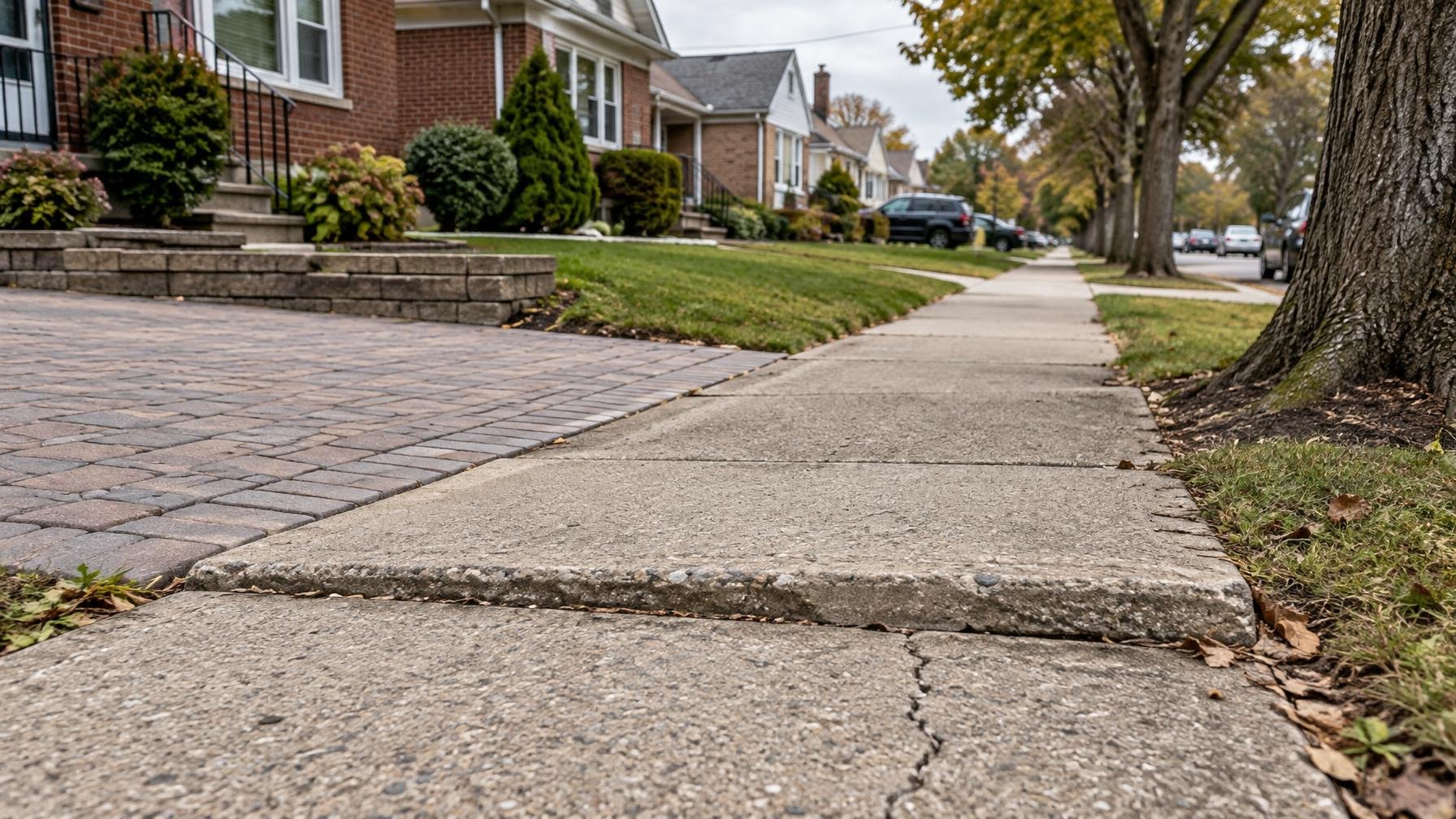
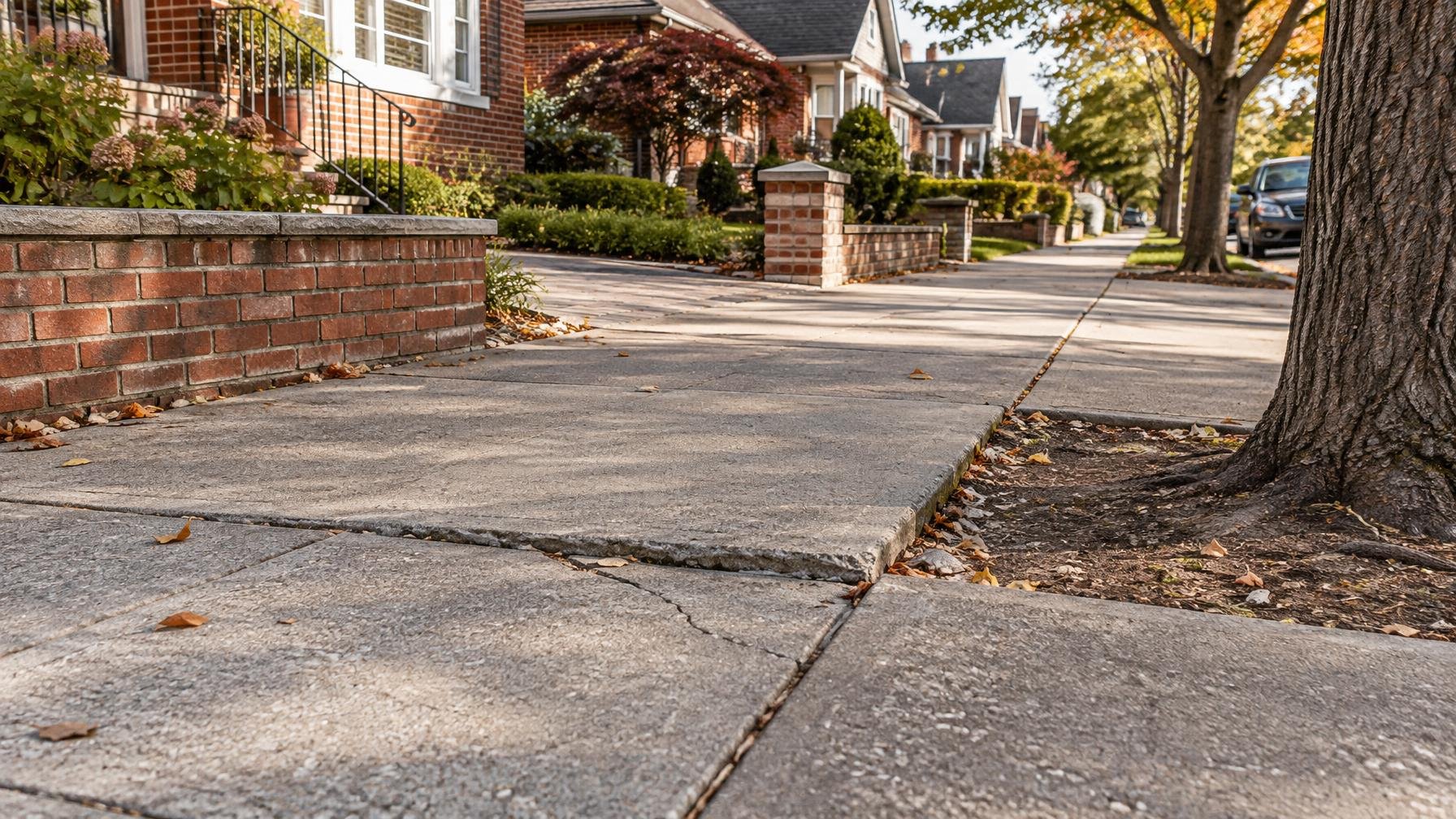
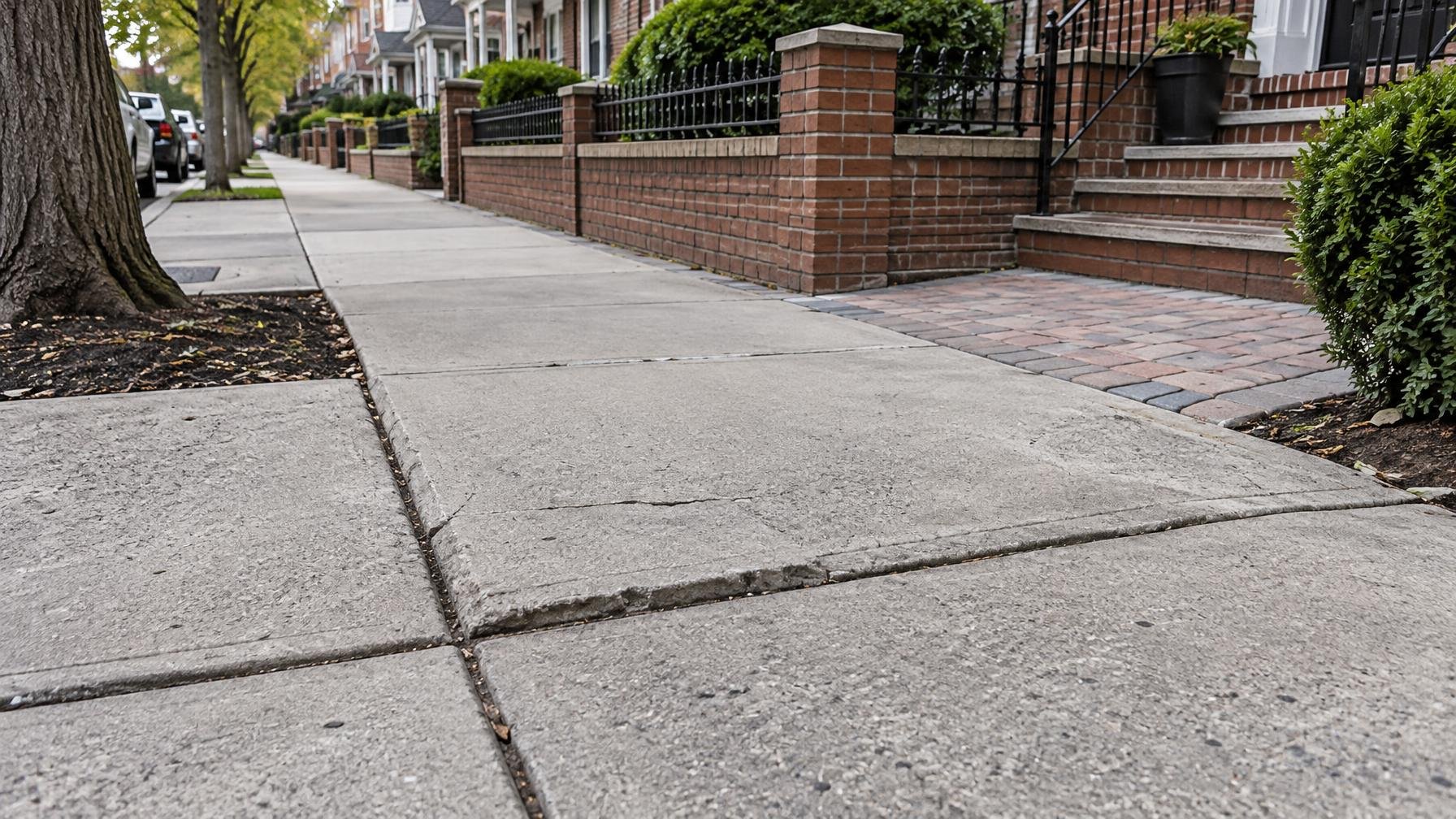
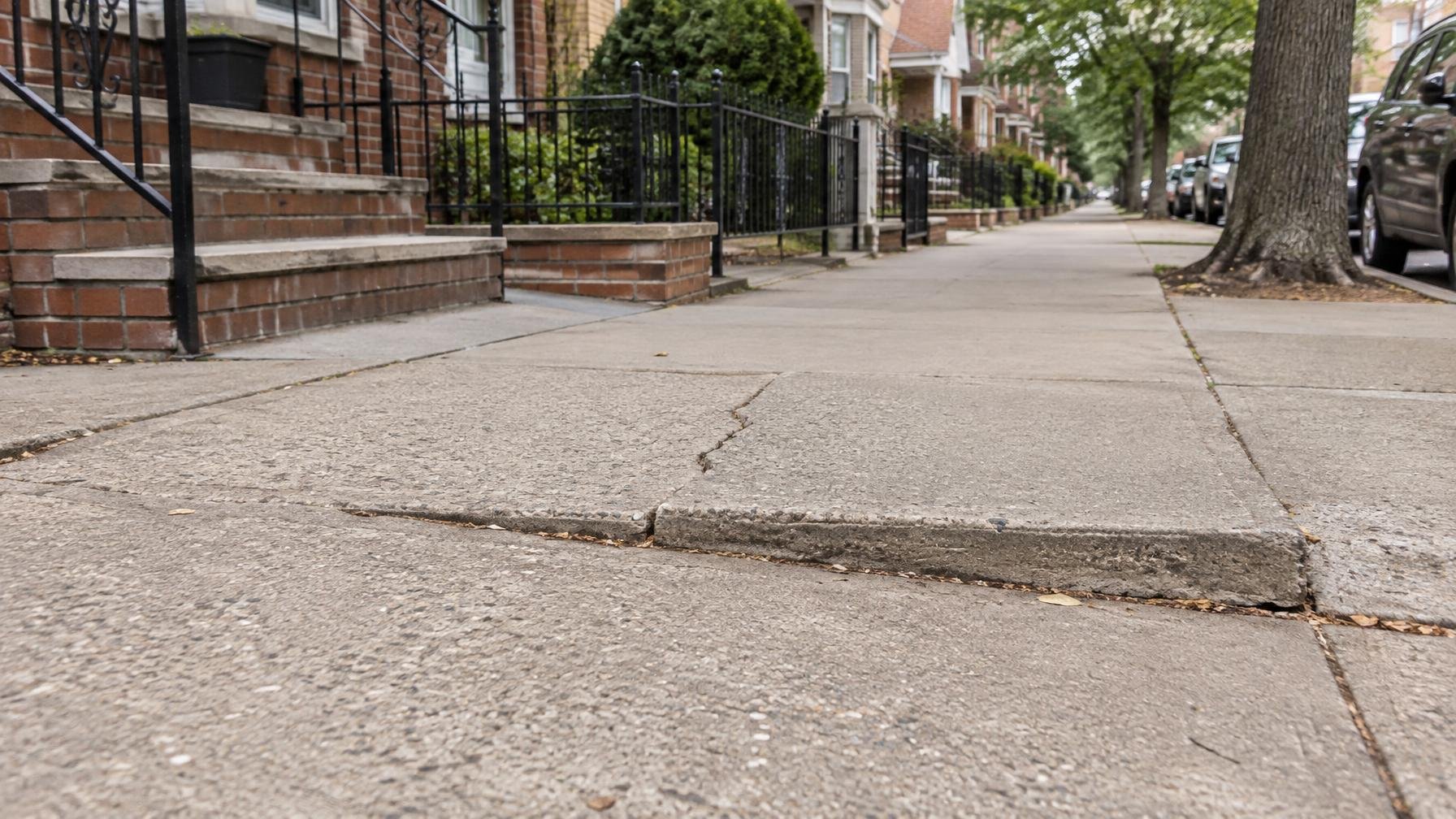
- Raised or sunken edges: Differences in elevation between adjoining flags create tripping points and can indicate movement underneath.
- Loose or broken sections: Concrete that shifts underfoot or breaks apart needs more than cosmetic attention.
- Deep cracks with displacement: A crack with one side sitting higher than the other suggests movement, not just surface wear.
- Flaking or crumbling surfaces: Shallow surface deterioration differs from concrete that has lost strength through much of its thickness.
- Persistent puddles: Water remaining after nearby areas have dried may reveal low spots or an unsuitable slope.
Photograph these conditions from both directions along the sidewalk. Include a wider view showing the entrance, curb and nearby tree pit so the relationship between the defects is clear. Keep people away from loose concrete where practical, without creating another obstruction in the public walking path.
Repair or Replacement: How to Decide
When a Limited Repair May Be Appropriate
A small, stable defect may be suitable for a localized concrete repair if the surrounding slab remains sound. The assessment should consider depth, movement, exposure to moisture and whether the proposed repair can bond properly to the existing concrete. A narrow crack without displacement is a different problem from a fractured corner that rocks when stepped on.
Ask what the repair is intended to accomplish. Filling a crack may help address an opening, but it does not lift a settled slab or correct a raised edge. Similarly, a thin coating over deteriorated concrete will not fix a weak base.
When Replacing Concrete Flags Makes More Sense
Replacement is often the more practical approach when flags are badly broken, significantly displaced or deteriorated throughout. Removing affected concrete also allows the underlying support to be inspected and prepared before new concrete is placed.
The scope should follow actual conditions and applicable city requirements. Replacing one flag might be sufficient for an isolated failure, while several adjoining low or unstable flags may need to be handled together. New concrete will generally differ in appearance from weathered concrete, so discuss the likely visual transition as well as the functional repair.
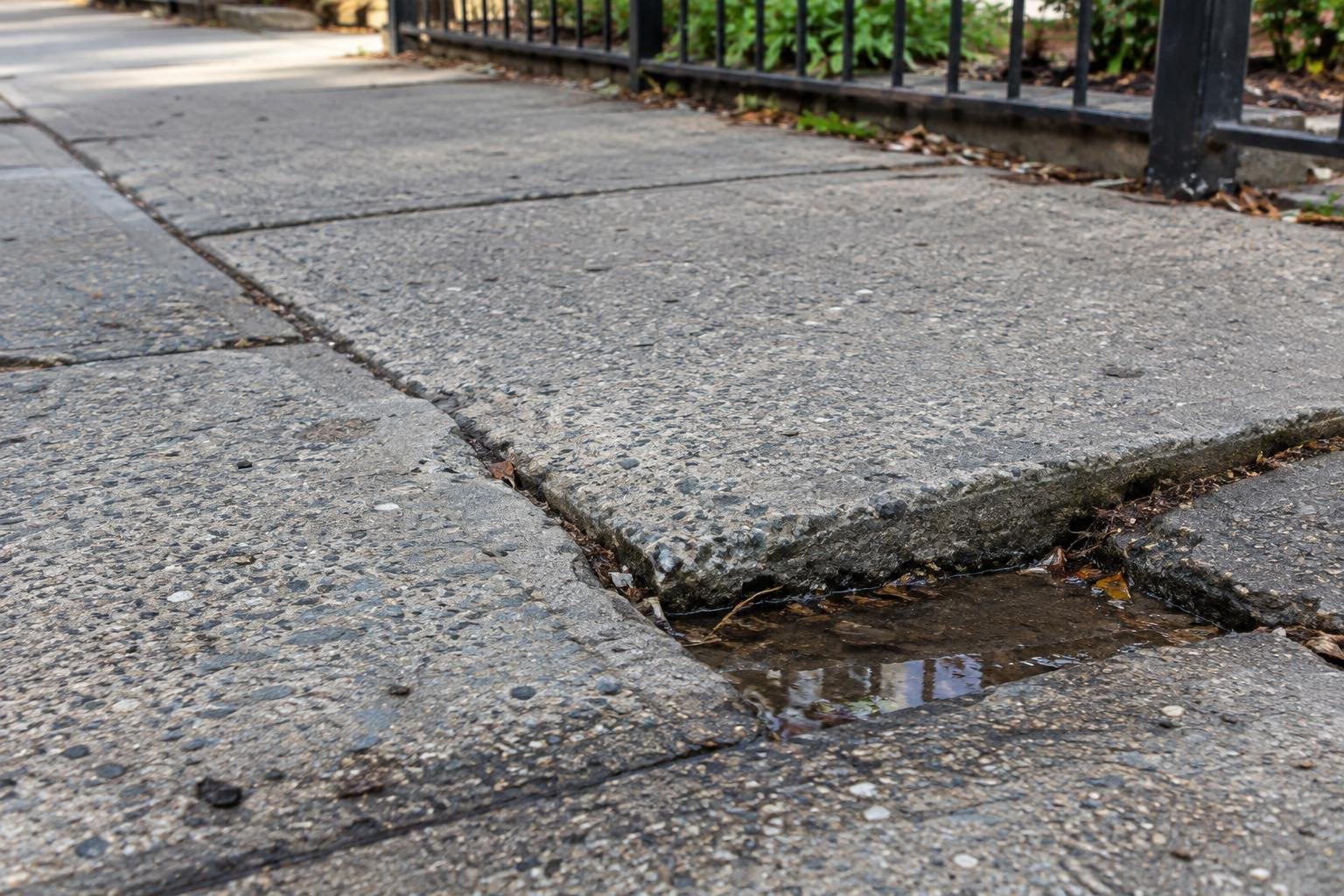
Why Astoria Sidewalks Crack, Settle or Lift
Water, Winter Weather and Poor Support
Queens experiences winter freezing and thawing. Water entering cracks or reaching poorly supported areas beneath concrete can contribute to deterioration and movement. Deicing products, repeated wetting and existing surface damage can further affect exposed concrete.
Settlement can also result from poorly compacted fill or loss of support beneath a slab. If a sidewalk repeatedly sinks in the same place, simply restoring its surface height without investigating the base risks repeating the problem. The repair plan should account for visible runoff routes and any water collecting beside the building.
Street Trees and Tight Property Frontages
Tree roots can lift sidewalk flags, but removing or cutting roots is not a routine concrete preparation step. If a city street tree is involved, confirm the applicable NYC Parks guidance and any required approvals before root work or changes around the tree pit. Ask whether a city tree-related sidewalk program may apply to the property rather than assuming eligibility.
Astoria's closely spaced entrances, basement access points and narrow frontages also make elevation changes important. A replacement sidewalk should not create a new awkward step at the gate, interfere with a doorway or send runoff toward a lower-level entrance. These connections need to be reviewed before demolition begins.
What to Do If You Receive an NYC Sidewalk Violation
A sidewalk violation notice should shape the estimate and repair scope. Do not assume that fixing the most obvious crack will address every condition identified by the city, or that completing construction automatically removes the violation from the property record.
- Gather the paperwork. Have the notice, any accompanying diagram and the property address available for the site visit.
- Match the notice to the frontage. Review the cited areas alongside the physical damage so the estimate addresses the relevant sections.
- Confirm the current process. Check NYC Department of Transportation guidance for applicable deadlines, permits, inspection and dismissal procedures.
- Clarify responsibilities. Establish who will obtain required permits, coordinate the work and handle any follow-up request.
- Keep a repair record. Save the written scope, photographs, permits where applicable and completion documents.
Public sidewalk work is different from repairing a private backyard slab. Before work starts, confirm the requirements for the location and scope, including any separate issues involving the curb or driveway crossing. A contractor's completed work and the city's administrative closeout are separate steps.
What a Useful On-Site Estimate Should Cover
An estimate should explain which areas need attention and what is included beneath and around the finished surface. StoneSky provides concrete, sidewalk and masonry services in Queens, allowing property owners to discuss nearby concrete or entrance damage during the same assessment.
- Defined repair boundaries: Identify the flags or sections proposed for repair or removal, rather than relying on a vague description.
- Removal and disposal: Clarify how existing concrete and debris will be handled.
- Base preparation: Ask how exposed support conditions will be assessed and what happens if unexpected voids or unsuitable material are found.
- Concrete placement details: Discuss thickness appropriate to the use and applicable requirements, joint layout, surface finish and transitions.
- Drainage: Review the intended surface slope and its relationship to doors, gates and neighboring sections.
- Access and reopening: Agree on pedestrian arrangements and how long the new work must remain protected.
For a driveway crossing, identify vehicle use during the estimate. A sidewalk section carrying vehicles needs to be assessed for that use rather than treated only as a pedestrian surface.
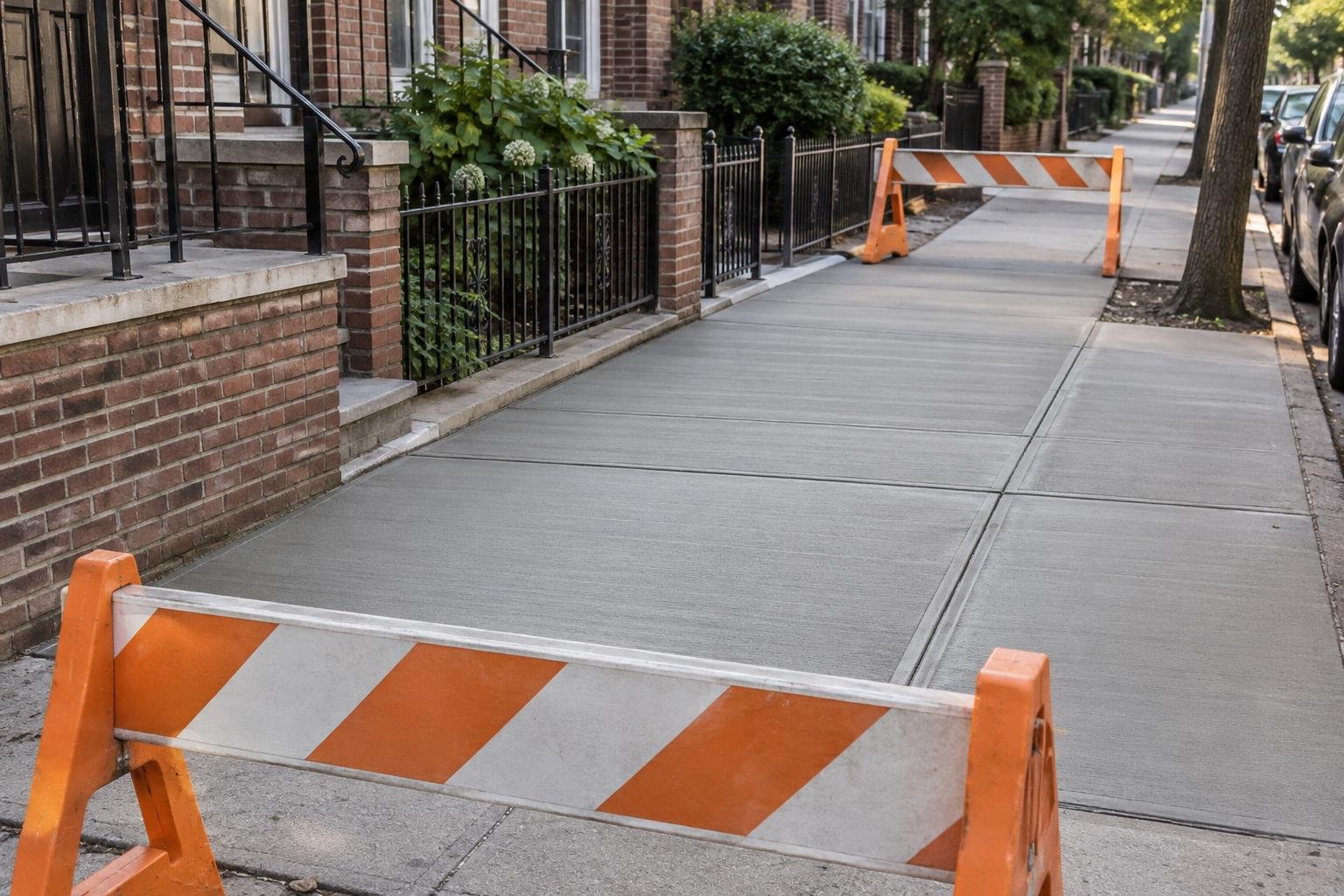
Planning the Work on an Occupied Astoria Property
Sidewalk replacement affects more than the concrete footprint. For an occupied multifamily building or storefront, discuss entrance access, deliveries, waste collection and the needs of residents who cannot easily use steps. Any temporary pedestrian arrangement must follow applicable requirements; directing people into the street is not a substitute for a proper access plan.
Tell the contractor about basement doors, utility covers, irrigation lines or known features near the work. If construction access is limited by parked vehicles or a narrow frontage, discuss staging and material delivery before the scheduled start.
Weather also affects scheduling. Heavy rain, freezing conditions and temperature extremes can affect placement and curing, so the schedule should allow for unsuitable conditions. Ask for specific instructions on when people, carts and vehicles may return. Concrete that looks dry is not necessarily ready for every type of use.
If the damage continues onto a private front walk or entrance slab, read our Astoria concrete repair and replacement guide to help separate the public sidewalk scope from other concrete work around the property.
Protect the Sidewalk After Repairs
Follow the contractor's curing and use instructions, including keeping traffic and stored materials off fresh concrete for the specified period. Do not apply sealers or other treatments unless they are appropriate for the concrete and its stage of curing.
Afterward, keep the walking surface clear and monitor the repaired area after rain and winter weather. Use deicing products only as directed and confirm their suitability for the concrete, particularly when it is new. Report renewed settlement or persistent pooling early so the underlying condition can be assessed.
Request a Free On-Site Estimate in Astoria
StoneSky Pavers & Masonry serves Astoria and other Queens neighborhoods with concrete installation and repair, sidewalk repair and replacement, and sidewalk violation repairs. Have your photos and any city notice ready so the site visit can focus on the damaged areas, access and appropriate scope.
Request a free on-site estimate or call (929) 528-1205 to discuss your Astoria sidewalk project.
Frequently Asked Questions
Can a cracked sidewalk in Astoria be repaired without replacing it?
Sometimes. A localized, stable defect may be repairable if the surrounding concrete is sound. Displaced cracks, loose sections and badly deteriorated flags often require replacement. An on-site assessment should check both the surface and signs of underlying movement.
Does completing sidewalk repairs automatically clear an NYC violation?
No. Physical repairs and the city's violation dismissal process are separate. Review current NYC Department of Transportation instructions and confirm the required inspection or dismissal steps for your notice.
What if tree roots are lifting my sidewalk?
If a city street tree is involved, check NYC Parks guidance before cutting roots or changing the tree pit. Required approvals and possible program eligibility should be confirmed before work is planned.
How soon can I walk or drive on replacement concrete?
Reopening depends on the concrete, weather, curing conditions and intended load. Follow the contractor's project-specific instructions. A surface that looks dry may still need protection, especially from vehicles.
Does StoneSky offer free sidewalk repair estimates in Astoria?
Yes. StoneSky Pavers & Masonry offers free on-site estimates in Astoria. Call (929) 528-1205 or use the contact page to discuss sidewalk damage, replacement needs or a sidewalk violation notice.