Sidewalk repair in Forest Hills, NY starts with identifying why the concrete cracked, settled or lifted—not simply covering the damage. StoneSky Pavers & Masonry offers concrete and sidewalk repair and replacement in Queens, including Forest Hills, with free on-site estimates to assess the affected area and discuss the appropriate scope.
Whether you are dealing with a raised slab outside a row house, ponding near an apartment entrance or a sidewalk violation notice, the repair plan should address safe passage, underlying conditions and applicable NYC requirements.
Which Sidewalk Problems Need Attention?
A narrow crack and a displaced slab are different problems. Before requesting an estimate, look at how the damaged section meets neighboring concrete, whether it moves underfoot and what happens after rain. Avoid testing loose sections by lifting them yourself.
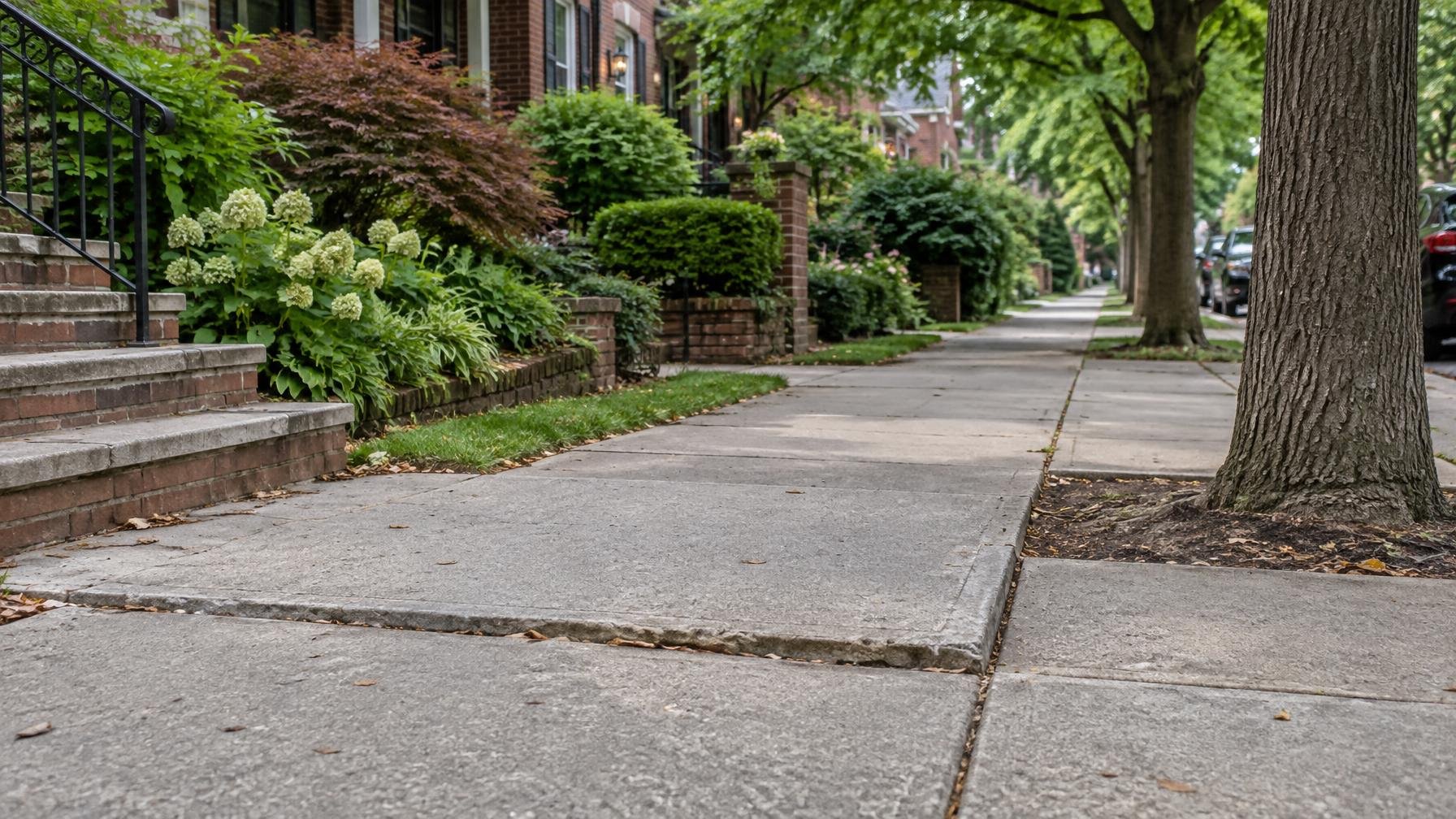
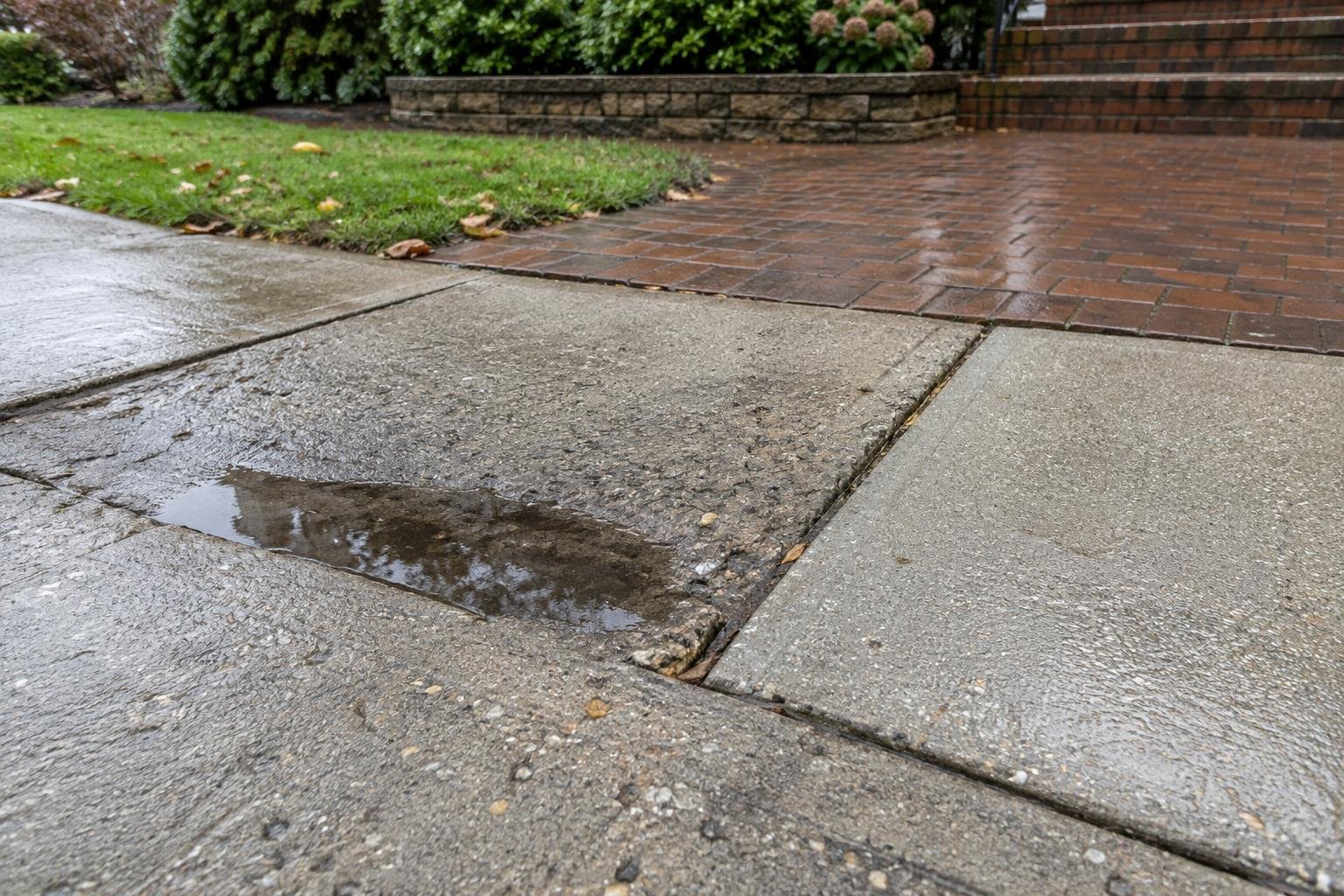
- Raised edges: One flag—the individual section of sidewalk—sits higher than the next, creating a trip point.
- Sunken concrete: A section has settled, sometimes leaving a depression that collects water.
- Broken or rocking flags: Pieces move or separate, suggesting the problem extends beyond a surface crack.
- Flaking surfaces: The top layer breaks away, leaving rough concrete that may continue deteriorating.
- Ponding: Water remains near an entrance, tree pit or slab joint instead of draining away.
Photograph each affected area from close up and from farther away. A wider view shows its relationship to the curb, building entrance, driveway and nearby trees. If there is an immediate hazard, keep people away from it without forcing pedestrians into the street or creating another obstruction.
Why Forest Hills Sidewalk Repairs Need Site-Specific Planning
Forest Hills includes detached homes, attached houses, apartment buildings and busy commercial frontages. A repair beside a residential garden has different access needs from work outside an occupied apartment building or storefront along a heavily used walking route.
Tree-lined residential blocks
Where mature street trees sit close to sidewalk flags, lifted concrete may be associated with roots. Replacing the flag without understanding the conflict can leave the same problem beneath the new surface. Tree pits also limit where crews can excavate, stage materials and establish finished grades.
Apartment and shared entrances
For multi-unit properties, planning must account for residents, deliveries, strollers and mobility devices. Identify every active entrance before work begins. The contractor and property manager should discuss sequencing, barriers and an appropriate access plan rather than assuming everyone can use a rear door.
Driveway crossings and private streets
Concrete crossing a driveway needs to be evaluated for vehicle loading as well as pedestrian use. Some Forest Hills properties, including locations within Forest Hills Gardens, may also have private-street or association requirements. Confirm who controls the sidewalk area and whether additional approvals apply before choosing materials or scheduling demolition.
Repair or Replacement: What Should the Estimate Cover?
The right approach depends on the depth of damage, the condition of the supporting base and the finished elevations. A cosmetic treatment cannot stabilize a moving slab or correct a poorly supported section.
When a localized repair may be reasonable
Limited surface damage on otherwise sound, stable concrete may be a candidate for repair. The important questions are whether the material remains well bonded, whether the defect affects walking safety and whether the proposed method is appropriate for that sidewalk location.
Do not assume filling a crack makes a sidewalk compliant or resolves a violation. If a notice has been issued, the proposed work needs to address the cited condition and the applicable requirements—not just improve its appearance.
When replacing flags makes more sense
Replacement is often the more practical option for badly fractured flags, significant height differences, recurring settlement or concrete that has deteriorated through its depth. Removing the damaged section allows the supporting material to be evaluated and corrected before new concrete is placed.
Ask whether the scope includes full affected flags or only portions, how new work will meet existing joints and whether adjacent sections must be included to create a suitable transition. For a broader overview, see StoneSky’s Queens sidewalk replacement planning guide.
Address Tree Roots and Drainage Before New Concrete
Do not treat street-tree roots as ordinary demolition debris
If roots are exposed or suspected, raise that issue during the estimate. Cutting roots without appropriate review can damage a tree and may violate city requirements. NYC Parks requirements may apply to work affecting street trees, roots or tree pits.
Ask who will confirm the required coordination before excavation begins. If you believe a city tree caused the damage, check current NYC guidance about inspection or assistance options and eligibility. Do not assume that tree-related damage automatically makes the city responsible for your repair.
Identify where the water is coming from
A low flag may collect runoff from surrounding concrete, but water can also come from a downspout, adjacent paving or an improperly pitched entrance area. Observe the site during or shortly after rain, from a safe location, and share photographs of persistent puddles.
The finished sidewalk should have an appropriate drainage path while maintaining required walking slopes and transitions. Raising one low section without checking the neighboring elevations can move the puddle toward a stoop, driveway or adjoining property.
Queens winters make these details important. Water that remains in cracks or beneath poorly supported concrete can contribute to deterioration during freezing and thawing. Correcting the source of moisture and inadequate support is more useful than repeatedly covering the visible symptom.
NYC Sidewalk Notices, Permits and Property Responsibility
NYC generally places sidewalk maintenance responsibility on adjoining property owners, although exceptions and particular circumstances can affect responsibility. If you receive a sidewalk violation notice, read the documents carefully and confirm the current process with NYC DOT. A notice should not be treated as a general request for cosmetic improvements.
- Keep the paperwork: Share the notice and any accompanying defect information with the contractor.
- Confirm the work area: Match the cited conditions to the sidewalk outside your property rather than guessing from the most visible crack.
- Discuss permits: Sidewalk construction in the public right-of-way generally requires an NYC DOT permit. Clarify who is responsible for obtaining required approvals.
- Confirm the follow-up: Ask what inspection or dismissal steps apply after the repair and who will request them.
Completing concrete work does not by itself establish that a violation has been removed from city records. Keep the scope, permit information where applicable, photographs and completion documents together. Verify deadlines and administrative steps directly with the issuing agency rather than relying on assumptions about how quickly records will update.
What to Ask During an On-Site Estimate
A useful estimate should explain what is being corrected and how the work will connect to the remaining sidewalk. Walk the frontage with the contractor and point out less obvious concerns, such as water that appears only after heavy rain or a gate that already rubs against the paving.
- Which sections are included? Identify the affected flags and distinguish sidewalk work from the curb, driveway apron, steps and private walkway.
- What caused the damage? Discuss likely settlement, root interference, drainage issues or deterioration, including anything that cannot be confirmed until removal.
- How will the base be prepared? Ask how unsuitable or loose supporting material will be addressed.
- How will elevations and joints be handled? Review transitions at existing slabs, entrances, utility covers and driveway crossings.
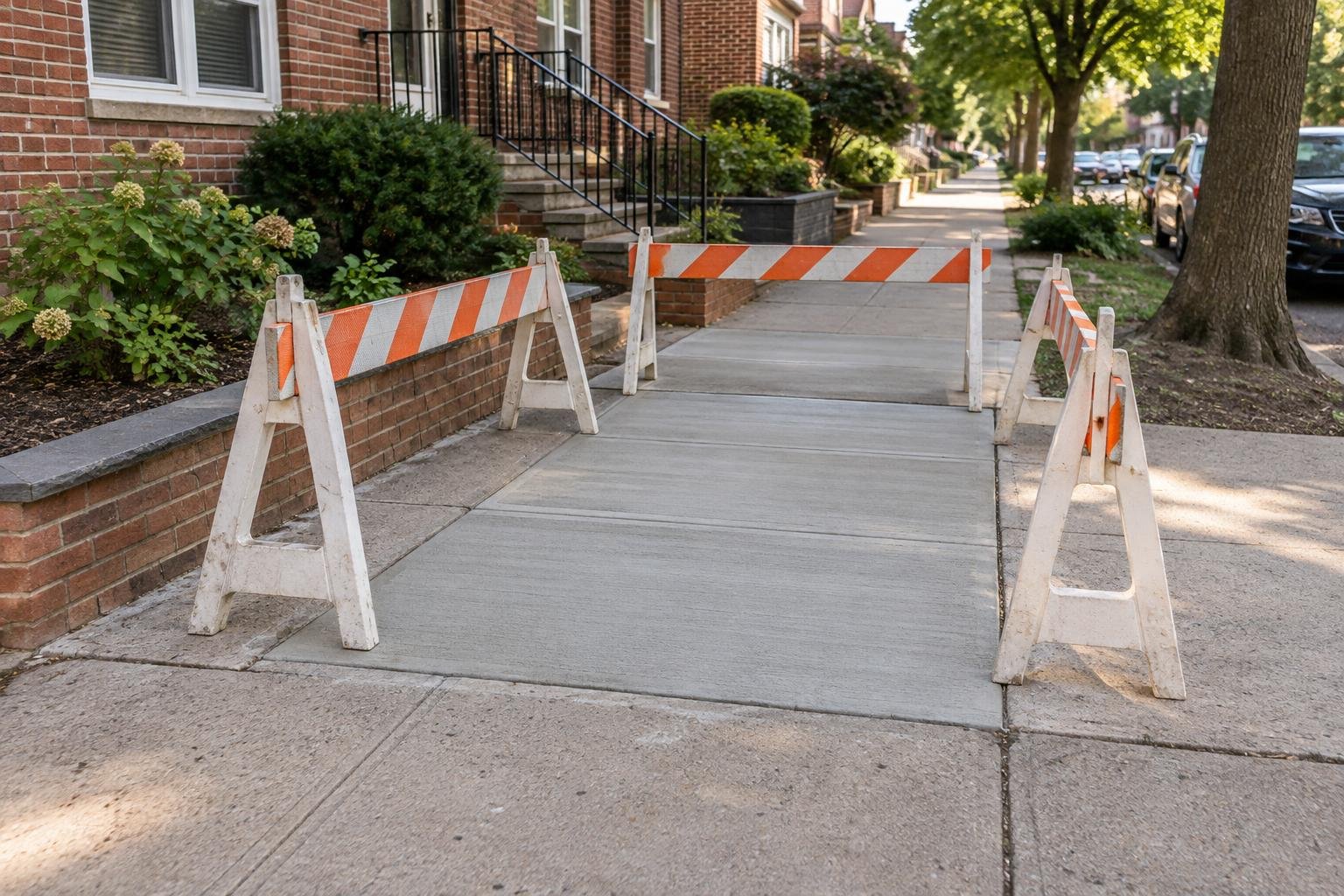
- How will access be maintained? Discuss pedestrian protection, building access and temporary restrictions on driveway use.
- What is included in completion? Clarify debris removal, cleanup, concrete protection and any required administrative follow-up.
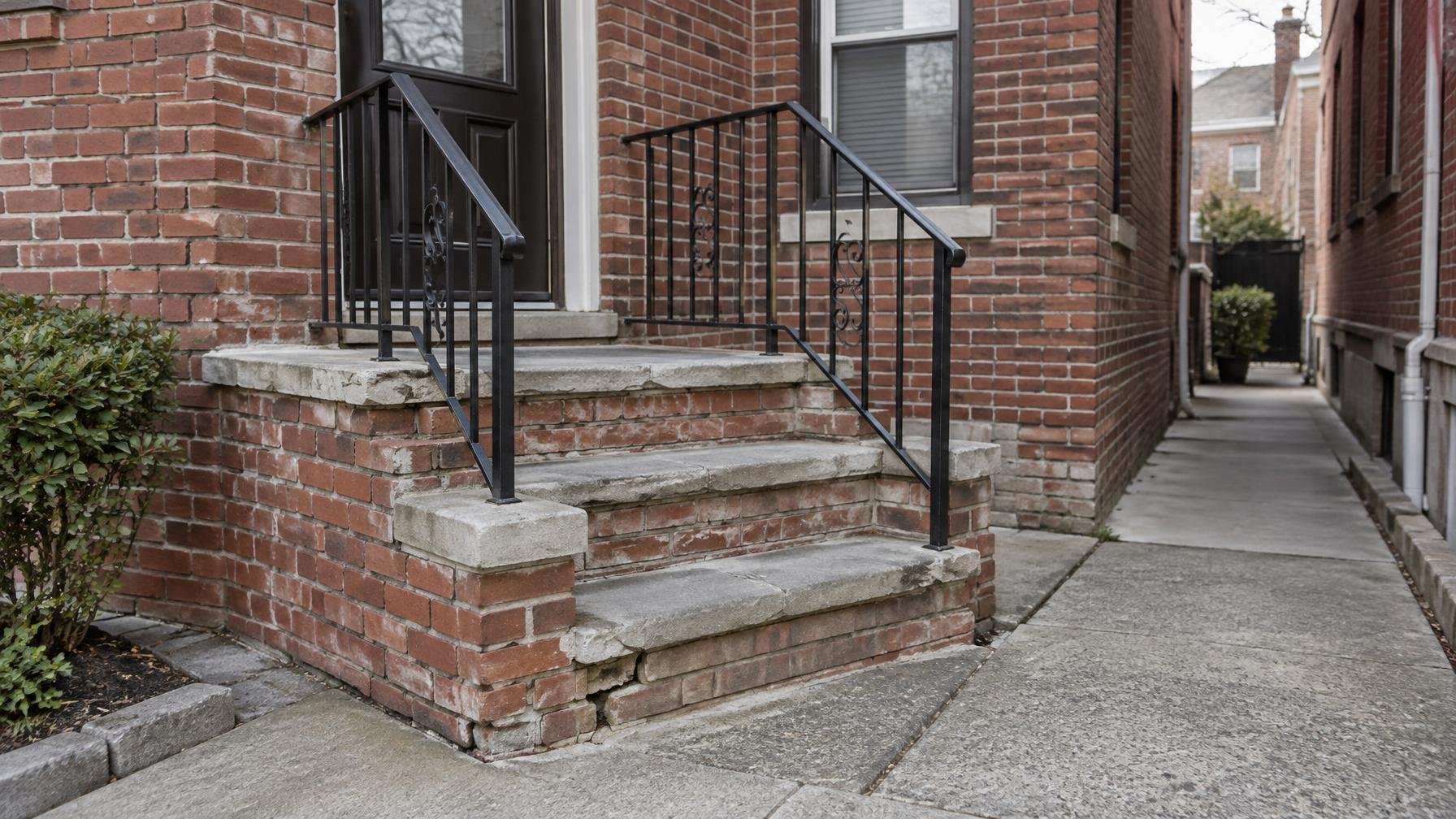
If the public sidewalk meets a damaged private paver path, evaluate the two surfaces together but keep their repair scopes distinct. StoneSky also offers paver repair and resetting for uneven or sunken pavers that may affect the approach to your entrance.
Scheduling and Caring for the Repaired Sidewalk
Concrete work depends on suitable weather and protection during curing. Cold temperatures, heavy rain and hot, drying conditions can affect placement and finishing. Ask how the forecast will influence the schedule rather than expecting every planned installation date to remain fixed.
Before work starts, move vehicles if driveway access will be restricted and notify occupants about the agreed access arrangements. After placement, keep people, pets, bins and vehicles off the new concrete until the contractor says the surface is ready for the intended use. Pedestrian access and vehicle loading may have different timing.
For ongoing care, keep drainage routes clear, watch for new settlement and use snow-removal methods that avoid striking concrete edges. Follow the contractor’s guidance on deicing products, especially for newer concrete. Report recurring ponding early so its cause can be evaluated before another winter.
Request a Free Sidewalk Repair Estimate in Forest Hills
StoneSky Pavers & Masonry provides sidewalk repair and replacement, concrete repairs and sidewalk violation repairs in Forest Hills and throughout Queens. An on-site assessment is the place to review damaged flags, entrance transitions, visible root concerns and the work described in any notice.
Request a free on-site estimate or call (929) 528-1205. Have your property address, photographs and any sidewalk notice available so the discussion can focus on the conditions that need correction.
Frequently Asked Questions
Can one damaged sidewalk flag be replaced instead of the entire frontage?
Sometimes. If the damage is isolated and the surrounding concrete is sound, replacing the affected flag may be appropriate. The assessment should check adjacent elevations, supporting material, drainage and any requirements associated with a sidewalk notice.
Do I need a permit for sidewalk repair in Forest Hills?
Sidewalk construction in NYC’s public right-of-way generally requires an NYC DOT permit. Confirm the requirements for your specific scope and clarify who will obtain approvals before work starts. Private-street or association requirements may also apply at some properties.
What if a street-tree root has lifted my sidewalk?
Do not cut the root yourself. Work affecting street trees, roots or tree pits may require coordination with NYC Parks. Check current city guidance about inspections and any assistance eligibility, and have the root conflict evaluated before concrete removal.
Does repairing the sidewalk automatically clear a violation?
No. Physical repairs and the administrative process for removing a violation are separate matters. Confirm the required inspection or dismissal steps with NYC DOT and retain your repair and permit documentation.
How soon can I use the sidewalk after new concrete is placed?
Timing depends on the concrete, weather, curing conditions and intended use. Follow the contractor’s instructions for reopening pedestrian access, and obtain separate guidance if vehicles will cross the repaired area.
Does StoneSky offer free sidewalk repair estimates in Forest Hills?
Yes. StoneSky Pavers & Masonry offers free on-site estimates in Forest Hills and its Queens service area. Call (929) 528-1205 or use the contact page to request an assessment.