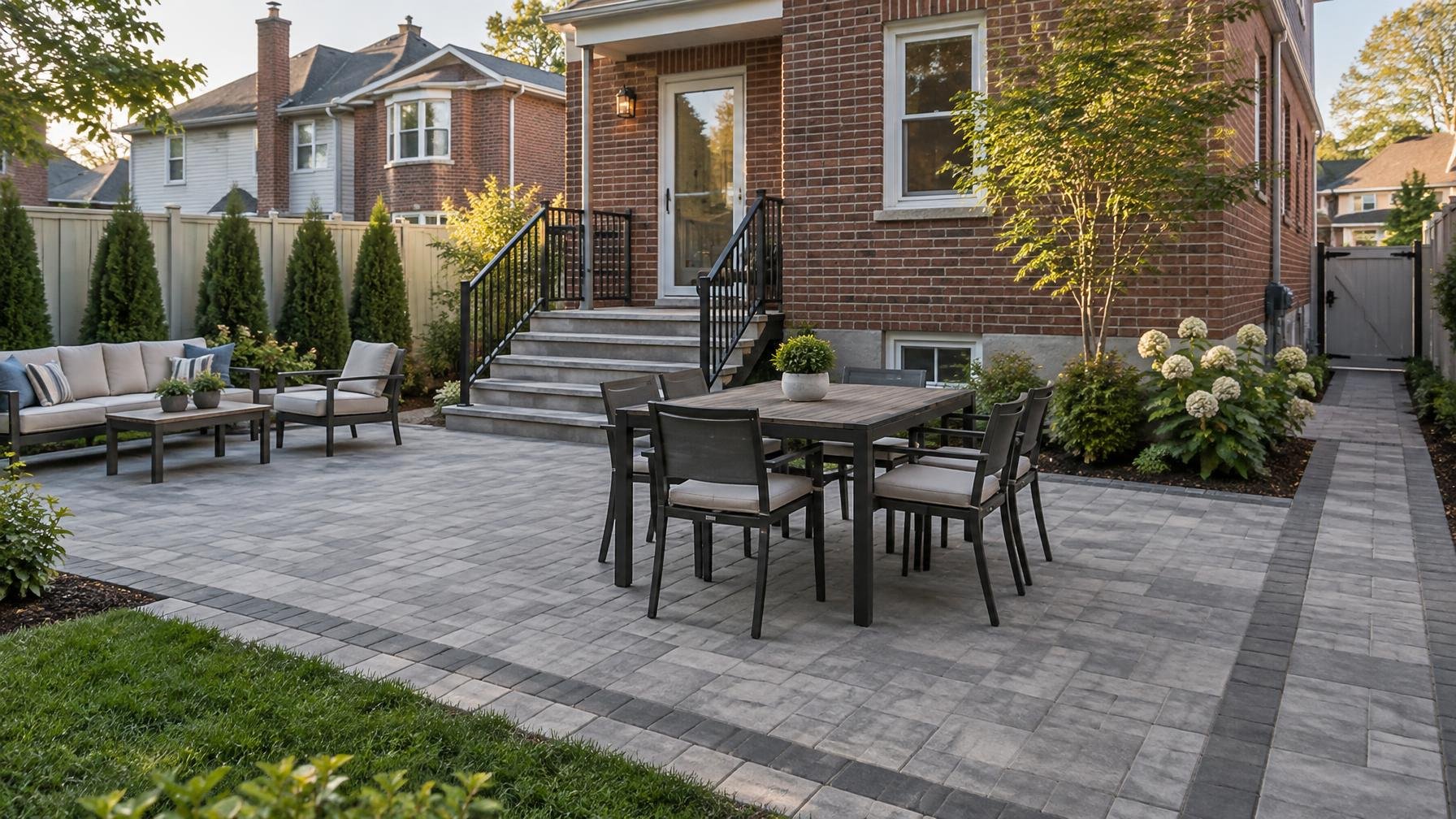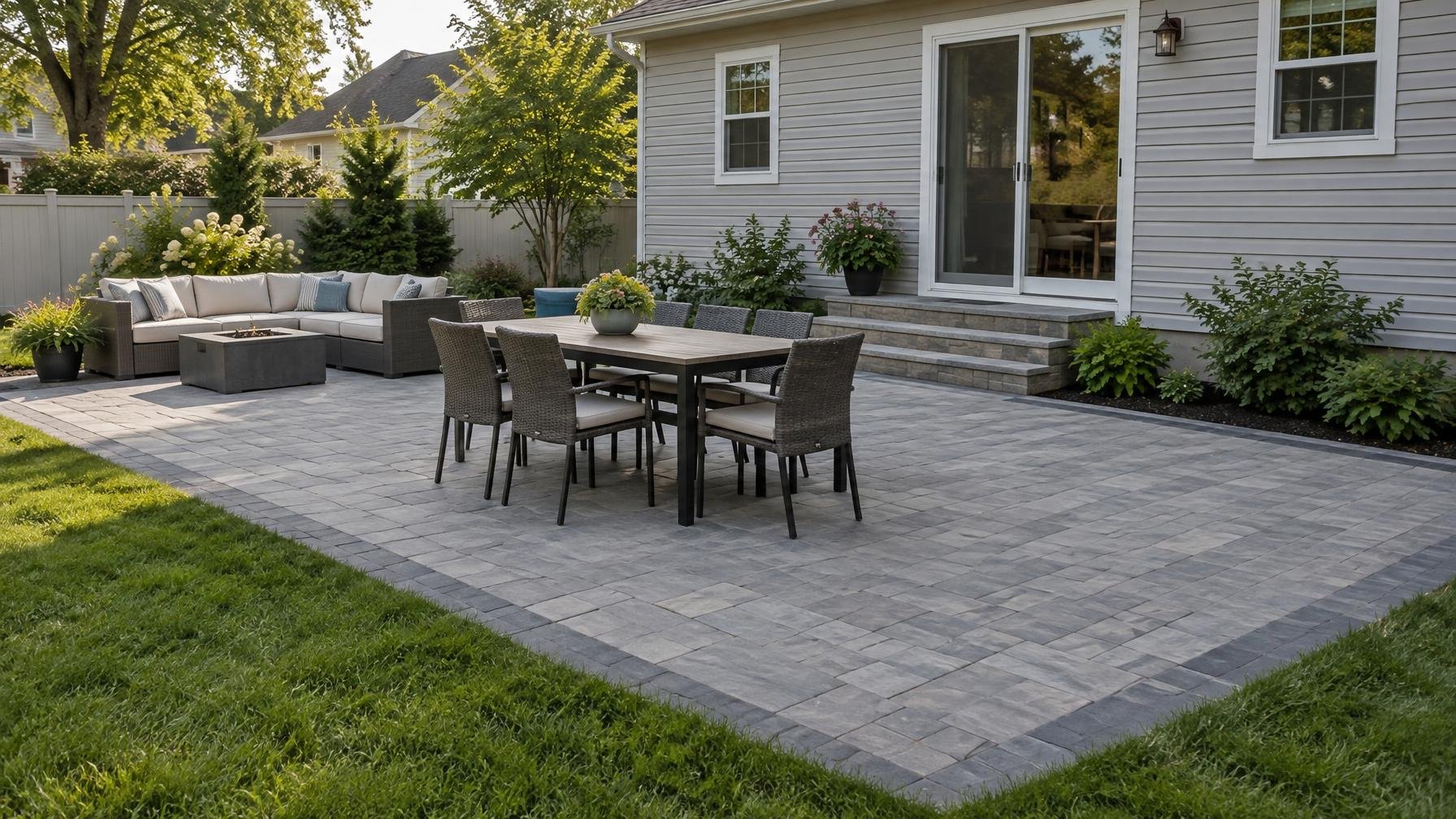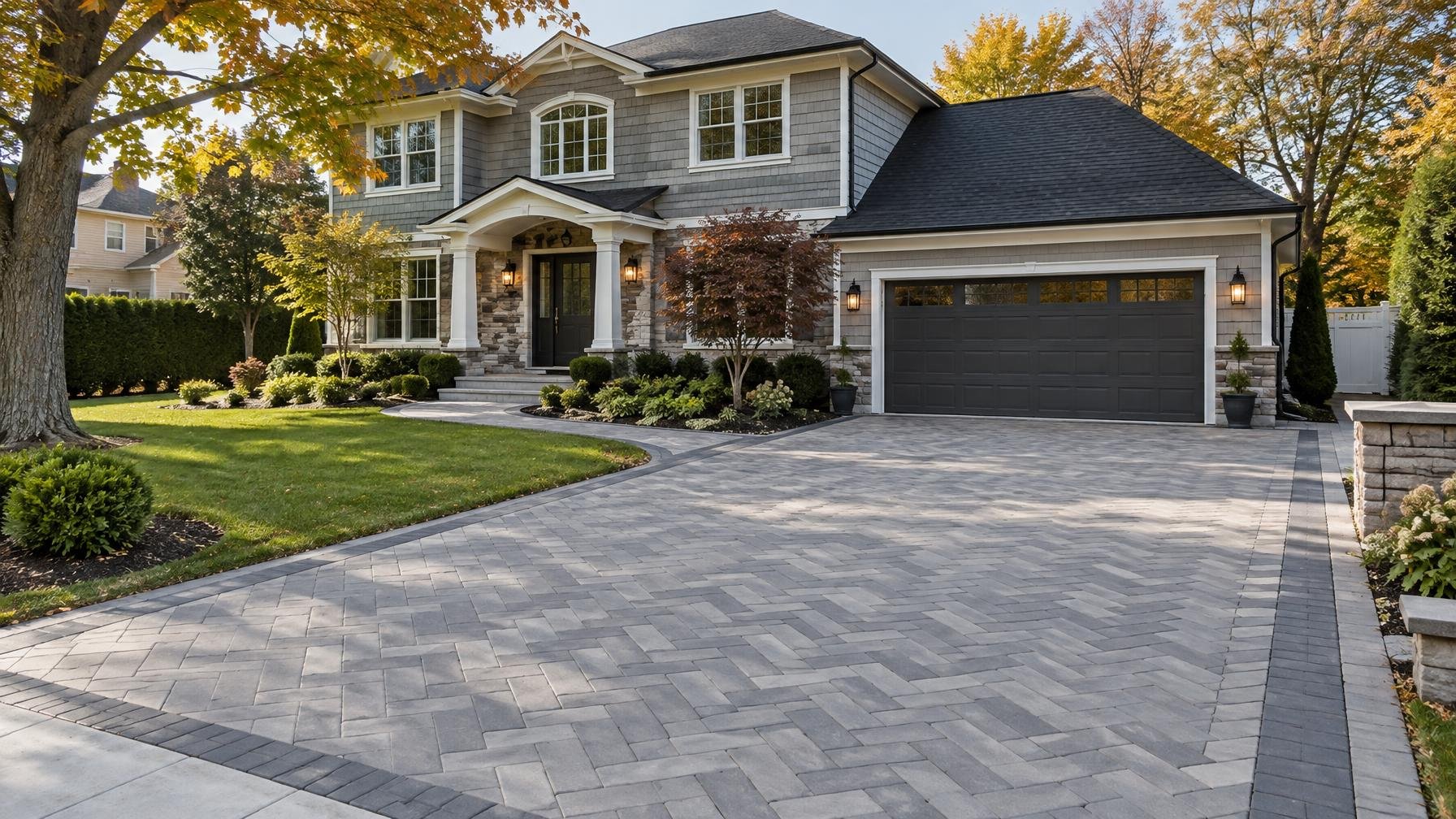
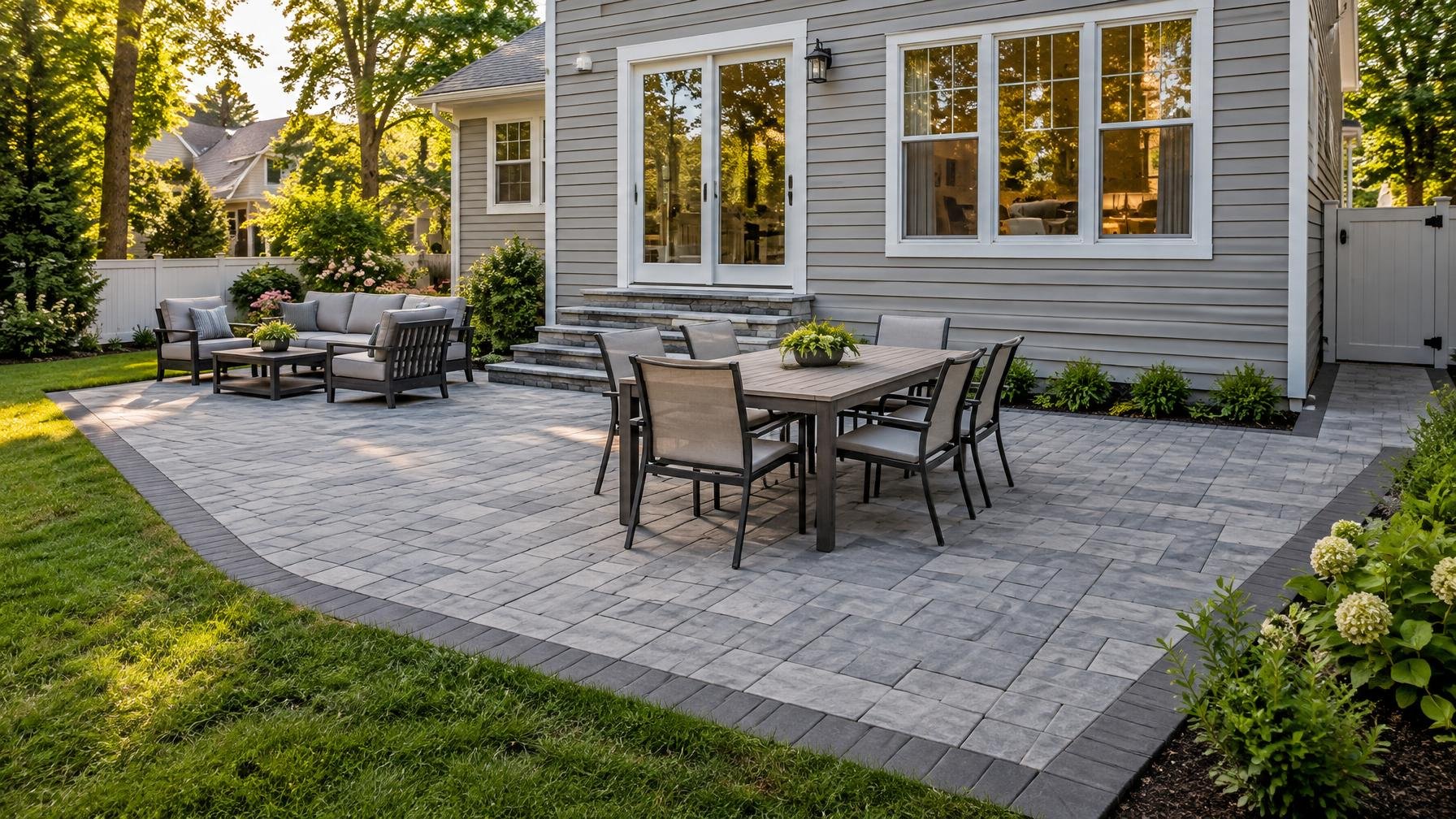
If you are looking for a paver patio contractor in Commack, NY, start with a site visit that covers drainage, finished elevations and how you actually use the backyard. StoneSky Pavers & Masonry offers paver patio installation and repair in Commack and across Long Island, with free on-site estimates. The right plan should connect your back door, seating area and lawn without creating puddles, awkward steps or maintenance problems.
Plan the Patio Around Everyday Use
Before choosing colors, decide what needs to fit. A dining patio, a quiet seating area and a route from the house to the pool have different space requirements. Sketch the furniture you intend to keep, including chairs pulled away from the table, rather than estimating from the tabletop alone.
On a Commack property with a rear deck, side gate or detached garage, the patio also needs to work as a circulation space. People should be able to reach the lawn or gate without squeezing behind occupied chairs or walking through the cooking area.
Mark the layout before committing
Use stakes or a garden hose to outline the proposed footprint. Walk it from the back door, then check it with furniture in place if possible. This simple exercise often reveals that a slightly different shape works better than adding more paving.
- Dining: Allow room for seated guests and a clear route around the table.
- Cooking: Keep the grill location consistent with the appliance manufacturer’s clearance requirements.
- Access: Preserve a practical path to gates, hose connections and outdoor equipment.
- Lawn and planting beds: Leave enough space for maintenance without repeatedly crossing the patio.
StoneSky’s paver patio installation services can be discussed around a simple seating area or a larger backyard layout. Establish the function first so the material and border choices support the plan.
Set Finished Elevations Before Selecting Pavers
The most important patio decisions are often below the surface. The contractor needs to establish where the finished paving will sit relative to door thresholds, foundation openings, existing steps and the surrounding yard. Raising the patio to eliminate one step can create a different problem at the house.
Give runoff a deliberate destination
A patio should generally shed surface water away from the foundation toward an appropriate location on the property. It should not simply move ponding to the side gate or send runoff onto a neighboring lot. Downspouts also matter: roof water discharging beside a patio can overload an otherwise workable layout.
Show the estimator where water stands after rain. Photographs taken during a storm can be more useful than a dry-yard inspection alone. A low corner, muddy gate entrance or washed-out planting bed helps identify existing problems that the new patio should not repeat.
Long Island’s freeze-thaw cycles make trapped moisture a concern. Correct grading and a stable base help limit movement, but a paver surface cannot compensate for an unresolved drainage problem underneath it. Ask how the proposed elevations will tie into the rest of the yard.
Choose Pavers for the Location, Not Just the Sample
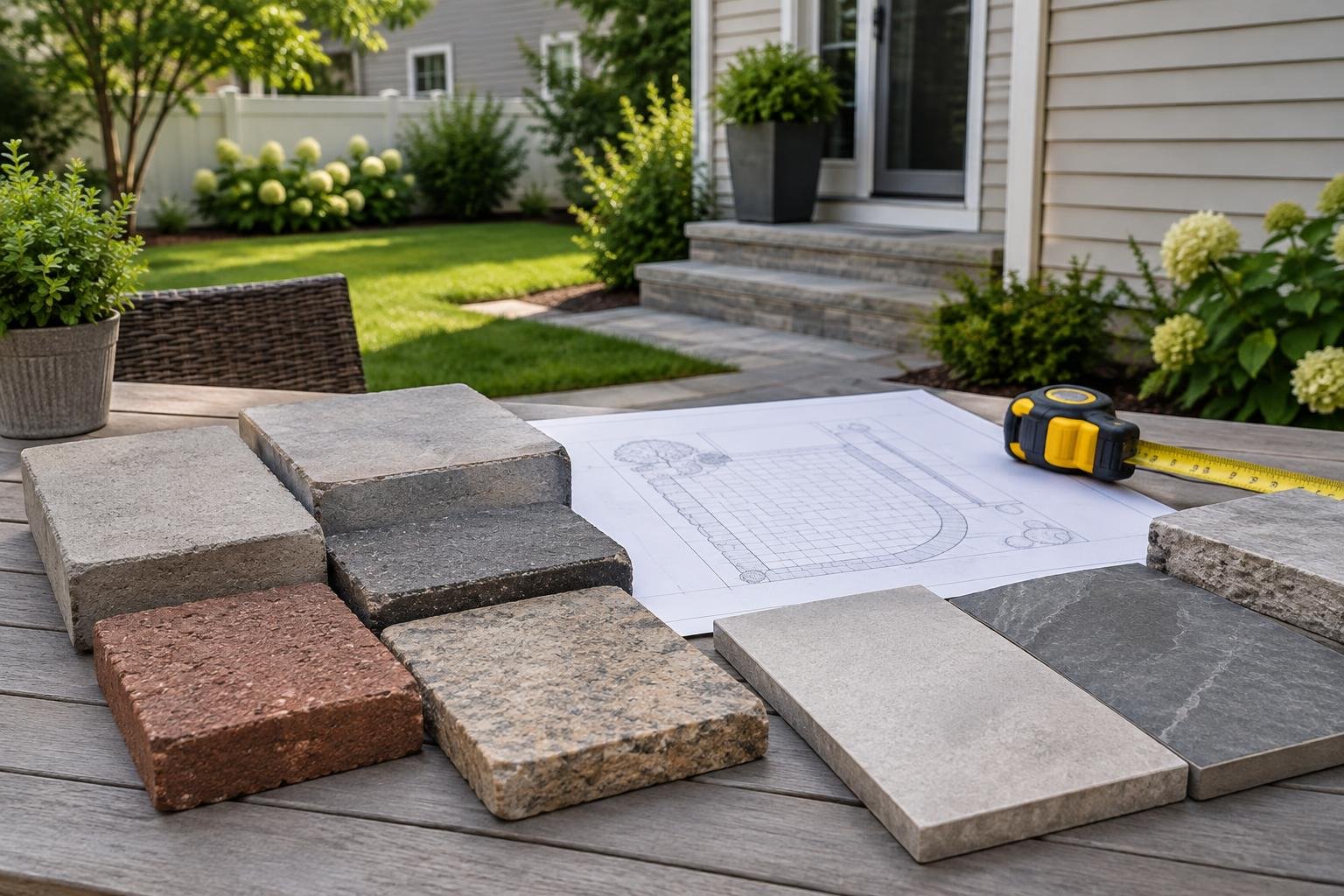
A sample viewed indoors does not show how a patio will look beside your siding or feel in direct afternoon sun. Compare materials outdoors, and consider wet conditions, shade, fallen leaves and the cleaning the surface will need.
Concrete and brick pavers
Concrete pavers offer a range of shapes, textures and colors, making them useful for both straightforward rectangular patios and layouts with contrasting borders. Brick pavers can suit homes where a smaller-unit pattern complements existing brickwork. In either case, select products intended for exterior paving and local exposure conditions.
Pattern also affects the finished appearance. A restrained field pattern can keep a small patio from looking crowded, while a contrasting border can define the edge. Ask where cuts will fall, especially around steps and curves, so the layout avoids unnecessary narrow pieces.
Porcelain and natural stone
Exterior porcelain pavers can provide a more uniform appearance, while natural stone offers variation in color and texture. These materials are not interchangeable with standard concrete pavers when it comes to installation details. Product thickness, support requirements and the manufacturer’s installation instructions need to guide the assembly.
For any material, ask about wet traction and surface temperature. Dark paving in full sun may feel noticeably warmer underfoot. A textured sample should still be evaluated for the intended use rather than assumed to be slip-proof.
Permeable paving requires a complete system
Permeable pavers may be worth discussing where site conditions support infiltration, but the joints alone do not make a patio a drainage solution. The underlying aggregate layers, soil conditions, overflow provisions and ongoing maintenance all matter. Do not assume permeable paving eliminates local approvals or solves a wet backyard automatically.
Ask What Is Included Below and Around the Patio
A useful installation proposal should explain more than the paver style and total area. Excavation, base preparation, edge restraint and transitions determine how well the finished surface holds its shape.
Excavation and base preparation
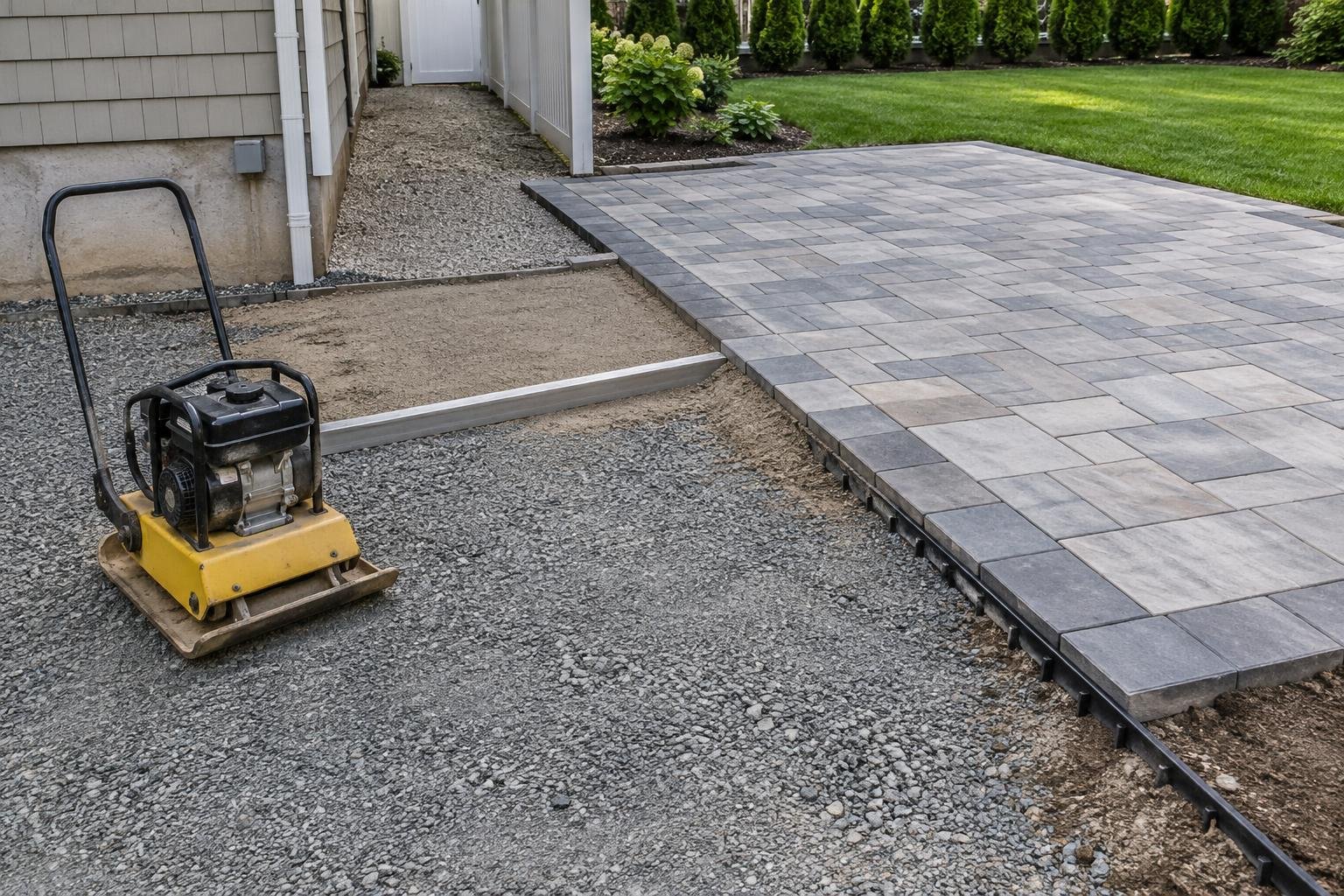
The contractor should assess existing soil, old fill and any material being removed. Organic material and unstable areas need attention before the new assembly goes in. Base material should be placed and compacted in suitable lifts rather than treated as one loose layer.
There is no single base depth that can responsibly be prescribed for every Commack backyard without seeing the site. Soil conditions, drainage, the selected paving system and anticipated loads affect the approach. Ask the estimator to explain the proposed preparation and how unexpected soft areas would be handled.
Edges, joints and transitions
Edge restraints help keep units from spreading, while the joint material must suit the paver system. The proposal should also address where the patio meets grass, walkways and steps. A new surface should not leave an abrupt lip at an existing path or create inconsistent stair risers.
If you want paving to extend beyond the seating area, discuss the entire route during the estimate. StoneSky’s backyard paver services can be considered alongside the patio so connecting surfaces are planned together rather than added without checking elevations.
Check Commack Access and Approval Requirements
Commack includes properties within the Town of Huntington and the Town of Smithtown. Confirm which municipality has jurisdiction over your address before relying on permit advice. Requirements can depend on the scope, including grading changes, retaining walls, steps and other structures—not simply whether the surface is made of pavers.
Ask the applicable building department about permits, setbacks, lot coverage and any drainage requirements relevant to your plan. Keep a property survey available if you have one. A fence is not necessarily an accurate property-line marker, and an easement may affect where work can take place.
Review the construction route
A roomy backyard can still be difficult to reach. Narrow side yards, gates, established trees and existing paving affect how excavated material leaves and new material arrives. These details should be reviewed during the site visit, not after work begins.
- Identify the proposed equipment and material delivery route.
- Point out irrigation lines, landscape lighting and known underground features.
- Discuss protection for surfaces and landscaping along the access route.
- Confirm responsibility for utility locating and identifying private underground lines before excavation.
- Ask where materials will be staged and what cleanup is included.
Decide Whether an Existing Patio Needs Repair or Replacement
A sunken section does not always mean the entire patio needs replacement. If the pavers remain sound and the problem is localized, lifting the affected units, correcting the support underneath and resetting them may be appropriate. Widespread settlement, poor overall elevations or a layout that no longer works calls for a broader assessment.
StoneSky provides paver repair and resetting. During an inspection, ask whether the issue is confined to one area or connected to runoff, edge movement or base conditions. Resetting the surface without addressing the cause may leave the same problem unresolved.
For a new or repaired patio, plan on routine sweeping, prompt leaf removal and periodic joint checks. Sealing is a separate maintenance decision, not a substitute for proper installation. Suitability depends on the material, its condition and the desired finish.
Request a Free On-Site Estimate in Commack
Before the visit, gather a few backyard photos, note where water collects and list the furniture and access routes the patio needs to accommodate. If you have a preferred material or a property survey, have those ready too. These details help keep the discussion focused on a buildable layout.
StoneSky Pavers & Masonry serves Commack and surrounding Long Island communities with paver, concrete and masonry services. Request a free on-site estimate or call (929) 528-1205 to discuss your patio installation or repair.
Frequently Asked Questions
Does StoneSky install paver patios in Commack, NY?
Yes. StoneSky Pavers & Masonry serves Commack and offers paver patio installation, repair and resetting. Free on-site estimates are available.
Do I need a permit for a paver patio in Commack?
Confirm requirements with the municipality responsible for your address. Commack includes properties in the Town of Huntington and the Town of Smithtown, and requirements can vary with grading, structures, setbacks and other project details.
Can sunken patio pavers be reset instead of replaced?
Often, sound pavers in a localized sunken area can be lifted and reset after the underlying support is corrected. An inspection is needed to determine whether drainage, base conditions or wider settlement require more extensive work.
Which paver material is best for a Commack backyard patio?
The right choice depends on exposure, wet traction, maintenance preferences and the installation system. Concrete, brick, exterior porcelain and natural stone each offer different characteristics. Review outdoor samples and product requirements before deciding.
What should I prepare for a patio estimate?
Have a rough layout, furniture requirements, photos of drainage trouble and any available property survey ready. Point out gate restrictions, irrigation lines, existing steps and the routes you need to keep accessible.