Looking for a paver driveway contractor in Melville, NY? StoneSky Pavers & Masonry provides driveway paver services in Melville and across Long Island, with free on-site estimates to review your property and project scope. Before choosing a pattern, focus on how the driveway will support vehicles, handle rainwater and connect to your garage, walkway and street.
Start With How Your Melville Driveway Is Used
A driveway should fit your daily routine, not just the front elevation of the house. On a property with a set-back garage, a long approach may need room for passing or turning. On a shorter driveway, the priority may be parking two vehicles without blocking the front walk or leaving a bumper over the sidewalk.
Walk the existing driveway with the contractor and identify what works and what does not. Mark where cars normally park, where tires turn and where delivery vehicles pull in. Include occasional heavier vehicles in the discussion; the intended traffic affects the pavement assembly, not just the surface material.
- Parking: Allow room to open doors and unload groceries without stepping into planting beds.
- Garage access: Check the transition at the garage slab and whether water collects near the door.
- Walking routes: Keep a clear connection between parked cars, the front entrance and any side gate.
- Winter use: Consider snow storage areas and whether piled snow will melt back across a walking route.
StoneSky’s paver driveway services are a starting point for discussing a new installation or replacement. Bring your layout concerns to the estimate so the proposed work addresses more than appearance.
Inspect the Existing Surface Before Deciding on Replacement
Cracking, settlement and standing water can reveal problems beneath an existing driveway. A low area near a downspout may have a different cause from wheel-track depressions or movement along an unsupported edge. Covering those conditions without understanding them can leave the same weaknesses under a new surface.
When resetting may be worth considering
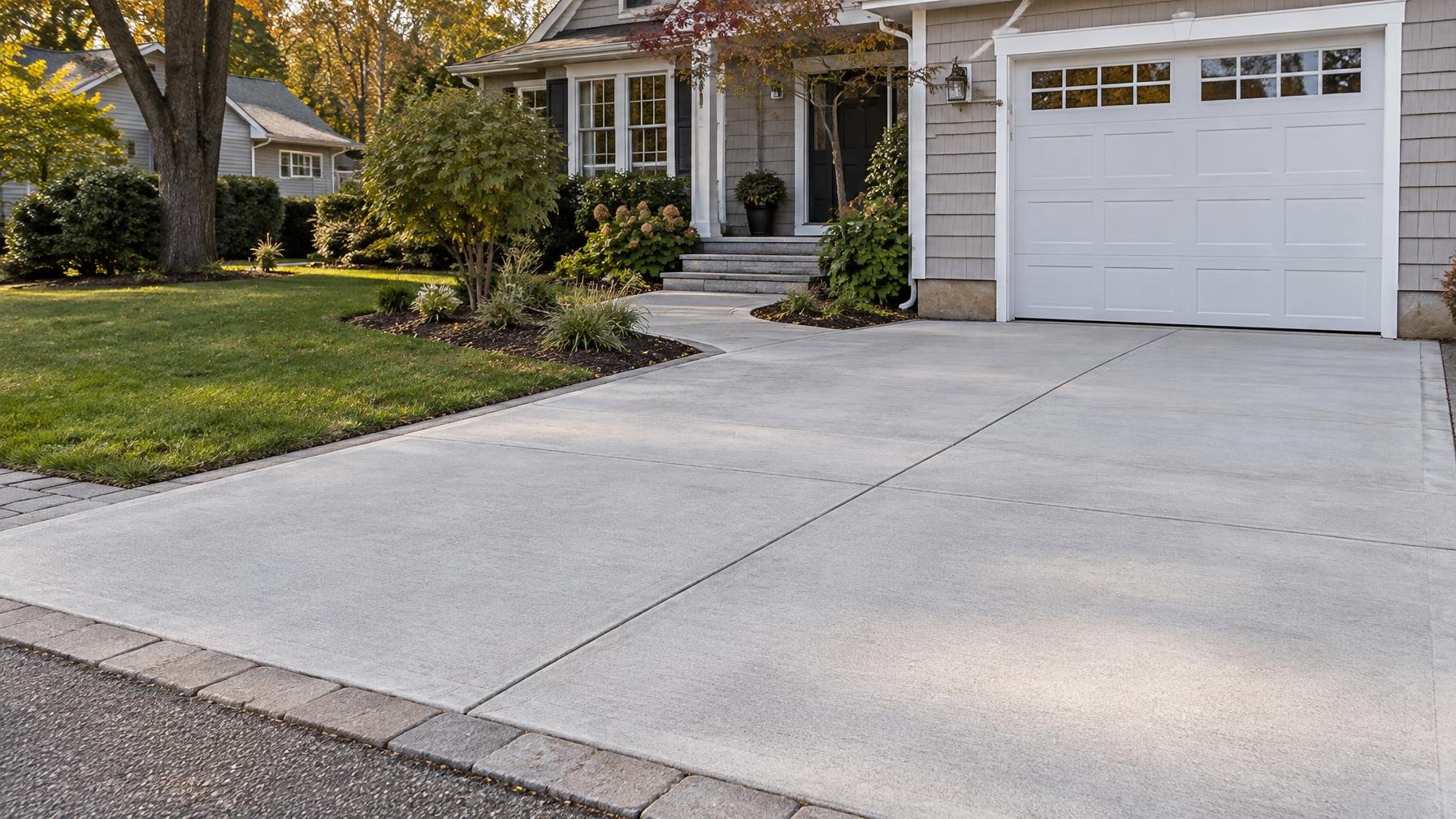
If you already have pavers, a localized dip does not automatically mean the entire driveway needs replacement. Sound units may be reusable when the affected area is lifted, the underlying problem is corrected and the pavers are reset. Widespread movement, deteriorating units or an unsuitable overall grade may call for a broader scope.
Ask whether paver repair and resetting could address the problem, and how the repaired section would meet the surrounding surface. Replacement pavers may not match older material exactly, especially where weathering has changed the color.
Photograph water problems before the visit
Photos taken during or shortly after rain are useful, particularly if the estimate happens on a dry day. Capture puddles, runoff from the roof and water moving toward the garage or house. Note whether a low spot is new, seasonal or has been present for years.
Base Preparation and Drainage Deserve the Most Attention
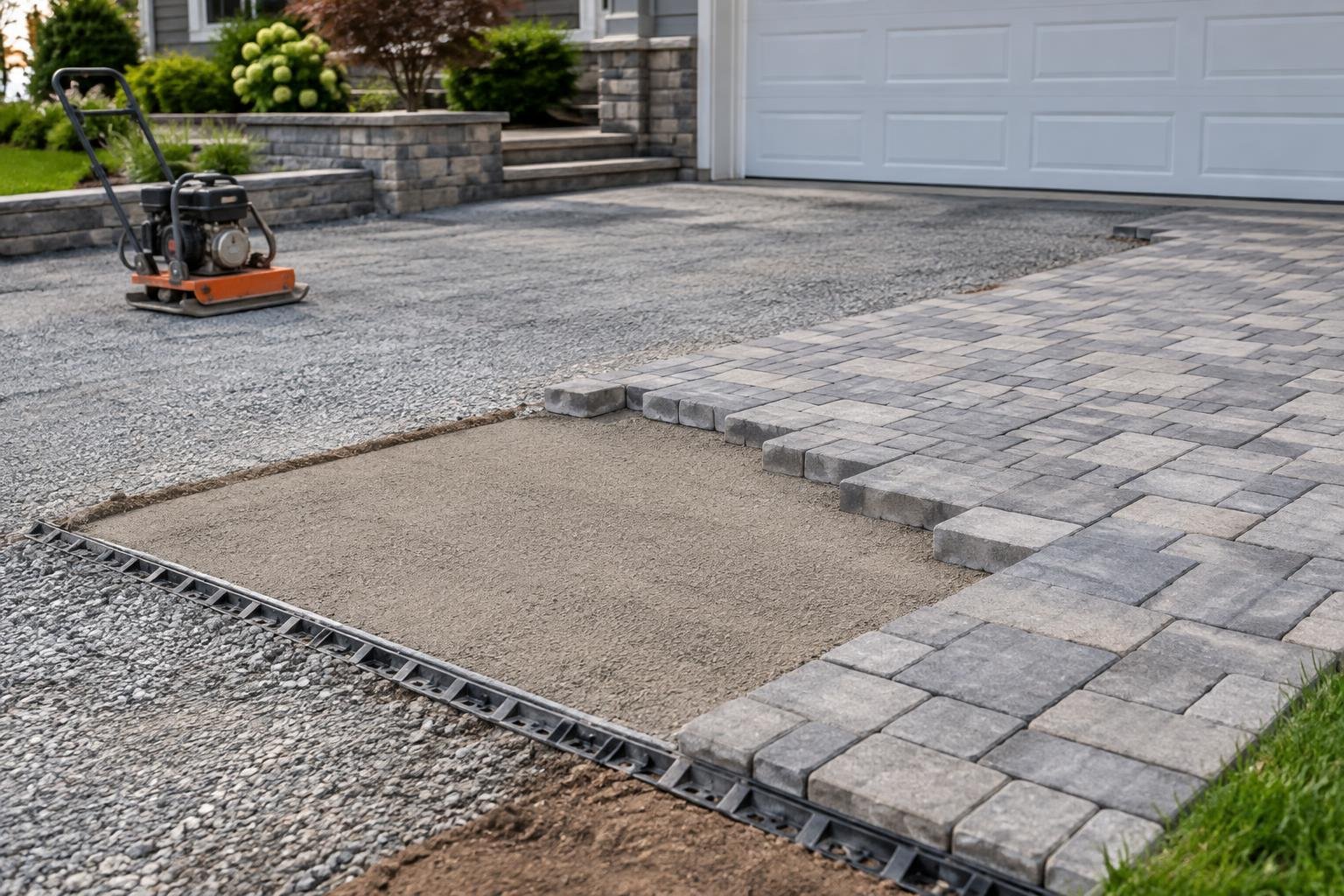
Long Island’s winter freezing and thawing can expose weaknesses where water remains in the pavement system or supporting soil. A durable driveway depends on an assembly suited to the site: prepared subgrade, compacted aggregate base, an appropriate bedding layer, driveway-rated pavers and secure edge restraints.
Ask for a site-specific base plan
There is no single excavation depth that should be promised for every Melville property without looking at conditions. Existing fill, soft soil, drainage and expected vehicle loads all matter. The estimate should explain what will be removed, what base material will be installed and how unsuitable areas discovered during excavation will be handled.
Compaction should be addressed as part of the installation sequence. Aggregate is generally placed and compacted in lifts rather than dumped into one deep layer and compacted only at the top. Bedding material provides a setting layer; it should not be used to hide major irregularities in the base.
Establish finished elevations before installation
The driveway grade needs to work with fixed points such as the garage slab, front steps, sidewalk and street connection. Raising a driveway without checking those elevations can create awkward transitions or direct water toward the building. Ask the contractor to explain where surface runoff will travel when the installation is finished.
Water should not simply be shifted toward a neighboring property. If the existing elevations make a workable drainage path difficult, resolve that issue before agreeing to the surface layout. Where additional drainage work is proposed, clarify its scope and any necessary approvals rather than assuming it is included in paving.
Check requirements at the street connection
For a Melville property, confirm applicable requirements with the Town of Huntington and the authority responsible for the adjoining road. Widening an entrance or changing a curb, apron or sidewalk may involve approvals beyond resurfacing within the existing footprint. Establish who will verify requirements and obtain any necessary permits before work begins.
Choose Pavers for Vehicle Traffic, Not Just Color
Some paving products are intended primarily for patios and pedestrian areas. For a driveway, confirm that the specific unit, thickness and installation method are suitable for vehicle traffic. A material name alone does not establish that suitability.
Concrete pavers and interlocking layouts
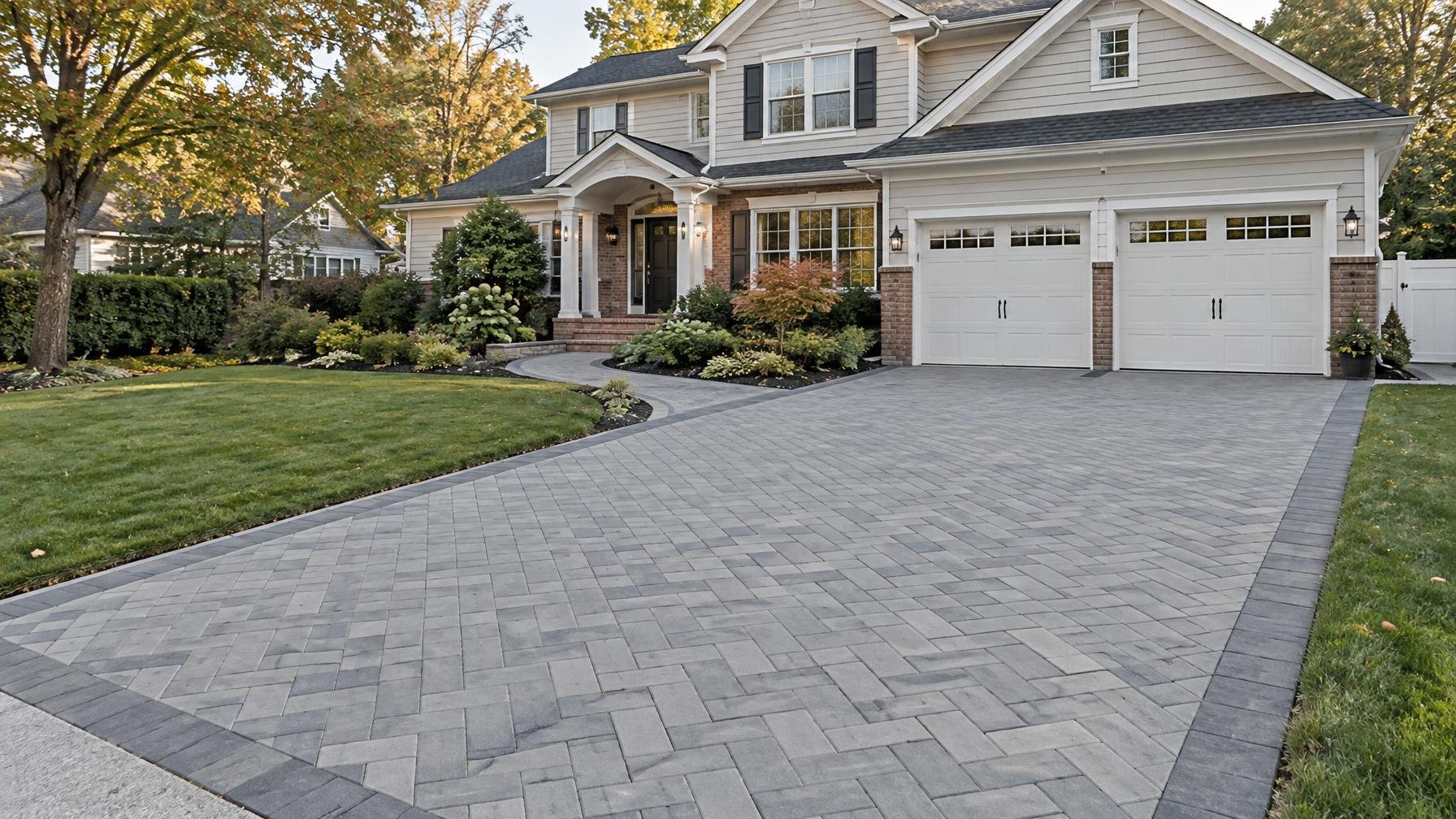
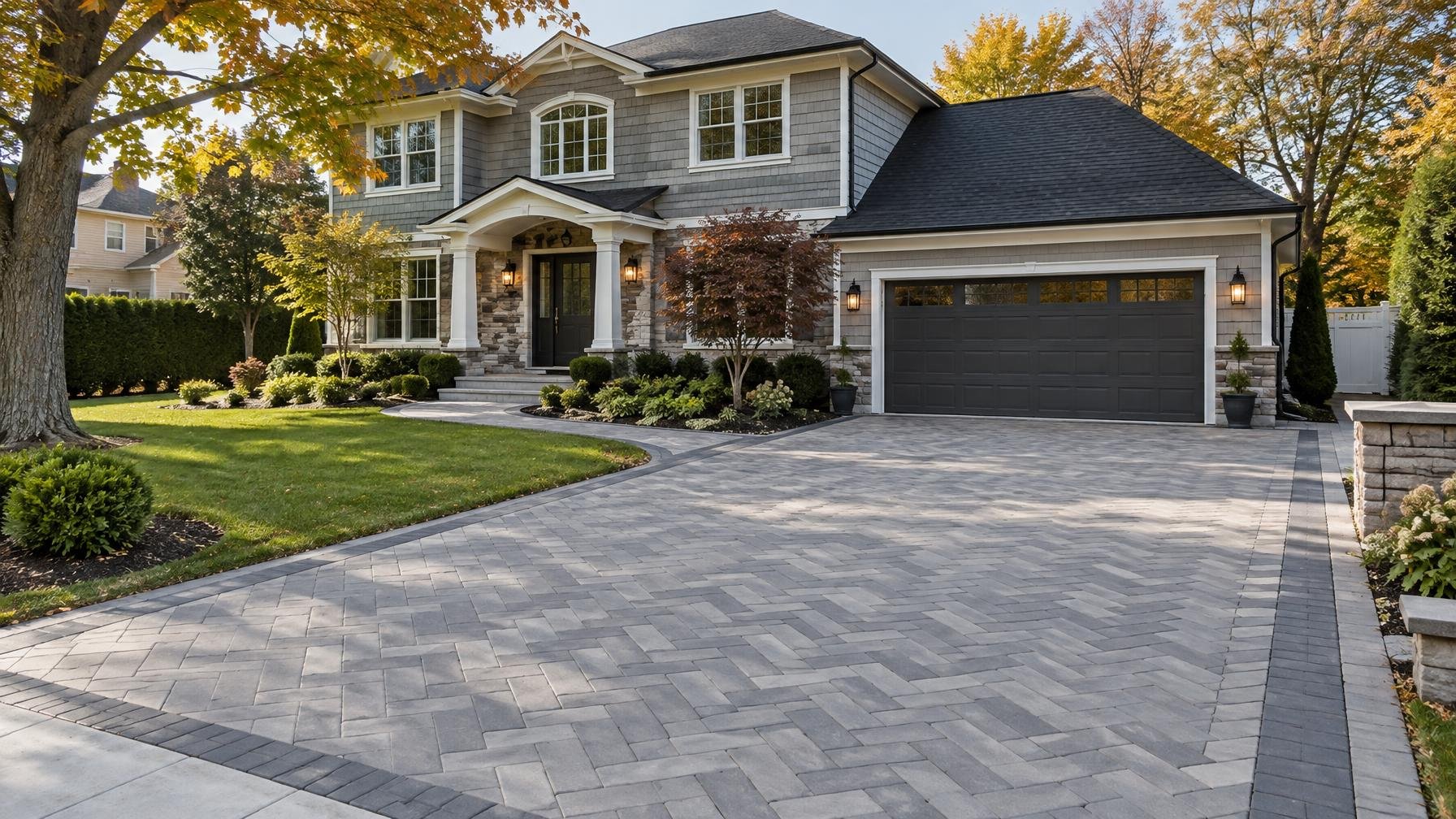
Concrete pavers offer a range of shapes, finishes and color blends. Interlocking pavement relies on the complete system—including the laying pattern, filled joints and restrained edges—to help the surface resist movement. Herringbone is often considered for driveways because its arrangement helps resist forces from braking and turning, though the appropriate design depends on the product and site.
Brick, natural stone and other material options
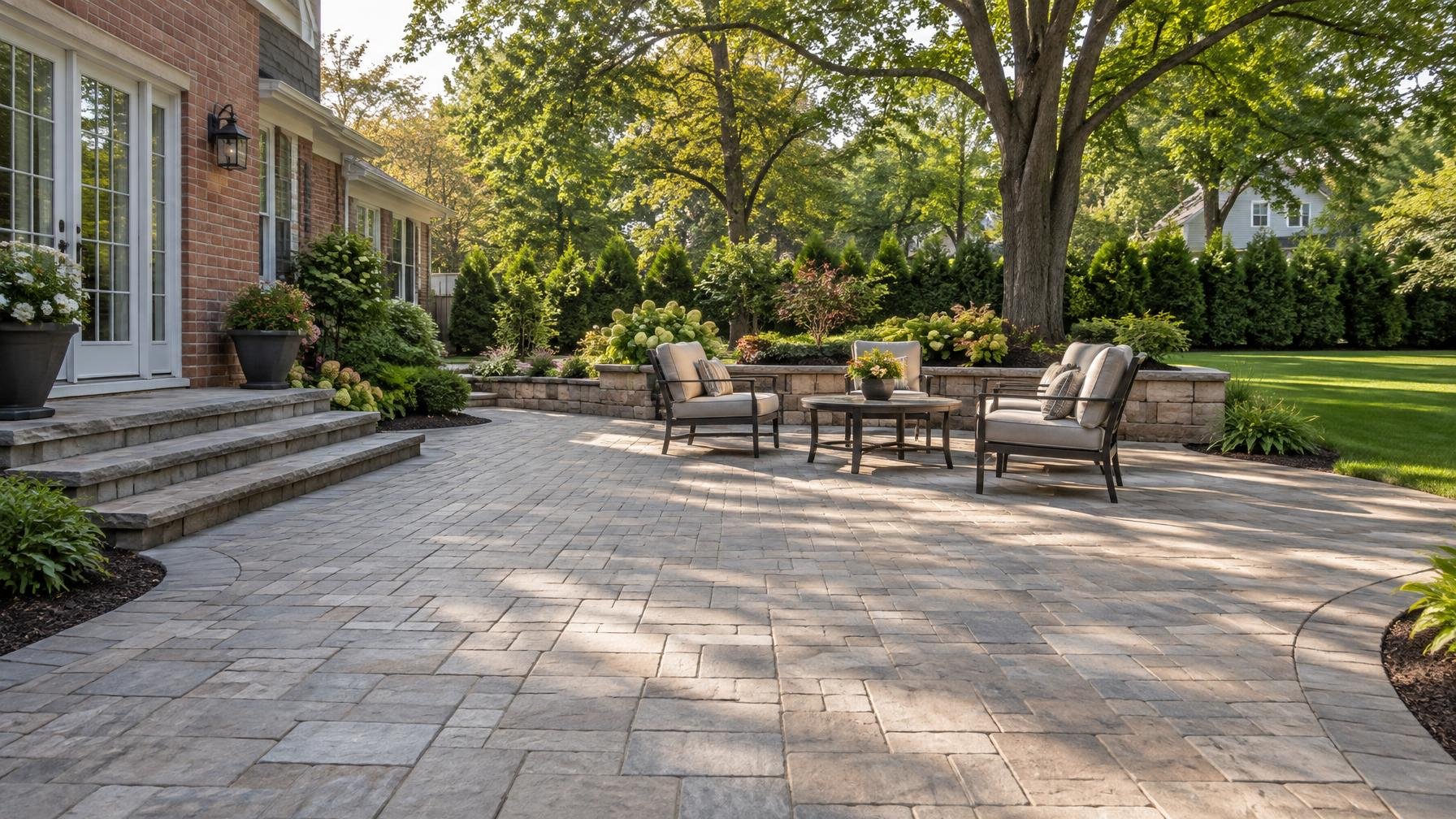
Brick can complement traditional homes, while natural stone can provide varied texture and color. Either choice needs a product and assembly appropriate for the intended load. If considering porcelain, verify that the specific product and installation system are approved by the manufacturer for vehicular use; pedestrian patio specifications are not enough.
View samples outside beside the siding, foundation and front steps. Check them dry and wet, since both appearance and surface feel can change. Also discuss how the chosen texture will interact with snow removal equipment.
Permeable paving requires its own design
Permeable pavers are not simply standard pavers with wider joints. Their performance depends on compatible joint aggregate, an open-graded base and a plan suited to soil and water conditions. They are not an automatic solution for every wet driveway, and the joints need maintenance to remain functional.
Make Borders and Transitions Part of the Plan
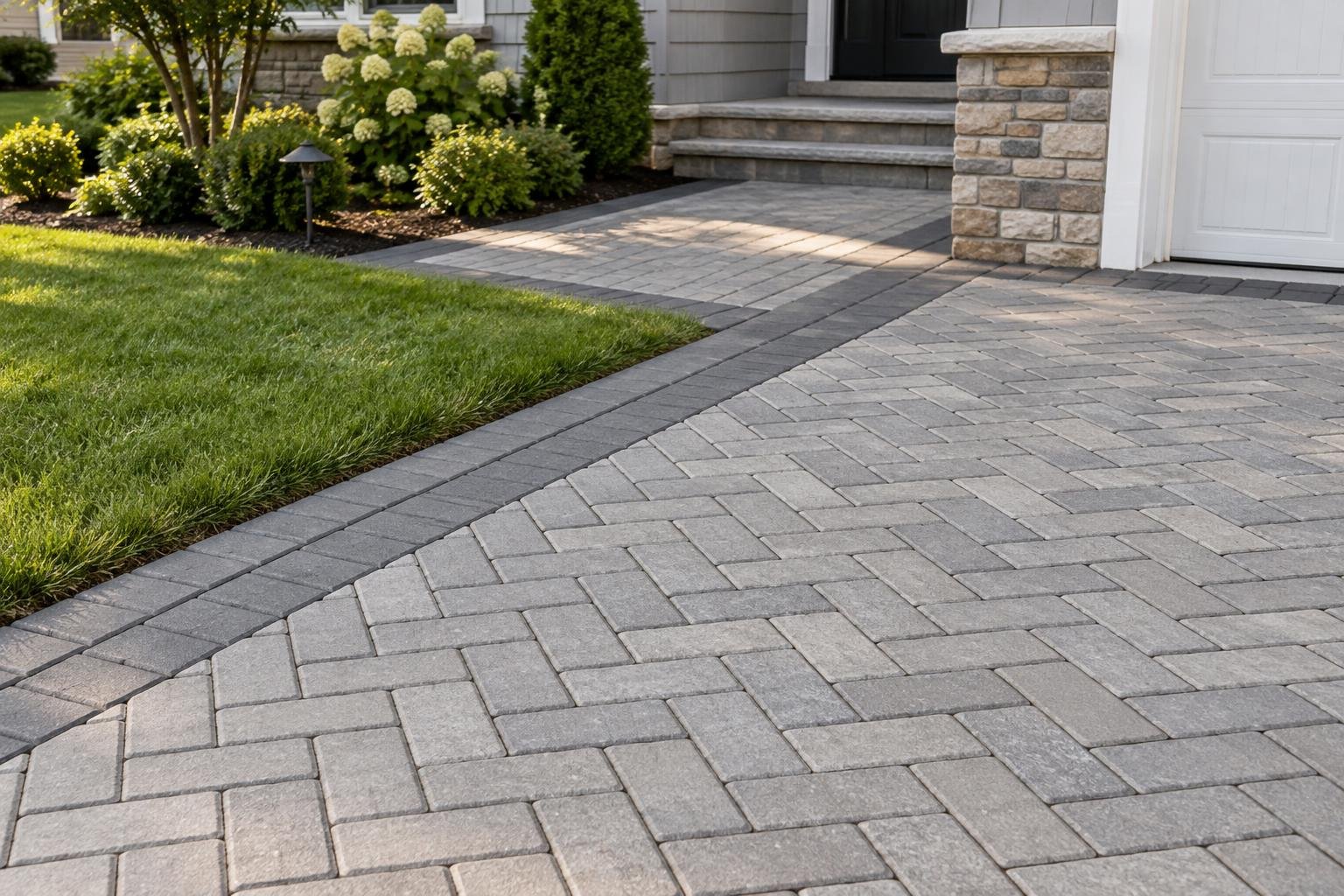
A contrasting border can define parking areas and tie the driveway into the front entrance. It also needs to work structurally: decorative edging is not a substitute for an effective restraint system. Areas where vehicles turn or cross a driveway edge deserve particular attention.
Review the layout near garage doors, steps and walkways before installation starts. Avoid unnecessary narrow cuts where a revised pattern could produce a cleaner finish. If the project connects to an existing walk, decide whether the materials should match, coordinate or create a deliberate contrast.
Keep finished paving clear of features that need access, such as utility covers and irrigation components. Identify visible equipment during the estimate and confirm how underground utilities will be located before excavation.
What to Clarify in Your On-Site Estimate
A useful estimate describes the work clearly enough that you know what is included. Before approving a driveway project, review these items:
- Removal and disposal: Which existing surfaces and materials will be taken out?
- Preparation: What excavation, base preparation and compaction are proposed?
- Materials: Which paver product, color, pattern, border and joint material are specified?
- Drainage: What finished grades are planned, and how will known low spots be addressed?
- Connections: How will the driveway meet the garage, walkways and street apron?
- Access: Where can vehicles park during work, and when can the completed driveway carry traffic?
- Changes: How will unexpected subsurface conditions or requested additions be documented?
Discuss landscaping along the excavation area as well. Agree on the boundaries of the work and what restoration, if any, is included. Written scope details reduce uncertainty once equipment and materials arrive.
Plan for Routine Maintenance
After installation, keep leaves and soil from accumulating along edges and in joints. Watch for joint material loss, widening gaps or new settlement, especially after winter. Addressing a small movement early can help prevent a larger uneven area.
Follow the paver manufacturer’s guidance for cleaning, deicing products and snow removal. Aggressive pressure washing can disturb joints, and unsuitable deicers may damage some materials. Sealing is a separate maintenance decision—not a correction for poor drainage or a weak base. StoneSky offers paver sealing and cleaning for homeowners reviewing maintenance options.
Request a Free On-Site Estimate in Melville
StoneSky Pavers & Masonry serves Melville and surrounding Long Island communities with paver installation, driveway work, repairs and maintenance. An on-site visit is the time to review parking needs, existing surface conditions, drainage and material choices together.
Request a free on-site estimate or call (929) 528-1205. Have your driveway concerns and any rainwater photos ready so the conversation can focus on the work your property actually needs.
Frequently Asked Questions
Can a sunken paver driveway in Melville be repaired without full replacement?
Often, a localized area can be lifted and reset if the pavers remain sound. The underlying cause of settlement must be corrected first. Widespread base problems, damaged pavers or unsuitable grading may require more extensive work.
Do I need a permit to replace or widen my driveway in Melville?
Requirements depend on the property and scope. Confirm with the Town of Huntington and the authority responsible for the adjoining road, particularly if the work changes driveway width, the street entrance, a curb or a sidewalk.
Which pavers should I choose for a residential driveway?
Choose a product specifically suitable for vehicle traffic, with an appropriate thickness and installation assembly. Concrete, brick and natural stone options should be evaluated by product rather than appearance alone. Confirm manufacturer requirements for any porcelain option.
Will permeable pavers solve standing water on my driveway?
Not automatically. Permeable paving requires a compatible joint and base system, assessment of soil and water conditions, and ongoing maintenance. Existing grades and the source of standing water should be evaluated before choosing the system.
Does StoneSky offer free driveway estimates in Melville?
Yes. StoneSky Pavers & Masonry serves Melville and offers free on-site estimates. Call (929) 528-1205 or use the contact page to request a visit.