Front stoop repair in Astoria, NY starts with identifying whether the problem is loose mortar, damaged concrete, moving treads or deeper settlement. StoneSky Pavers & Masonry offers steps, stoops and masonry repairs, with free on-site estimates to assess the condition and discuss the work needed.
For an entry used every day, the goal is a stable walking surface, consistent steps and water that moves away from the doorway—not simply a fresh-looking coating.
Start With the Parts of the Stoop That Affect Safety
Astoria’s attached brick homes, rowhouses and smaller multifamily buildings often have compact entrances close to the sidewalk. A damaged tread or loose landing edge can leave little room to step around the problem, especially when carrying groceries, handling a stroller or leaving during icy weather.
Inspect the entrance from a safe position without testing loose pieces with your body weight. Photograph the entire stoop, then take closer pictures of visible damage.
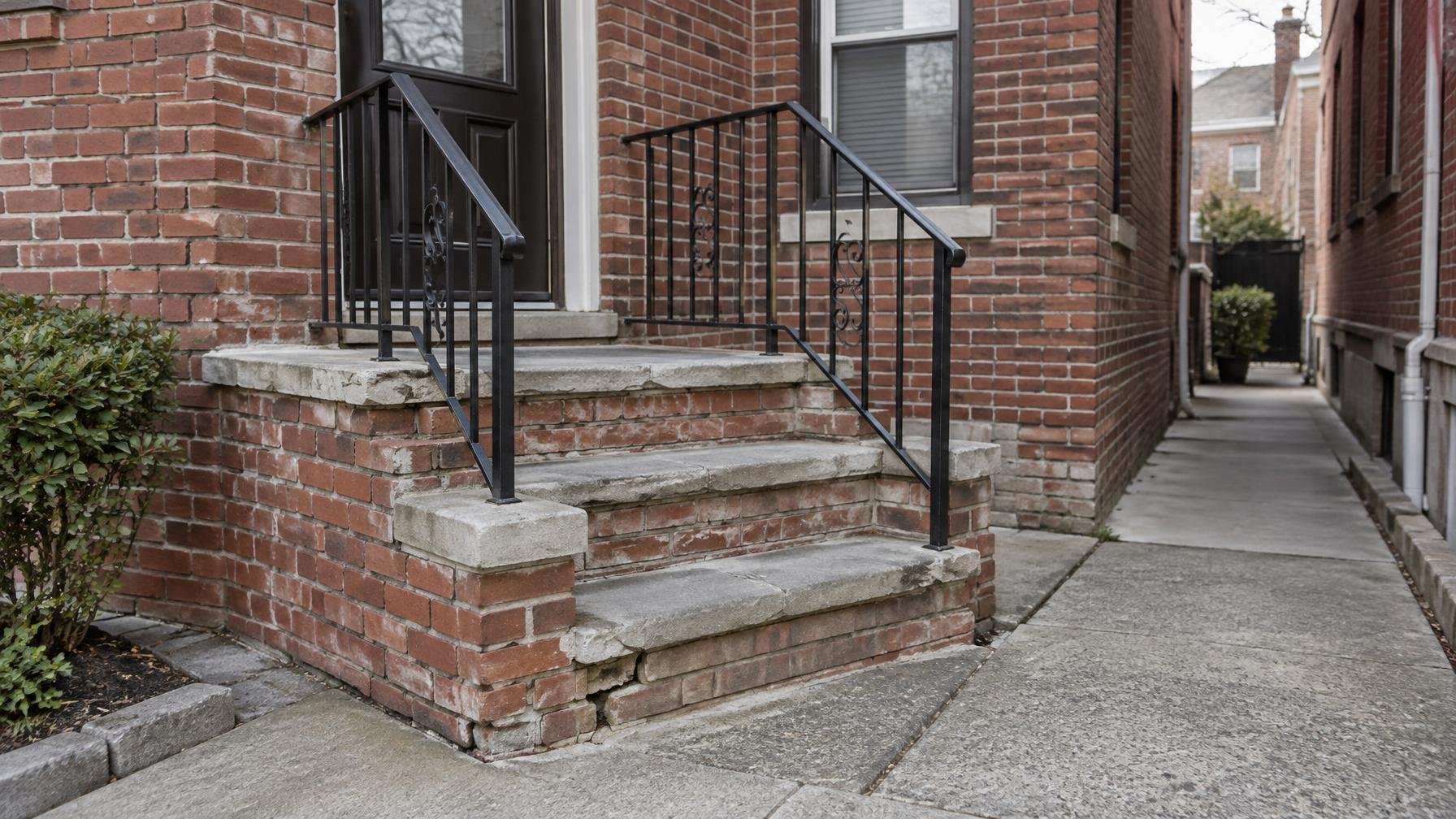
- Loose treads: A stone or concrete step that rocks, shifts or has separated from its bedding needs attention before cosmetic work.
- Broken step noses: Missing material along the front edge reduces usable footing and can create a trip point.
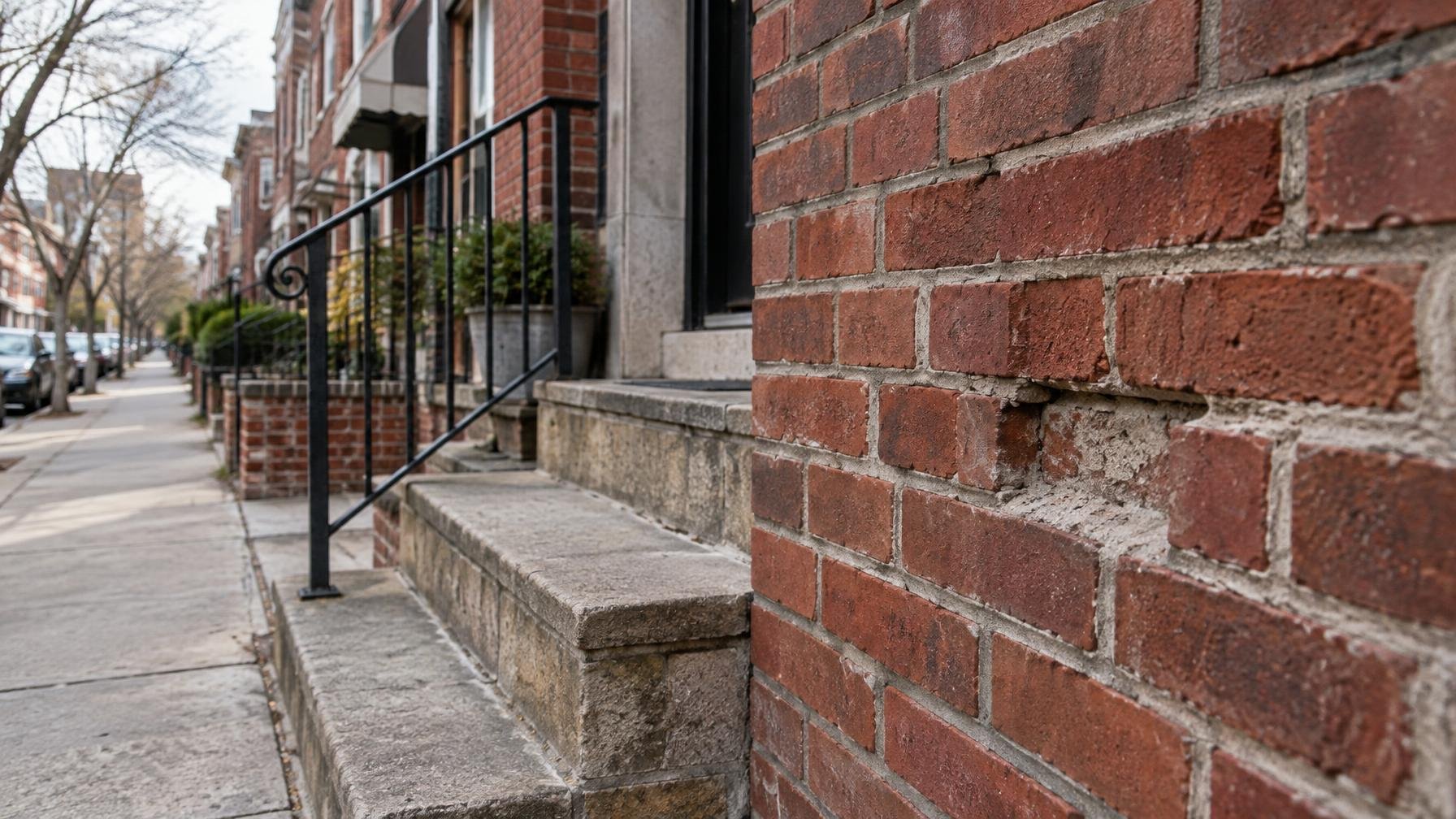
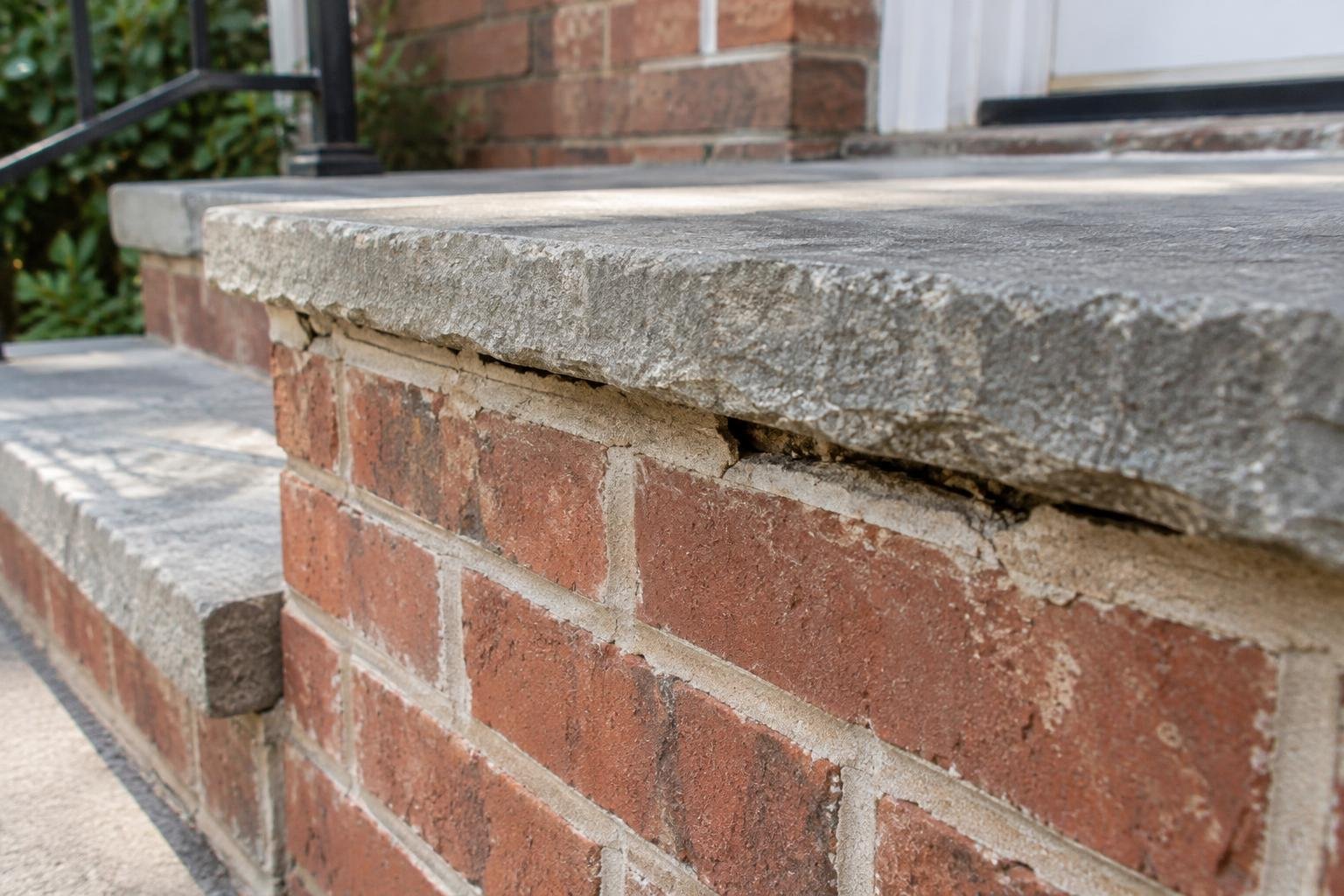
- Open mortar joints: Gaps between bricks or beneath treads allow water into the assembly.
- Uneven step heights: A settled landing or added surface layer can make the first or last step unexpectedly different.
- Movement at railings: Cracks around railing anchors may involve both the attachment and the surrounding masonry.
- Separation from the building: A widening gap, leaning wall or shifted landing deserves closer assessment rather than immediate patching.
If a step moves or a section appears unstable, avoid using that area and arrange prompt assessment. Where there is no safe alternate entrance, do not improvise a temporary walking surface or obstruct required access.
Why Front Stoops Deteriorate in Astoria
Water and freeze-thaw exposure
Rain and melting snow can enter cracked mortar, open tread joints and damaged concrete. When trapped water freezes, it can widen those openings and break down exposed edges. Repeated winter wetting is especially troublesome where the landing holds puddles or a downspout discharges beside the steps.
Look at the stoop after rainfall, from a safe location. Water sitting against the doorway, running into a wall joint or collecting below the lowest tread provides useful clues about what the repair must address.
Old patches over weak material
A thin patch may hide a defect without correcting it. If the underlying concrete is deteriorating or a tread is moving, a new surface layer can crack or separate. Multiple repairs can also obscure the original step geometry and create awkward transitions at the sidewalk or threshold.
Settlement and masonry movement
Steps, sidewalls and landings do not always move together. Soil settlement, deteriorated support or water near the base can contribute to uneven surfaces. A crack alone does not establish the cause; its location, surrounding conditions and whether movement is continuing matter.
Which Repair Approach Fits the Damage?
The right scope depends on what remains sound. During an estimate, ask the contractor to distinguish material that can stay from material that needs removal, and explain how the proposed work addresses the source of failure.
Repointing sound brickwork
When the bricks remain stable but mortar joints have deteriorated, repointing may be appropriate. This involves removing unsound mortar and replacing it with mortar suited to the existing masonry. Smearing new mortar over the face of an open joint is not the same repair.
Older brick needs particular care when selecting mortar and preparing joints. StoneSky’s guide to brick repointing in Astoria explains the distinction between joint deterioration and problems that call for more substantial masonry work.
Resetting or replacing individual treads
A loose tread may be repairable if its support is sound and the piece itself is suitable for reuse. The work needs to address the bedding and support underneath, not just the exposed seam. A cracked or badly broken tread may need replacement instead.
Ask how a replacement will match the adjoining steps in height, depth, overhang and finish. A close color match is useful, but consistent footing comes first.
Repairing concrete steps and landings
Localized concrete damage may allow a repair after weak material is removed and the remaining surface is properly prepared. The repair material must suit the depth, exposure and intended use. Deep deterioration, exposed corroding reinforcement or widespread cracking can make a surface patch inadequate.
Ask whether the proposed work is a localized repair or replacement of the affected section. Those are different scopes and should be described clearly in the estimate.
Partial rebuilding or broader replacement
Leaning masonry, widespread movement, failed support or several unstable steps may call for rebuilding part or all of the stoop. Covering those conditions with stone, pavers or a new coating does not restore the support underneath. If the movement suggests a structural concern, further evaluation may be necessary before the repair scope is finalized.
Plan the Stoop and Front Walk Together
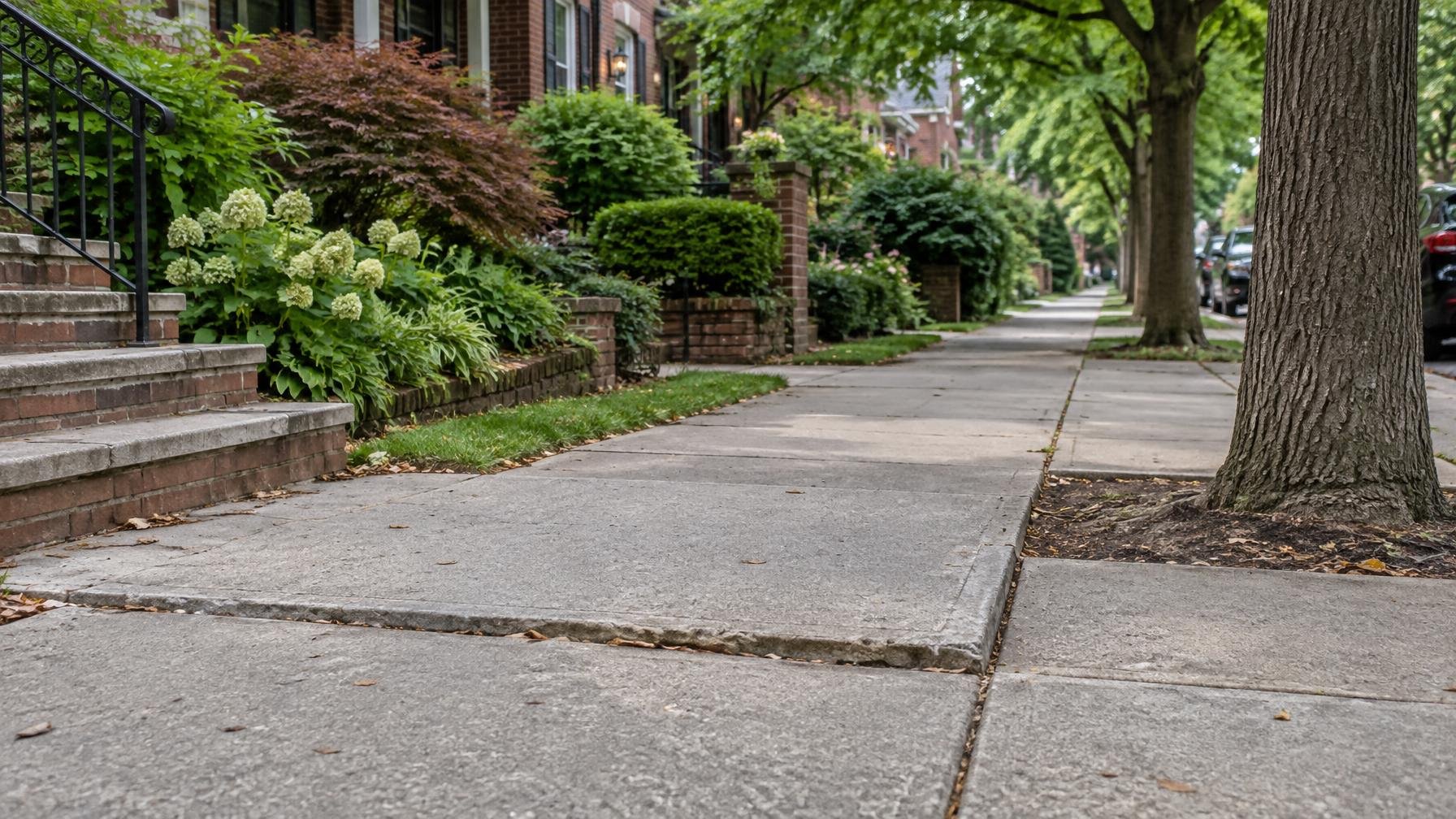
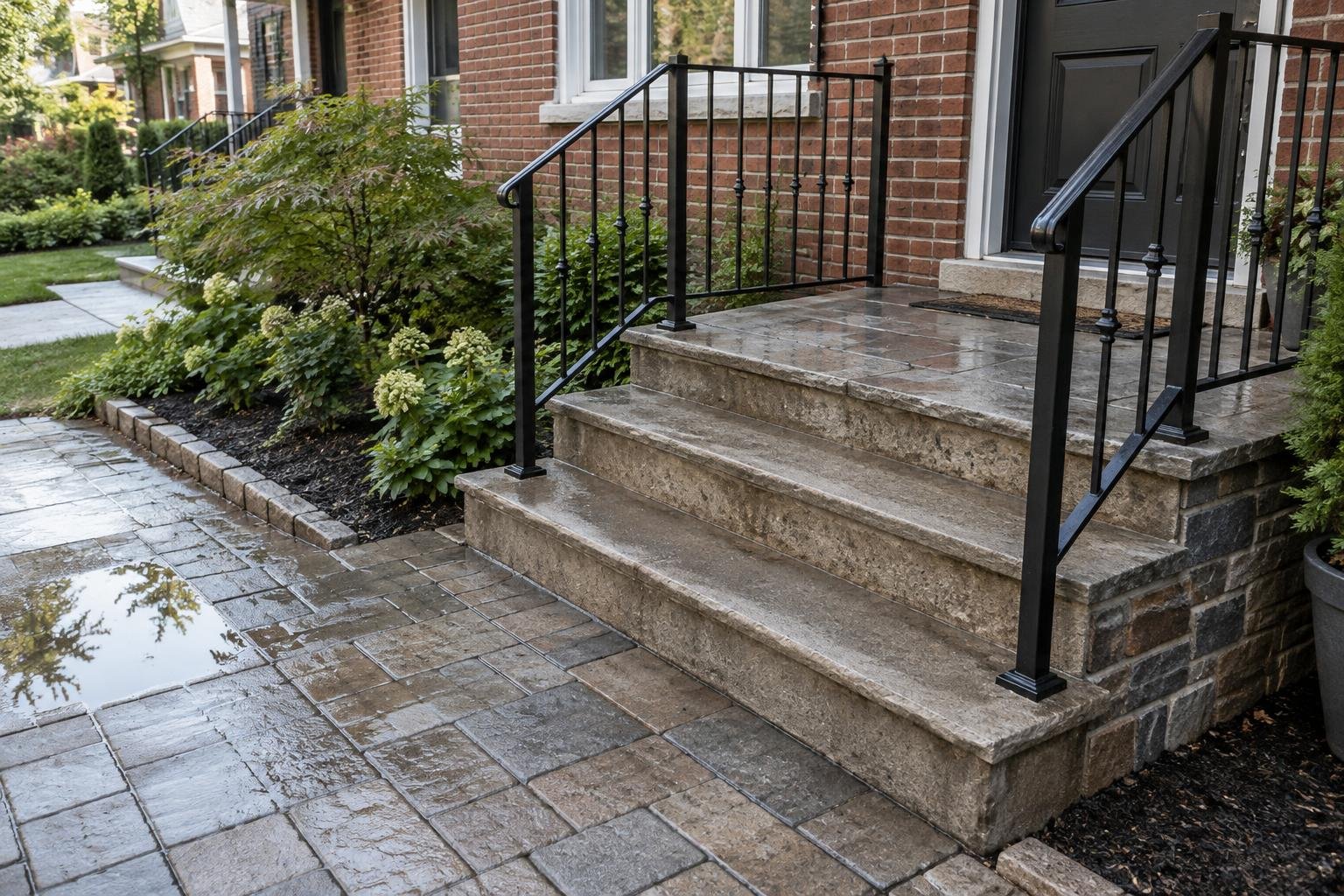
A repaired stoop still needs to meet the walkway safely. In a compact Astoria front yard, even a small elevation change can affect the bottom riser, gate clearance or route to the public sidewalk.
- Check the bottom transition: Settled pavers or a lifted concrete panel can create a second trip hazard immediately below the stairs.
- Protect the doorway: Finished landing height should not interfere with door operation or cover drainage details at the threshold.
- Review runoff: Water should not be trapped against the building or redirected into a neighboring entrance.
- Consider surface texture: Discuss traction when wet, cleaning needs and winter exposure rather than choosing by color alone.
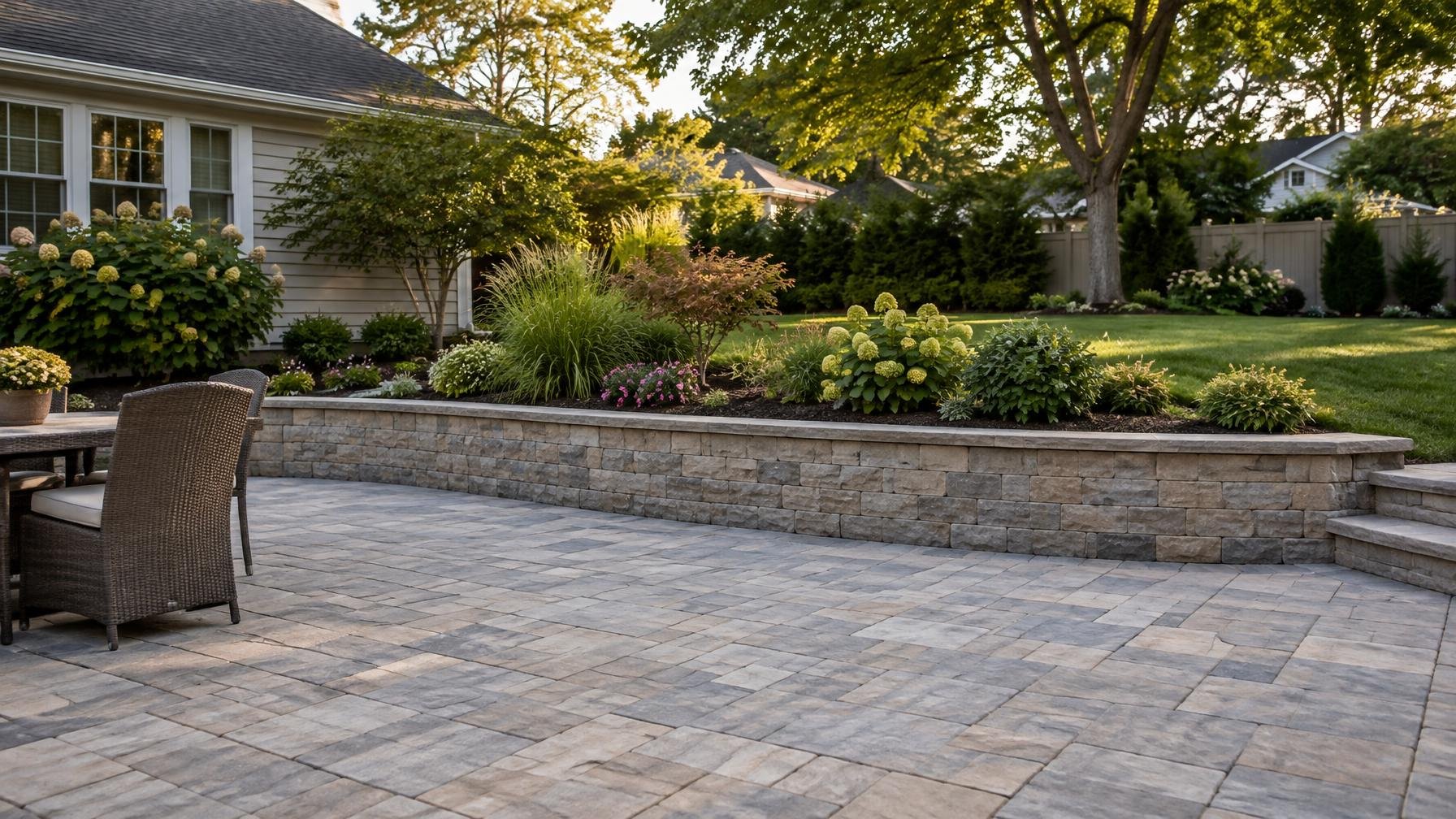
If the approach also needs work, coordinate it with the stoop rather than setting each elevation separately. StoneSky offers front entrance paver installation for projects that include the walk or entry approach.
Access, Permits and Scheduling in Queens
Confirm requirements before changing the entrance
Do not assume every stoop project is a permit-free patch. Requirements can depend on whether the work is maintenance, rebuilding, structural alteration or a change to the entrance layout. Confirm applicable NYC Department of Buildings requirements before work starts. Work affecting the public sidewalk may also involve NYC Department of Transportation requirements.
If the property is designated as a landmark or lies within a historic district, confirm whether exterior masonry changes need approval. Discuss these questions early, particularly when changing dimensions, materials or railings.
Keep everyday entry needs in the plan
For a shared entrance, agree on how residents, deliveries and emergency access will be handled during demolition and curing. Ask when the steps can be used again; a surface that appears dry is not necessarily ready for foot traffic. Gates, basement access and neighboring entrances also need to remain part of the site plan.
Allow for suitable weather
Concrete and mortar repairs need conditions appropriate to the selected materials, including protection while they cure. Cold weather, heavy rain or excessive heat can affect installation and scheduling. Ask what weather protection is included and what conditions would require postponement rather than pushing for a fixed completion date regardless of the forecast.
What to Ask During a Free On-Site Estimate
Show the contractor where water collects and point out previous repairs. Photos taken after rain or before a patch was installed can help explain conditions that are not visible during the visit.
- What is causing the damage? Ask whether the issue appears limited to joints or surfaces, or involves support and movement.
- What will be removed? Clarify which treads, bricks or concrete sections are included and what will remain.
- How will elevations be checked? Discuss step consistency, landing drainage and the transition to the walk.
- What materials are proposed? Review the visible finish and suitability for the existing assembly.
- What happens if hidden damage appears? Agree on how additional findings and scope changes will be communicated.
- How will access and cleanup work? Confirm protection, debris removal and restrictions while materials cure.
After repair, keep joints and drainage paths clear, check for new movement and use winter maintenance products compatible with the installed materials. Report recurring cracks or puddles rather than repeatedly covering them with another patch.
Request a Free On-Site Estimate in Astoria
StoneSky Pavers & Masonry serves Astoria and other Queens neighborhoods with steps and stoops, concrete repair, brick repointing and front entrance hardscaping. Whether the problem is one damaged tread or a deteriorating landing, start with an assessment of the existing materials and support.
Request a free on-site estimate or call (929) 528-1205 to discuss your front stoop repair.
Frequently Asked Questions
Can a front stoop be repaired without replacing the whole structure?
Often, localized damage can be addressed by repointing sound brickwork, repairing concrete or resetting individual treads. Widespread movement, deteriorated support or multiple unstable steps may require partial rebuilding or replacement. An on-site assessment helps establish the appropriate scope.
Does front stoop repair in Astoria require a permit?
Requirements depend on the scope. Maintenance, structural repairs and changes to entrance dimensions can be treated differently. Confirm applicable NYC Department of Buildings requirements, and check additional requirements if the work affects the public sidewalk or a designated historic property.
Can new pavers or stone cover a cracked stoop?
A covering should not be used to hide movement or weak support. Any proposed overlay also needs a review of step heights, threshold clearance, drainage and attachment. The underlying assembly must be suitable before adding a new finish.
How soon can I walk on repaired steps?
That depends on the repair materials, weather and type of work. Ask for specific access restrictions before the project begins and follow the contractor’s curing instructions. A dry-looking surface is not proof that the repair is ready for use.
Does StoneSky offer free estimates for stoop repair in Astoria?
Yes. StoneSky Pavers & Masonry serves Astoria and offers free on-site estimates. Call (929) 528-1205 or use the contact page to discuss damaged steps, landings or related masonry repairs.