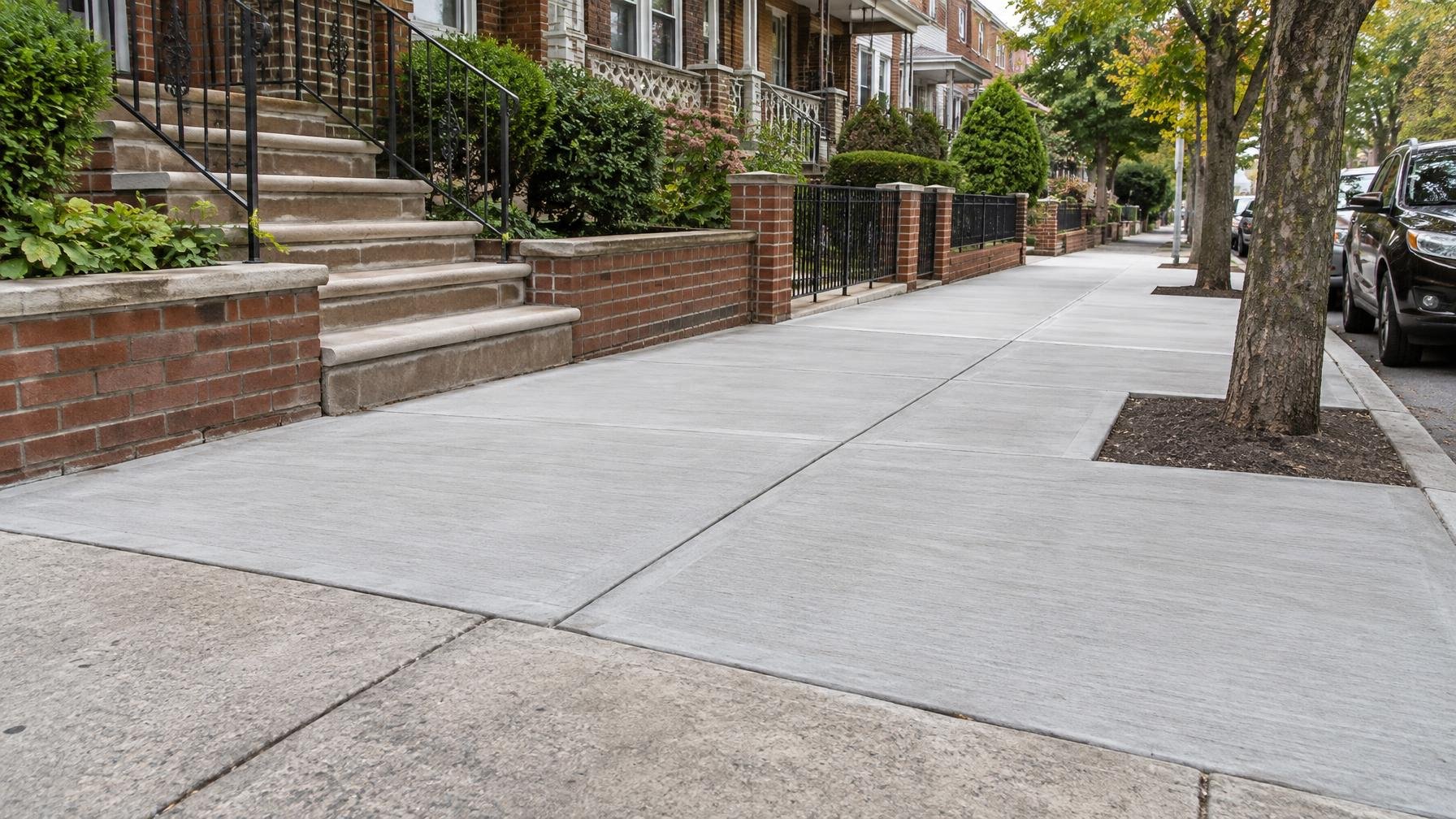
If you’re looking for a concrete contractor in Astoria, NY, start with an assessment of the damage, drainage and intended use of the surface—not just a quote to cover the cracks. StoneSky Pavers & Masonry provides concrete installation and repair, sidewalk repair and replacement, and steps and stoops in Astoria and throughout Queens, with free on-site estimates.
This guide explains what to check before deciding whether to repair an existing surface or replace it, especially on properties with narrow access, shared boundaries or busy public sidewalks.
Start With the Problem, Not the Finish
A concrete surface can look worn without needing full replacement. It can also look mostly intact while creating a trip hazard or directing water toward a basement entrance. Before discussing finishes, identify what the concrete is doing wrong and where the problem begins.
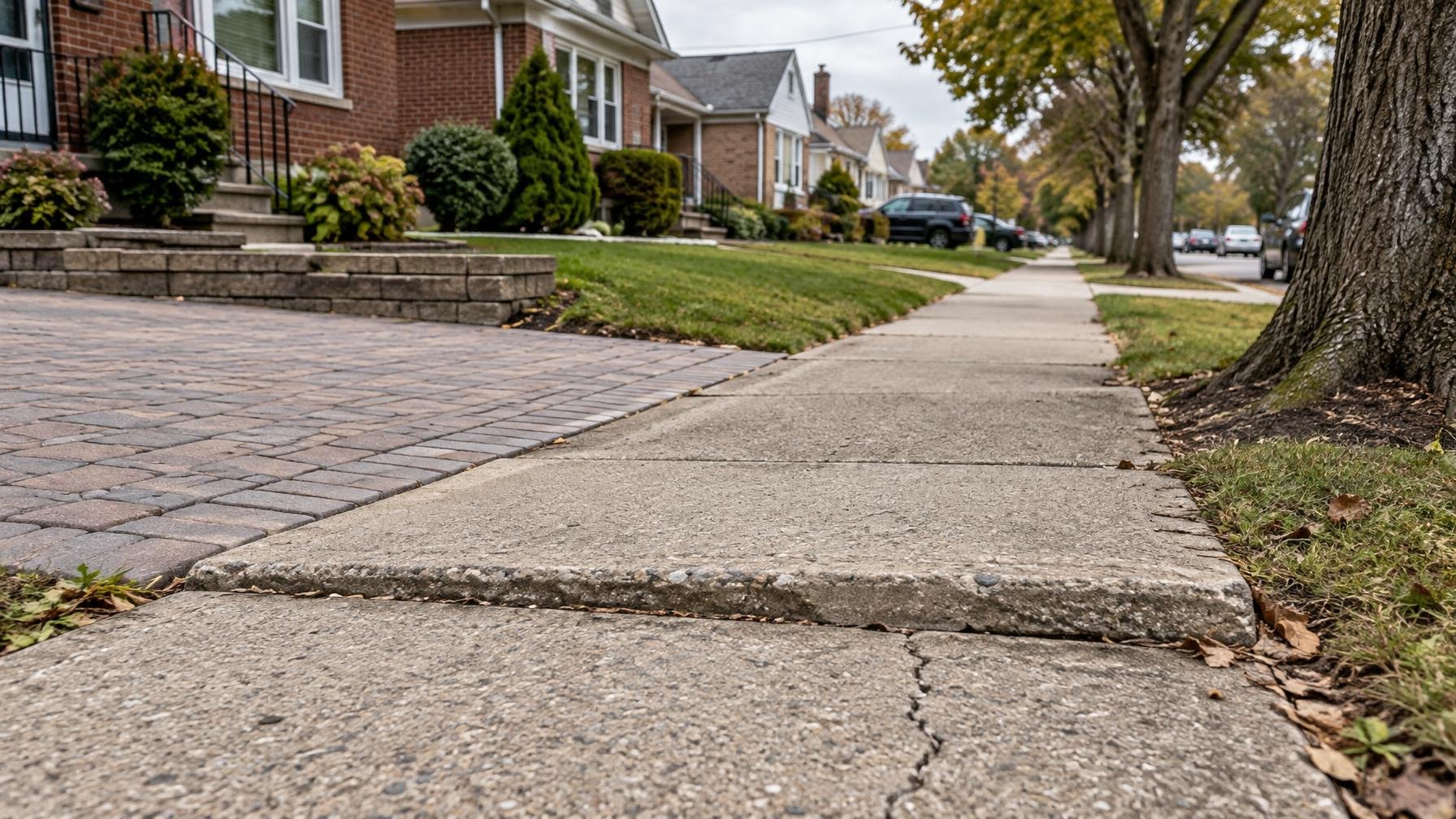
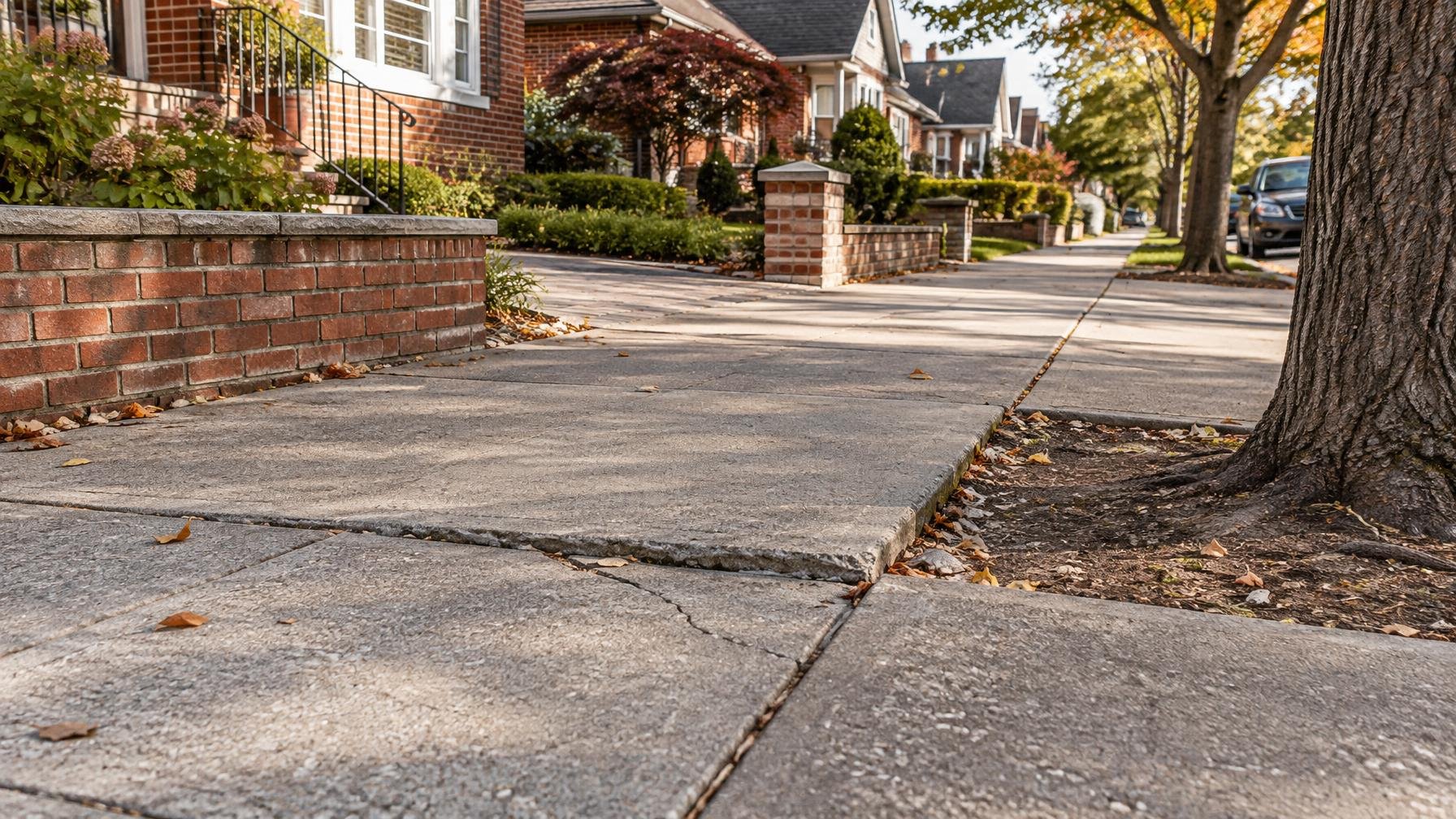
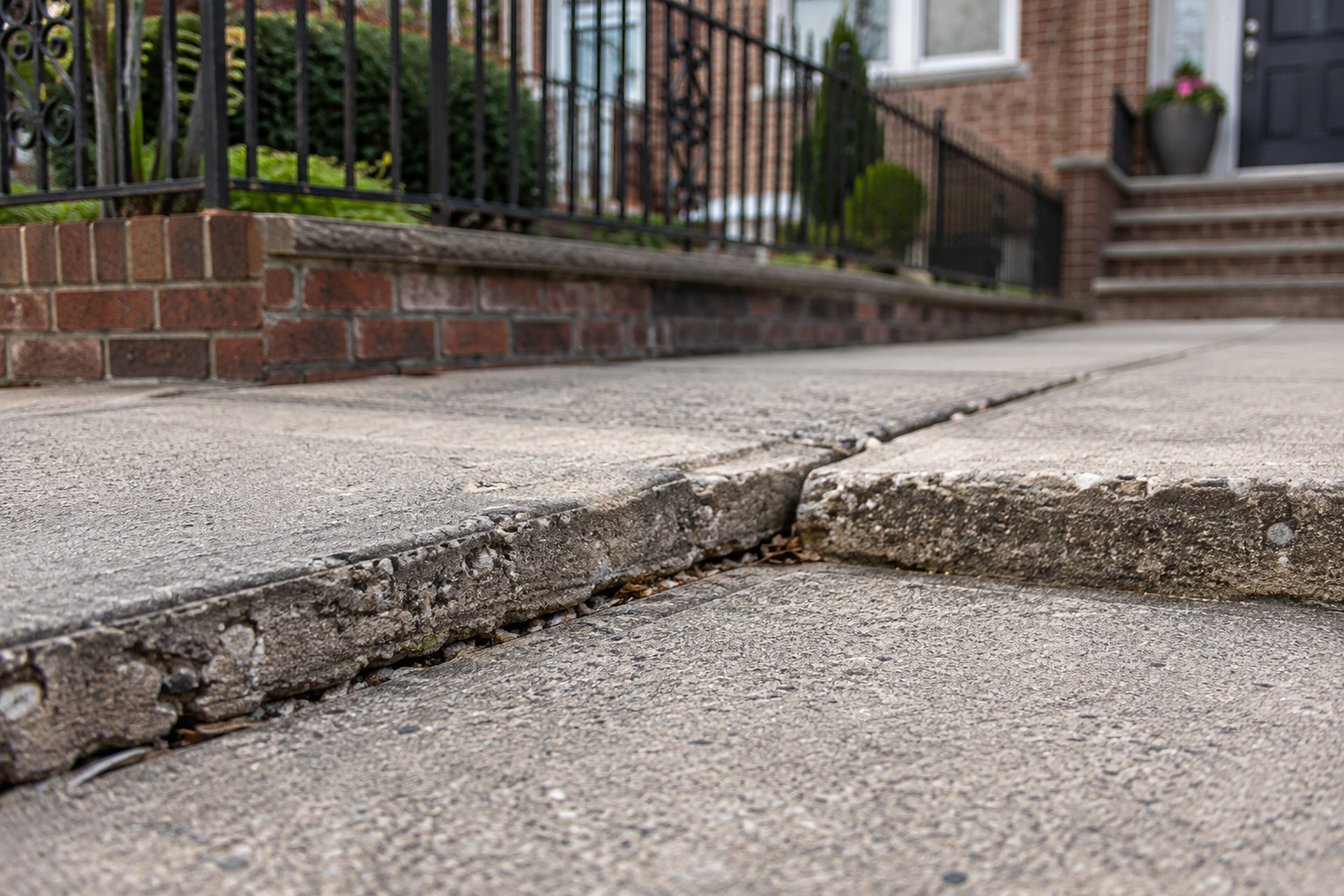
- Uneven edges: One slab sits higher than the next, creating a raised lip.
- Standing water: Puddles remain near the house, stoop or gate after surrounding areas have drained.
- Surface breakdown: The top layer flakes, scales or exposes loose material.
- Movement: A crack widens, a slab settles or a step shifts away from the landing.
- Access trouble: The existing layout leaves an awkward transition at a doorway or walkway.
Take photographs when the surface is dry and after rainfall. Note whether the condition changed after winter, nearby excavation or repeated vehicle use. Those observations help distinguish a localized defect from a base or drainage problem that needs attention before new concrete goes down.
Repair or Replace? What an On-Site Assessment Should Resolve
When a Localized Repair May Make Sense
Repair may be appropriate where damage is limited and the surrounding concrete remains stable. An isolated surface defect or a small, nonmoving crack may be a candidate, depending on depth, exposure and use. The repair material must suit the condition; a thin cosmetic coating is not a substitute for addressing movement underneath.
Ask what the repair is intended to accomplish. Restoring a worn surface, limiting water entry and correcting a height difference are different goals. Also ask how the repaired area will look. New repair material may not match the color or texture of older concrete.
When Replacement Deserves Consideration
Replacement often makes more sense when slabs have significant settlement, multiple displaced cracks, extensive deterioration or a slope that sends water toward the building. Removing an affected section allows the underlying support and finished elevations to be evaluated instead of hiding the problem.
The assessment should establish how far removal needs to extend and where the new work will meet sound existing concrete. Replacing one section without checking its neighbors can leave an awkward lip or an isolated low spot. For steps and stoops, loose masonry, unstable landings or visibly shifting components need evaluation beyond surface patching.
Astoria Site Conditions That Affect Concrete Work
Narrow Lots and Limited Backyard Access
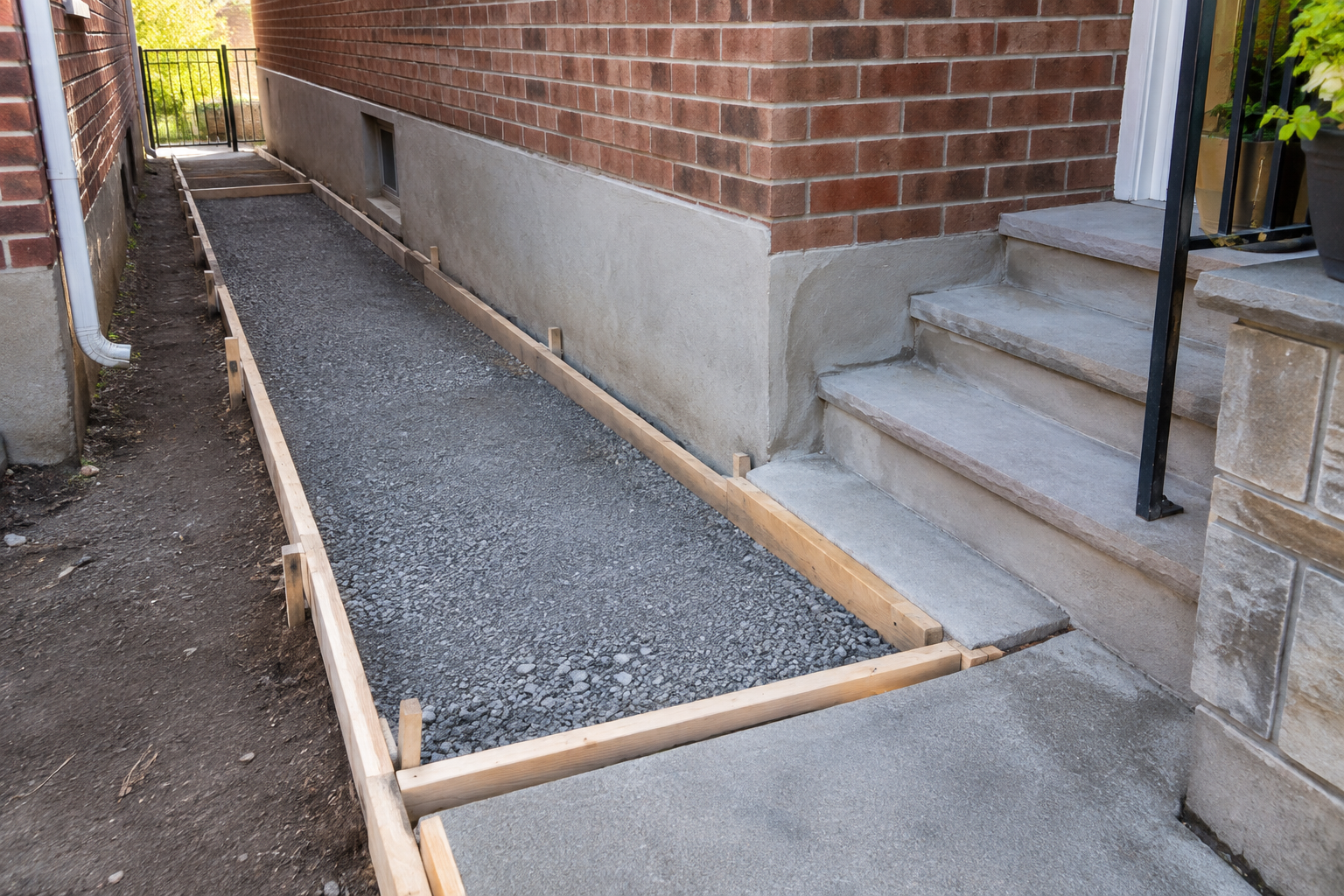
On attached and closely spaced properties in Astoria, getting demolition debris out and fresh material in can be a major part of the job. A front sidewalk may be easy to reach, while a rear slab may be accessible only through a narrow side passage. Gate width, stairs and adjacent finishes all affect the work plan.
During the estimate, walk the entire access route. Point out basement doors, fences, outdoor equipment and anything that must remain accessible. Confirm where materials can be staged and how the work area will be separated from residents, visitors and pedestrians.
Older Entrances and Tight Elevation Changes
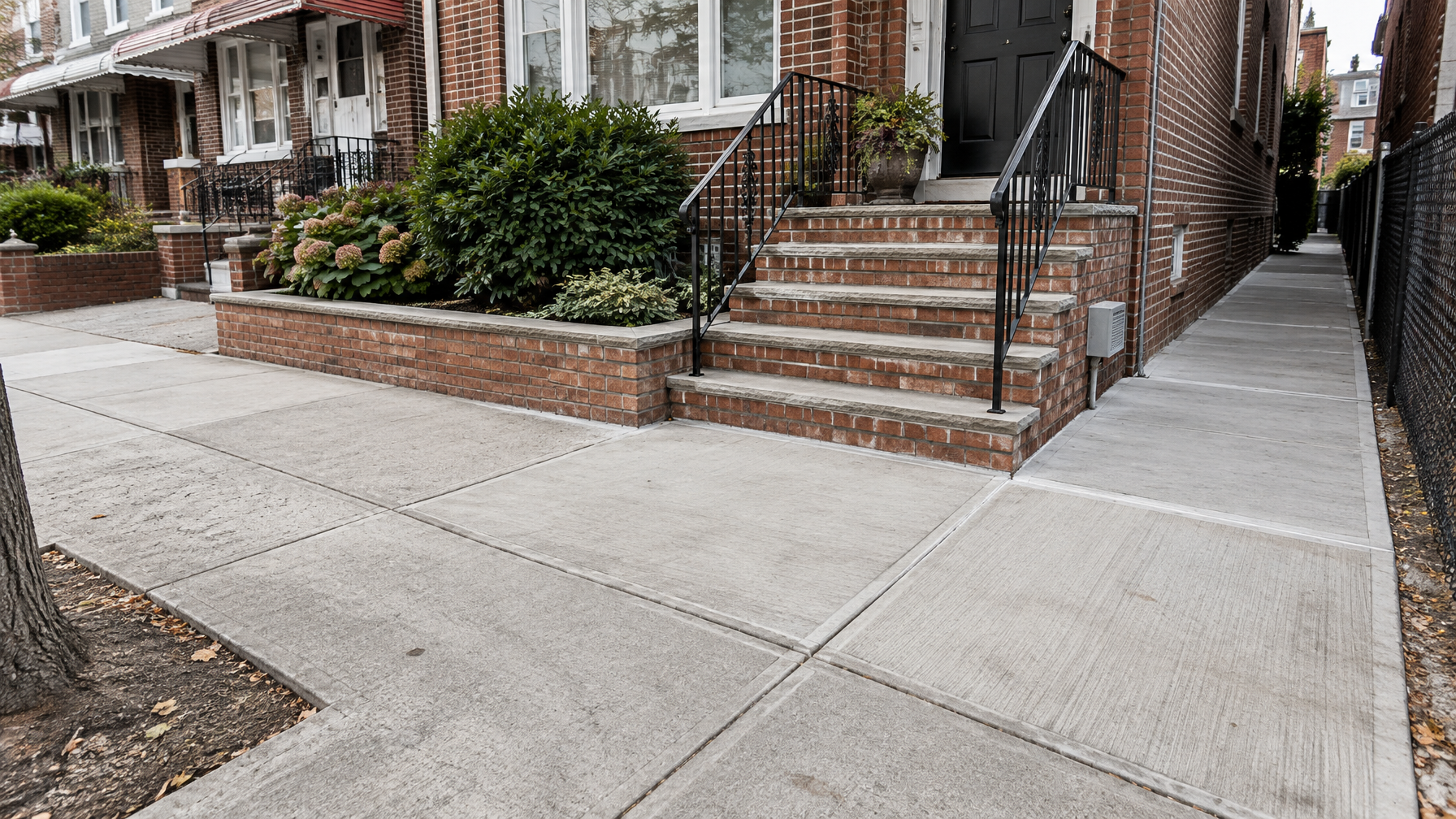
An older stoop or below-grade entrance can leave little room to adjust concrete height. Raising a slab simply to meet an adjacent surface may reduce clearance beneath a door or create a new drainage problem. Finished elevations should be planned around thresholds, steps and existing drainage paths.
Water should not be redirected onto a neighboring property as a shortcut. Where space is tight, discuss the drainage limitation before agreeing to the layout. The practical question is where rainwater will go once the new surface is installed.
Freeze-Thaw Exposure and Winter Wear
Queens winters expose outdoor concrete to freezing temperatures, moisture and deicing products. Water entering cracks or collecting in poorly drained areas can contribute to deterioration as conditions change. A durable installation depends on suitable materials, proper preparation, drainage and curing—not simply a smooth-looking finish on installation day.
Ask for maintenance instructions specific to the finished surface, including guidance on deicers. Avoid assuming that every product labeled for winter use is appropriate for newly placed concrete.
Sidewalk Work: Separate Private Repairs From Public Requirements
A private backyard slab and a public sidewalk are not the same type of project. Sidewalk replacement in Astoria can involve NYC Department of Transportation requirements, permits and pedestrian-access considerations. Tree-related damage can add another issue that should be reviewed before excavation.
If you have received a sidewalk violation notice, have it available during the estimate. Review the identified defects and confirm whether the proposed scope addresses them. Completing physical repairs should not be treated as automatic confirmation that a violation has been cleared; verify the applicable inspection and dismissal process with NYC DOT.
- Identify which sidewalk sections are included in the work.
- Ask who will handle any required permits and follow-up steps.
- Discuss safe pedestrian access while the concrete is unavailable.
- Flag street trees, utility covers and nearby curb conditions.
- Confirm whether work affecting the curb or driveway access requires separate review.
Do not cut tree roots or alter a tree pit without checking the applicable city requirements. If roots appear to be lifting a slab, raise that issue early rather than treating it as routine base preparation.
What to Discuss Before Concrete Is Placed
A useful estimate should explain more than the visible square footage. The preparation, transitions and protection plan have a direct effect on how the completed surface performs.
- Removal and disposal: Identify the existing material to be removed, including any deteriorated edges that would otherwise remain beside new work.
- Base condition: Discuss how soft areas, voids or unsuitable material will be handled if uncovered. New concrete needs consistent support.
- Intended loading: A pedestrian path and a vehicle-bearing surface need different design considerations. State exactly how the area will be used.
- Joint layout: Discuss planned control joints and separation where appropriate at buildings or adjoining elements. Joints help manage movement but do not guarantee crack-free concrete.
- Finish and traction: Exterior walking surfaces should be selected with wet-weather footing in mind, not appearance alone.
- Curing and reopening: Confirm how the concrete will be protected and when foot traffic, furniture or vehicles can return.
Concrete may look dry before it is ready for normal use. Reopening depends on the mix, weather, curing conditions and expected loads, so follow project-specific instructions rather than a generic waiting period. Ask how rain, extreme heat or freezing conditions could change the schedule.
Concrete or Pavers for a Private Outdoor Area?
For a private walkway, patio or driveway, it can be useful to consider both poured concrete and individual pavers before choosing a surface. Poured concrete provides a continuous slab divided by planned joints. Pavers use individual units over a prepared base, with edge restraint and joint material appropriate to the system.
Individual pavers can often be lifted and reset when localized settlement occurs, but they still need proper support and drainage. They are not a shortcut around ground preparation. StoneSky’s paver installation and maintenance services offer another option for private outdoor projects.
If the property already has an uneven paver section beside concrete, discuss paver repair and resetting as part of the transition plan. Avoid choosing either material on appearance alone, and do not assume a private-property paving option is acceptable for a public sidewalk.
Prepare for Your Astoria Concrete Estimate
Before the visit, list the surfaces you want assessed and the problems you want solved. Include puddling, trip hazards, difficult steps and damaged sections—not just the area you want replaced. Have any sidewalk notice ready, and explain access restrictions or times when entrances must remain usable.
Ask for a clear scope covering removal, preparation, installation, cleanup and exclusions. If hidden conditions may change the work, ask how those findings will be documented and discussed before additional work proceeds.
Request a Free On-Site Estimate in Astoria
StoneSky Pavers & Masonry serves Astoria, Queens, Nassau County and Long Island with concrete, sidewalk, paver and masonry services. Whether you need a damaged slab assessed, a sidewalk replaced or steps and a stoop repaired, start with an on-site review of the existing conditions.
Request a free on-site estimate or call (929) 528-1205 to discuss your concrete project.
Frequently Asked Questions
Does StoneSky provide concrete services in Astoria, NY?
Yes. StoneSky Pavers & Masonry serves Astoria and other Queens neighborhoods with concrete installation and repair, sidewalk repair and replacement, and steps and stoops. Free on-site estimates are available.
Does cracked concrete always need to be replaced?
No. Localized damage in stable concrete may be repairable. Displaced cracks, settlement, extensive deterioration or incorrect drainage can make replacement more appropriate. An on-site assessment helps determine the right scope.
What should I bring to an estimate for a sidewalk violation repair?
Have the violation notice and any related documents available, along with photographs of the damaged areas. Ask whether the proposed work addresses the listed defects and clarify permit responsibilities and the applicable NYC DOT inspection and dismissal process.
How soon can I use newly installed concrete?
The timing depends on the concrete mix, weather, curing conditions and intended use. Foot traffic and vehicle traffic have different requirements. Follow the project-specific reopening instructions rather than judging readiness by whether the surface looks dry.
Can pavers be considered instead of concrete?
For private patios, walkways and driveways, pavers may be an option depending on site conditions and intended loading. Public sidewalks have separate requirements, so do not assume the same material choices apply.