Paver driveway installation in Syosset, NY starts with evaluating the existing surface, ground conditions and where rainwater will go—not just choosing a paver color. StoneSky Pavers & Masonry installs paver driveways in Syosset and throughout Nassau County, with free on-site estimates to review layout, materials and site preparation.
Before work begins, use this guide to identify the decisions that affect everyday parking, winter maintenance and long-term surface stability.
Start With How Your Driveway Actually Works
A driveway should accommodate more than the vehicles parked on it during an estimate. Think about opening car doors, carrying groceries to the entrance, moving trash bins and accessing the garage when another vehicle is parked outside. On properties with an attached garage and a separate front walk, those routes need to work together.
Review parking space and turning movements
Mark where each vehicle normally parks and note any tires that regularly run onto the lawn. That can reveal a layout issue rather than simply worn paving. If you want to widen the driveway, review property boundaries and applicable local requirements before assuming the entire available lawn can become parking space.
- Check clearance around garage doors, gates and side entrances.
- Allow room for passengers to exit without stepping into planting beds.
- Identify tight turns where vehicles repeatedly load the driveway edge.
- Consider occasional delivery vehicles when discussing expected loads.
Check the connections to the house and street
Garage thresholds, front walks and the street connection establish important elevations. Raising the driveway without checking those points can create awkward steps or send water toward the garage. Existing stoops, brick borders and low masonry walls also need to be considered before the finished surface height is set.
Inspect the Existing Driveway Before Choosing a Replacement
Cracks, depressions and puddles provide clues about what is happening underneath an old driveway. A low area near the garage may indicate settlement or inadequate grading. Broken edges may reflect missing support, vehicle loading or nearby roots. Covering those conditions without addressing their cause can carry the same problems into a new installation.
During the site visit, point out where water sits after rain and where ice forms in winter. Photos taken during a storm can be useful when the estimate happens on a dry day. Also identify downspout outlets, irrigation lines and any known buried utilities near the work area.
If the existing driveway is already paved with individual units, ask whether the problem is localized. A small settled area may be a candidate for repair and resetting, while widespread movement can call for more extensive base work. The surface alone does not establish how much of the underlying construction is sound.
Base Preparation Is the Main Structural Decision
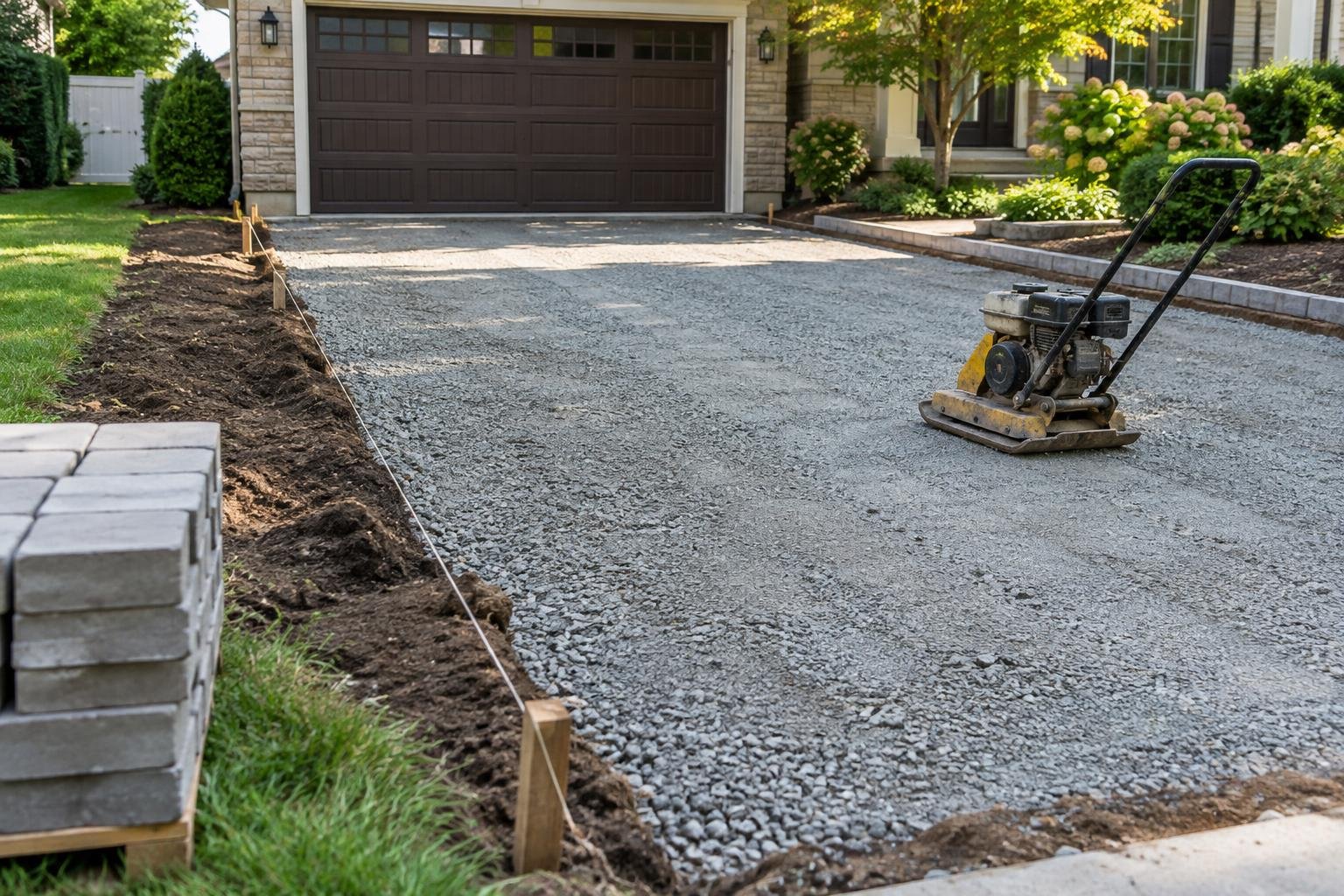
Driveway pavers depend on the layers beneath them to distribute vehicle loads. A typical installation involves excavation, subgrade preparation, compacted aggregate, a controlled bedding layer and the paver surface. The appropriate construction depends on soil conditions, drainage and expected use; one standard excavation depth should not be assumed suitable for every Syosset property.
Address soft ground before laying pavers
Organic material, loose fill and soft spots need attention before the base is placed. Aggregate should be installed and compacted in appropriate lifts rather than dumped into a deep excavation and compacted only at the top. Bedding material is used to establish a consistent laying surface, not to hide major base irregularities.
Include edge restraint in the scope
Unsupported edges can spread under repeated vehicle movement, opening joints and allowing pavers to shift. The restraint must suit the driveway construction and have adequate support. Decorative borders can define the layout, but a border pattern alone is not a substitute for structural edge restraint.
Plan Drainage for Rain, Snowmelt and Freeze-Thaw Conditions
Syosset driveways experience rainfall, snowmelt and winter freeze-thaw cycles. Water trapped in poorly drained layers can contribute to movement, while surface puddles can become slippery ice. The drainage plan should explain both the direction of surface runoff and how the base conditions will be managed.
Finished grades should guide water away from vulnerable building openings without creating a new problem at a neighboring property or public walkway. Downspouts should be reviewed as part of that plan: concentrated roof runoff can overwhelm a small low spot even when the rest of the driveway drains reasonably well.
Do not assume ordinary paver joints make a driveway permeable
A conventional interlocking paver driveway is not automatically a permeable pavement system. Permeable construction uses compatible surface units, joint aggregate and underlying storage layers, with suitability depending on site conditions and an appropriate water-management design.
If reducing surface runoff is a priority, ask whether a permeable system is practical for your property. Soil infiltration, groundwater conditions, nearby foundations and an overflow route all matter. Simply leaving wider joints between standard pavers is not an equivalent solution.
Choose Pavers Rated for Driveway Use
Not every product sold for outdoor paving is suitable for vehicles. Confirm the selected paver's intended use, thickness and installation requirements before approving the design. StoneSky's paver driveway services provide a starting point for discussing materials and layouts suited to vehicle traffic.
Concrete and brick pavers
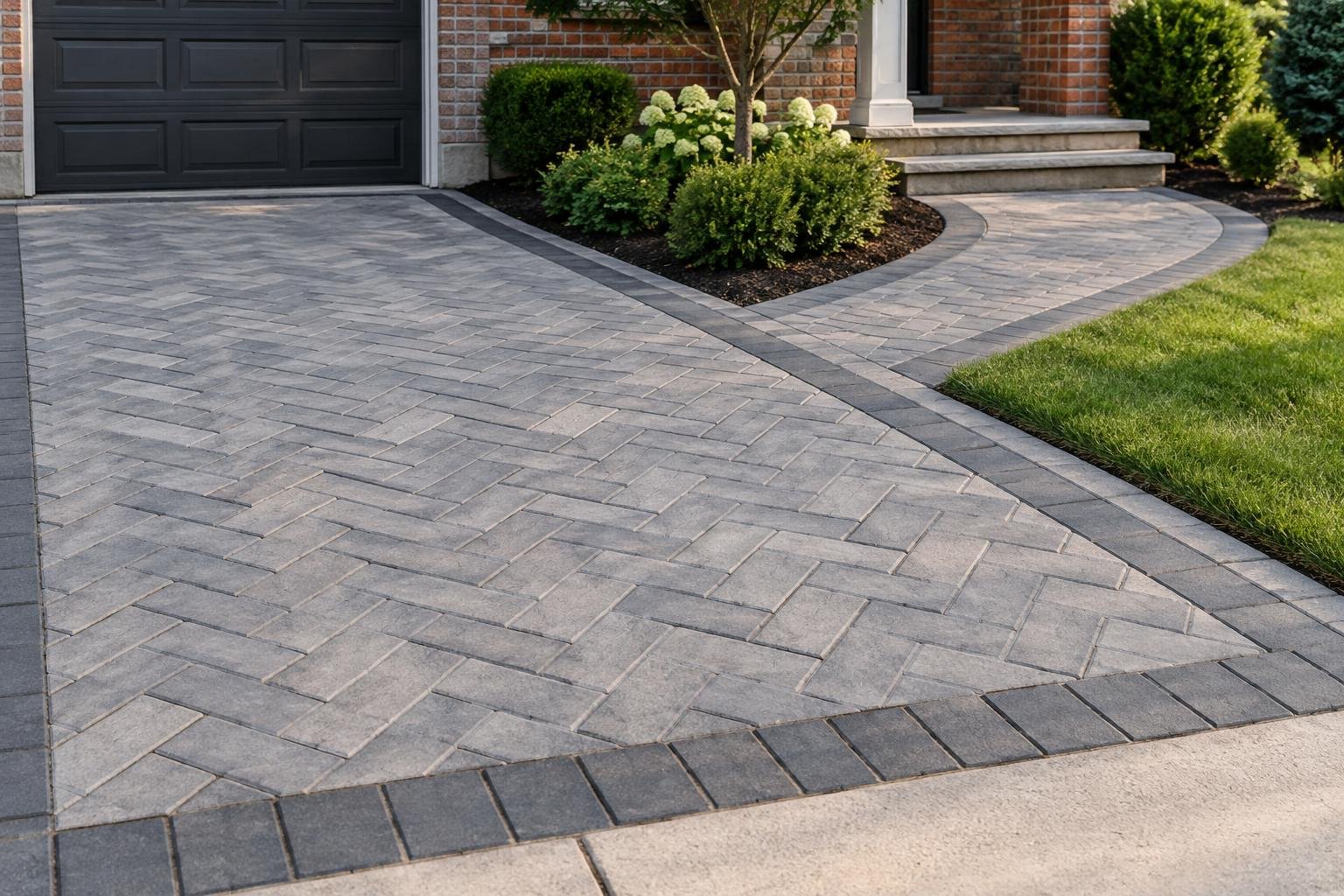
Concrete pavers offer a range of shapes, textures and colors, making it possible to coordinate with brick facades, siding and existing masonry. Brick pavers can provide a more traditional appearance, but the specific product still needs to be appropriate for driveway loading and local weather exposure.
Review physical samples outdoors rather than choosing solely from a screen. Look at them beside the house in both sun and shade. A heavily textured or strongly contrasting surface may look different across a full driveway than it does in a small sample board.
Pattern, borders and everyday use
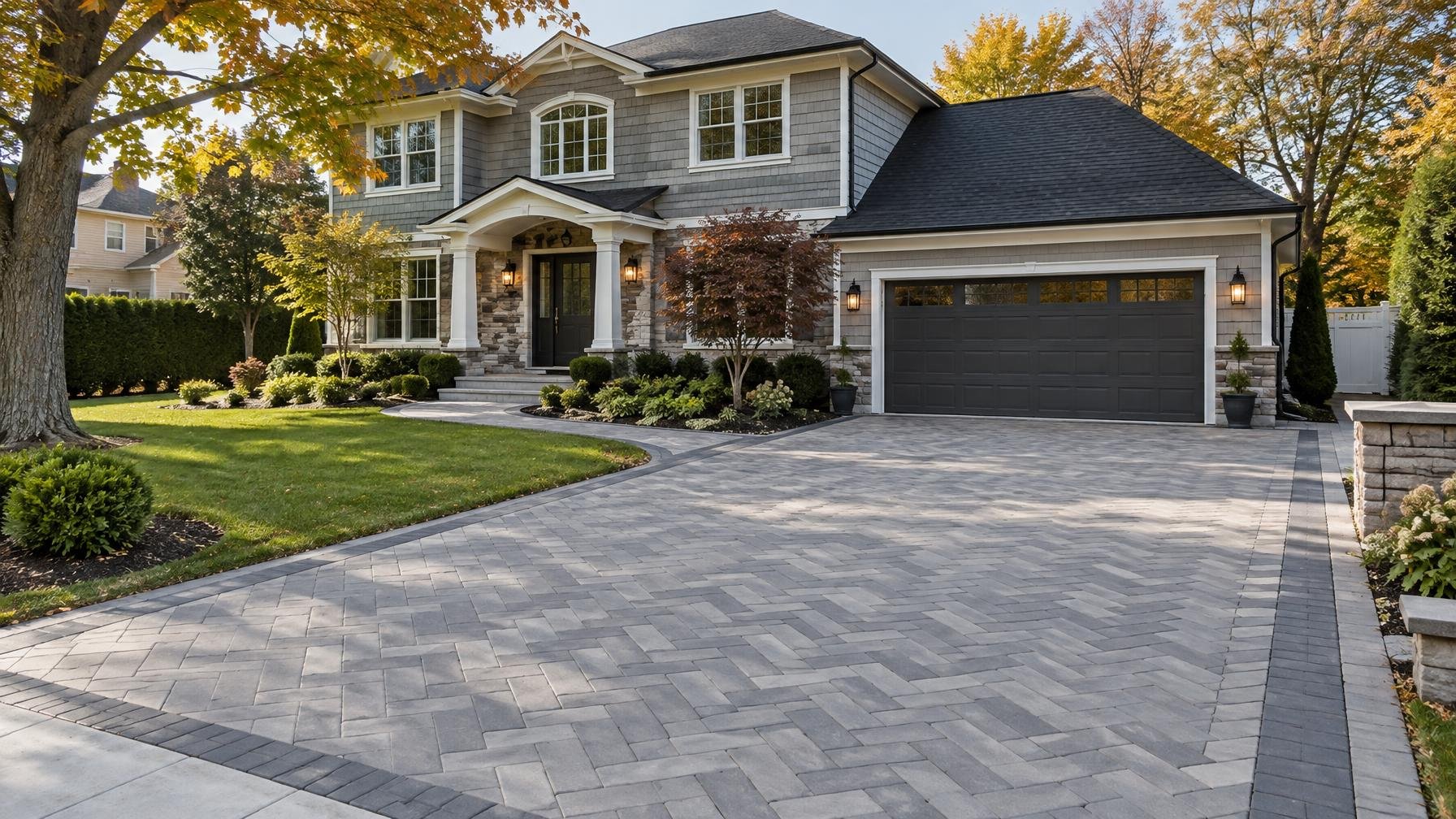
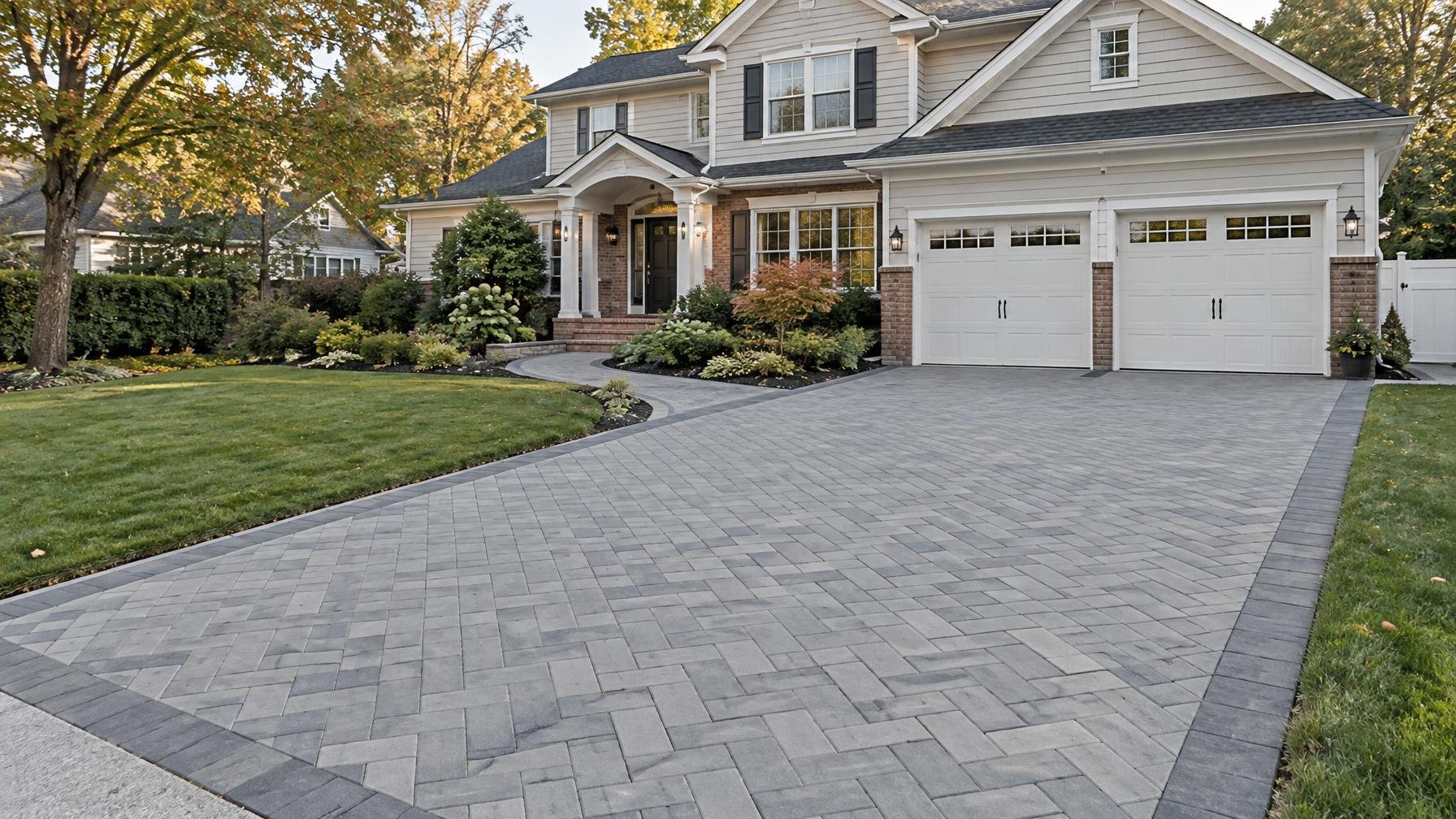
Pattern selection affects both appearance and the arrangement of joints under traffic. Herringbone is often considered for vehicle areas because of its interlocking layout, but performance still depends on proper construction and restraint. Avoid a design that creates unnecessary narrow cuts at heavily loaded edges.
For related planning considerations, see the Nassau County interlocking paver driveway guide. Keep the final design focused on your property's dimensions rather than copying a layout built for a different driveway.
Confirm Local Requirements Before Expanding or Changing Access
Syosset is within the Town of Oyster Bay, but the requirements for a particular driveway project depend on the address and proposed work. Replacing an existing surface is not necessarily treated the same way as widening parking areas, changing grades or altering the connection to the street.
Before scheduling construction, confirm with the appropriate local authority whether approvals are needed for the planned scope. Ask specifically about driveway width, paved coverage, drainage changes and any work involving the apron, curb or public sidewalk. If the road is under another authority's jurisdiction, additional coordination may be necessary.
Property boundaries should also be established before extending paving toward a side yard. Do not rely solely on an old fence or existing pavement edge as proof of the property line. Discuss required utility marking and separately identify private features such as irrigation or landscape-lighting lines.
Make the Installation Scope and Access Plan Clear
A useful proposal should describe the work below the pavers as clearly as the visible finish. Ask what is included in demolition, disposal, excavation, base preparation, bedding, edge restraint and joint treatment. The selected paver product, pattern and border should also be identified.
- Site access: Where will equipment enter, and where can materials be staged?
- Parking: Where will vehicles go while the driveway is unavailable?
- House access: How will occupants reach the entrance safely during work?
- Weather: How could wet ground or freezing conditions affect the schedule?
- Completion: When can vehicles return under the selected installation system?
Discuss how unexpected conditions will be handled if excavation exposes unsuitable soil or concealed obstructions. Before parking on the finished surface, get clear instructions on any waiting period associated with jointing materials, restraints or adjacent concrete work.
Protect the Finished Driveway With Routine Checks
After installation, watch for recurring puddles, shifting edges or loss of joint material. Addressing a localized issue early can help limit additional movement. Keep soil and mulch from building up along the borders, and clear leaves that hold moisture against the surface.
Use snow-removal equipment and deicing products according to the paver manufacturer's recommendations. Avoid aggressive scraping that can damage raised edges or surface finishes. Cleaning methods should also suit the material; excessive pressure can disturb joints. Sealing is a separate maintenance decision, not a remedy for poor drainage or an unstable base.
Request a Free On-Site Estimate in Syosset
StoneSky Pavers & Masonry serves Syosset, Nassau County, Queens and Long Island. For a new driveway or replacement project, have your parking needs, drainage concerns and preferred material options ready for the site visit.
Request a free on-site estimate or call (929) 528-1205 to discuss your paver driveway installation in Syosset, NY.
Frequently Asked Questions
Do I need a permit for a paver driveway in Syosset?
Requirements depend on the property and scope. Confirm with the Town of Oyster Bay and any relevant road authority before widening a driveway, changing drainage or modifying the apron, curb or public sidewalk. Do not assume a replacement and an expansion have the same requirements.
Can driveway pavers be installed over my existing driveway?
That requires an assessment of the existing surface, elevations, drainage and the proposed installation system. Covering a cracked or settling driveway does not correct underlying problems. Removal and base reconstruction may be needed.
Which pavers should I choose for vehicle traffic?
Choose a product specifically rated for driveway use and install it according to its requirements. Concrete and brick pavers can be options, but product thickness, base construction, laying pattern and edge restraint all affect suitability.
Will a paver driveway stop water from pooling near my garage?
Pavers alone will not correct pooling. The project needs a grading and drainage plan that considers garage elevation, downspouts, runoff routes and ground conditions. Conventional paver joints should not be treated as a permeable drainage system.
Can sunken driveway pavers be repaired instead of replaced?
Localized settlement may be addressed by lifting the affected pavers, correcting the supporting layers and resetting the surface. Widespread movement or recurring drainage problems may require a larger repair. An on-site assessment helps determine the appropriate scope.
Does StoneSky offer free driveway estimates in Syosset?
Yes. StoneSky Pavers & Masonry serves Syosset and offers free on-site estimates. Call (929) 528-1205 or use the contact page to request a visit.