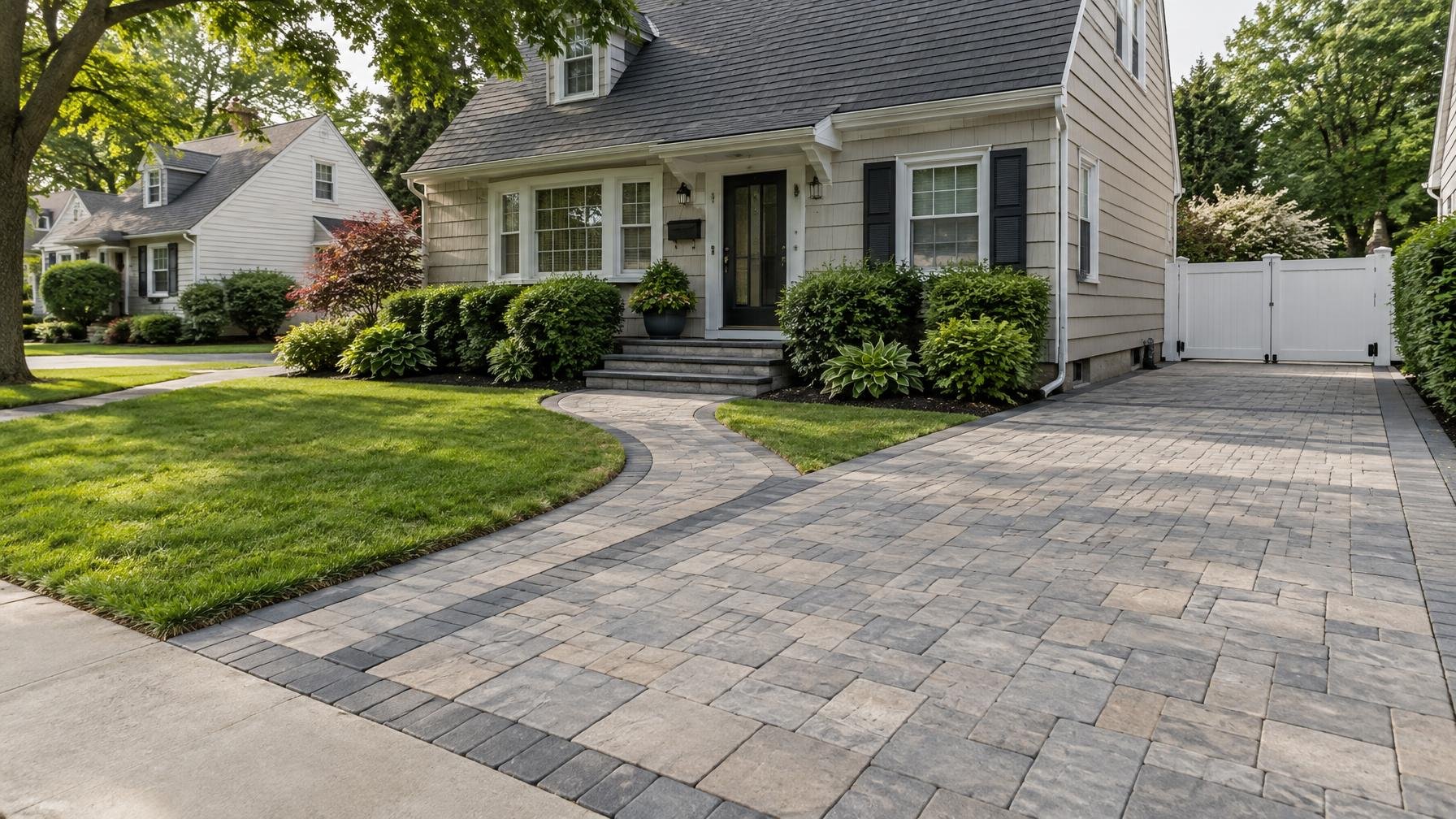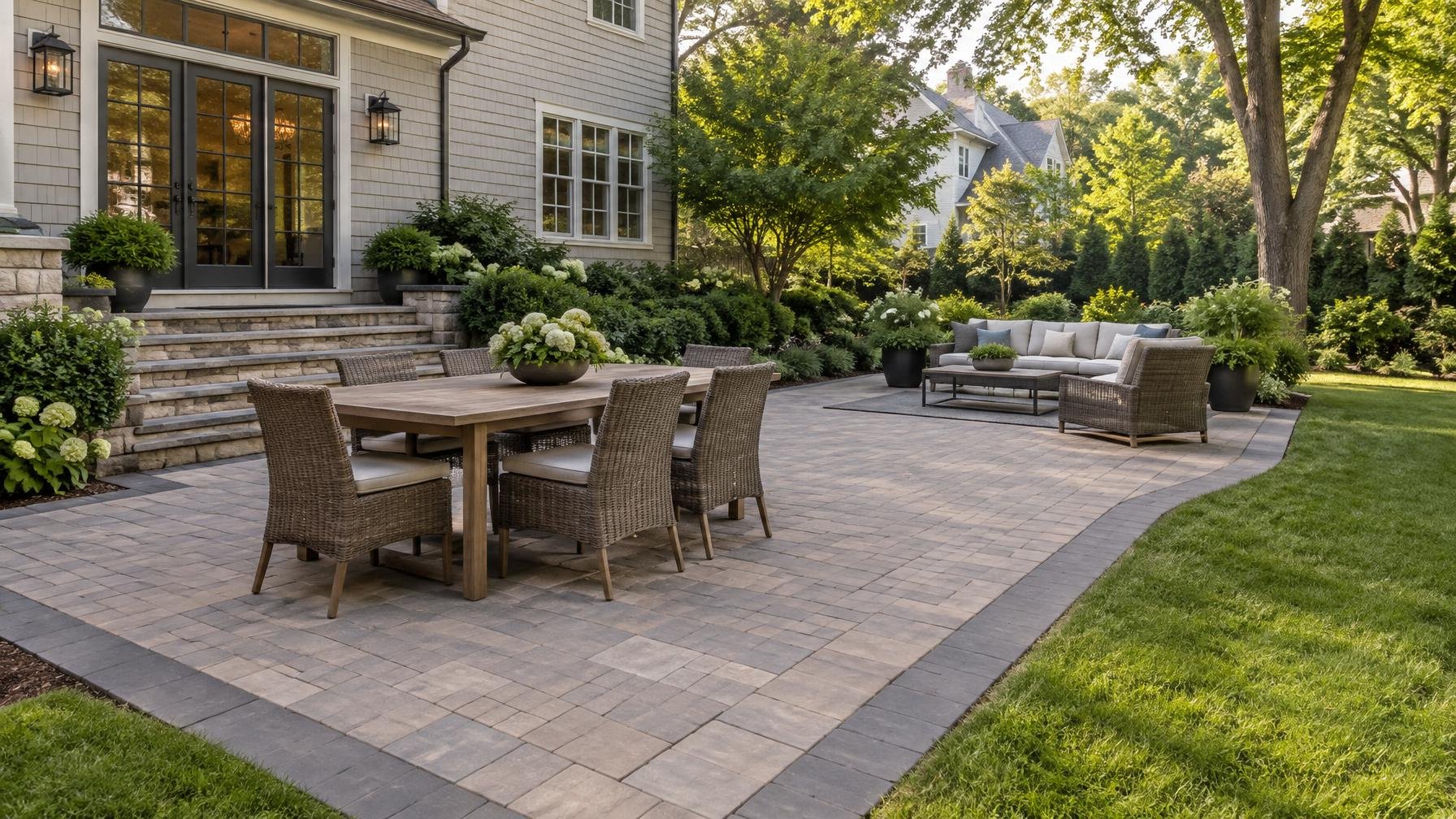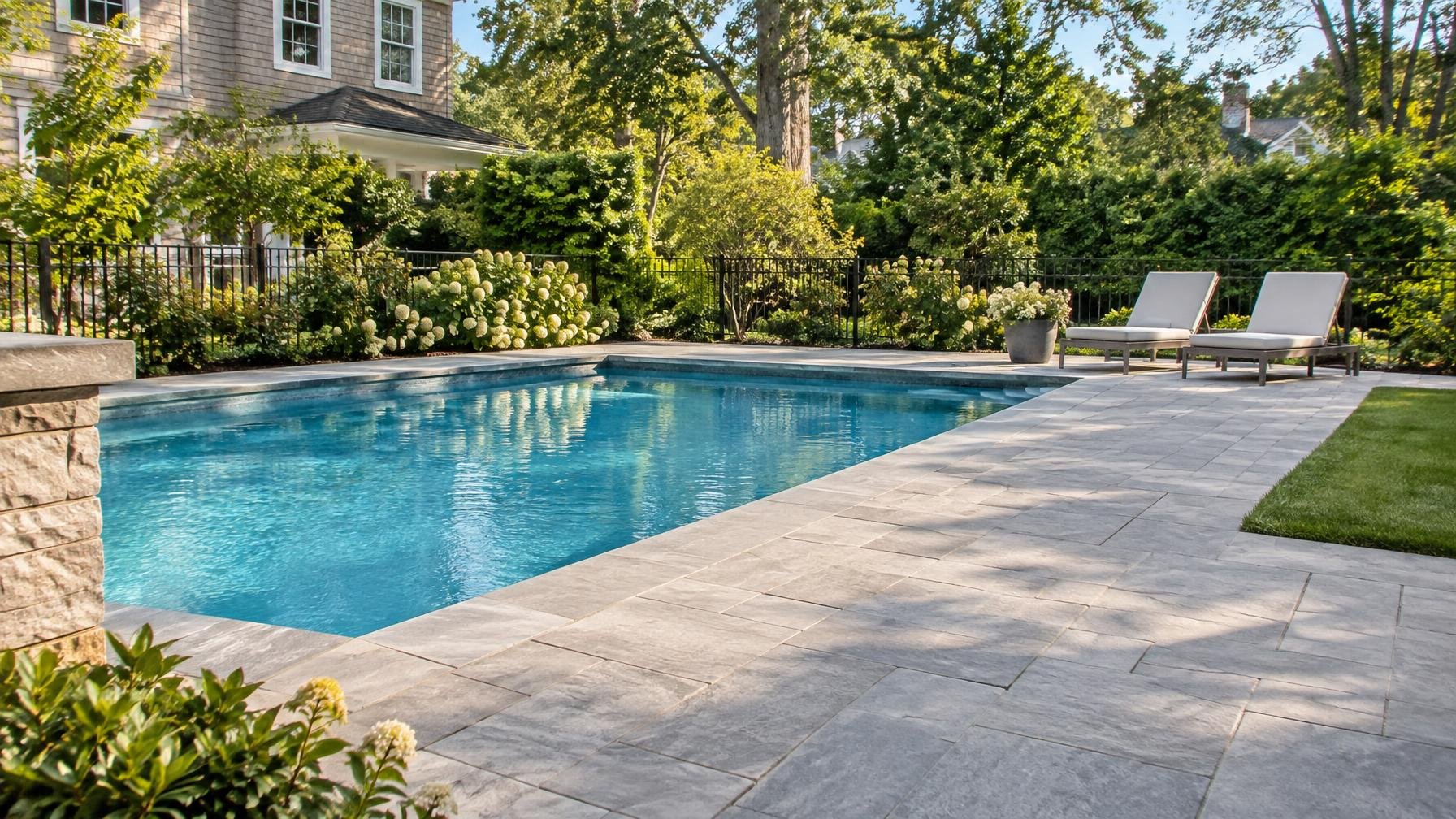
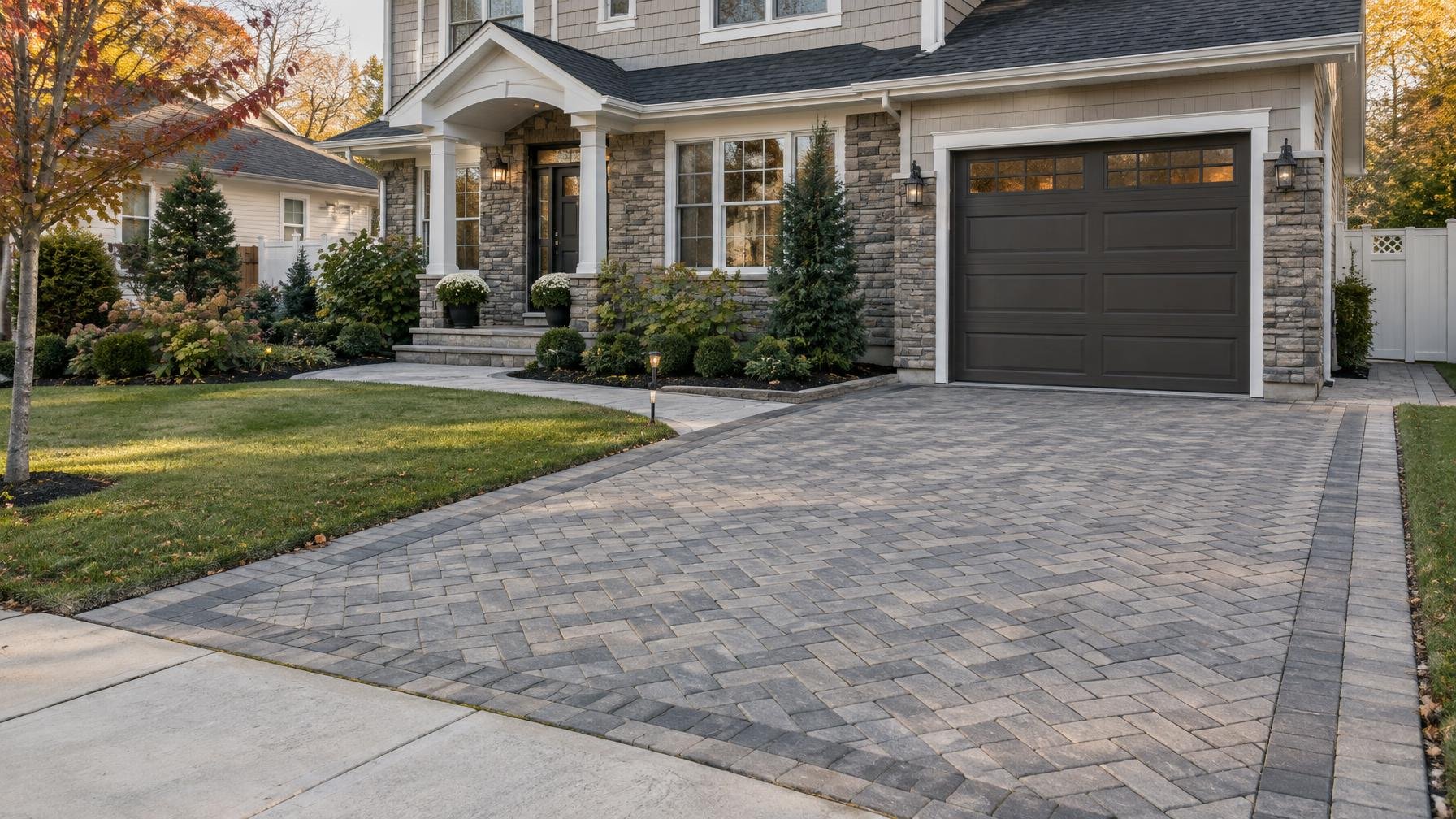
An interlocking paver driveway in Nassau County needs more than an attractive pattern: it needs a base suited to vehicle traffic, secure edges and a clear plan for runoff. For homeowners in Garden City, Levittown, Massapequa and nearby communities, the right starting point is an on-site review of existing grades, ground conditions and daily parking needs. StoneSky Pavers & Masonry offers paver driveway installation and free on-site estimates throughout Nassau County.
What Makes a Driveway an Interlocking Paver System?
Interlocking pavers work together rather than acting as isolated blocks. Their layout, filled joints, bedding layer and edge restraints help the finished surface resist movement under normal use. The compacted base underneath supports vehicle loads; the pavers alone cannot compensate for weak ground or inadequate preparation.
For a driveway, select units specifically rated by their manufacturer for the intended vehicle traffic. A product suitable for a garden path may not be suitable for repeated parking and turning. StoneSky’s interlocking paver services cover projects where material selection and installation details need to work together.
Also distinguish standard interlocking paving from permeable paving. Ordinary paver joints do not automatically make a driveway a stormwater infiltration system. A permeable installation requires compatible pavers, joint aggregate, a purpose-designed base and an assessment of whether the site can handle infiltration.
Start with How You Actually Use the Driveway
Measure Parking and Movement, Not Just Square Footage
Before discussing colors, identify where vehicles park, where doors open and how people reach the house. A driveway that fits two parked cars can still leave an awkward walking route to the front steps. Note garage access, delivery activity and any larger vehicles that regularly use the property.
- Parking positions: Allow for opening doors without stepping into planting beds.
- Turning areas: Identify places where steering tires repeatedly load the same section.
- Walking routes: Keep access to the entrance practical when every parking space is occupied.
- Connections: Review transitions at the garage, sidewalk, driveway apron and front walkway.
Account for the Property’s Existing Constraints
Across Nassau County, driveway layouts vary from narrow side drives to wider parking areas in front of attached garages. On a constrained lot in Great Neck or Manhasset, excavation access and nearby foundations may influence the work plan. On a property in Hicksville or Levittown, the main challenge might instead be reorganizing parking while preserving lawn or walkway space. Those are site questions, not assumptions to make from the address alone.
Base Preparation Is the Main Structural Decision
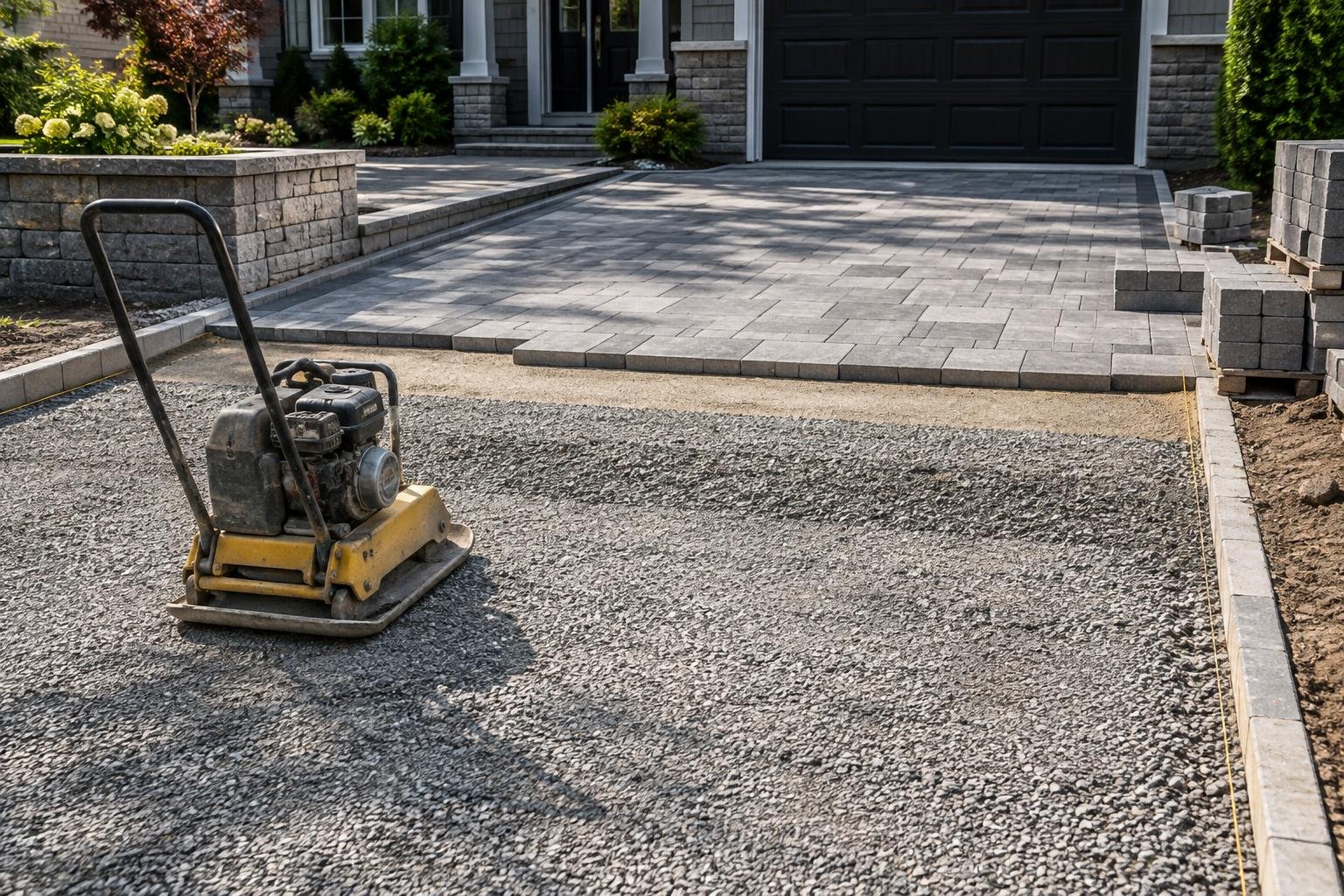
An estimate should explain what happens beneath the pavers. Removing the old surface is only the first step. The exposed subgrade must be evaluated for soft areas, unsuitable fill and moisture conditions before the new base is built.
There is no single excavation depth appropriate for every driveway. Required preparation depends on soil conditions, expected loads, drainage and the selected paving system. Ask how the contractor will determine the base section and address weak spots discovered after removal.
Base aggregate should be installed and compacted in appropriate lifts rather than dumped in one thick layer. The bedding layer then provides a consistent setting surface; it should not be used to hide major irregularities in the base. Secure edge restraints are equally important because unrestrained outside rows can spread as vehicles turn near the perimeter.
Long Island’s winter freezing and thawing make water management beneath and around the driveway especially important. Good preparation reduces conditions that contribute to movement, but no credible installation discussion should promise that outdoor paving can never shift.
Plan Drainage Before Choosing the Finished Pattern
Walk the property after rain if possible. Look for water against the garage, puddles near the front steps, soft lawn edges and sediment washing onto the existing driveway. Photographs can help explain a problem that is not visible during a dry-weather estimate.
The proposed surface should have a deliberate drainage path that accounts for the house, neighboring properties and the street connection. Simply raising a low area can move the puddle somewhere less convenient. Likewise, lowering a driveway without checking garage and sidewalk elevations can create difficult transitions.
Questions to Resolve During the Site Visit
- Where does runoff go now, and where should it go after installation?
- Will downspouts discharge across or alongside the driveway?
- Can the proposed grades work with the existing garage threshold?
- Will a new border or adjacent planting bed block water movement?
- Does the proposed drainage approach require municipal review?
For properties in lower-lying or coastal parts of Massapequa, existing high-water conditions may complicate infiltration plans. Permeable paving is not an automatic solution for every wet driveway. Its suitability depends on actual ground conditions, available storage and an appropriate outlet where required.
Choose Driveway Materials for Traction, Loads and Upkeep
Color and shape matter, but start with suitability for vehicles and exposure to local weather. Ask to see the manufacturer’s driveway-use guidance for the proposed product, including installation requirements and care recommendations.
Pattern and Paver Size
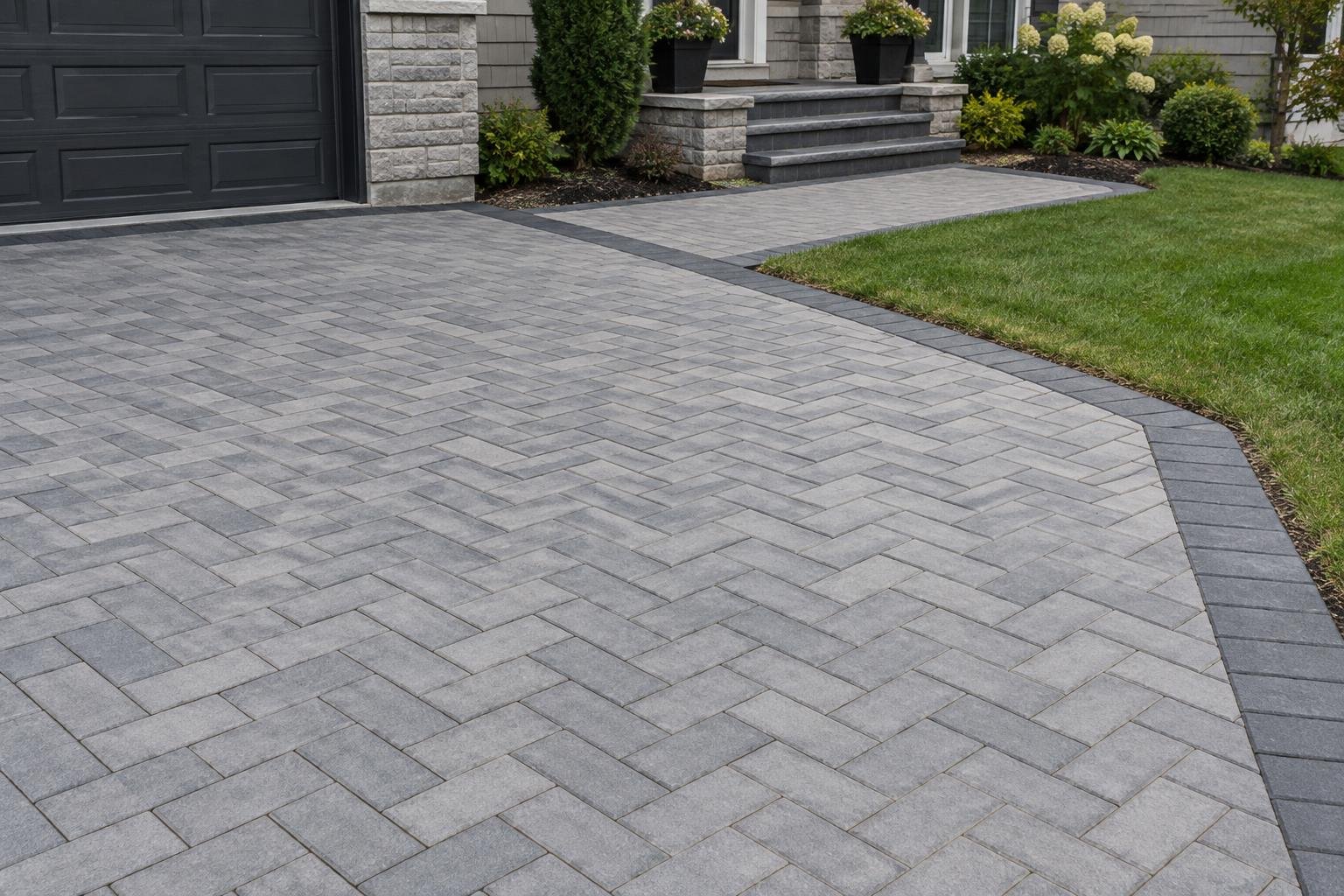
Herringbone patterns are often used for interlocking concrete paver driveways because their arrangement helps resist movement from braking and turning. Other patterns can work when the selected system supports the application. Larger-format units require particular attention to vehicle ratings and base requirements; a patio slab should not be substituted simply because its appearance matches the house.
Surface Texture and Color
Review samples outdoors beside the siding, brickwork or existing stoop. Look at them dry and wet when practical. A highly textured face may provide a different walking feel than a smoother one, while deep surface relief can affect snow clearing. Blended colors can make everyday dirt less conspicuous, but no color eliminates cleaning or stain management.
Borders and Transitions
A contrasting border can define the parking area and connect the driveway visually to the entrance. Its decorative role does not replace structural edge restraint. Ask how the layout will avoid small, vulnerable cut pieces at heavily used edges and how finished elevations will meet adjacent surfaces without abrupt lips.
StoneSky’s paver driveway services provide a starting point for discussing layout, materials and connections as one project rather than separate decisions.
Check Local Requirements Before Work Starts
Nassau County properties fall within different town, city and village jurisdictions. Do not assume a driveway replacement, widening or apron change follows the same process everywhere. Confirm the applicable requirements with the municipality responsible for your address before finalizing the scope.
Ask specifically about changes to paved area, curb cuts, public sidewalks, driveway aprons and drainage. If the work approaches a street tree, clarify any restrictions affecting roots or excavation. Confirm who will handle required applications, inspections and utility marking before digging.
Keep the distinction between private driveway work and work in the public right-of-way clear in the proposal. Replacing paving on your property does not automatically authorize changes at the curb or sidewalk.
Decide Whether Repair or Replacement Makes Sense
If you already have pavers, isolated settlement does not necessarily mean the entire driveway needs replacement. Sound units can sometimes be lifted, the underlying problem corrected and the area reset. The decision depends on how widespread the movement is and whether the existing elevations and drainage are workable.
Recurring wheel-track depressions, widespread edge spreading or water consistently collecting against the garage call for a broader assessment. Resetting only the visible low spot may not address the cause. StoneSky offers paver repair and resetting for homeowners evaluating whether existing paving can be retained.
For either option, discuss ongoing care: sweeping debris, checking joint material, treating spills promptly and following product-specific snow and ice guidance. Sealing is a separate maintenance decision, not a substitute for a properly built base.
Request a Free On-Site Estimate in Nassau County
Before the visit, gather photos of standing water, note your normal parking arrangement and identify any plans to change the driveway’s width or shape. Ask for a written scope covering removal, base preparation, paver selection, edges, transitions and drainage responsibilities.
StoneSky Pavers & Masonry serves Nassau County, Queens and Long Island with paver installation, repairs and related concrete and masonry services. Request a free on-site estimate for your driveway, or call (929) 528-1205 to discuss the property and the work you have in mind.
Frequently Asked Questions
Are interlocking pavers suitable for a Nassau County driveway?
Yes, when the selected pavers are rated for vehicle use and installed over a properly designed, compacted base. Drainage, edge restraint, soil conditions and expected vehicle loads should all be reviewed before installation.
How deep should the base be under a paver driveway?
There is no universal depth for every property. The base section should reflect the soil, drainage conditions, vehicle loads and manufacturer’s installation requirements. Ask the contractor to explain the proposed preparation and how unsuitable ground will be handled.
Do I need a permit to replace a driveway in Nassau County?
Requirements depend on your town, city or village and the scope of work. Confirm local rules, especially if you plan to widen the driveway, change drainage, alter a curb cut or disturb the sidewalk or apron.
Are all interlocking paver driveways permeable?
No. A permeable driveway requires a compatible paving system with appropriate joint aggregate and a specially designed base. Standard interlocking pavers should not be assumed to provide stormwater infiltration.
Can sunken driveway pavers be repaired without replacing everything?
Often, an isolated area can be lifted and reset after correcting the underlying support or drainage problem. Widespread settlement or unsuitable overall grades may require more extensive work. An on-site assessment helps determine the appropriate scope.