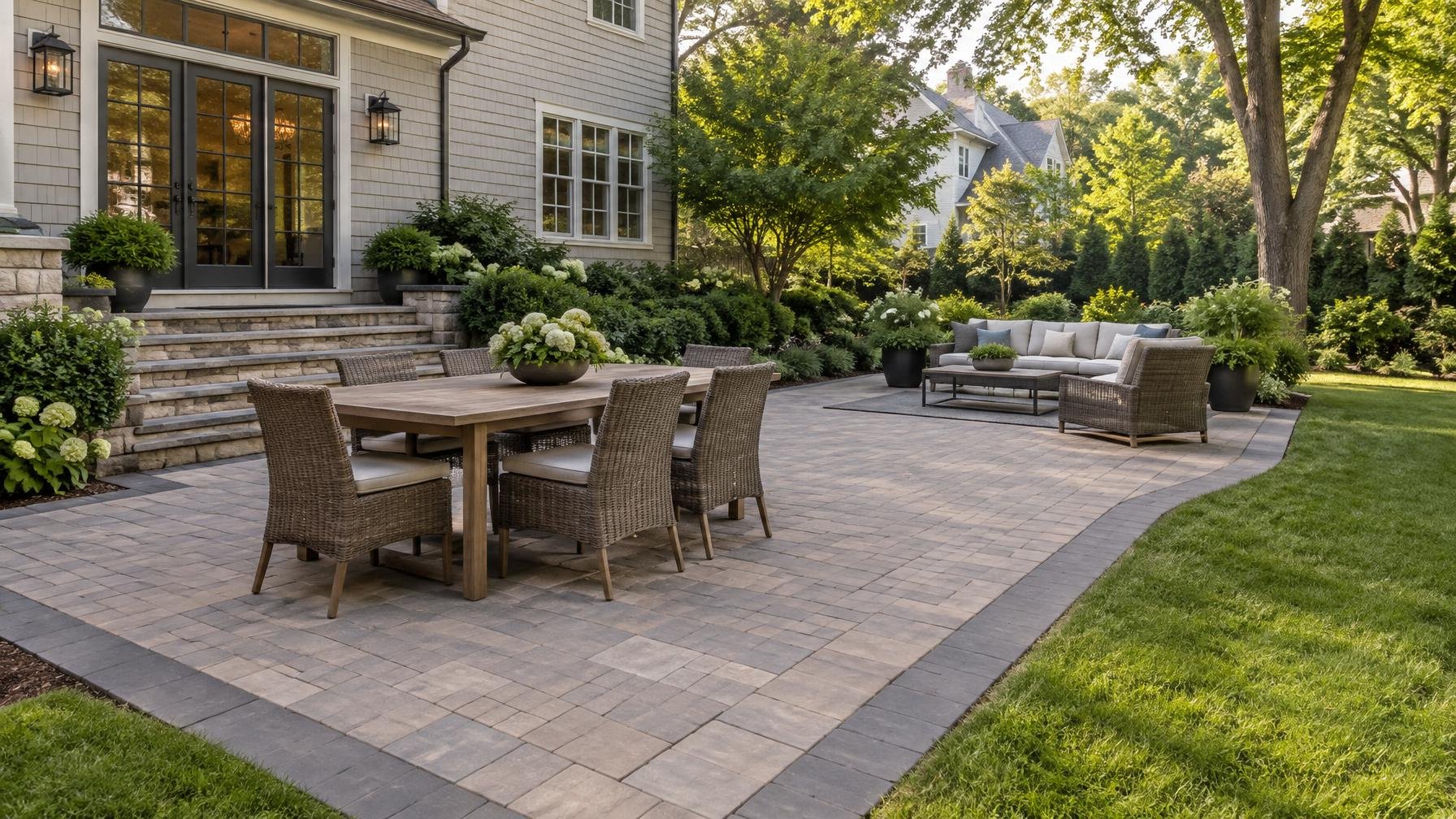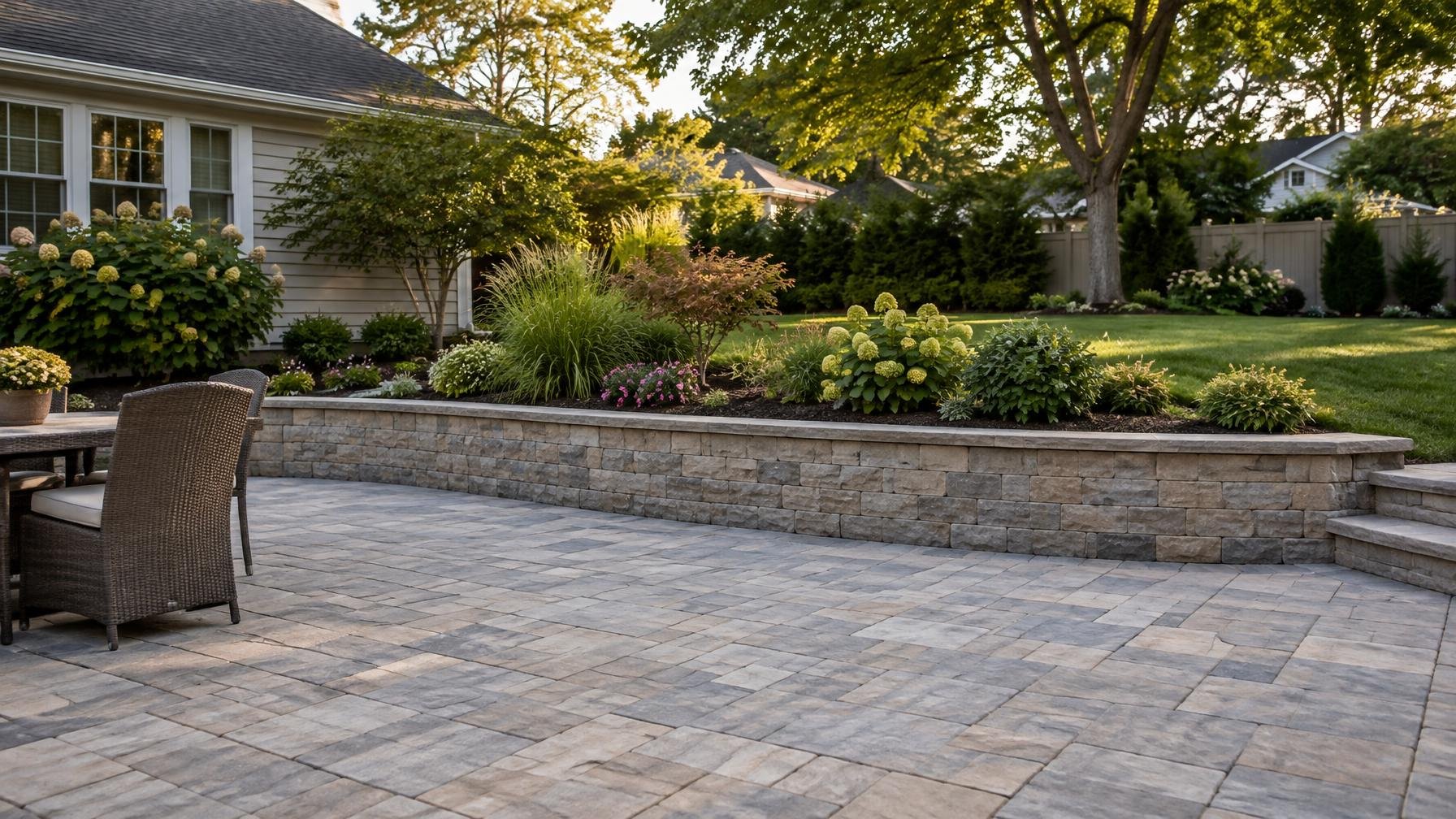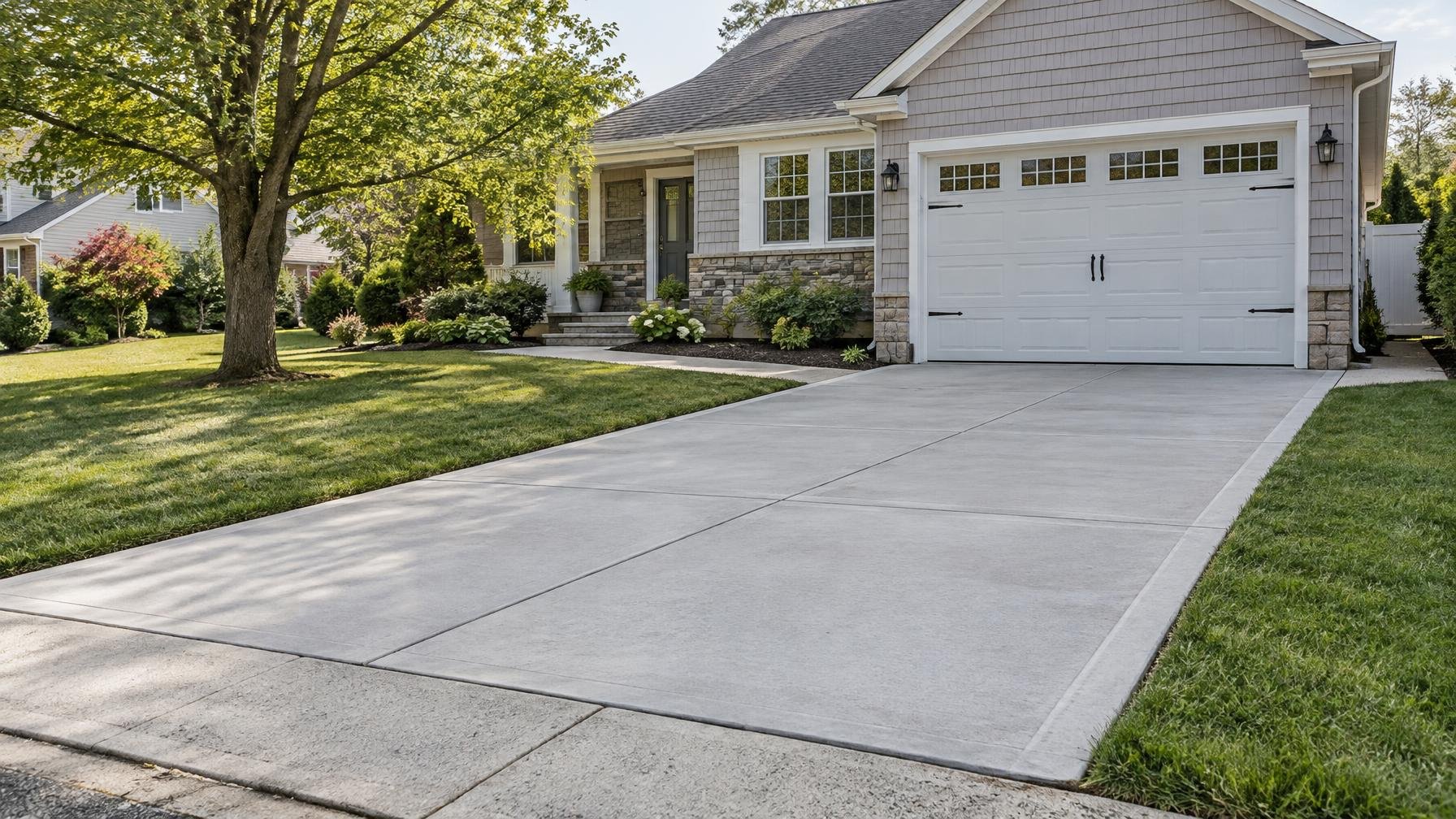
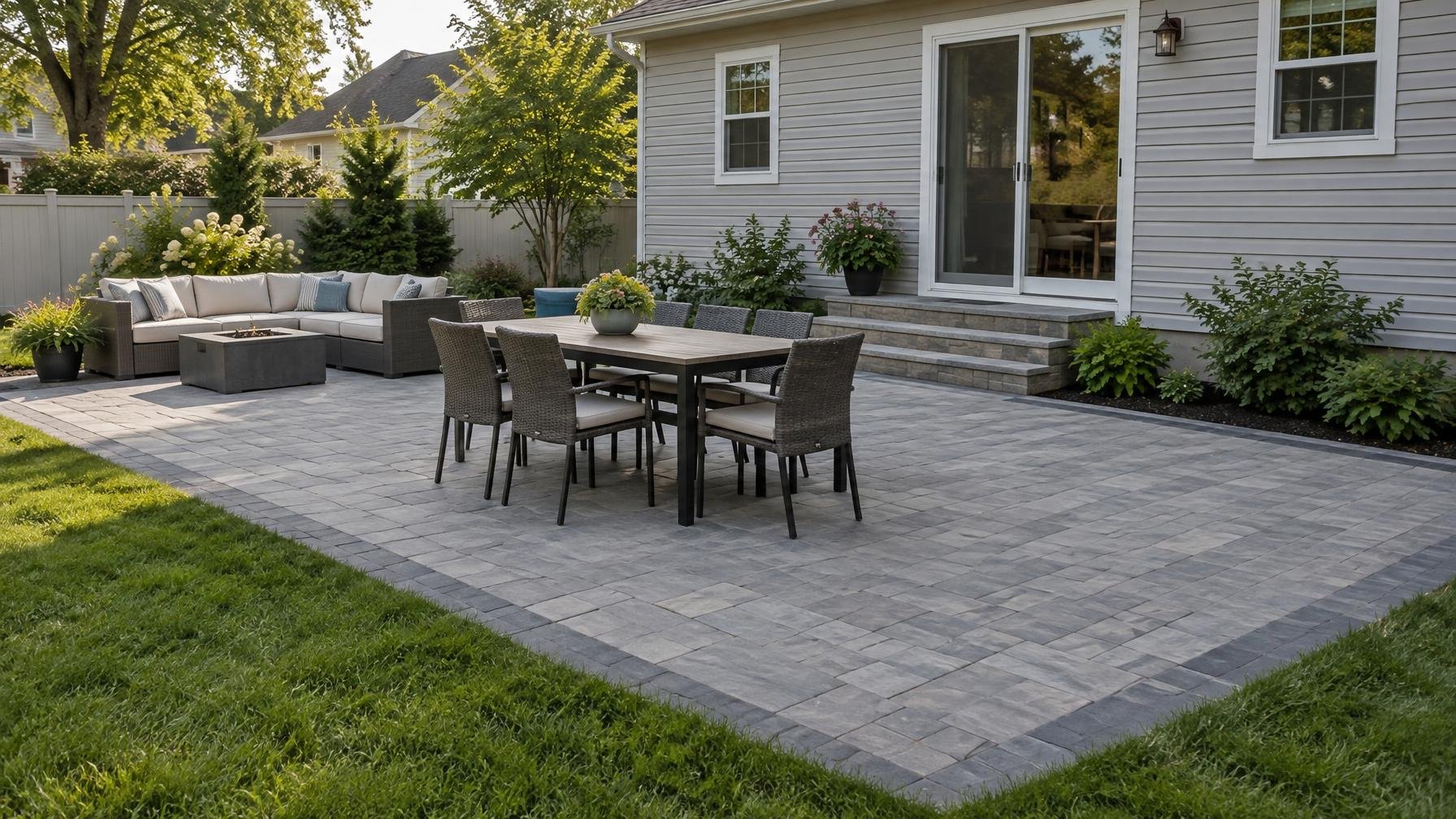
Paver patio installation in Massapequa, NY starts with checking how your backyard drains, setting the right finished height and choosing a layout that fits daily use. StoneSky Pavers & Masonry installs paver patios in Massapequa and across Nassau County, with free on-site estimates to review those conditions before work begins.
Whether you are replacing an uneven sitting area or building a patio outside the back door, use this guide to plan the surface, understand the installation scope and avoid overlooking important details.
Start With How You Will Use the Patio
Before choosing a pattern, decide what needs to fit. A dining table, grill and lounge chairs require more than their individual footprints: people need room to pull out chairs, carry food and walk past furniture without stepping into planting beds.
Mark the proposed perimeter with stakes or a garden hose. Set out existing furniture, then walk the route from the back door to the grill, garage and yard. This simple check can reveal a tight corner before the shape becomes permanent.
Plan around doors, gates and existing features
- Back-door access: Keep landing areas clear and check how the patio will meet existing steps.
- Grill placement: Follow the grill manufacturer's clearance requirements and keep the cooking area out of the main walking route.
- Gate access: Preserve enough room to move lawn equipment and outdoor furniture.
- Existing trees: Identify large roots before excavation; cutting them without proper guidance can damage the tree.
- Future use: Tell the installer if you may later add a heavy feature, because an ordinary patio assembly may not support it.
StoneSky's paver patio services can be discussed alongside connecting walkways or backyard paving so the elevations and layout work together.
Check Drainage Before Choosing Pavers
Massapequa backyards vary, including properties closer to the South Shore waterfront and inland lots with different grades and soil conditions. A neighborhood name alone does not establish whether the ground drains well. The site visit should look at low spots, downspout outlets, existing paving and where water goes during a substantial rain.
A patio should have a planned slope that carries surface water away from the house without sending runoff onto neighboring property. “Level” is not the same as properly graded: a perfectly flat outdoor surface can hold water.
Set the finished elevation first
The finished paver height needs to work with door thresholds, siding, foundation openings, steps and adjacent surfaces. Raising the backyard surface to hide an old problem can create a new one if it reduces clearances or directs water toward the building.
Long Island's winter freeze-thaw cycles make trapped moisture especially important. Water in a poorly drained base can contribute to movement as it freezes and thaws. Adequate excavation, suitable base material and controlled drainage matter more than selecting a thicker-looking paver.
Take photographs of puddles after rain and bring them to the estimate. If groundwater or a persistently wet area is a concern, ask what further assessment is needed before committing to the patio design. Pavers alone are not a drainage solution.
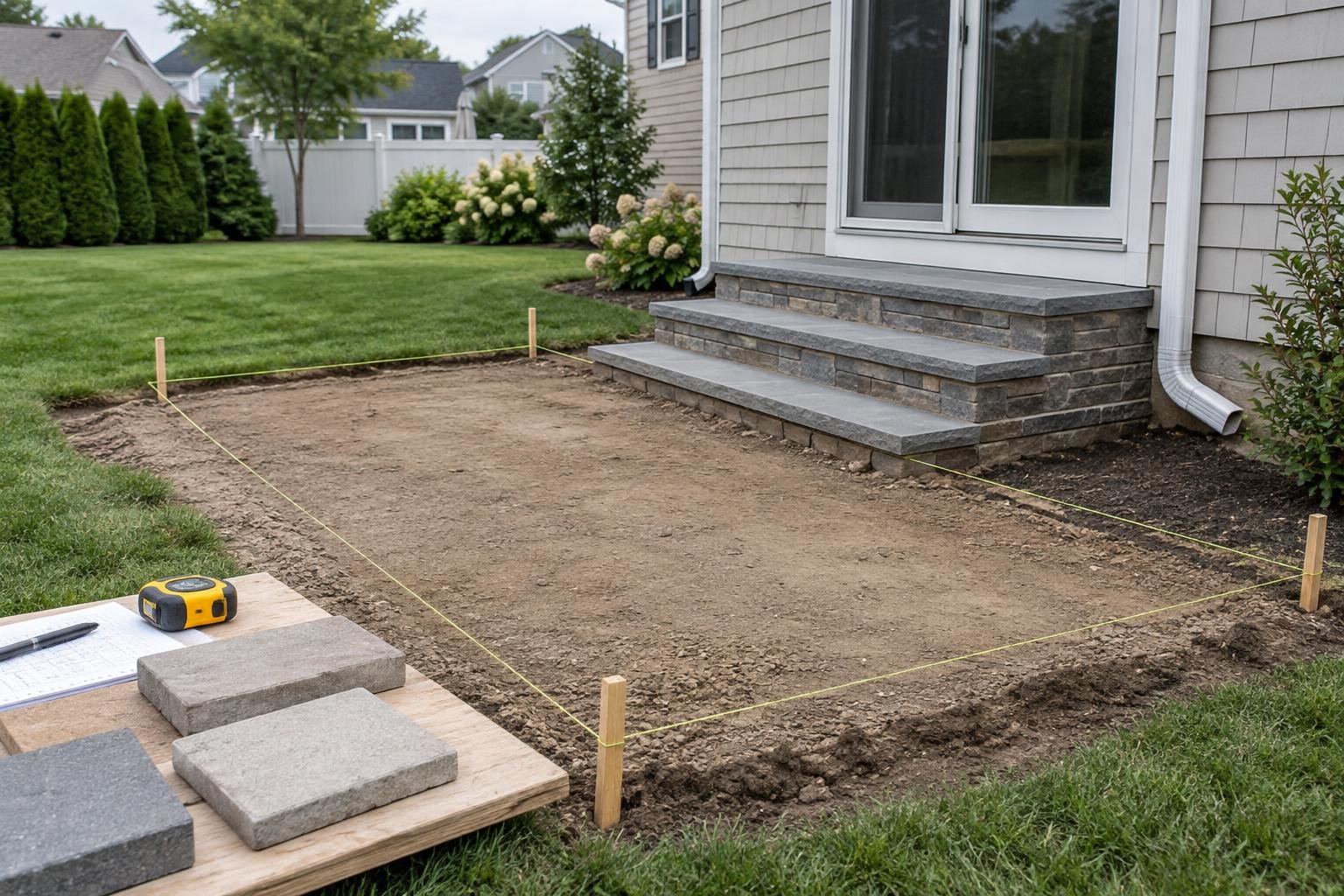
Choose Materials for Use, Not Just Appearance
Color and texture should complement the house, but also consider barefoot comfort, wet traction, cleaning and the installation system each material requires. Look at physical samples outdoors in both sun and shade; catalog photographs do not show every variation.
Concrete pavers
Concrete pavers offer a range of sizes, textures and colors for dining patios and connecting paths. Smaller units can work well around curves, while larger formats create a more open visual pattern. Large units require careful support and handling; ask which products suit the proposed base and installation method.
Brick pavers
Brick can complement traditional brick houses and masonry stoops. Select paving units intended for outdoor ground use and local freeze-thaw exposure rather than assuming wall brick is suitable. Discuss the joint layout and border treatment, particularly where the patio meets existing brickwork.
Porcelain and natural stone
Exterior porcelain offers a different surface character, but the selected product must be appropriate for outdoor paving and the intended installation system. Natural stone provides variation in color and texture, with performance and maintenance depending on the particular stone and finish.
For either option, review wet-surface traction, edge details and cleaning recommendations. If the patio receives strong afternoon sun, compare sample temperatures under similar conditions rather than relying on color names alone.
Permeable pavers
A permeable patio requires a coordinated assembly of pavers, open joints and an appropriate stone base. It is not simply a conventional patio with wider gaps. Soil infiltration, groundwater conditions and an overflow strategy affect suitability. Review StoneSky's permeable paver options if managing runoff is part of your project, without assuming they will solve every wet-yard condition.
What a Complete Installation Scope Should Address
The visible pavers are only one part of the work. A useful proposal explains the preparation underneath them and how the new surface will connect to the rest of the property.
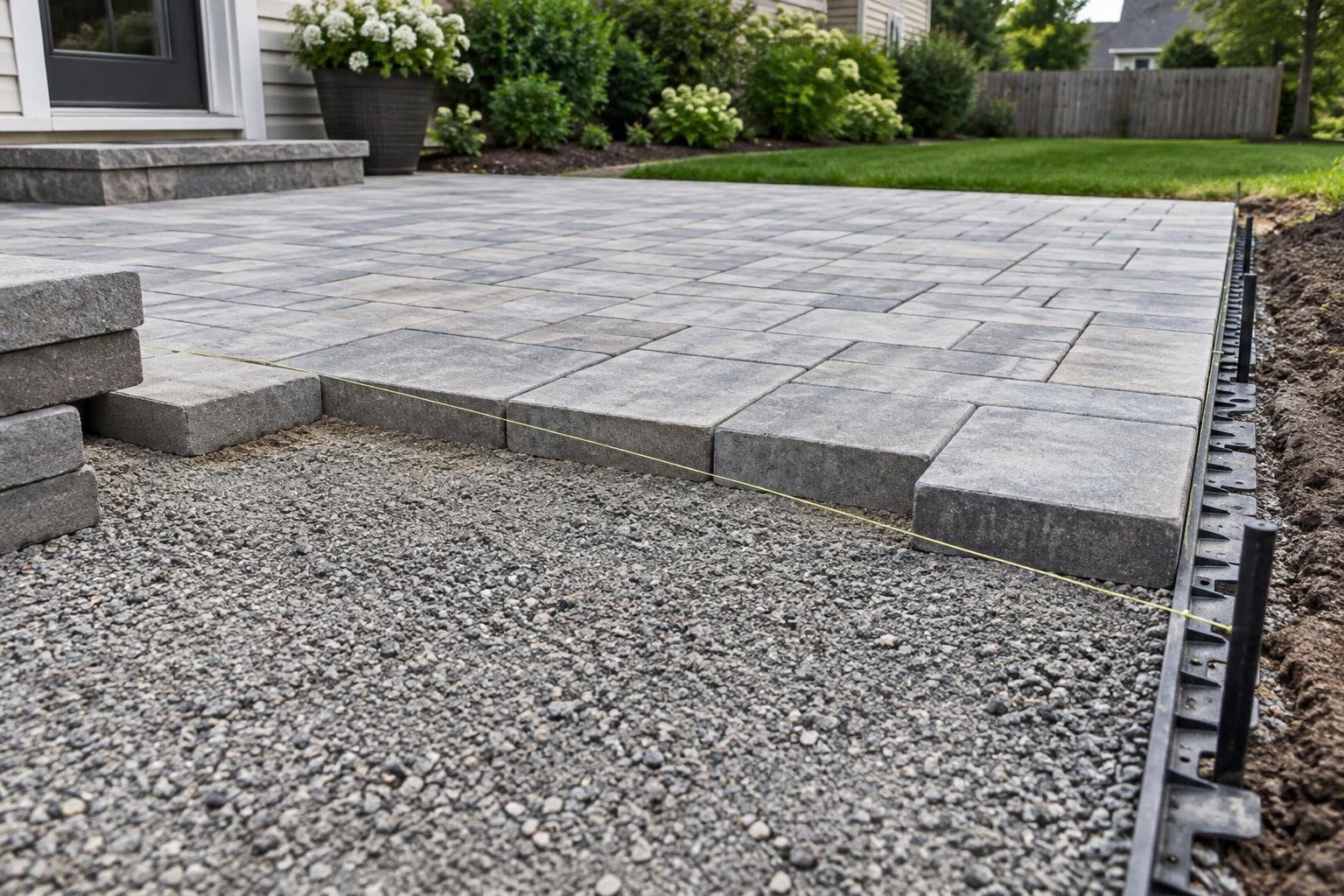
- Removal and excavation: Identify existing paving, vegetation or unsuitable material to be removed, along with access and debris handling.
- Subgrade preparation: Assess exposed soil and address soft areas. Any separation fabric should be selected according to site conditions and the assembly.
- Base construction: Specify the aggregate and planned depth for the soil, loading and paving system. Compact the material in suitable lifts rather than treating a deep loose layer as finished support.
- Bedding and laying: Use the bedding material and thickness required by the selected system, with a consistent layout and carefully fitted cuts.
- Edge restraint: Provide a compatible restraint to help prevent the perimeter from spreading.
- Joint completion: Use the specified joint material and follow its placement and activation requirements.
- Final review: Check transitions, drainage, surface consistency and cleanup before arranging furniture.
There is no single excavation depth that fits every Massapequa backyard. Be cautious about choosing a proposal solely because it lists a substantial depth; the complete assembly, soil condition and workmanship all matter.
Confirm Local Requirements and Backyard Access
Before scheduling, confirm which municipality has jurisdiction over your property. A Massapequa mailing address does not by itself settle permit requirements, and nearby incorporated villages may have their own procedures. Ask the appropriate building department about the proposed patio, changes in grade, lot coverage and any associated steps or walls.
For waterfront or flood-prone properties, ask whether floodplain or other site restrictions affect the work. Do not assume replacing an existing surface automatically removes the need for review.
Utility marking should be arranged before excavation. Also identify private irrigation, landscape lighting, pool lines and other buried features that may not be covered by standard utility marking.
Access affects how the job is organized. A narrow side yard may limit equipment, while fences, air-conditioning equipment and established landscaping can restrict material movement. During the estimate, agree on the entry route, staging area and how disturbed lawn areas will be addressed.
Decide Whether to Replace or Reset an Existing Patio
If you already have pavers, a full replacement may not be necessary. A localized low area, loose border or uneven transition may be a candidate for lifting and resetting when the remaining installation is sound.
Widespread settlement, persistent water toward the house or movement across several areas calls for a broader assessment. Covering the old surface or adding joint sand will not correct an inadequate base. StoneSky offers paver repair and resetting; ask whether targeted work can address the cause or whether rebuilding makes more sense.
Keep Maintenance Practical From the Start
Ask for care guidance for the actual paver and joint products installed. Sweep away leaves, soil and organic debris, and clean spills before they become harder to remove. Avoid aggressive pressure washing that can damage surfaces or dislodge joint material.
Sealing is an option for some installations, not a substitute for proper construction or a requirement for every material. Discuss compatibility, appearance, traction and the correct timing before applying a product. For winter care, follow the paver manufacturer's guidance on deicers and snow-removal tools.
After winter and heavy rain, check the edges, joints and transitions at steps. Addressing a small movement early can help prevent a larger uneven area from developing.
Request a Free On-Site Estimate in Massapequa
Bring your approximate dimensions, furniture plans, preferred materials and any drainage photographs to the site visit. StoneSky Pavers & Masonry can review your Massapequa patio project, including the layout, existing surface and connections to walkways or steps.
Request a free on-site estimate or call (929) 528-1205. Start with the site conditions, then choose a patio design that fits your backyard.
Frequently Asked Questions
Do I need a permit for a paver patio in Massapequa?
Requirements depend on the municipality responsible for your property and the project scope. Check with the appropriate building department about paving, lot coverage, grading and any associated steps or walls. Waterfront or floodplain conditions may require additional review.
Can pavers be installed over my existing concrete patio?
An overlay is only appropriate when the existing slab, drainage, finished elevations and selected paving system allow it. Cracking, settlement or inadequate clearance at doors can make removal the better approach. An on-site assessment is needed before choosing either method.
Will permeable pavers fix standing water in my backyard?
Not necessarily. Permeable paving requires a compatible base and suitable site conditions, including consideration of soil infiltration and groundwater. Persistent standing water should be assessed before deciding whether a permeable patio is appropriate.
How long does paver patio installation take?
The schedule depends on patio size, removal work, backyard access, soil conditions, material availability and weather. Ask for a project-specific sequence and expected schedule after the site visit rather than relying on a general installation timeframe.
Can sunken patio pavers be repaired instead of replaced?
Often, localized sunken areas can be lifted and reset after correcting the support underneath. Widespread movement or drainage problems may require more extensive rebuilding. StoneSky offers paver repair and resetting as well as new installation.