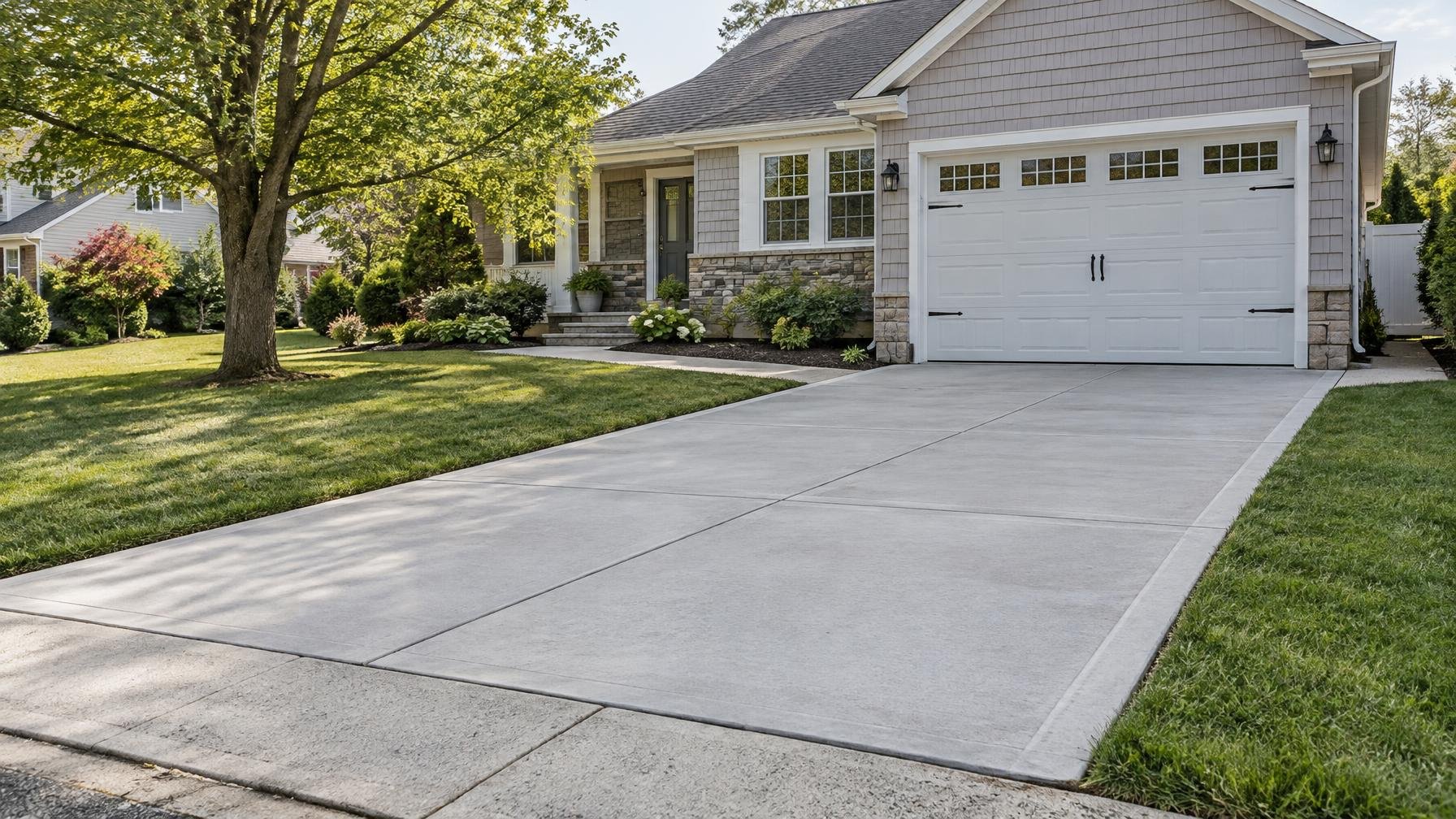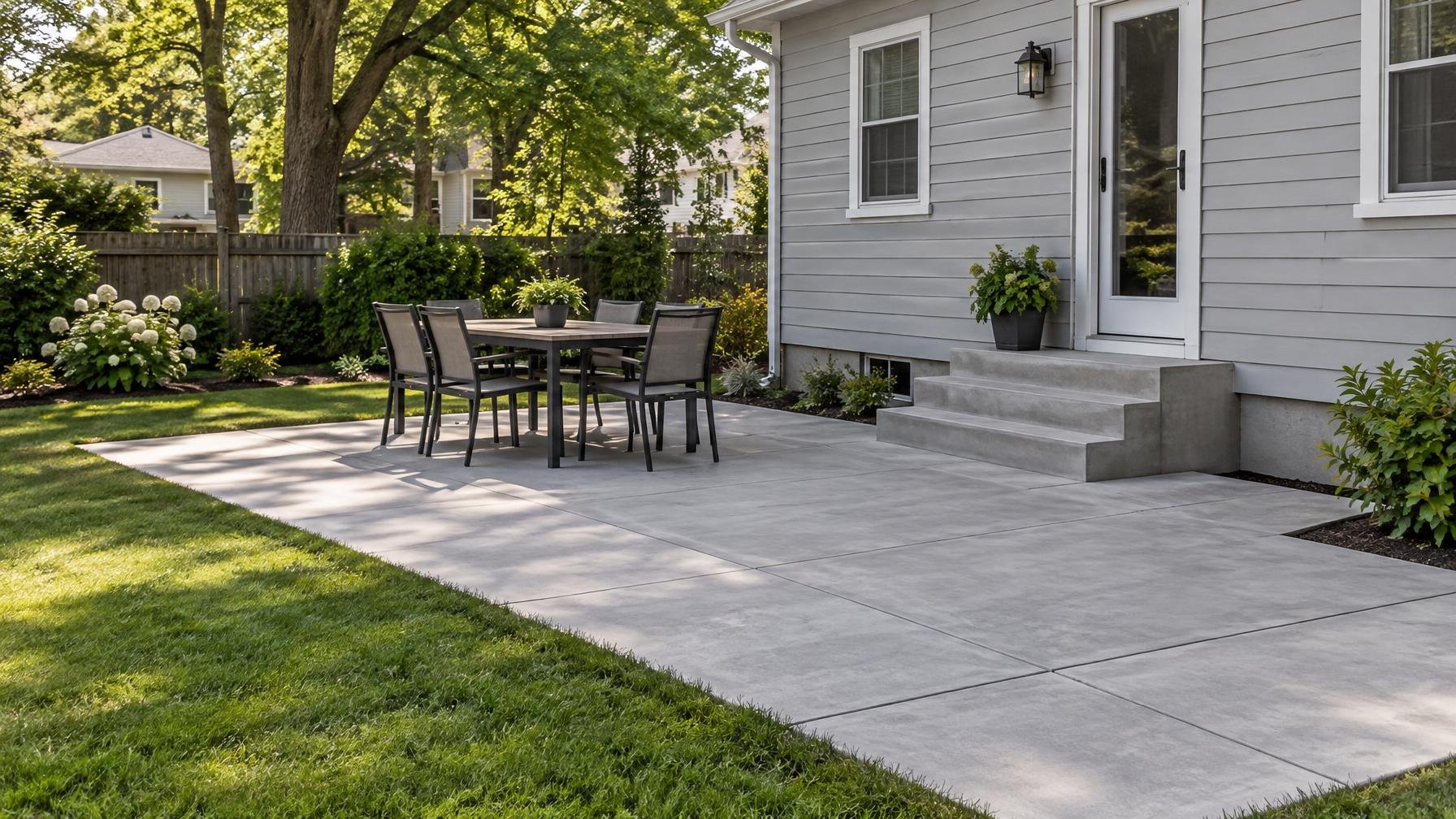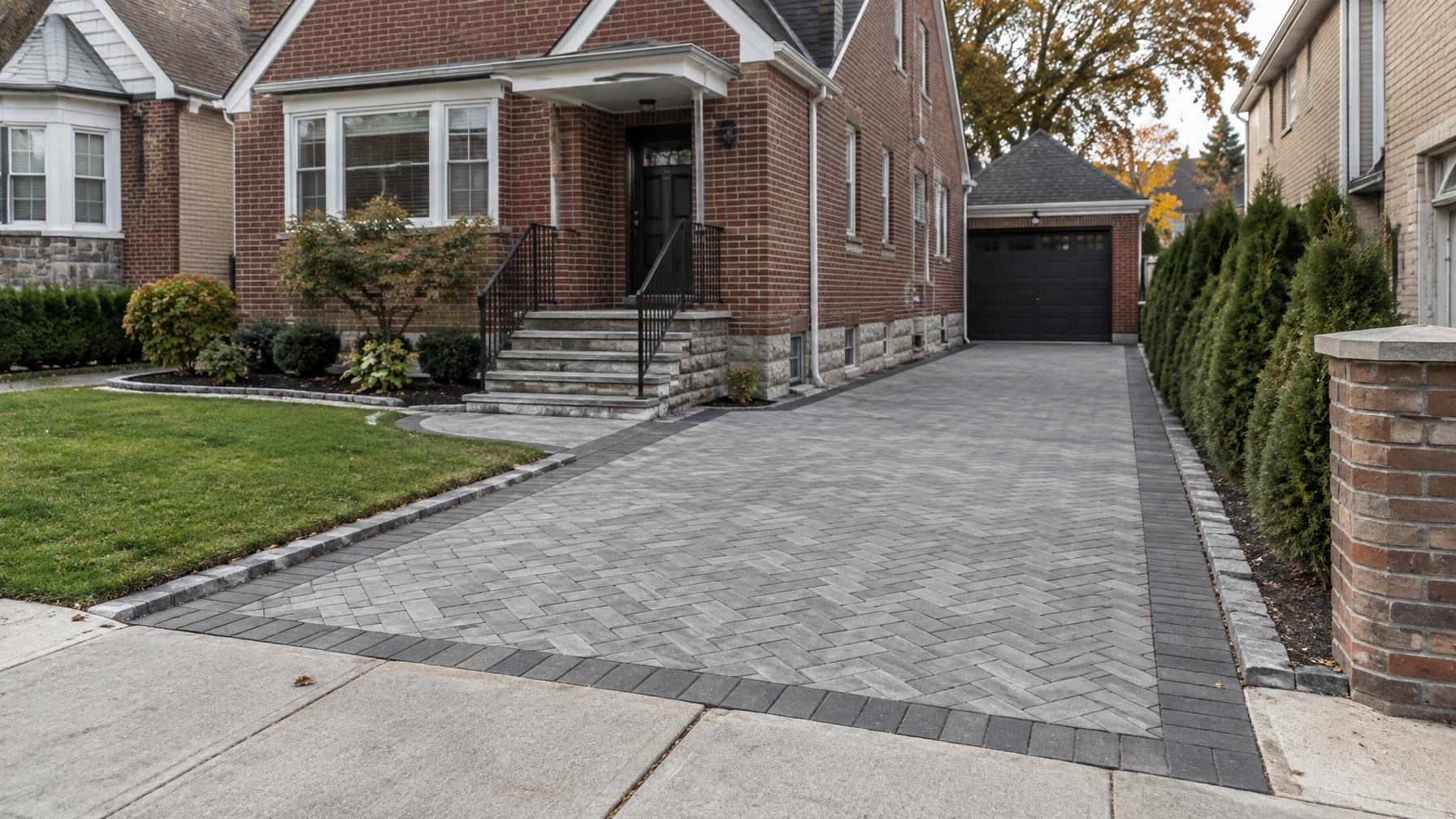
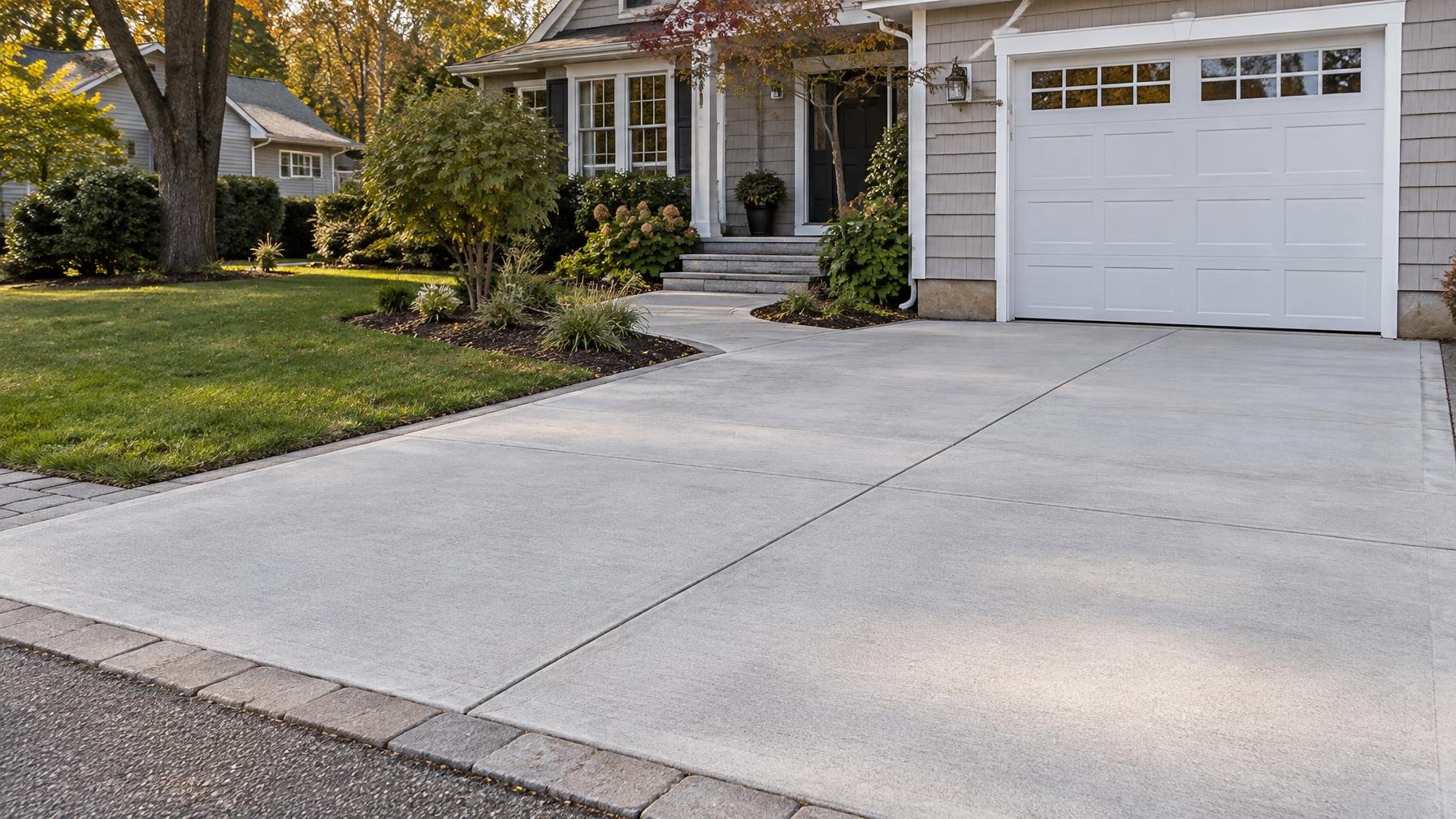
For concrete driveway installation in Babylon, NY, start with the driveway’s elevation, drainage and expected vehicle use—not just its dimensions. StoneSky Pavers & Masonry offers concrete installation and repair on Long Island, including Babylon, with free on-site estimates to review the existing surface and proposed work.
A useful installation plan should explain what will be removed, how the base will be prepared, where water will go and when you can park on the new concrete. Those decisions matter as much as the finished appearance.
Start With the Way You Use Your Driveway
Before choosing a layout, look at how the driveway functions on an ordinary day. Do two vehicles need to park side by side? Does someone step directly from a car onto the lawn? Is the garage used for parking, storage or both? These details determine where added space will help and where it might create unnecessary paved area.
For an existing Babylon driveway, walk the full route from the street to the garage or side entrance. Pay attention to tight turns, doors that open over planting beds and areas where parked vehicles block a walkway.
- Vehicle loads: Identify passenger cars, pickups, work vans or other vehicles that will regularly use the surface.
- Parking and turning: Account for door clearance, backing movements and access around parked vehicles.
- Garage transitions: Check the relationship between the proposed driveway elevation and the garage threshold.
- Pedestrian access: Keep a practical route to the front entrance, side gate and trash storage area.
- Existing obstacles: Note utility covers, trees, downspouts, steps and fences before deciding on the footprint.
If widening is part of the project, confirm property boundaries rather than using an old pavement edge or fence as proof of the lot line.
Check Babylon Jurisdiction Before Finalizing the Work
A Babylon mailing address alone does not establish which office regulates a driveway project. Properties in the Village of Babylon and properties elsewhere in the Town of Babylon may have different approval paths. Confirm the property's jurisdiction and ask the appropriate building or highway office about the proposed scope.
Describe whether you are replacing a driveway within its existing footprint, widening it, changing the entrance or altering the driveway apron. Work near a public sidewalk, curb or street may have requirements separate from work entirely on private property. Do not assume that an existing driveway makes every proposed alteration acceptable.
Before excavation, underground utilities also need to be addressed through the appropriate utility-marking process. Identify private lines or features that may need separate attention, such as irrigation piping or power running to a detached structure. Clarify who will coordinate these steps before work starts.
Plan Drainage Around the Actual Property
Babylon driveways need to handle rain, snowmelt and winter freezing. In low-lying or south-shore locations, discuss any history of standing water or storm-related flooding during the estimate. A new concrete surface should not be presented as a solution to broader flooding conditions without evaluating their cause.
The driveway should have a deliberate drainage path that respects the house, garage, neighboring properties and applicable local requirements. Raising a low section without checking surrounding elevations can redirect water toward a doorway or trap it along a side yard.
- Photograph puddles after rain, especially near the garage and street entrance.
- Show where roof downspouts discharge onto or beside the driveway.
- Identify lawn edges that stay soft or wash soil onto the pavement.
- Ask how the finished driveway will meet the sidewalk and apron without creating an abrupt lip.
If available elevations cannot provide workable surface drainage, resolve that issue before approving the installation. Do not leave the water-management plan until concrete is ready to be placed.
What Should Happen Below the Concrete?
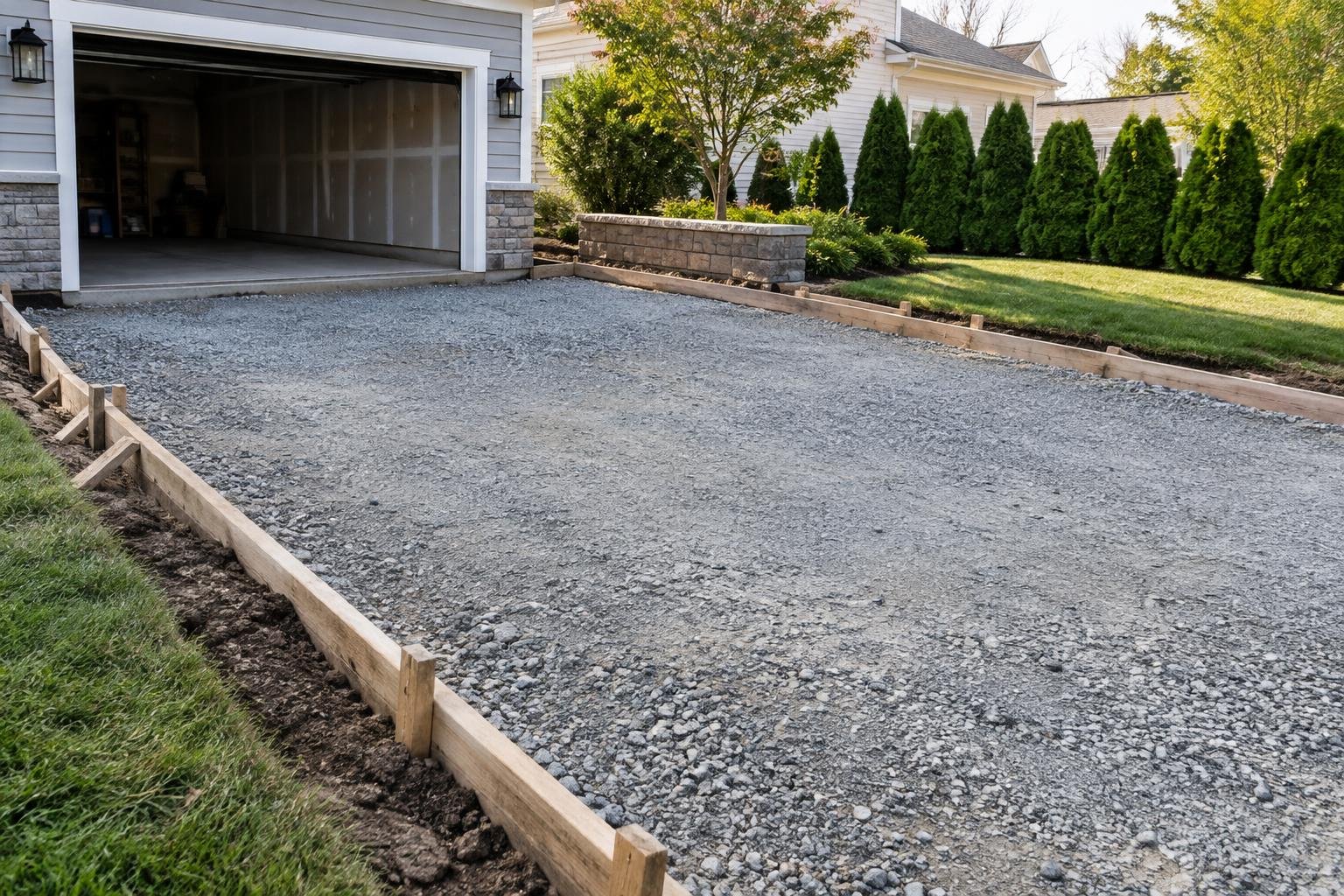
The finished slab depends on the support underneath it. Existing cracks, settled patches and recurring puddles can point to problems worth investigating, but the full condition of the ground may not become clear until the old driveway is removed.
Removal and subgrade preparation
The scope should identify the existing materials to be removed and how unsuitable ground will be handled if encountered. Soft spots, buried debris and organic material should not simply be concealed beneath the new driveway. The prepared subgrade needs consistent support rather than alternating firm and yielding areas.
Tree roots deserve attention before excavation. Cutting substantial roots can affect tree health and stability. Where trees or public-sidewalk areas are involved, clarify any required review rather than treating roots as routine demolition debris.
Base material and compaction
Ask what base material is proposed, how its depth will be determined and how it will be compacted. The answer should reflect soil conditions, drainage and vehicle loads—not a single specification applied to every property.
Also discuss what happens if demolition reveals more extensive preparation needs. A written process for documenting unexpected conditions makes it easier to understand changes before they become covered work.
Concrete Thickness, Reinforcement and Joints
A driveway for passenger cars may need a different design from one used regularly by heavier vehicles. Tell the estimator about actual use, including occasional deliveries or work vehicles, so the proposed slab and base can be assessed together.
Ask for the planned concrete thickness and whether reinforcement is included. If reinforcement is specified, its placement and support matter; simply listing steel or mesh in an estimate does not explain how it will function in the slab. Reinforcement also does not eliminate the possibility of cracking.
Understand the joint layout
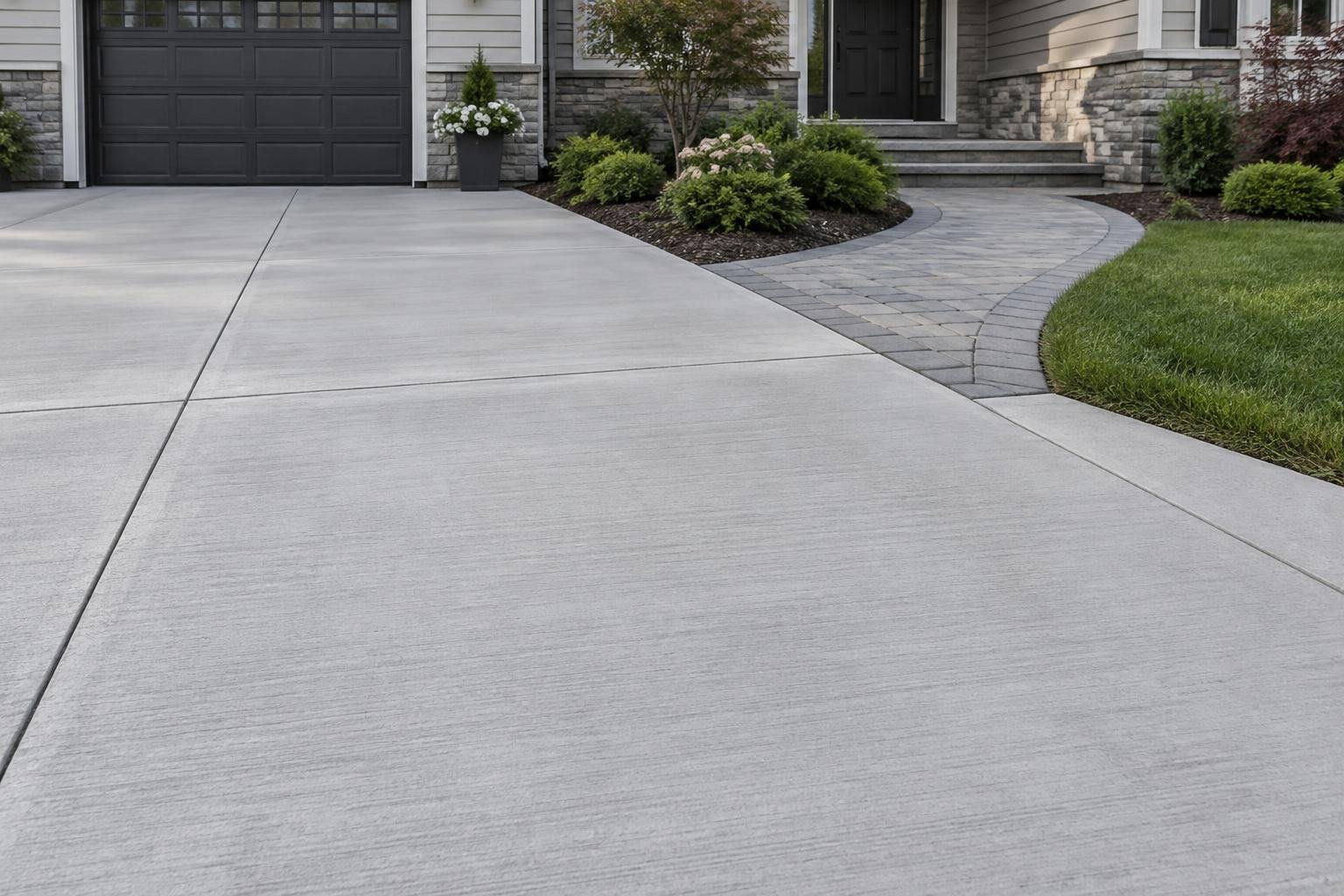
Concrete changes volume as it cures and responds to temperature. Contraction joints create planned locations where shrinkage cracking is encouraged to occur. Isolation joints allow separation at appropriate fixed features, such as adjacent structures.
Discuss joint locations before placement, particularly around garage openings, changes in driveway width and inside corners. Ask how and when the joints will be formed or cut. A deliberate layout helps organize the finished surface, but no responsible installation plan should promise crack-free concrete.
Choose a Practical Finish and Clean Transitions
A broom finish is a common choice for exterior concrete because it provides texture underfoot. Ask to understand the proposed texture and direction, particularly on sloped areas and walking routes. No finish makes an icy driveway safe, so winter maintenance remains necessary.
Transitions also affect usability. Review the connections to garage floors, existing sidewalks, front paths and any retained paving. These meeting points should be considered during elevation planning, not improvised after forms are set.
If you are still comparing materials, StoneSky also offers paver driveway installation. Concrete creates a continuous slab divided by joints, while individual pavers offer a different appearance and repair approach. Compare the complete installation scope rather than surface appearance alone.
Schedule for Weather, Curing and Household Access
Concrete work requires suitable placement and curing conditions. Long Island cold snaps, hot weather and heavy rain can affect scheduling and protection needs. Ask how the contractor will respond if conditions change rather than assuming a scheduled pour should proceed regardless of the forecast.
Curing helps concrete develop its intended properties by managing moisture and temperature. A surface that looks dry is not necessarily ready for vehicle traffic. Get project-specific instructions for walking, parking and heavier loads, and follow the installer's guidance rather than judging readiness by color.
Before removal begins, arrange temporary parking and confirm how people will reach the house. Keep delivery drivers, pets and children away from fresh concrete. If driveway work affects the main entrance route, agree on an alternative access plan in advance.
Compare Written Scopes, Not Just the Finished Surface
A useful estimate should make the work understandable. When reviewing proposals, check that they cover the same area and preparation requirements. A short description such as “replace concrete driveway” leaves important decisions unresolved.
- Removal: Which surfaces are included, and is debris removal addressed?
- Preparation: What base work is proposed, and how will unsuitable ground be handled?
- Slab design: What thickness, reinforcement if applicable, finish and joint approach are specified?
- Drainage: How will elevations meet the garage, sidewalk and surrounding grade?
- Responsibilities: Who handles any required approvals and utility coordination?
- Completion: What cleanup, edge restoration and curing instructions are included?
StoneSky provides concrete, paver and masonry services across Queens and Long Island. If the driveway connects to deteriorated steps or a damaged walkway, point those out during the visit so related work can be discussed without assuming it is included in the driveway scope.
Request a Free On-Site Estimate in Babylon
Planning a new driveway or replacing worn concrete? Have photos of drainage problems, your parking requirements and any proposed layout changes ready for the visit. An on-site review gives StoneSky a chance to assess access, elevations and the existing surface before discussing the work.
Request a free on-site estimate from StoneSky Pavers & Masonry for concrete driveway installation in Babylon, NY. Call (929) 528-1205 to discuss your project.
Frequently Asked Questions
Do I need a permit to replace a concrete driveway in Babylon?
Requirements depend on the property's jurisdiction and the work involved. Confirm whether the property falls within the Village of Babylon or another Town of Babylon jurisdiction, then ask the appropriate office about replacement, widening, apron changes and work near public sidewalks.
How thick should a concrete driveway be?
Thickness should be selected based on vehicle loads, ground conditions and the overall driveway design. Tell the estimator about pickups, work vans or other heavier vehicles and request the proposed slab thickness and base preparation in writing.
Can a new concrete driveway fix standing water?
Correcting elevations may address localized puddling, but the cause needs to be evaluated first. Downspouts, surrounding grades, limited drainage outlets or broader flooding can require attention beyond replacing the surface.
When can I park on a newly installed concrete driveway?
Follow the project-specific curing and traffic instructions provided by the installer. Weather, the concrete mix and anticipated vehicle loads affect readiness; a surface that appears dry is not necessarily ready for parking.
Will reinforcement prevent all driveway cracks?
No. Proper preparation, concrete placement, curing and joint layout help manage cracking, while reinforcement can help control crack movement when correctly specified and installed. None of these measures guarantees crack-free concrete.
Does StoneSky offer free driveway estimates in Babylon?
Yes. StoneSky Pavers & Masonry serves Babylon and offers free on-site estimates. Call (929) 528-1205 or use the contact page to discuss your concrete driveway project.