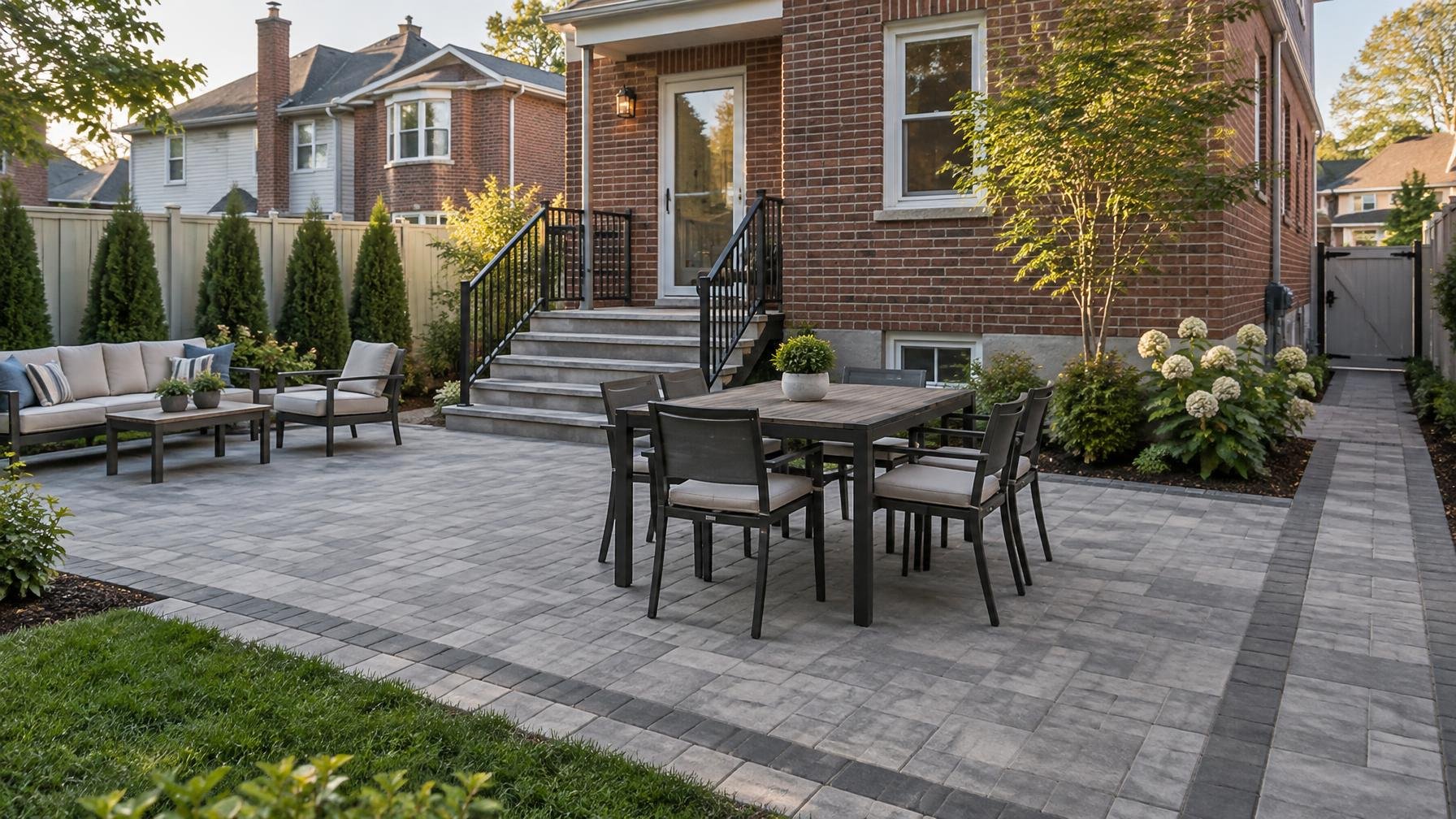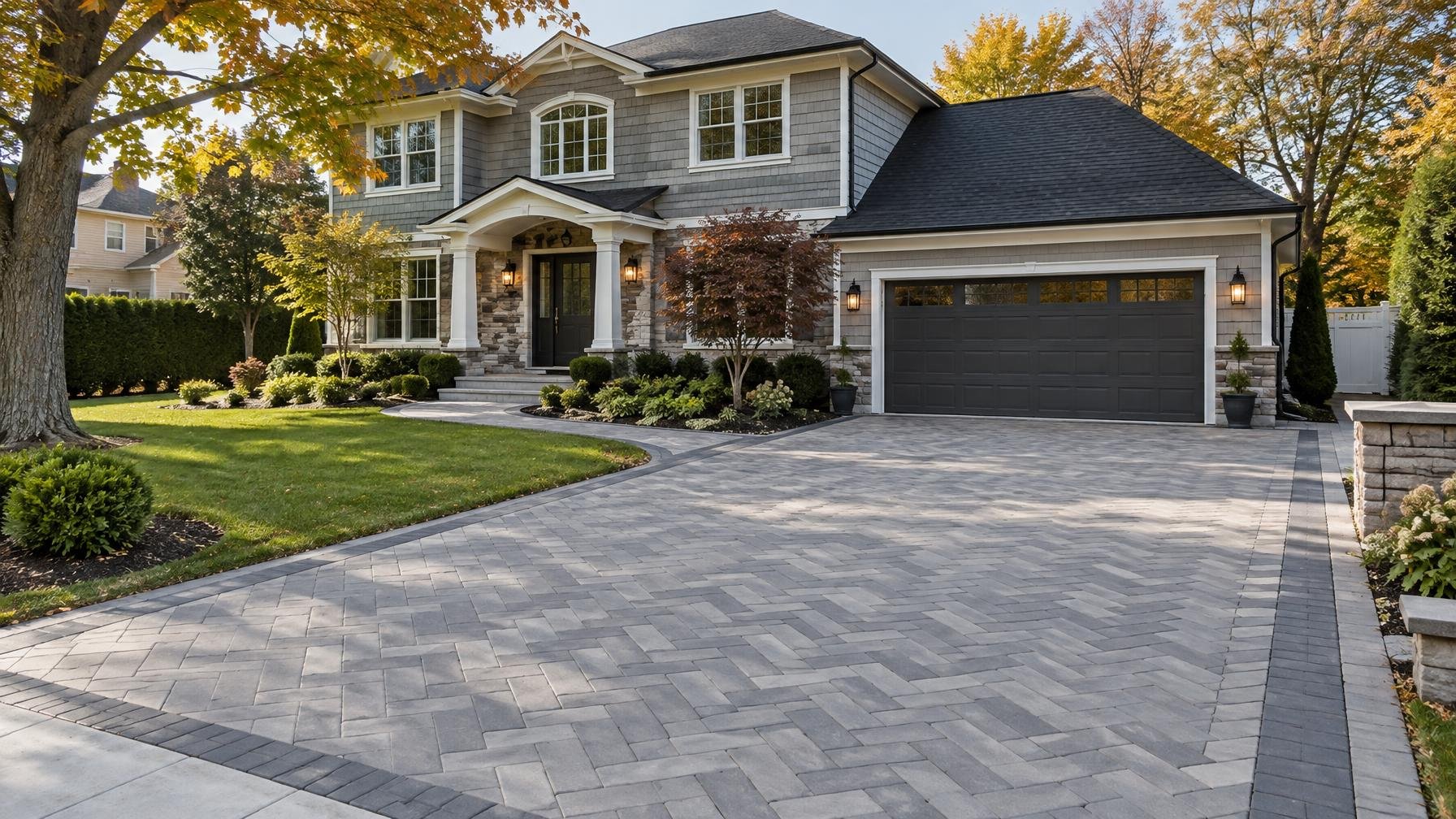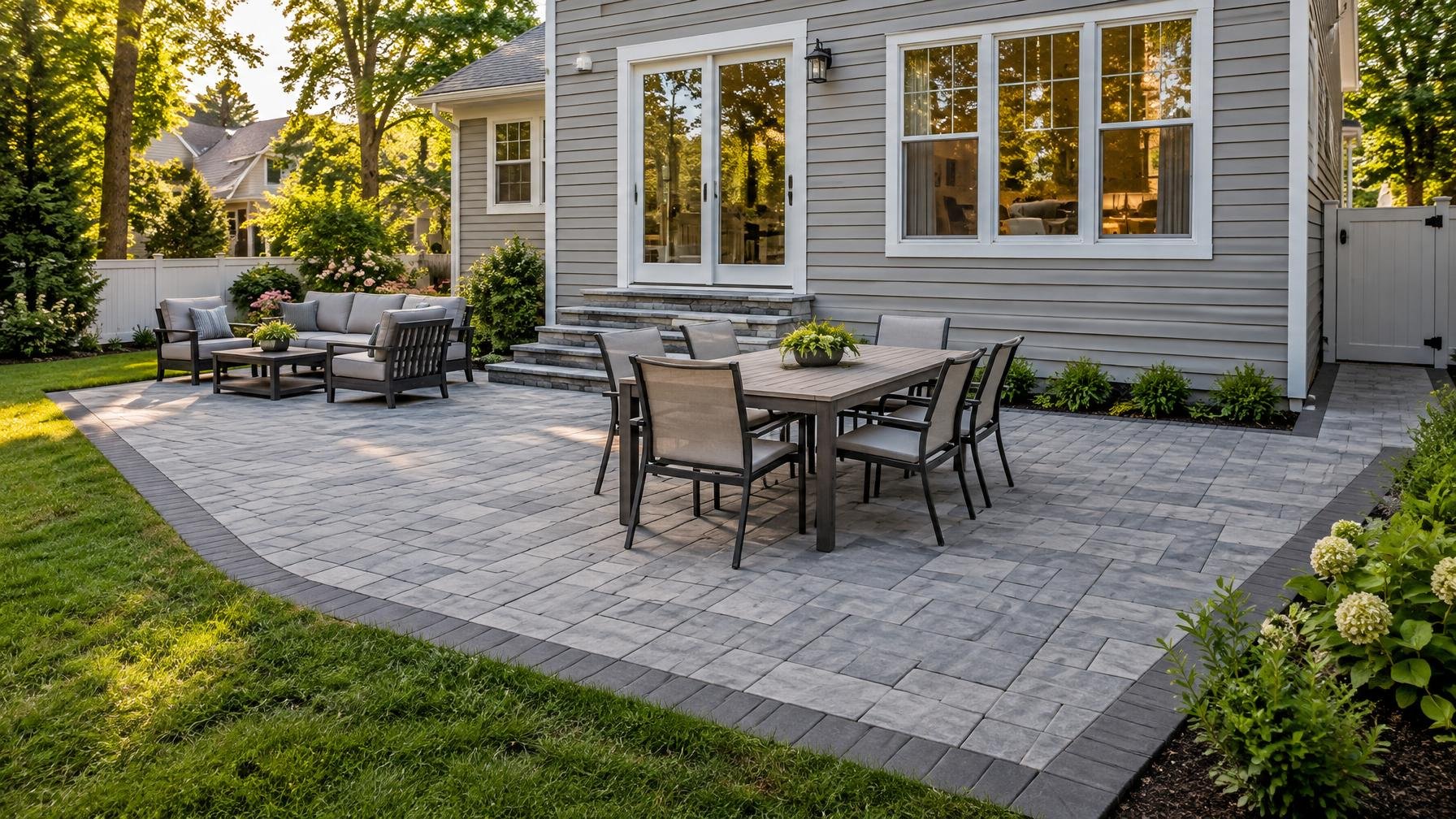
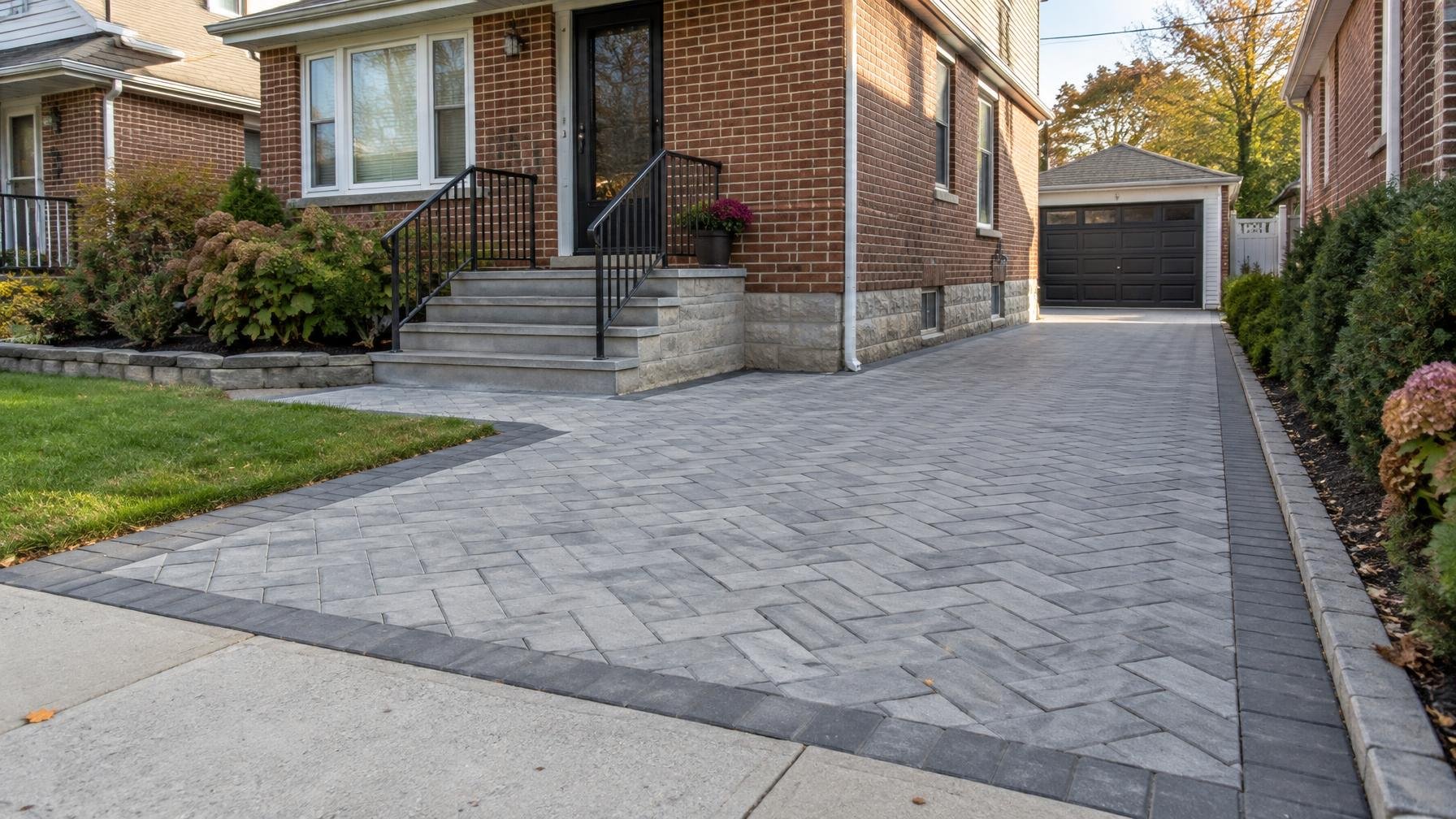
Paver driveway installation in Flushing, NY requires more than choosing a color and laying a pattern. The driveway needs a base designed for vehicle loads, grades that manage runoff, and a workable connection to the garage, sidewalk and street. StoneSky Pavers & Masonry offers paver driveway services in Flushing and across Queens, with free on-site estimates to review those conditions before work begins.
Start With How Your Flushing Driveway Actually Works
On a tight residential lot, a driveway can serve several purposes: parking, garage access, a route to the backyard and a walking path to the front entrance. Planning should begin with those daily uses rather than the appearance of a sample paver.
Flushing properties vary from narrow side-yard driveways beside older homes to wider parking areas in front of detached houses. Existing stoops, fences, foundation walls and neighboring pavement can limit how much the finished elevation or footprint can change.
Measure the usable space, not just the paved area
Check whether vehicle doors open comfortably, trash bins can pass a parked car, and someone can reach the entrance without squeezing against a wall. Include the vehicles that actually use the property. An SUV, work van or occasional delivery vehicle may create different loading and maneuvering needs than a small passenger car.
- Garage clearance: Review the threshold and door clearance before setting the finished driveway height.
- Side access: Identify gates, basement entrances and utility equipment that must remain accessible.
- Parking movements: Note where tires turn sharply or repeatedly track along the same edge.
- Existing obstacles: Record tree roots, downspouts, low windows and walls near the excavation area.
Plan Drainage Before Choosing the Pavers
A new surface should not simply reproduce the slope of an old driveway. If water currently collects beside the house or at the garage door, that condition needs to be addressed in the installation plan. Photographs taken during or shortly after rain can help show where runoff travels.
The contractor should review elevations at the house, garage, sidewalk and adjoining property. The goal is to establish a practical drainage route without directing water toward a foundation or creating a problem for a neighbor. Narrow side yards can make this especially important because there may be little room to adjust grades.
Do not assume paver joints solve runoff
Standard interlocking pavers are not automatically a permeable driveway system. A permeable installation uses compatible paving units, open-graded joint and base materials, and a design suited to the site's soil and water conditions. It should not be treated as a surface-only upgrade.
In Queens, winter freezing can make standing water particularly troublesome. Water that remains at the foot of a driveway or along a walking route can become ice. Correcting the drainage plan before construction is more useful than relying on repeated surface treatments afterward.
What Proper Driveway Preparation Should Include
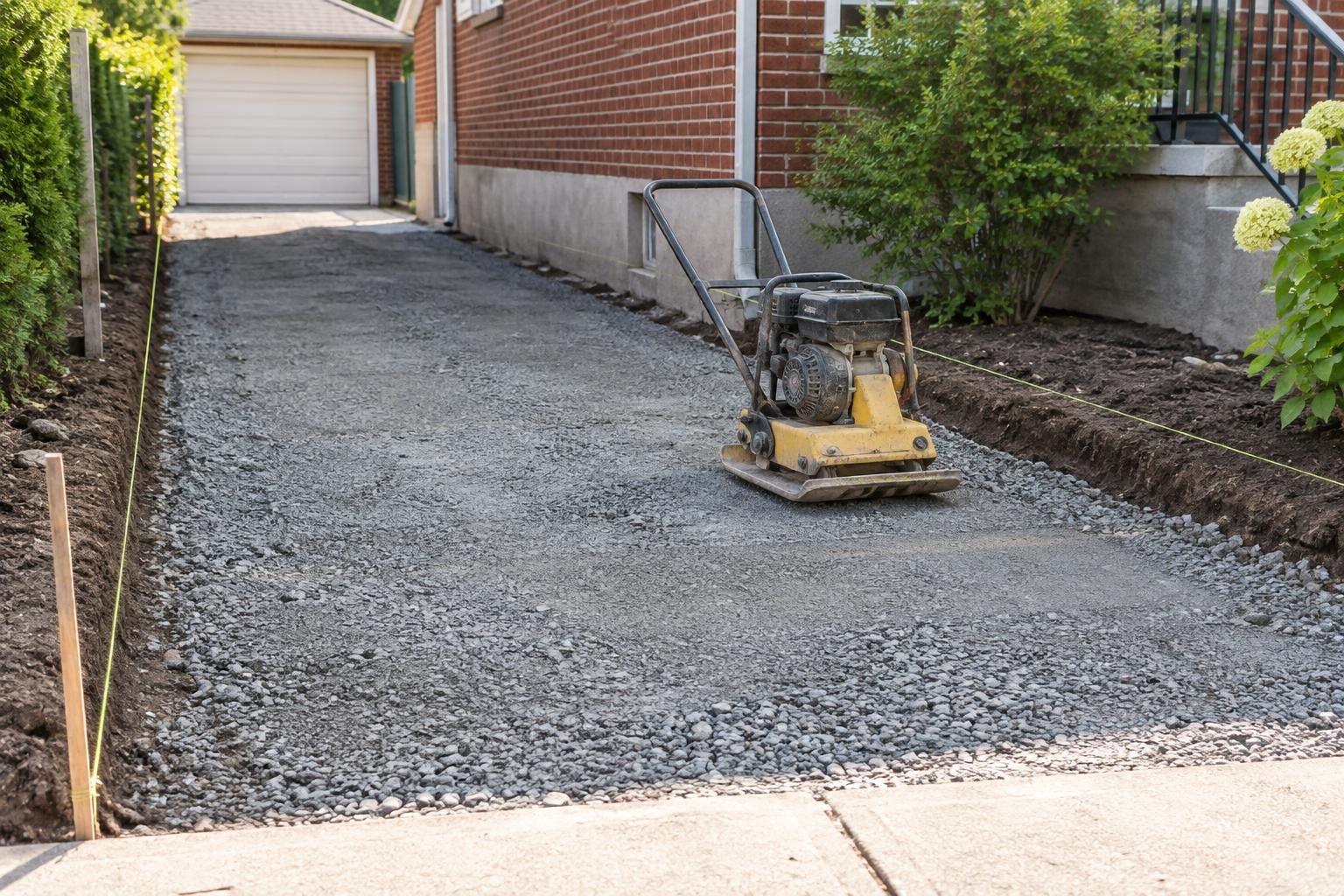
The paving units are the visible finish, but the supporting layers determine how well the driveway handles repeated vehicle use. StoneSky’s paver driveway services cover projects where layout, preparation and the finished surface need to be considered together.
Removal and subgrade assessment
After existing pavement is removed, the exposed ground should be checked for soft areas, unsuitable fill and evidence of persistent moisture. Placing a new base over unstable material can leave the same weak spot beneath a better-looking surface. The installation approach should account for actual conditions uncovered during excavation.
There is no single excavation depth that fits every Flushing driveway. Soil conditions, expected loads, the selected paving system and available elevations all affect the assembly. Ask how the proposed preparation was selected for your property rather than looking for one universal measurement.
Base placement and compaction
A driveway base needs suitable aggregate placed and compacted in manageable layers. Simply spreading a thick layer and compacting its top does not ensure the material beneath it is adequately consolidated. Areas beside walls, around utility features and near the driveway entrance deserve attention because equipment access can be restricted.
The bedding layer provides a uniform setting surface for the pavers; it should not be used to hide major irregularities in the base. Ask the contractor to explain how finished grades will be established and checked before paving begins.
Edge restraint and joint finishing
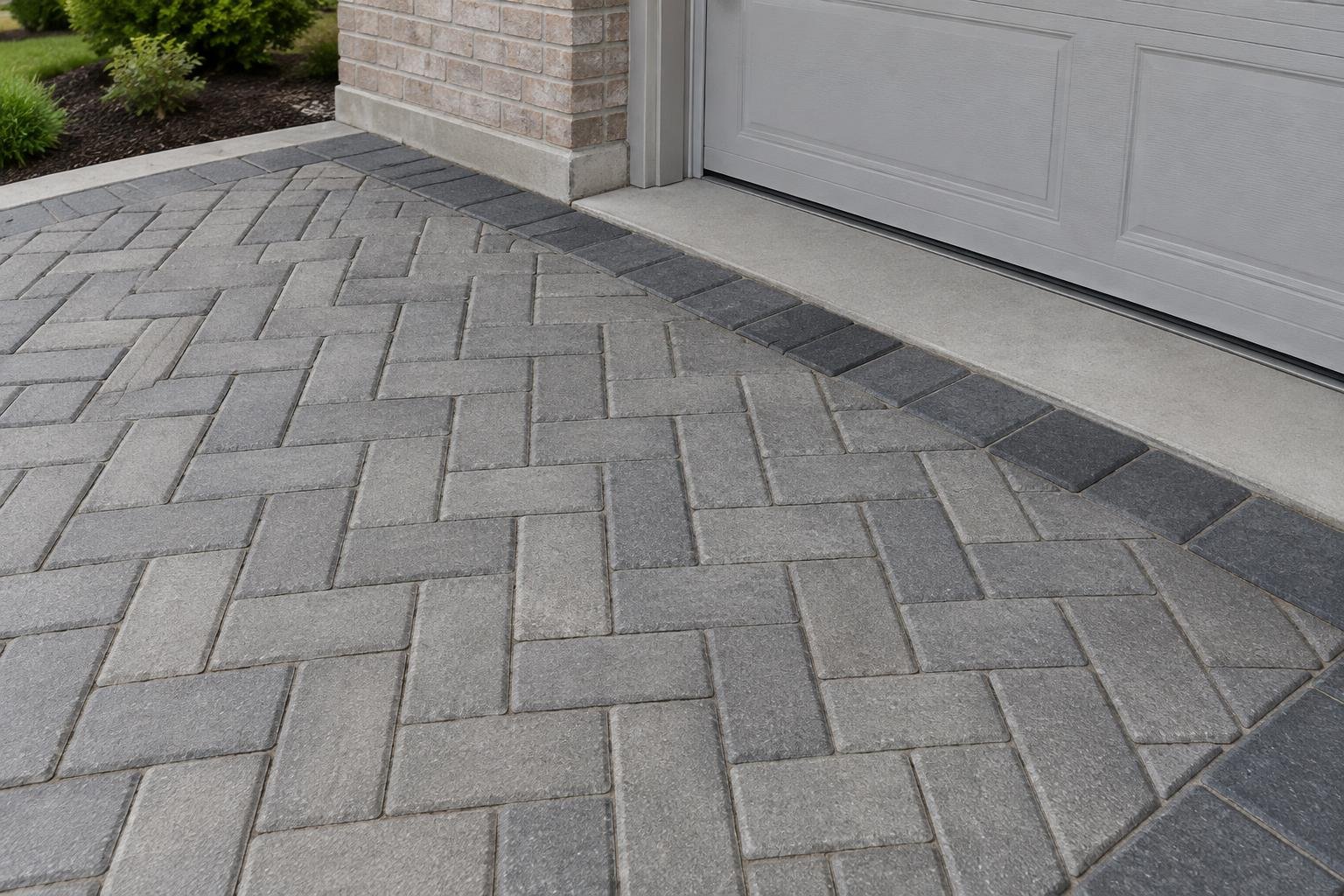
Vehicle turning puts sideways pressure on the paving surface. Secure edge restraint helps prevent the outer courses from spreading, particularly beside planting beds or unpaved side yards. Where the driveway meets an existing slab or wall, the transition needs deliberate detailing rather than an assumption that the neighboring surface will hold everything in place.
Joint material and final compaction should follow the requirements of the selected system. Complete joints help the installation function as intended; loose, incomplete or washed-out joints should not be dismissed as merely cosmetic.
Choose Materials for Vehicle Traffic and Daily Maintenance
Not every paving product suitable for a patio belongs in a driveway. Confirm that the specific unit, thickness, format and installation method are appropriate for vehicular use. Large slabs and thin products should not be substituted into a driveway design without checking their intended application.
- Concrete pavers: Offer a range of shapes, colors and textures. Evaluate driveway-rated options and the manufacturer's installation guidance.
- Clay brick pavers: Can complement brick-front homes, but the chosen product must be intended for paving and the expected traffic.
- Natural stone: Requires attention to stone type, thickness, finish and the supporting assembly. Suitability varies by product.
For an interlocking concrete driveway, a herringbone layout is worth discussing because it provides good resistance to movement under turning tires when properly installed. Pattern alone cannot compensate for an inadequate base or missing edge restraint.
Review samples outdoors beside the home's brickwork, stoop and garage door. Light colors can show tire marks and stains more clearly, while darker surfaces may become hotter in direct sun. A textured finish can be useful, but avoid assuming that any texture makes a wet or icy driveway slip-proof.
Check Sidewalk, Curb and Street Connections Early
The private driveway, public sidewalk crossing and curb connection are related, but they are not interchangeable parts of the project. Work affecting a sidewalk, curb or legal vehicle access may involve NYC requirements beyond replacing paving within an existing private footprint.
Before expanding a driveway or changing its street access, confirm applicable requirements with the relevant city agency. Do not assume that existing pavement proves an entrance or parking layout is authorized. Permit needs and approvals should be clarified before removal or material ordering.
The sidewalk must also remain a usable pedestrian route. Review changes in elevation where the driveway crosses it, and do not treat decorative pavers as an automatic replacement for required sidewalk materials. If the concrete crossing is cracked or uneven, StoneSky’s Flushing sidewalk repair guide explains issues to consider alongside the driveway work.
Repair and Resetting or a Full New Installation?
A driveway with a few localized depressions may not need complete replacement. If the existing pavers remain usable and the underlying problem is limited, lifting the affected area, correcting its support and resetting the surface may be appropriate. StoneSky offers paver repair and resetting for issues such as sunken paving.
Widespread rutting, recurring settlement, failing edges or poor drainage across the entire driveway calls for a broader assessment. Resetting the top surface without correcting the cause can allow the problem to return. Replacement is also worth discussing when the current layout no longer supports parking or access needs.
Prepare for the Estimate and Installation
A useful on-site estimate should establish what is being replaced, what stays and how the finished driveway will connect to surrounding surfaces. Ask for clarity on removal, base preparation, paver selection, edge restraint, joint material and cleanup. If hidden ground conditions could change the scope, discuss how those findings will be communicated.
- Access: Identify where equipment and materials can enter without blocking essential entrances.
- Parking: Plan where vehicles will stay while the driveway is unavailable.
- Utilities: Discuss utility locating before excavation and identify known private lines or irrigation.
- Weather: Ask how heavy rain, saturated ground or freezing conditions could affect the sequence.
- Return to use: Get instructions for walking and driving on the completed installation rather than assuming immediate access.
After installation, monitor joints, edges and drainage, especially following the first winter. Remove debris, address stains promptly and follow product-specific cleaning and deicing guidance. If an area starts to settle, investigate early rather than waiting for a larger trip hazard or puddle to develop.
Request a Free On-Site Estimate in Flushing
StoneSky Pavers & Masonry serves Flushing, Queens, Nassau County and Long Island with paver installation, repair and related concrete and masonry services. Discuss your driveway's layout, drainage, materials and street connection before choosing the finished design.
Request a free on-site estimate or call (929) 528-1205 to review your paver driveway project.
Frequently Asked Questions
Do I need a permit for paver driveway installation in Flushing?
Requirements depend on the scope. Work involving a curb, public sidewalk, driveway expansion or changes to vehicle access may need approvals. Confirm applicable NYC requirements before starting; an existing paved area does not by itself establish that the access or layout is authorized.
Can driveway pavers be installed over existing concrete?
An overlay is only suitable in certain conditions. The existing slab's stability, drainage, finished height and compatibility with the proposed paving system need evaluation. Cracking, movement or insufficient clearance can make removal and rebuilding the better approach.
Are standard driveway pavers permeable?
Not automatically. A permeable driveway requires a compatible paving system, appropriate joint and base materials, and a design that accounts for soil and water conditions. Ordinary paver joints should not be relied on to resolve drainage problems.
Can sunken driveway pavers be repaired without replacing everything?
Localized settlement may be addressed by lifting usable pavers, correcting the supporting layers and resetting the surface. Widespread movement or recurring drainage problems may require more extensive reconstruction.
What should I have ready for a driveway estimate?
Identify parking and access needs, known drainage problems, and any changes you want to the footprint. Photos of puddles after rain are useful. Ask about removal, base preparation, materials, edges, sidewalk connections and when vehicles can return.