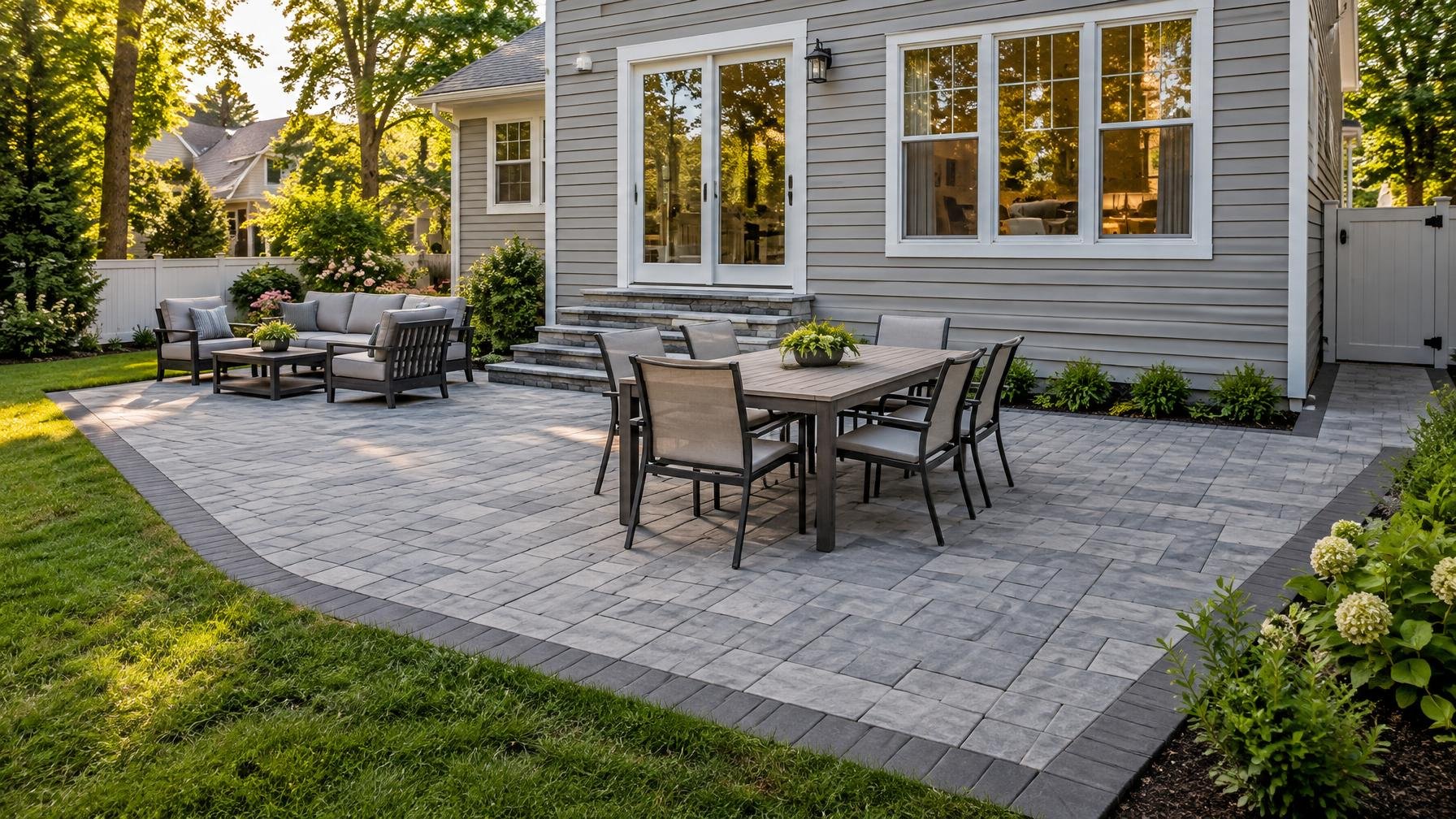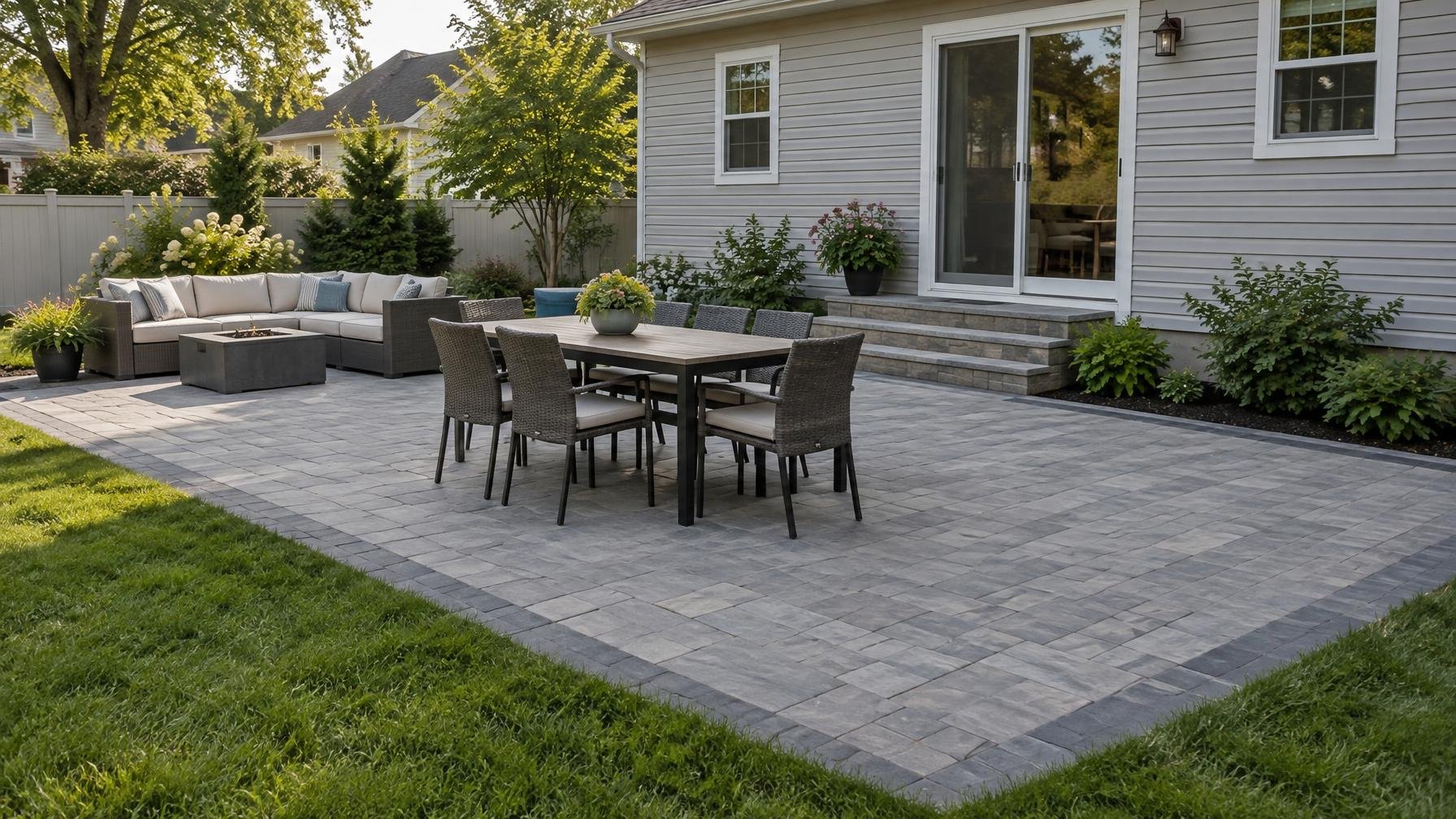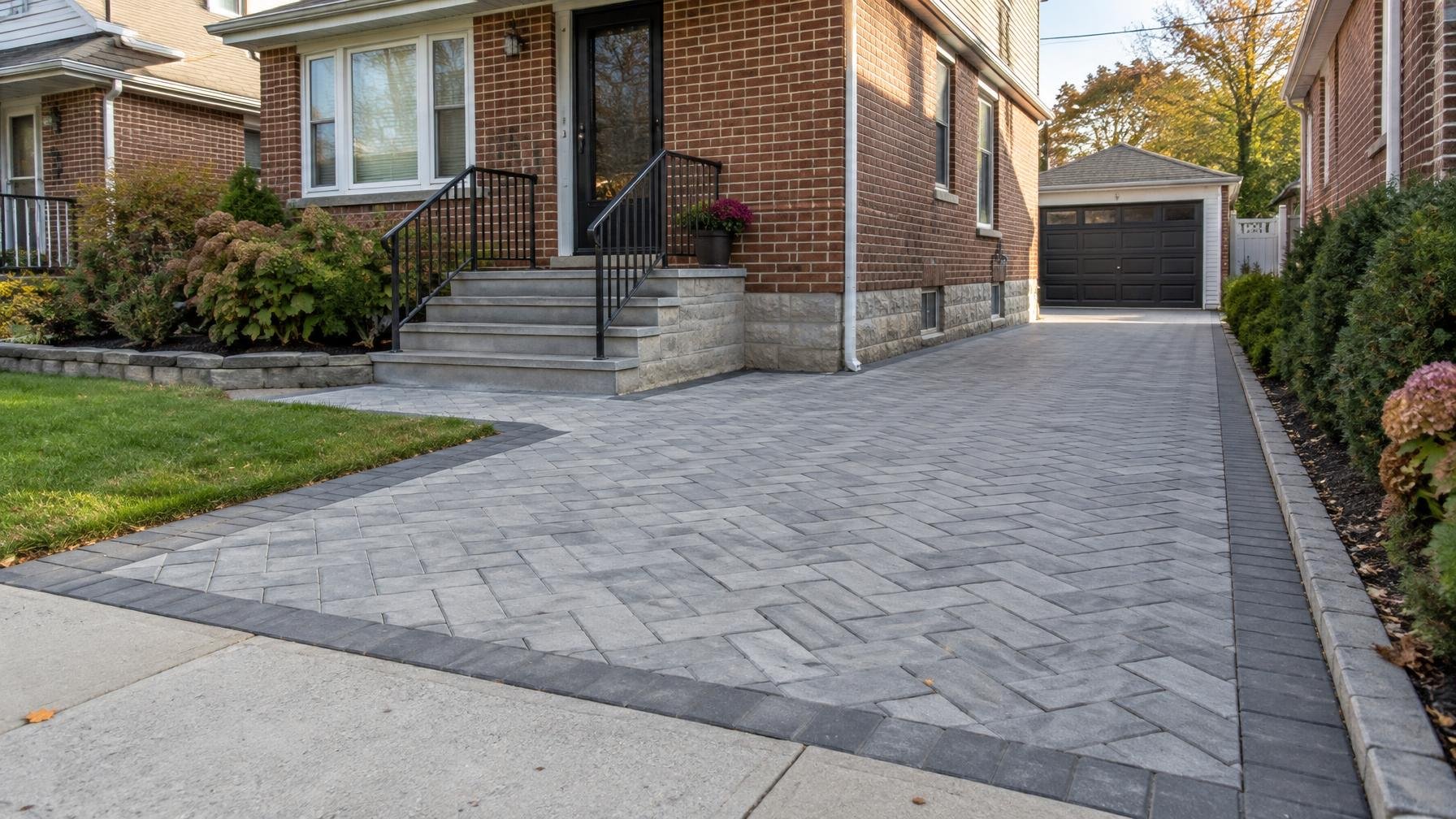
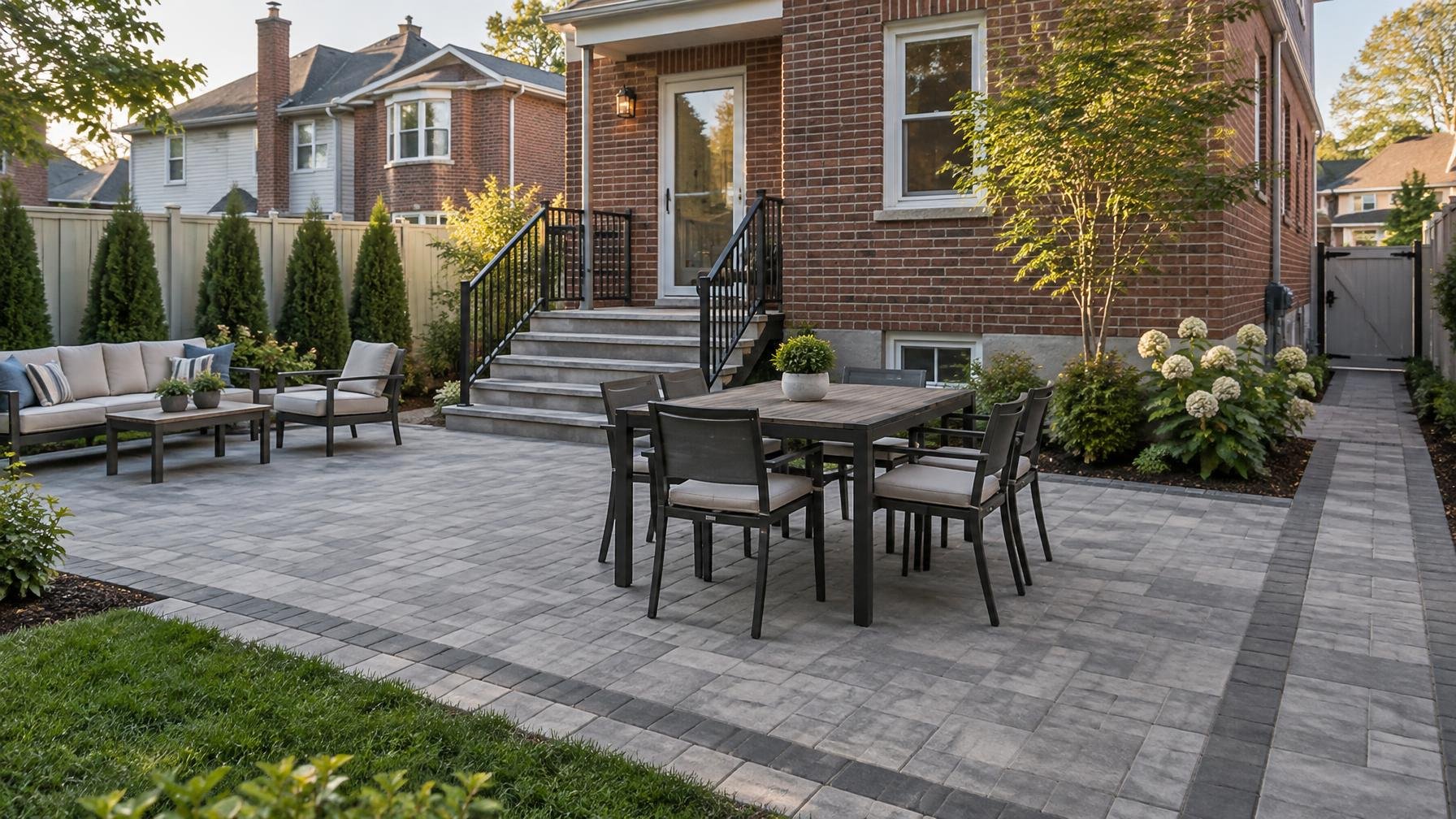
If you are looking for a paver patio contractor in Bayside, NY, start with a site visit that covers drainage, backyard access and how you want to use the space—not just paver colors. StoneSky Pavers & Masonry offers paver patio installation in Bayside and throughout Queens, with free on-site estimates to review your property and project scope.
Plan the Patio Around Your Bayside Backyard
Bayside properties vary, from compact yards behind closely spaced houses to larger outdoor spaces in areas such as Bay Terrace. The right patio layout depends on your actual lot, existing steps, planting beds and routes through the yard. A large paved rectangle is not automatically the most useful solution.
Before the estimate, decide what the patio needs to accommodate. A dining table, lounge seating and a grill each require more room than their footprints suggest. Chairs need pullback space, doors need clearance and people need a route through the yard without squeezing between furniture.
Mark Out the Main Activity Areas
- Dining: Allow room to pull chairs out while keeping a clear walking route.
- Cooking: Position the grill according to its manufacturer's clearance requirements, away from door swings and busy paths.
- Seating: Consider afternoon sun, nearby windows and the view from inside the house.
- Access: Keep a practical route to the side gate, hose connection, garage and storage areas.
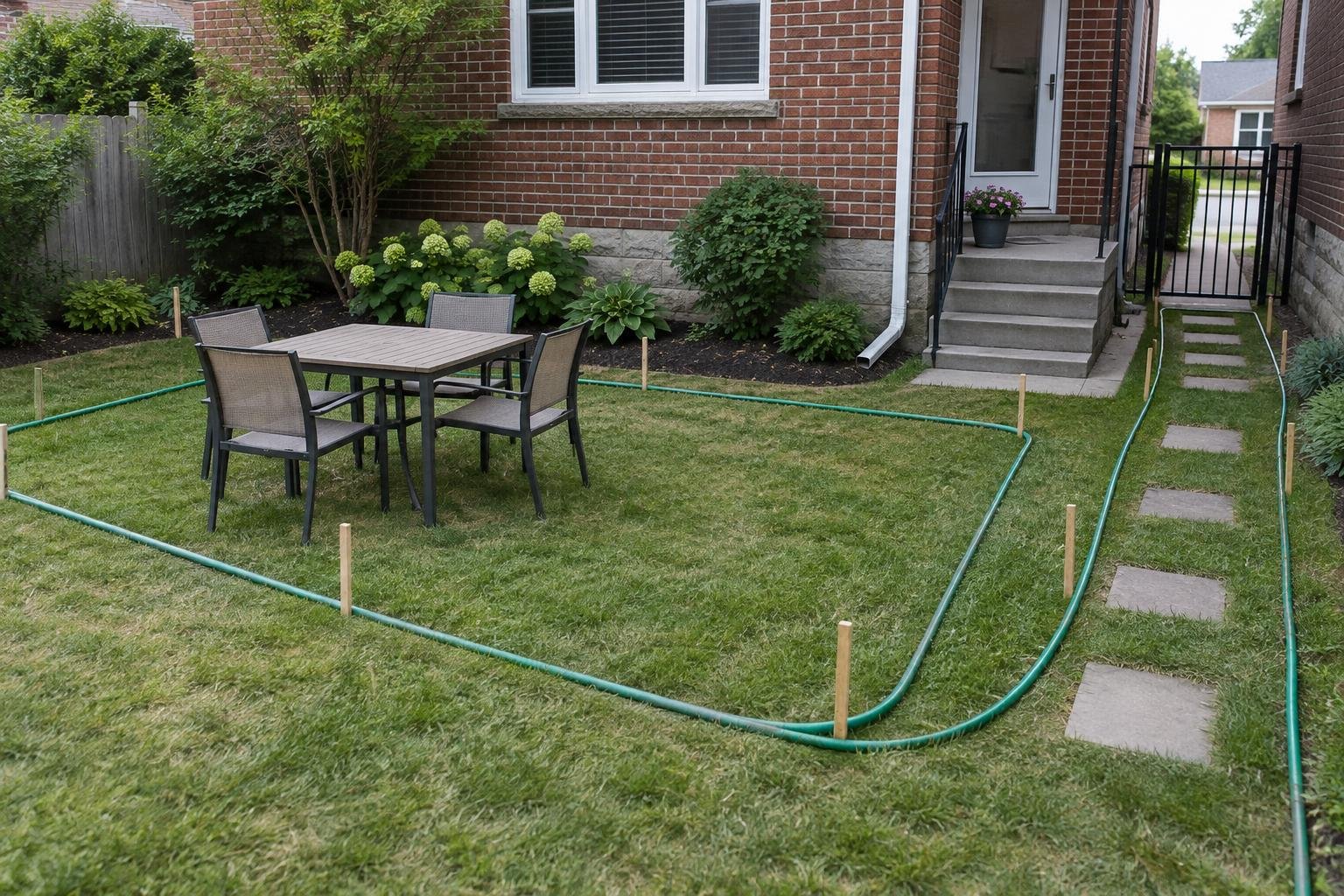
Use a garden hose or temporary markers to outline the proposed patio. Walk the route from the back door to each activity area. This simple check can reveal an awkward corner or narrow passage before the layout becomes an installation plan.
Check Elevations and Drainage Before Choosing Pavers
A patio should not create a low spot against the house or redirect runoff onto a neighboring property. In a tighter Bayside yard, small elevation differences between the back door, side passage and fence line can limit where water can go. Those relationships need to be checked on site.
Show the contractor where puddles form after rain and where downspouts discharge. Photos taken during or shortly after a storm are useful, especially if the yard is dry during the estimate. Mention water near basement entrances, damp areas along the foundation and any previous settling.
Review These Connections During the Site Visit
- The proposed finished patio height relative to door thresholds and existing steps.
- The direction of surface runoff and whether there is a suitable discharge route.
- Downspout outlets that could wash out joints or saturate the patio base.
- Transitions to lawn, walkways and neighboring surfaces.
- Low areas that may need more than a simple change in paver slope.
Queens winters bring freeze-thaw cycles, making moisture management important. Pavers alone do not solve drainage problems. A permeable surface also requires a compatible base design and suitable site conditions; it is not simply a standard patio with wider joints.
Choose Materials for Everyday Use
StoneSky's paver patio services cover outdoor spaces that need to work as well as they look. When reviewing materials, compare surface texture, maintenance needs, furniture stability and compatibility with the planned installation—not color alone.
Concrete Pavers
Concrete pavers offer a range of shapes, colors and patterns. They can suit both traditional brick houses and more contemporary exteriors. Ask to see the actual product dimensions and finish: a heavily textured surface may feel different under chairs and bare feet than a smoother one.
Brick Pavers
Brick pavers can complement brick facades and traditional front-to-back landscaping. For a patio, confirm that the selected product is intended for exterior paving and appropriate for local freeze-thaw exposure. Color variation can be part of the appearance, so review more than one sample.
Porcelain and Natural Stone
Porcelain pavers can provide a clean, consistent look, while natural stone offers variation in color and texture. Both require product-specific planning. Discuss exterior suitability, wet-surface traction, thickness and installation requirements rather than assuming they can be installed exactly like concrete pavers.
View samples outside, in both sun and shade, next to the house. Darker surfaces may become hotter in direct sunlight, while pale surfaces can make certain stains more noticeable. The best choice fits your yard's exposure and the maintenance you are willing to do.
Ask What Happens Below the Finished Surface
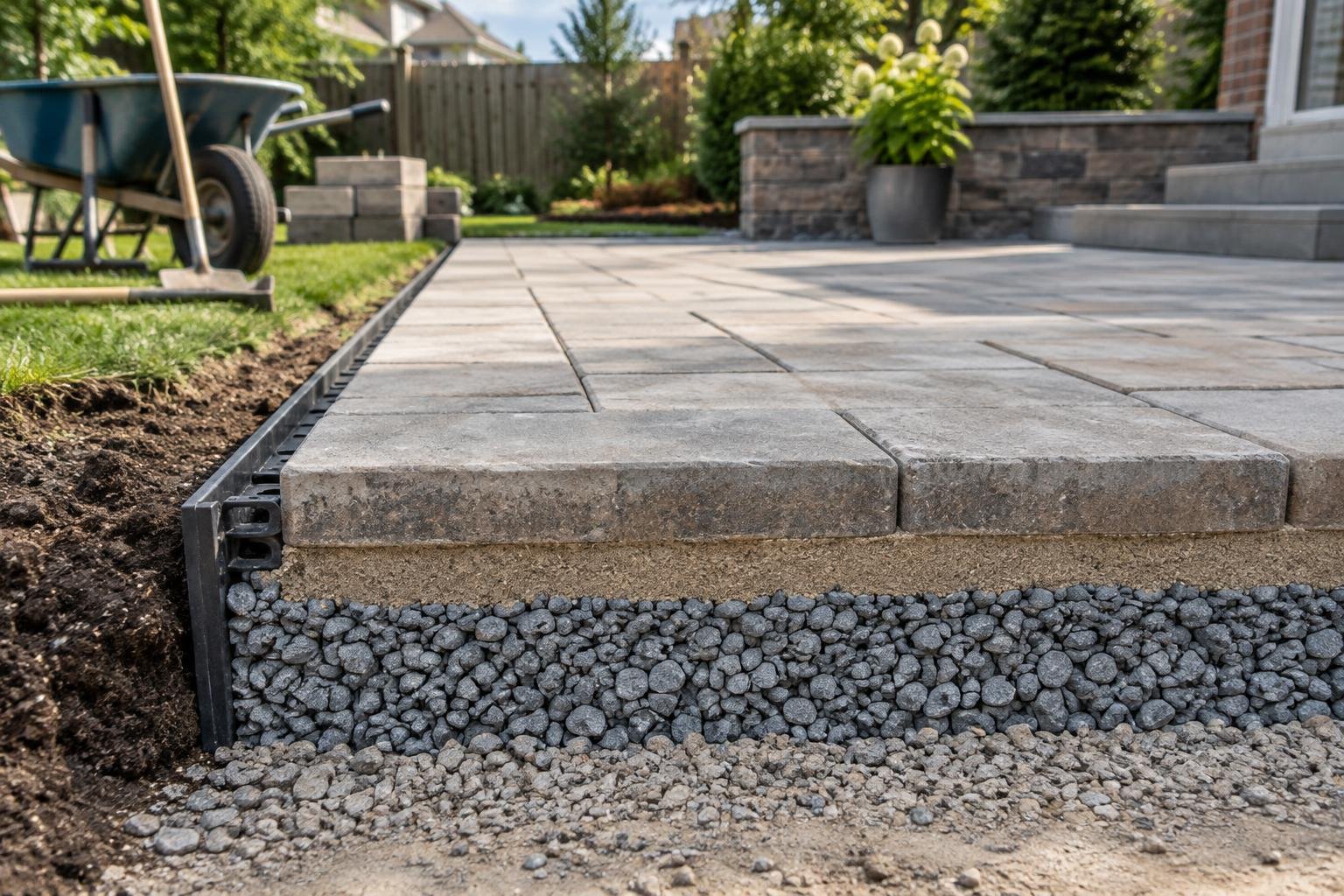
The visible pavers are only part of the patio. Excavation, subgrade preparation, base material, bedding and edge restraint all affect how the surface performs. A detailed proposal should explain the planned assembly rather than describing the work only as “install patio pavers.”
There is no single base depth that should be promised for every Bayside yard without inspection. Existing soil, disturbed ground, drainage conditions, selected materials and intended use matter. An area previously used as a planting bed may require different preparation from a stable existing paved area.
Key Installation Details to Discuss
- Excavation: What existing surfaces and unsuitable material will be removed?
- Base preparation: What aggregate is planned, and how will it be placed and compacted?
- Bedding: Which bedding material is appropriate for the selected paving system?
- Edges: How will unsupported perimeter pavers be restrained?
- Joints: What joint material will be used, and what installation conditions does it require?
- Transitions: How will the finished surface meet steps, paths and lawn?
Large slabs and different paving products may require different handling or compaction methods. Ask the contractor to explain how the installation will follow the selected manufacturer's guidance.
Account for Access, Trees and Existing Masonry
Backyard access can have a major effect on the work plan. In Bayside, a narrow side passage, gate or shared driveway may restrict equipment and material movement. Measure the narrowest opening and point out air-conditioning equipment, meters, fences and overhead obstructions during the estimate.
Discuss where deliveries can be placed, how excavated material will leave the yard and how existing surfaces will be protected. If access involves shared property, resolve permission before scheduling work. Do not assume materials can be stored on a public sidewalk or street without checking applicable requirements.
Do Not Overlook Roots and Steps
A patio near a mature tree needs careful planning. Excavation can damage roots, and future root growth can affect the paving. Where significant roots are involved, get appropriate tree-care guidance before deciding on removal, cutting or a change in grade.
Existing stoops and steps also deserve attention. Raising the patio can change the bottom step height and create an awkward transition. StoneSky lists steps, stoops and masonry among its services, so identify related work during the initial visit rather than treating it as an afterthought.
Decide Whether to Replace or Reset an Existing Patio
If you already have pavers, a full replacement may not be necessary. Localized settling, loose edges or uneven sections can sometimes be addressed through paver repair and resetting, provided the existing materials remain usable and the underlying cause can be corrected.
Repair is less straightforward when settlement is widespread, drainage is poorly planned or the layout no longer meets your needs. Ask whether the problem is limited to the bedding layer or extends into the base and soil below. Adding joint sand or applying sealer will not correct an unstable base.
For partial repairs, discuss appearance as well as structure. Replacement pavers may not match older, weathered units exactly. Reusing sound existing pavers can help retain consistency, but the available quantity and condition need to be assessed.
Clarify Scope, Local Requirements and Maintenance
Before authorizing work, request a written scope covering patio dimensions, material selection, preparation, edges, transitions, debris removal and any related masonry. Ask how unexpected conditions will be handled and which decisions must be finalized before materials are ordered.
For a Bayside property, confirm applicable NYC requirements before work starts, particularly if the project affects drainage, grading, retaining structures or public areas. Do not assume that every backyard patio needs the same approvals—or that none apply. Identify who will verify the requirements for your specific scope.
Plan for routine maintenance too: sweep debris, address spills and inspect joints and edges periodically. Use cleaning methods compatible with the paving product. If sealing is being considered, discuss whether it is appropriate for the material, how it may alter appearance or traction, and the need for future upkeep. StoneSky offers paver cleaning and sealing as separate maintenance services.
Request a Free On-Site Estimate in Bayside
A useful estimate starts with your property: access, elevations, existing surfaces and the way you want to use the backyard. Have your rough layout, drainage photos and material preferences ready so the visit can focus on practical options.
StoneSky Pavers & Masonry serves Bayside, Queens, Nassau County and Long Island. Request a free on-site estimate for your paver patio, or call (929) 528-1205.
Frequently Asked Questions
What should I prepare before a paver patio estimate in Bayside?
Prepare a rough layout, a list of planned furniture and photos of any pooling water. Point out narrow access routes, downspouts, existing steps, mature trees and surfaces you want to retain.
Can a paver patio be installed in a backyard with narrow access?
Narrow access does not automatically rule out installation, but it affects equipment choices, material handling and debris removal. An on-site visit is needed to review gate widths, obstructions and the available work route.
Do I need approval for a backyard patio in Bayside?
Requirements depend on the specific scope and property conditions. Confirm applicable NYC requirements before starting, especially when work involves grading, drainage, retaining structures or public areas.
Should I replace my sunken patio or have the pavers reset?
Localized settlement may be suitable for resetting if the pavers are sound and the underlying cause can be corrected. Widespread base problems, poor drainage or a needed layout change may justify more extensive reconstruction.
Does every new paver patio need sealing?
No. Sealing suitability depends on the paving material, desired appearance and product guidance. Discuss possible changes to color and traction, application conditions and future maintenance before deciding.
Does StoneSky offer free patio estimates in Bayside?
Yes. StoneSky Pavers & Masonry serves Bayside and offers free on-site estimates. Call (929) 528-1205 or use the contact page to request a visit.