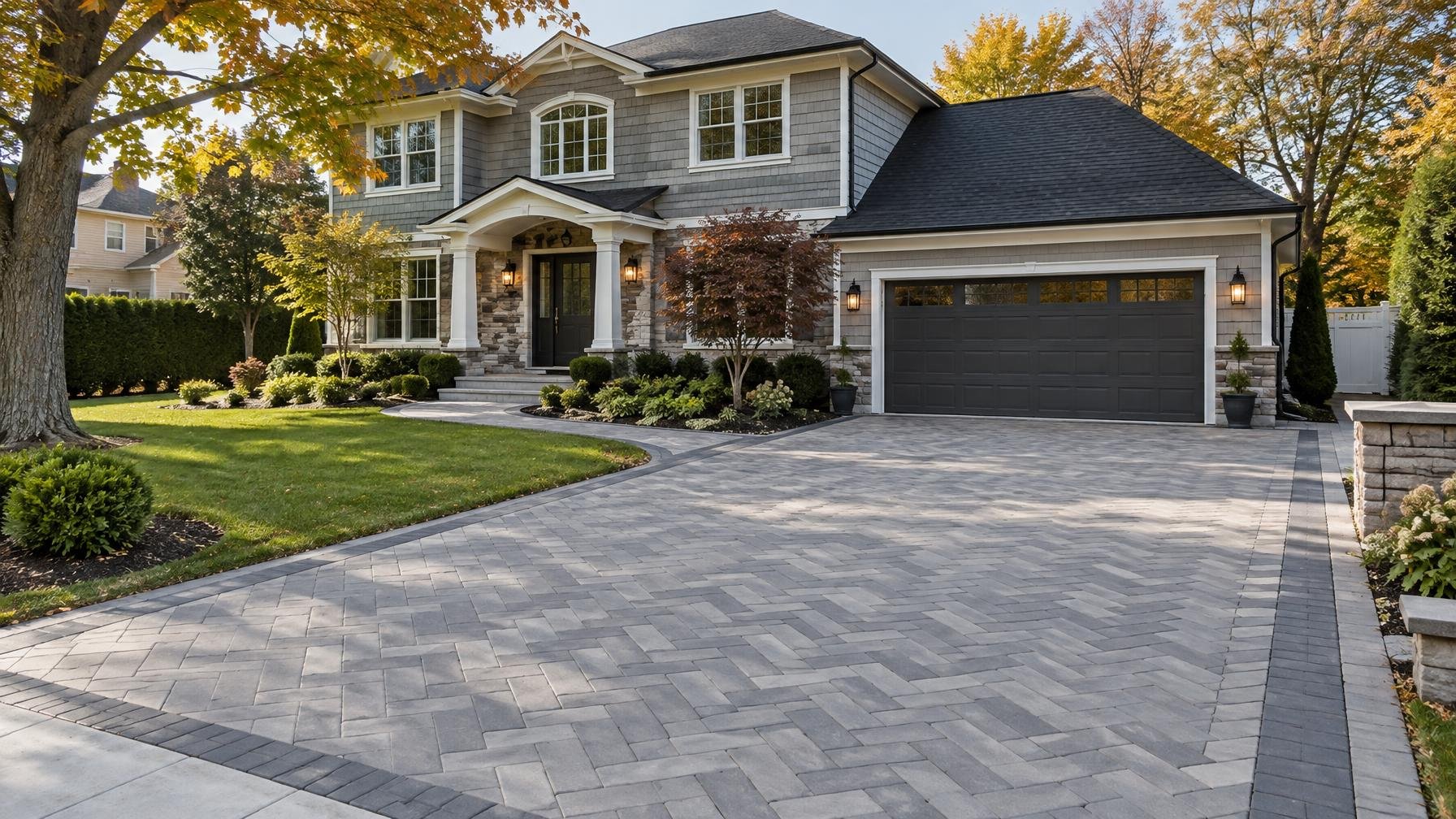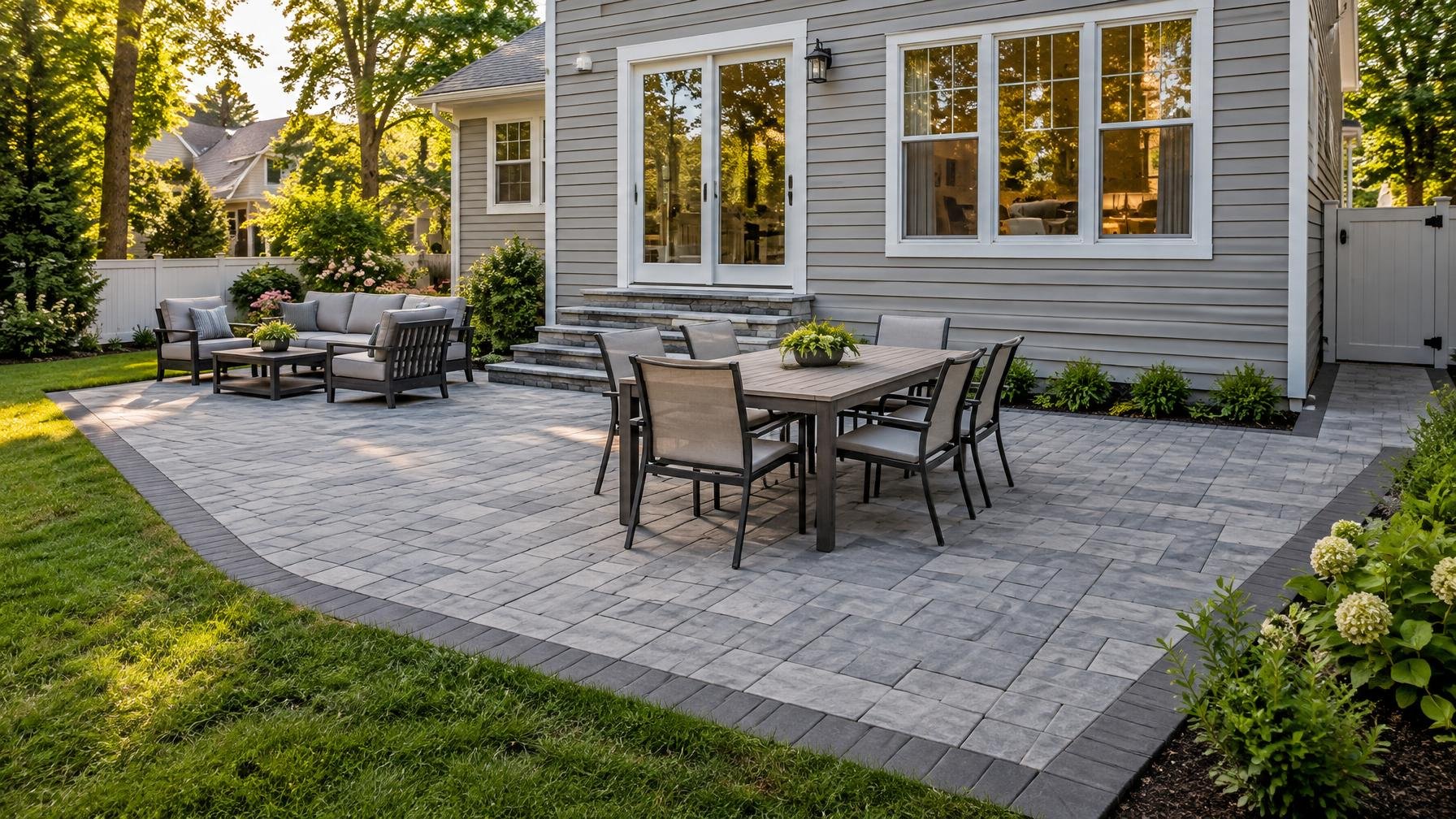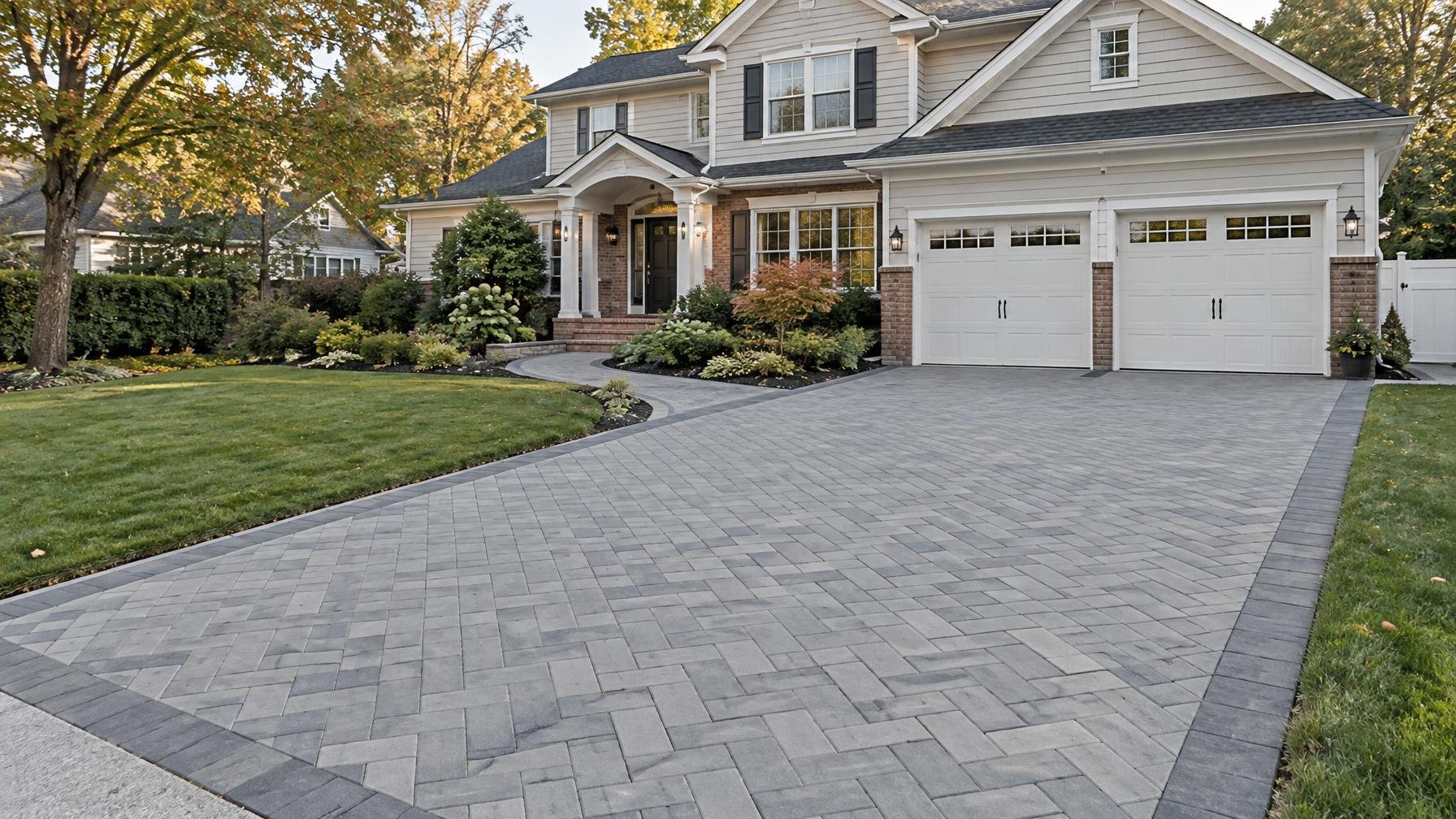
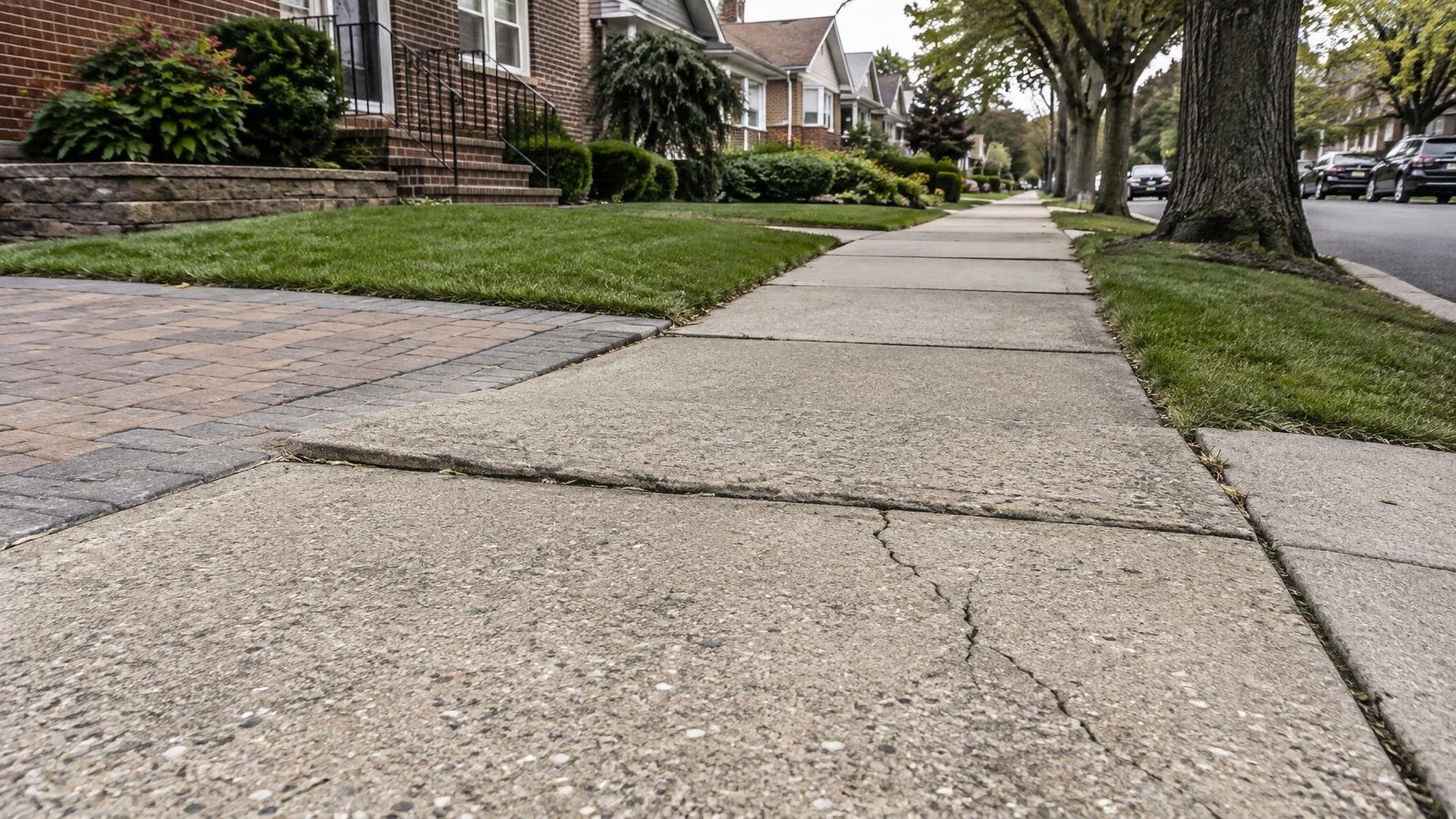
Concrete sidewalk repair in Fresh Meadows, NY starts with identifying whether the problem is surface wear, a damaged slab or movement underneath the concrete. StoneSky Pavers & Masonry offers concrete repair and sidewalk repair and replacement, with free on-site estimates to assess the condition and appropriate scope of work. Before patching a crack or replacing a section, check the surrounding slabs, drainage, tree roots and any sidewalk violation paperwork.
Start With the Sidewalk’s Condition, Not Just the Crack
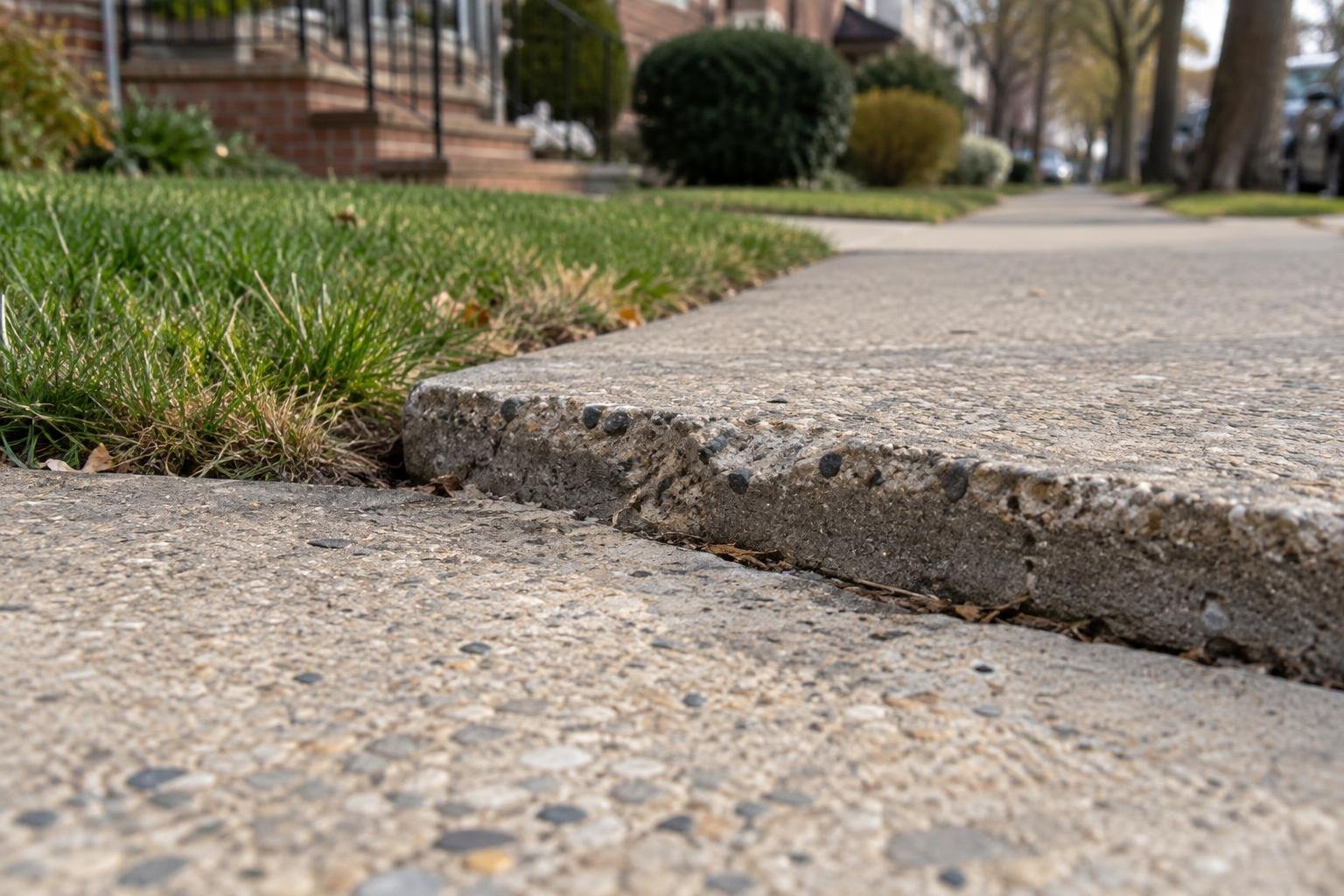
A crack does not tell the whole story. A narrow crack with both sides at the same height is different from a slab that has lifted at one corner or settled beside a driveway apron. The repair decision should account for how people use the sidewalk and why the damage developed.
In Fresh Meadows, residential sidewalk routes often cross driveway entrances and pass front walks, lawns and street trees. These transitions deserve attention because a repair must work with the surrounding surfaces, not simply look better on its own.
- Uneven edges: Look for raised corners and changes in height between neighboring slabs.
- Loose or crumbling concrete: Note broken edges, exposed aggregate and areas that shed material.
- Water collection: Photograph puddles after rain, especially beside the lawn, driveway or front walk.
- Slab movement: Tell the contractor if a section rocks underfoot or has changed height over time.
- Repeated patch failures: Old repairs that keep breaking may indicate an unresolved underlying problem.
You do not need to diagnose the cause yourself. Clear photographs and a description of when the problem appeared help make the site visit more useful.
When Repair Makes Sense—and When Replacement Is Better
Localized defects need a sound surrounding surface
Some limited concrete defects may be candidates for repair when the surrounding material remains sound and the slab is stable. The contractor should explain how the proposed repair will bond, handle outdoor exposure and meet the existing surface without creating another raised edge.
A thin patch over loose concrete or an actively moving crack is unlikely to address the cause. Ask what material must be removed before the repair and whether the work addresses only the visible damage or the condition beneath it.
Broken or displaced sections may need replacement
A slab with substantial cracking, settlement, root-related lifting or widespread deterioration may be better handled by removing and replacing the affected section. That creates access to inspect the support underneath and establish an appropriate finished elevation.
Replacement does not automatically mean replacing the entire frontage. The assessment should identify which sections are damaged and whether adjacent sections need work to create a safe, consistent transition. For broader planning considerations, see StoneSky’s Queens sidewalk replacement guide.
New concrete can also differ in color and texture from older slabs. Discuss appearance before work begins, but prioritize stable support, drainage and safe transitions over a promise of an invisible match.
Check the Conditions That Can Bring Damage Back
Winter moisture and freeze-thaw exposure
Queens sidewalks experience freezing weather, thawing and wet conditions. Water entering cracks or collecting in poorly draining areas can contribute to deterioration as temperatures change. Surface damage can also be affected by concrete quality, finishing, curing and deicing practices.
Ask how the proposed work will handle water and how the new concrete should be maintained through winter. A repair plan should address recurring puddles rather than leave the same low spot beside a new slab.
Tree roots near the sidewalk
A lifted slab near a tree needs careful evaluation. Roots may be involved, but removing concrete is not permission to cut roots or alter a street tree. Work affecting a city street tree may require coordination with NYC Parks and applicable approvals.
Point out the tree during the estimate and ask whether the proposed scope depends on a separate review. Do not assume that replacing the slab at its old elevation will solve the issue if the underlying conflict remains.
Driveway crossings and front-walk connections
Where a Fresh Meadows sidewalk crosses a driveway, the contractor should account for vehicle loading and the existing apron. A pedestrian-only section and a vehicle crossing may have different construction requirements. The estimate should identify the intended use and applicable requirements rather than treating every section identically.
Also check where your private front walk meets the public sidewalk. Raising or lowering one surface can create a new lip at the other. If that connection includes pavers, it may need separate resetting; StoneSky also offers paver repair and resetting.
Permits, Property Responsibility and Sidewalk Violations
Fresh Meadows is within New York City, so public sidewalk work should be planned around NYC requirements rather than procedures used in nearby Nassau County communities. Property owners are generally responsible for maintaining adjacent sidewalks, but responsibility for a particular condition and eligibility for city programs should be checked for the specific property.
Before scheduling construction, confirm the applicable NYC Department of Transportation permit requirements and who will handle the paperwork. If work affects a street tree, driveway crossing or another regulated feature, identify any additional approvals before demolition.
If you received a sidewalk violation, bring the notice and any accompanying defect sketch or inspection information to the estimate. The proposed scope should be checked against the listed defects; repairing the most visible crack alone may not address the notice.
- Confirm which sections are identified in the violation paperwork.
- Ask whether the estimate covers every listed condition or only selected repairs.
- Clarify who obtains required permits and coordinates any necessary follow-up.
- Verify the current inspection and dismissal process with NYC DOT.
Finishing the concrete work does not by itself establish that a violation has been dismissed. Keep copies of the scope, permits and relevant records, and confirm the required administrative steps.
What a Clear Sidewalk Repair Estimate Should Include
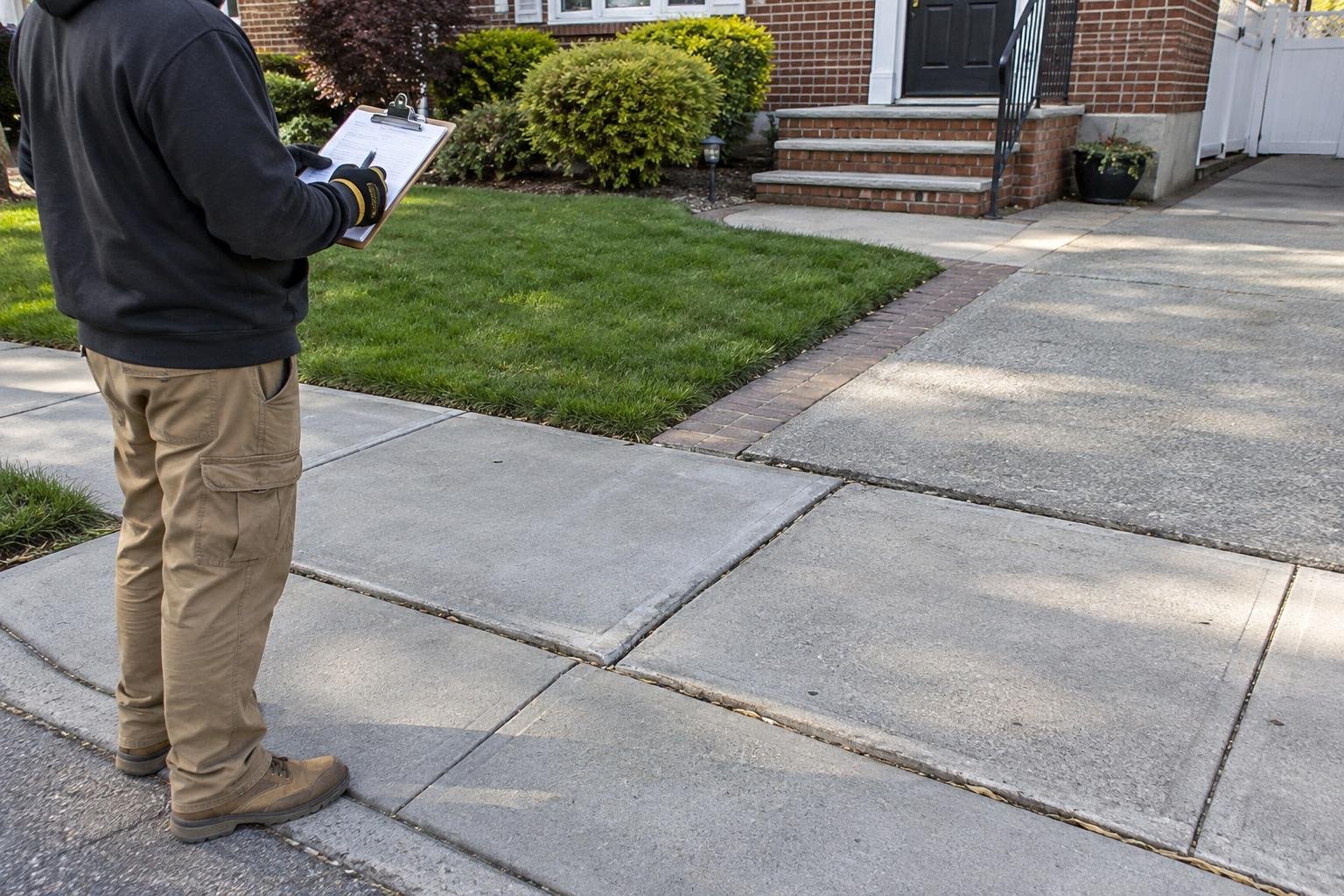
A useful estimate explains what will be done and where the work stops. Ask the contractor to identify the proposed sections during the site visit so there is no confusion between a small localized repair and removal of multiple sidewalk flags.
- Work area: The location and extent of each repair or replacement section.
- Removal and disposal: What existing concrete and unsuitable material will be removed.
- Underlying preparation: How support conditions will be assessed and prepared before placement.
- Concrete construction: The planned section, joint layout and any reinforcement required for the location and use.
- Elevations and finish: How the work will meet adjacent slabs, driveway surfaces and front walks.
- Drainage: How water will leave the repaired area without creating a new problem nearby.
- Access and protection: How pedestrians will be accommodated and fresh concrete protected.
- Permit responsibilities: What paperwork and follow-up are included or handled separately.
Also ask what happens if removal reveals unexpected roots, voids or other conditions. A clear process for discussing changed conditions is more useful than assuming everything below the slab is sound.
Prepare for the Work and Protect the Finished Concrete
Before the estimate, take wide photos showing the frontage and close-ups of each defect. Include the driveway crossing, nearby trees and the connection to your front entrance. If ponding is intermittent, photos taken after rainfall can show something that is not visible on a dry inspection day.
Before construction, discuss deliveries, driveway access and how residents will reach the entrance. This is especially important when the front walk is the household’s primary access or someone uses a stroller, walker or wheelchair. Pedestrian routing and barriers should be planned, not improvised after removal starts.
Concrete needs appropriate curing and protection. Weather, the concrete mix and expected loading all affect when a section can return to use. Get specific instructions for foot traffic and vehicles; do not assume the driveway crossing is ready because the surface looks dry.
Afterward, keep joints clear of accumulated soil, avoid aggressive ice-chipping tools and follow the contractor’s guidance on deicers. Check the area after heavy rain and again after winter. Reporting a developing low spot or new height difference early makes the condition easier to assess.
Request a Free On-Site Estimate in Fresh Meadows
StoneSky Pavers & Masonry serves Fresh Meadows and surrounding Queens neighborhoods with concrete installation and repair, sidewalk repair and replacement, and sidewalk violation repairs. An on-site assessment can help define the damaged sections, identify adjoining surfaces that need attention and clarify the proposed work.
Request a free on-site estimate or call (929) 528-1205. Have your sidewalk photos and any violation paperwork ready so the visit can focus on the conditions at your property.
Frequently Asked Questions
Can a cracked concrete sidewalk be repaired without replacing the slab?
Some localized defects may be repairable if the slab is stable and the surrounding concrete is sound. Significant displacement, widespread deterioration or repeated patch failure may make section replacement more appropriate. An on-site assessment is needed to distinguish the two.
Do I need a permit for sidewalk repair in Fresh Meadows?
Public sidewalk work in Fresh Meadows is subject to NYC requirements. Confirm the applicable NYC DOT permit requirements before scheduling work and clarify who will obtain the permit. Work involving street trees or other regulated features may require additional coordination.
What should I do if tree roots are lifting my sidewalk?
Have the lifted section and nearby tree assessed before planning removal. Do not cut street-tree roots yourself or assume sidewalk work authorizes root cutting. Work affecting a city street tree may require NYC Parks coordination and approvals.
Does repairing the sidewalk automatically remove an NYC sidewalk violation?
No. The work must address the applicable defects, and the required NYC DOT inspection and dismissal steps must also be completed. Review the violation paperwork with the contractor and confirm the current process with NYC DOT.
How soon can I use a repaired or replaced sidewalk?
Timing depends on the repair material or concrete mix, weather, curing conditions and expected loading. Follow the contractor’s specific instructions for pedestrian access and vehicle use. A dry-looking surface does not mean concrete is ready for traffic.
Does StoneSky offer free sidewalk repair estimates in Fresh Meadows?
Yes. StoneSky Pavers & Masonry offers free on-site estimates in Fresh Meadows. Call (929) 528-1205 or use the contact page to request an assessment.