If you are looking for a paver patio contractor in Manhasset, NY, start with a site assessment—not just a paver sample. StoneSky Pavers & Masonry installs paver patios and backyard paving in Manhasset and across Nassau County, with free on-site estimates. A useful proposal should address layout, drainage, base preparation and the connection between your patio, house and yard.
Plan the Patio Around How You Use the Backyard
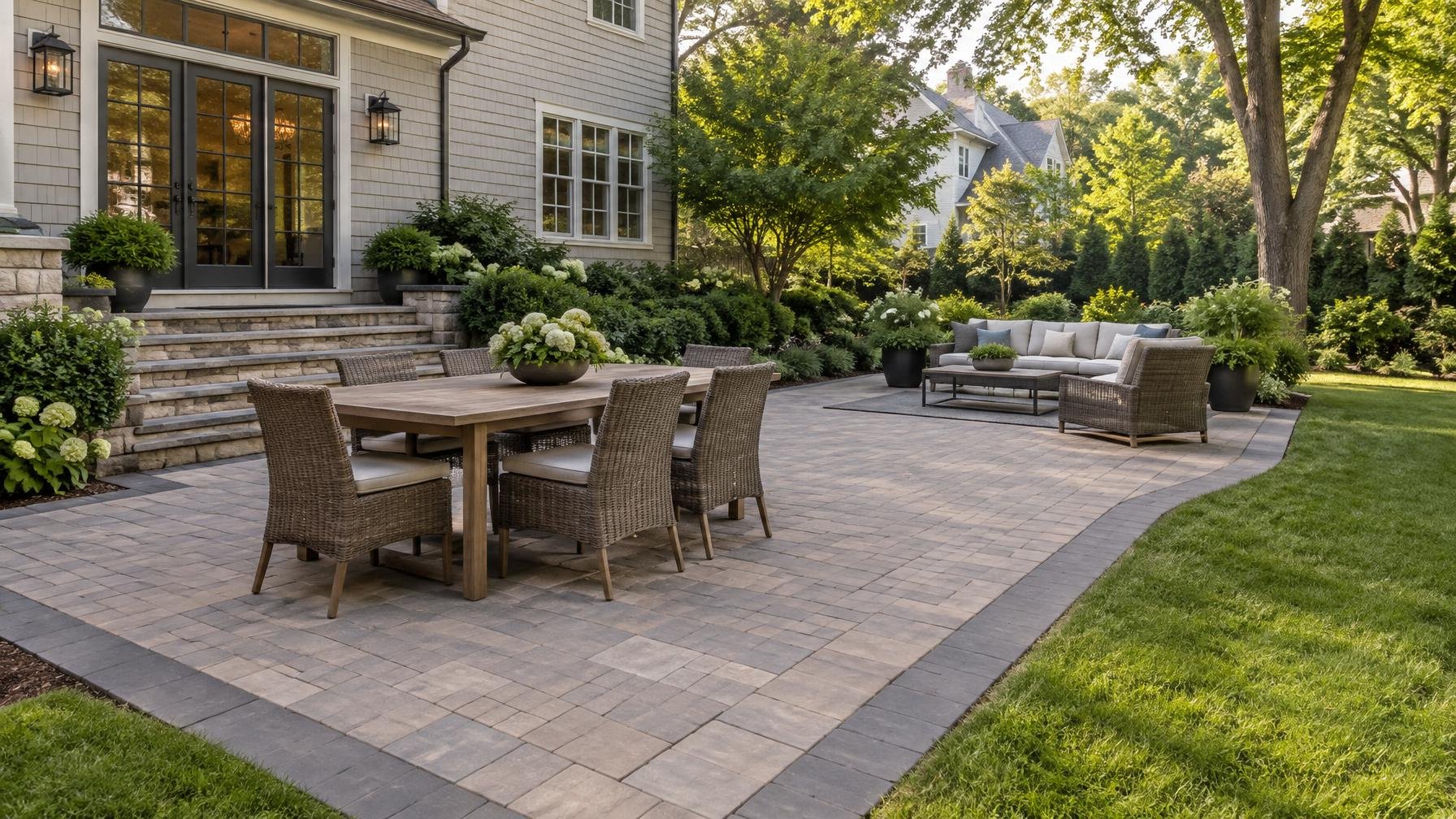
A patio should accommodate everyday movement as well as furniture. Before discussing colors or borders, decide whether the space will mainly serve outdoor meals, lounge seating or a combination of both. An oversized paved area can leave too little lawn, while a tight layout can make chairs and doorways difficult to use.
Mark out furniture and walking routes
Use a garden hose or temporary markers to outline the proposed patio. Set out your actual furniture, if possible, and pull dining chairs away from the table. Walk from the back door to the lawn, grill area and side gate. This simple exercise often reveals that a slightly different shape works better than a larger rectangle.
- Keep the main walking route clear of occupied chairs.
- Leave room for doors and gates to open fully.
- Plan grill placement around the equipment manufacturer's clearance requirements.
- Allow access to hose connections, basement windows and exterior equipment.
- Decide whether an existing walkway should connect directly to the new patio.
StoneSky's paver patio services cover the main outdoor living surface. Discuss adjoining backyard pavers, walkways or steps during the same visit so their elevations and transitions can be considered together.
Check Drainage and Finished Heights First
Manhasset patios need to handle rain, snowmelt and winter freeze-thaw cycles. Water that remains in low spots can make a patio inconvenient to use and can become ice in cold weather. Choosing a textured paver does not solve a grading problem underneath it.
Look at the whole route water takes
The contractor should assess where water comes from and where it can appropriately go. That includes roof downspouts, sloping lawn areas, adjacent paving and low points near the house. The finished surface should direct water away from the foundation without simply transferring runoff to a neighboring property.
Take photographs after a steady rain before the estimate appointment. Show any puddles beside the foundation, muddy areas at the lawn edge or water collecting at the bottom of exterior steps. These observations are more useful than trying to describe a drainage problem on a dry afternoon.
Coordinate the patio with doors and steps
Finished height affects door thresholds, siding clearances and the rise of adjoining steps. Raising a patio to cover an awkward transition can create a different problem at the house. Ask how the proposed elevation will preserve necessary clearances and avoid an unexpectedly short or tall step.
Where substantial grade changes exist, the project may need a separate discussion about steps or retaining walls. Those are masonry elements with their own structural and drainage considerations, not details to improvise after the patio surface is installed.
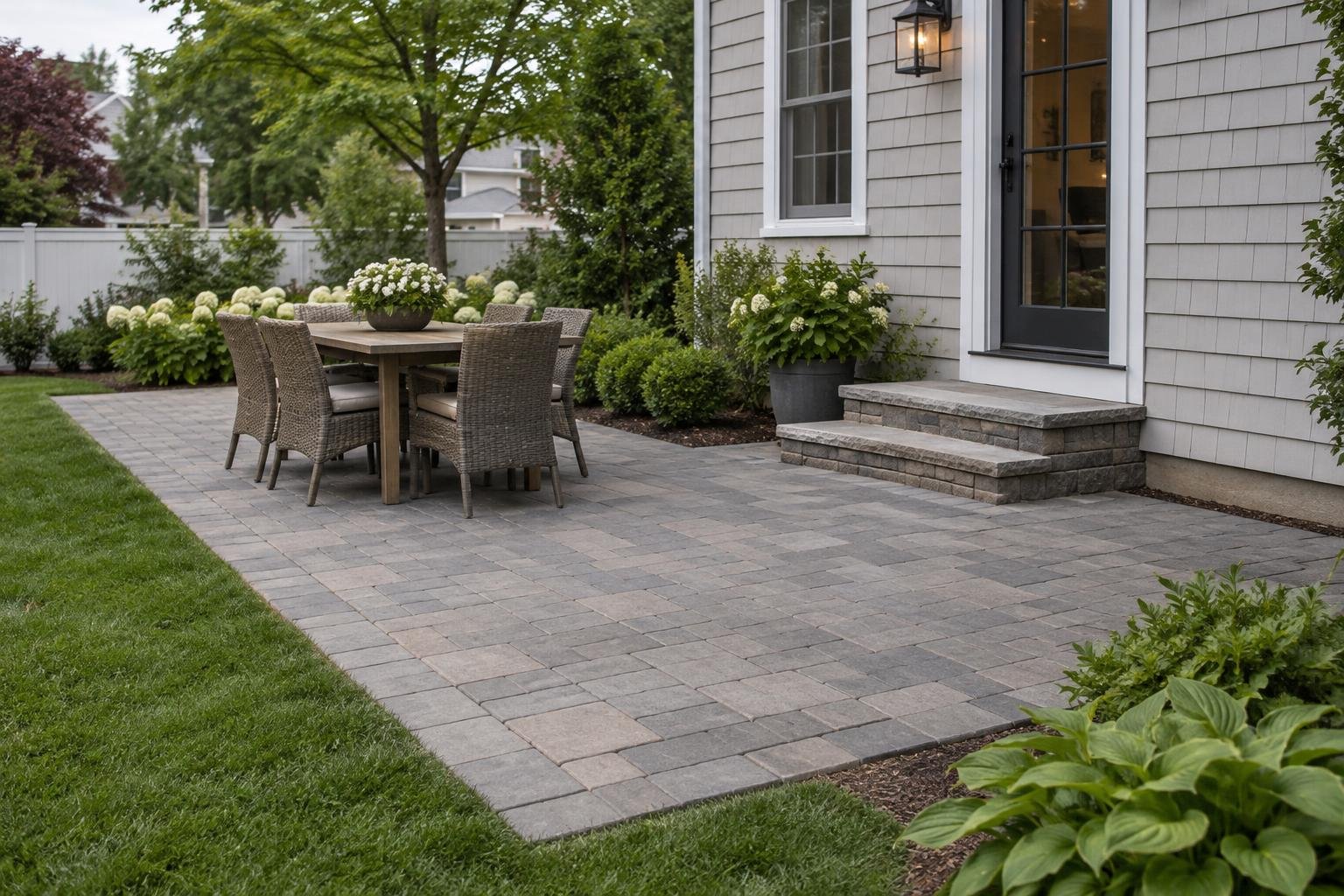
Choose Pavers for the Site, Not Just the Photograph
Bring a few reference images to the estimate, but judge material samples beside your own siding, brickwork and landscaping. Shade from mature trees can change how colors appear, and leaves or moisture may affect maintenance needs. Compare samples dry and wet when practical.
Concrete pavers
Concrete pavers offer a range of shapes, colors and laying patterns. They can suit a straightforward dining patio or a larger backyard layout with a contrasting border. Ask which product sizes and installation requirements fit the proposed use, particularly if the design includes large-format units.
StoneSky offers concrete paver installation alongside other paver material options. Discuss the specific product rather than assuming every concrete paver has the same thickness, finish or application.
Brick, natural stone and porcelain
Brick pavers can complement traditional masonry, while natural stone offers variation in color and surface character. Exterior porcelain pavers provide another option, but the product and installation method must suit the site. For each material, ask about outdoor use, freeze-thaw suitability, traction when wet and the maintenance the manufacturer recommends.
A smooth-looking display sample does not tell you everything about barefoot comfort or wet traction. If the patio receives strong afternoon sun, consider how the material feels in comparable conditions. Material choice should balance appearance with how the household will actually use the space.
Permeable pavers require a complete system
Permeable paving is not simply ordinary paving with wider joints. It relies on compatible units, joint material and an underlying stone system designed around site conditions. Soil infiltration, groundwater conditions and an appropriate overflow plan matter. Ask whether a permeable assembly is suitable for your property before selecting it as a drainage solution.
Ask What Is Included Beneath the Pavers
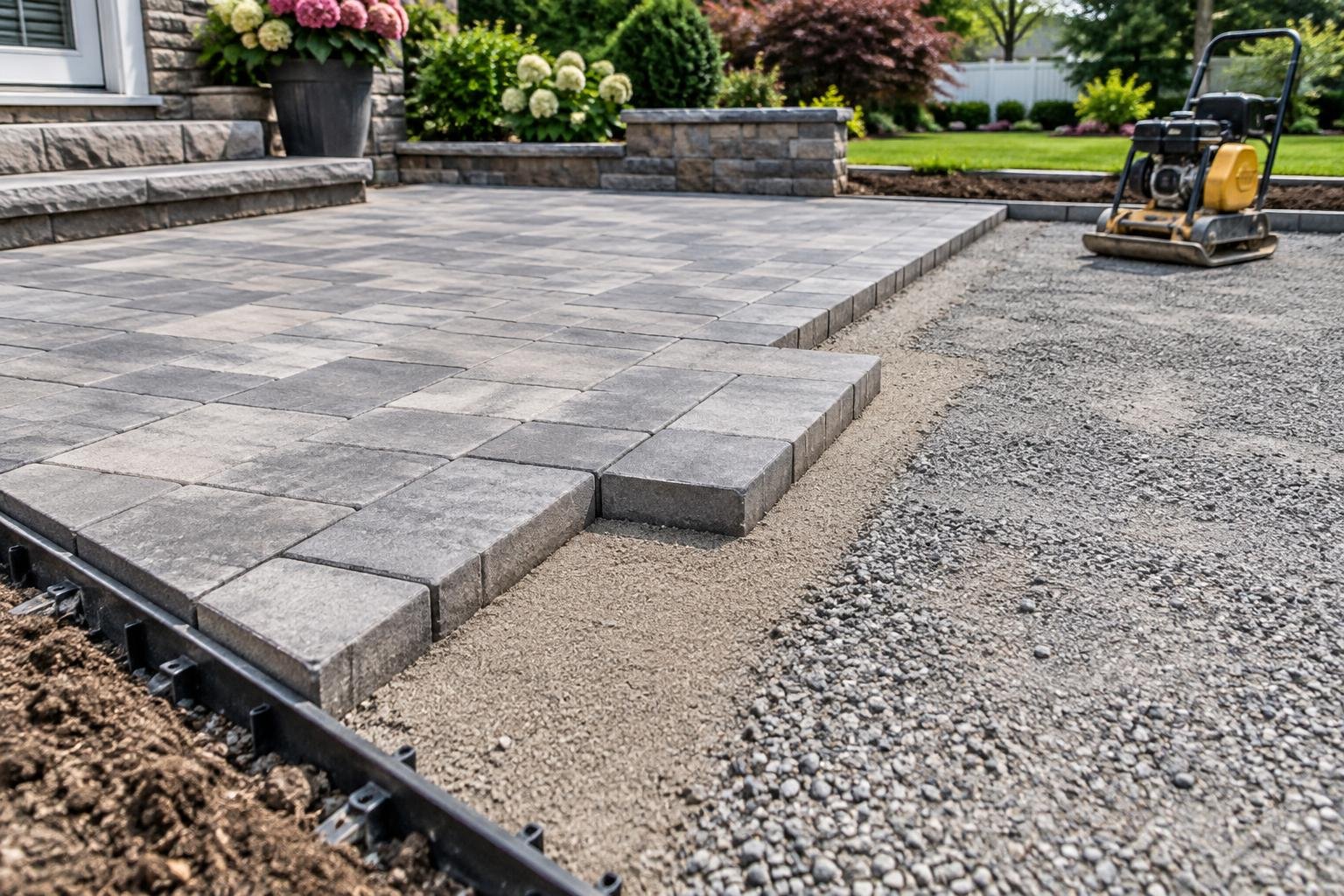
The visible surface is only one part of the installation. Excavation, subgrade preparation, compacted base material, bedding, edge restraint and joint material all affect how the patio performs. A written scope should explain these components rather than describing the work only as “install patio pavers.”
- Excavation: What existing paving, soil or unsuitable material will be removed?
- Subgrade: How will soft spots or disturbed ground be evaluated and addressed?
- Base: What material and depth are proposed for the soil, product and intended use?
- Compaction: How will the base be placed and compacted in layers?
- Edges: What will restrain the pavers along lawn and planting-bed boundaries?
- Joints: Which joint material is compatible with the selected pavers and installation?
There is no single base specification that should be assumed correct for every Manhasset backyard. Existing soil, previous excavation and the selected paving system can change the requirements. Ask how unexpected conditions will be documented and discussed before additional work proceeds.
Account for Backyard Access and Local Approvals
Access can shape the construction plan even when the patio itself is simple. In established Manhasset neighborhoods, side gates, narrow passages, mature planting beds and existing front walks may limit equipment routes. Show the contractor every available entry point rather than assuming machinery can reach the backyard.
Discuss where removed material will go, where new materials can be staged and which existing surfaces need protection. If delivery or staging could affect a sidewalk or street, ask what arrangements or permissions may be needed. Also identify tree roots near the work area; cutting significant roots should not be treated as routine excavation.
A Manhasset mailing address does not by itself establish the permitting authority. Depending on the property's location, requirements may involve the Town of North Hempstead or an incorporated village. Confirm the applicable building department and ask about setbacks, lot coverage, drainage and whether associated steps or retaining walls require approvals.
Do not assume that a ground-level patio is automatically exempt from review. Clarify who will verify requirements and obtain any necessary approvals before scheduling construction. An available property survey can help identify boundaries and other site constraints.
Decide Whether an Existing Patio Needs Repair or Replacement
If you already have pavers, replacement is not always the first option. Localized settlement, loose edges or uneven sections may be candidates for lifting and resetting when the units remain serviceable and the underlying cause can be corrected.
StoneSky provides paver repair and resetting. During an assessment, point out areas that move underfoot, hold water or have separated from the border. Ask whether the issue is limited to one section or indicates a broader base or drainage problem.
Widespread movement, damaged units or a layout that no longer works may support a larger rebuild. Cleaning and sealing can address certain maintenance needs, but they do not correct settlement or poor slope. Structural and drainage problems should be evaluated before cosmetic treatments.
Prepare for the Estimate and Future Maintenance
For a productive estimate, have your rough layout, furniture dimensions, rain photographs and preferred material examples ready. Explain whether you want to keep existing steps, expand a walkway or preserve a particular planting bed. These decisions affect the scope more than choosing a border color early.
Request a written description of demolition, preparation, paving, edge details, cleanup and any adjoining masonry work. Confirm what is excluded and how changes will be approved. After installation, follow product-specific care guidance: sweep leaves, watch for developing low spots and use compatible cleaning products. If sealing is being considered, ask whether it is appropriate for the selected material and finish.
Request a Free On-Site Estimate in Manhasset
StoneSky Pavers & Masonry serves Manhasset, Nassau County, Queens and Long Island with paver installation, repairs and outdoor masonry services. Start with a site visit to discuss patio size, material choices, drainage and access before settling on the final design.
Request a free on-site estimate or call (929) 528-1205 to discuss your Manhasset patio project.
Frequently Asked Questions
What should I ask a paver patio contractor in Manhasset?
Ask how the patio will drain, how finished heights will meet doors and steps, and what excavation, base preparation, edge restraint and joint materials are included. Also discuss backyard access, applicable approvals and how unexpected site conditions will be handled.
Do I need approval for a paver patio in Manhasset?
Requirements depend on the property's jurisdiction and the proposed work. Confirm whether the Town of North Hempstead or an incorporated village is the applicable authority, then check patio, lot coverage, drainage and setback requirements. Related steps or retaining walls may require separate review.
Can sunken patio pavers be reset instead of replaced?
Localized settlement may be repairable by lifting the pavers, correcting the supporting layers and resetting serviceable units. Widespread movement, drainage problems or damaged pavers may require more extensive work. StoneSky offers paver repair and resetting.
Are permeable pavers a solution for backyard puddles?
They may be suitable, but only as part of a properly planned permeable paving system. Soil infiltration, groundwater conditions, base design and overflow must be evaluated. Installing permeable pavers alone does not guarantee that existing drainage problems will be resolved.
Does StoneSky offer free patio estimates in Manhasset?
Yes. StoneSky Pavers & Masonry serves Manhasset and offers free on-site estimates. Call (929) 528-1205 or use the contact page to discuss your patio layout, materials and existing site conditions.