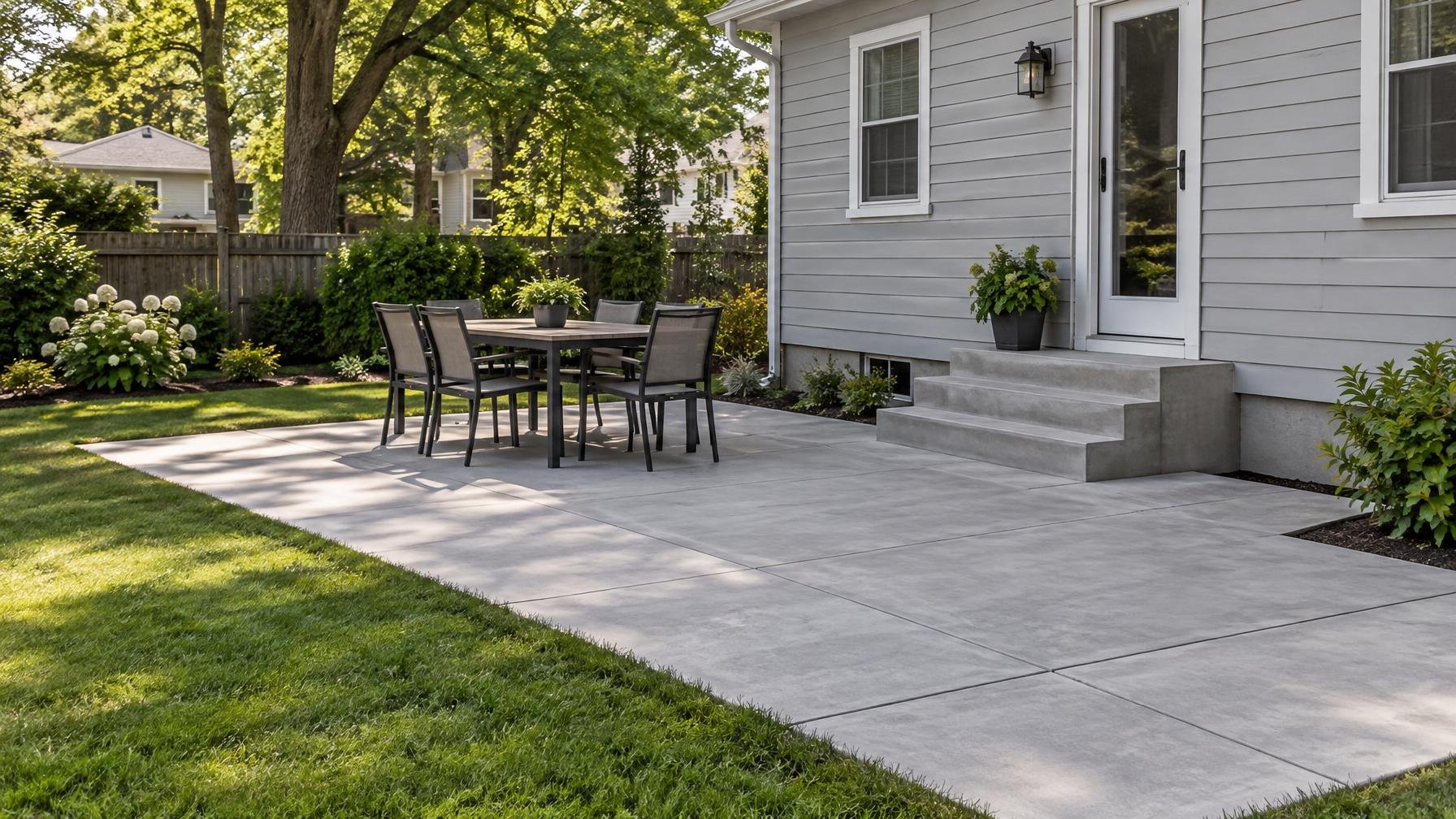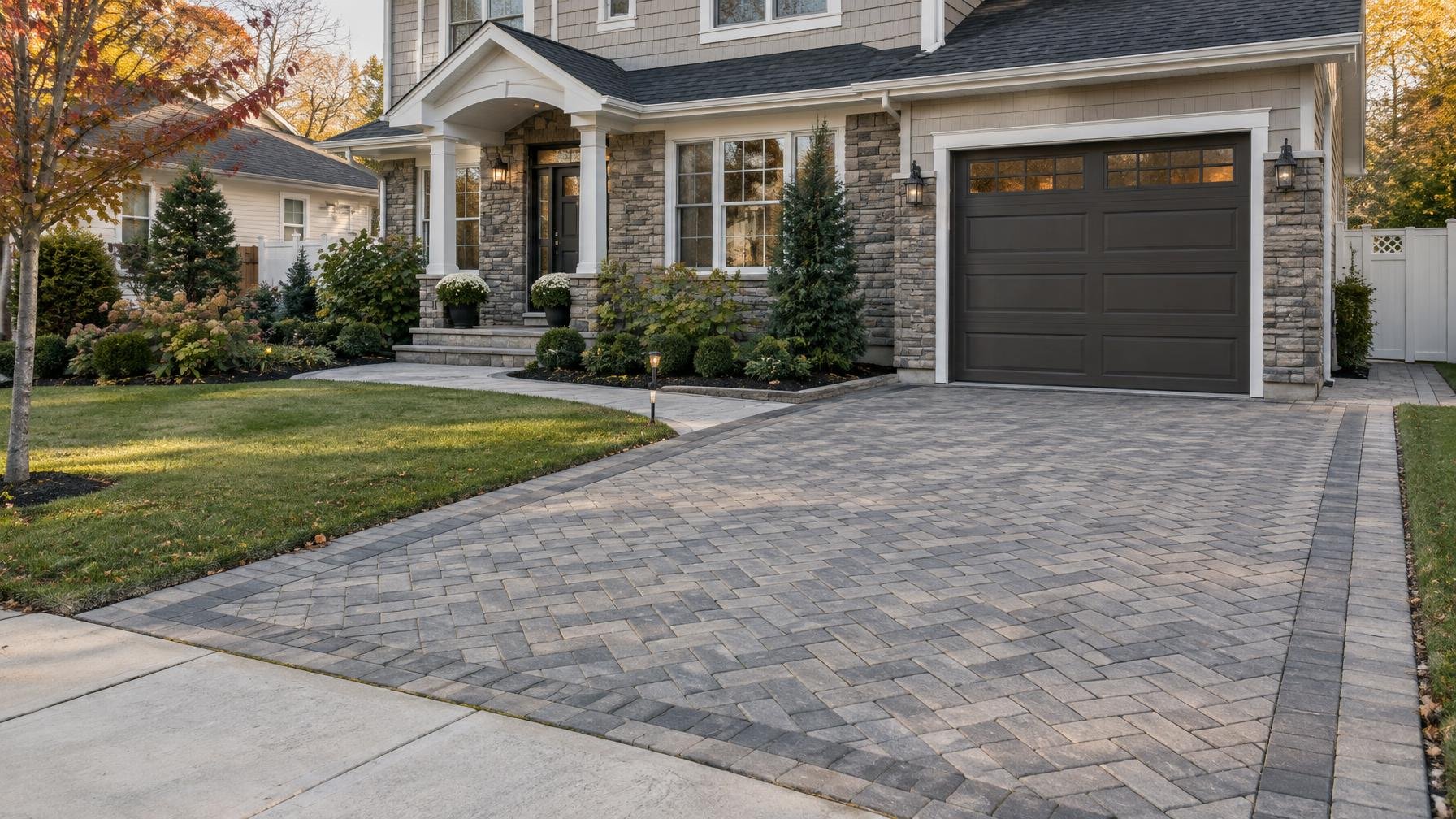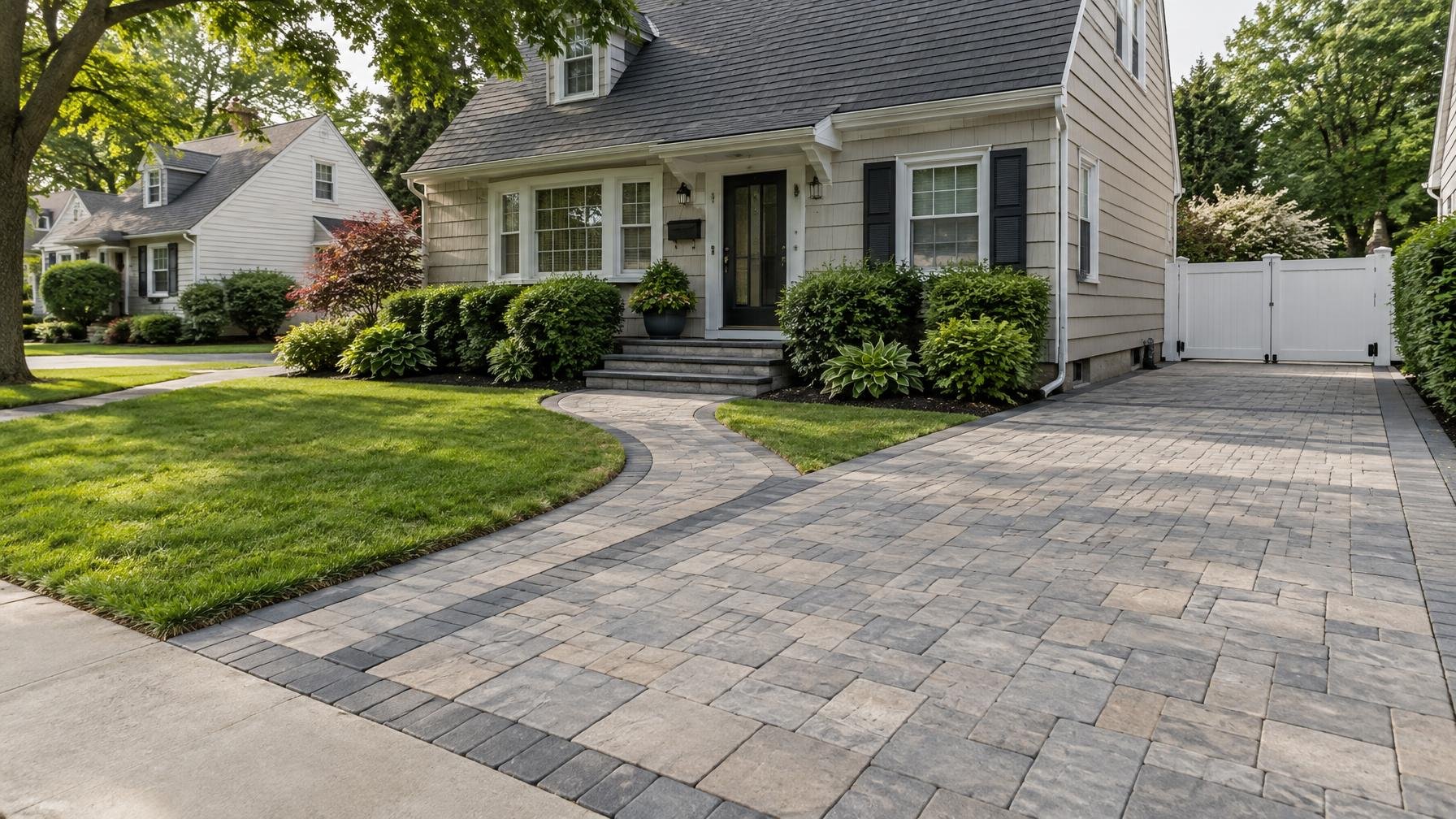
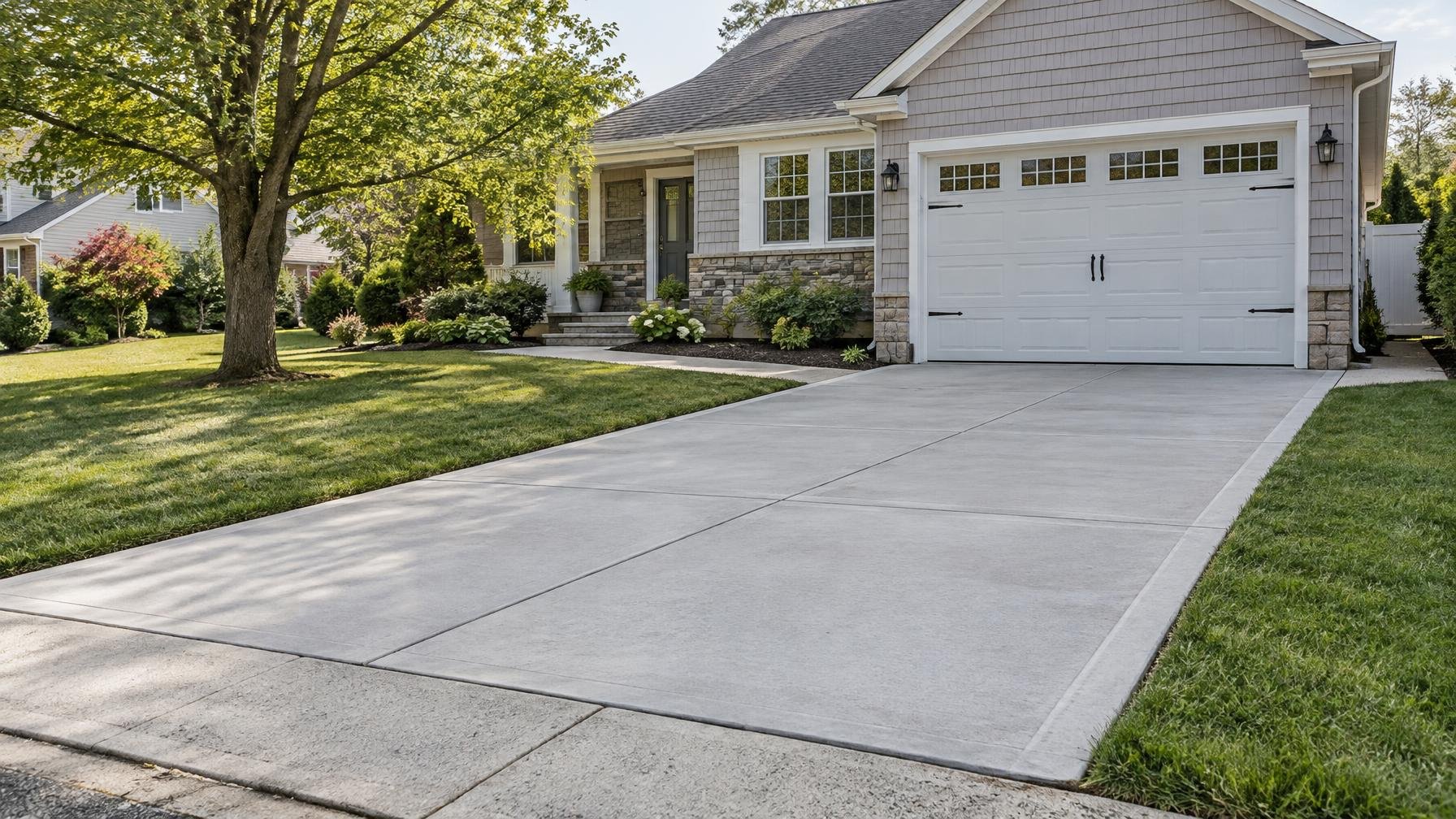
Concrete driveway installation in Massapequa, NY starts with checking how the driveway will carry vehicles, shed water and connect to the garage, sidewalk and street. StoneSky Pavers & Masonry offers concrete installation and repair in Nassau County, with free on-site estimates to assess existing conditions and define the work before installation begins.
For homeowners replacing a damaged driveway or planning a different layout, the most important decisions are often below the surface—not just the color or finish.
Start With the Existing Driveway and Daily Use
Before choosing a layout, look at how the driveway works on a normal day. A surface that fits parked cars may still leave too little room to open doors, wheel out garbage bins or walk safely to the front entrance.
Bring these details to the on-site estimate:
- Vehicle use: Number of vehicles, their approximate size and whether heavier vehicles regularly enter the driveway.
- Problem areas: Cracks, depressions, loose edges and spots where water collects after rain.
- Access needs: Routes to the front door, side gate, garage and backyard.
- Existing connections: Sidewalk crossings, steps, utility covers and driveway apron conditions.
- Planned changes: Widening, moving an edge or connecting the driveway to a new walkway.
Photos taken during rainfall are especially useful. They show water movement that may not be obvious during a dry-weather visit. Note whether puddles disappear quickly or remain long after the surrounding pavement dries.
Check Local Requirements Before Changing the Layout
A Massapequa mailing address alone does not establish which office handles every approval. Confirm whether the property is under Town of Oyster Bay jurisdiction or within an incorporated village such as Massapequa Park, and ask the appropriate building or highway department about the proposed work.
Requirements may differ for replacing an existing driveway, widening it, changing a curb opening or disturbing a public sidewalk. Do not assume an existing driveway footprint automatically authorizes an expansion.
Separate private driveway work from street-side work
The apron, curb and sidewalk crossing deserve their own review. Ask where the private-property work ends, whether work affects the public right-of-way and who will handle any required applications or inspections. If a sidewalk crosses the driveway, its continuity and pedestrian use must be considered alongside vehicle access.
Before excavation, confirm that underground utility marking has been arranged. Also identify private features such as irrigation lines or landscape lighting that may not be covered by public utility markings. Resolving these points early helps keep the installation scope clear.
Plan Drainage Around Massapequa Conditions
Long Island rain, snowmelt and winter freeze-thaw cycles make drainage a central part of driveway planning. In lower-lying portions of Massapequa, including areas closer to the South Shore waterways, site elevation and wet ground may require closer evaluation. Conditions should be checked at the property rather than assumed from the neighborhood.
The driveway should have a planned water path that protects the garage and foundation without creating problems for neighboring properties or pedestrian routes. A surface that looks nearly level can still hold water if elevations are not coordinated.
Check every transition, not just the middle
Review the garage threshold, front walk, side-yard edge and street connection together. Raising the new driveway to cover an old low spot can create a different problem at a doorway or sidewalk. Downspouts discharging onto the driveway should also be discussed before elevations are finalized.
If grading alone cannot manage runoff, identify the limitation before the pour and determine whether additional drainage planning is needed. A new concrete surface is not, by itself, a solution to a broader flooding problem.
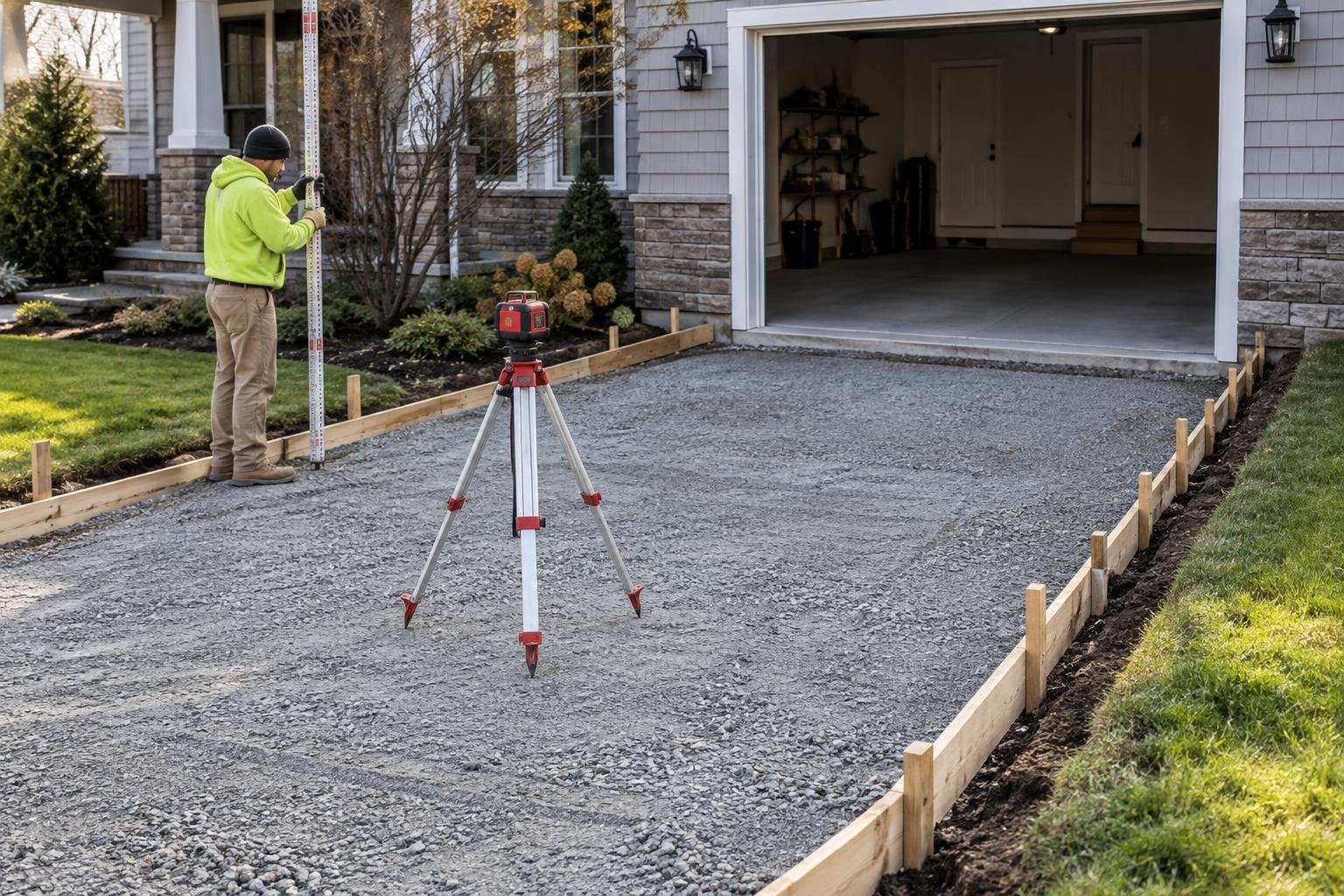
What a Concrete Driveway Installation Should Address
A useful estimate explains the preparation and installation sequence, not simply the finished surface area. StoneSky’s concrete, paver and masonry services cover related outdoor surfaces, making it important to identify which driveway connections belong in the proposed scope.
Removal and excavation
For a replacement, establish whether the existing surface will be removed and how unsuitable material underneath will be handled. Pouring over deteriorated pavement without evaluating it can carry existing movement and elevation problems into the new work.
Excavation should accommodate the planned concrete and supporting base while maintaining the intended finish elevations. Access for equipment, removal of debris and protection of nearby landscaping should be discussed before work starts.
Subgrade and base preparation
The ground below the driveway needs consistent support. Soft areas, disturbed fill and pockets that retain water should be addressed rather than concealed. Base material and compaction should suit the soil conditions and anticipated vehicle loads.
There is no single preparation detail that fits every driveway. Ask how the contractor will assess the exposed ground and communicate changes if removal reveals conditions that could not be seen during the estimate.
Slab thickness, reinforcement and joints
The proposed slab thickness should reflect vehicle use and site conditions. Reinforcement, when specified, needs proper positioning during placement; simply having steel on site does not explain how it will function in the slab.
Concrete shrinks as it cures. Control joints create planned locations for shrinkage cracking, while isolation joints allow separation at appropriate fixed features. Ask about the joint layout before placement, particularly around garage corners, narrow sections and changes in driveway width. Reinforcement and joints help manage behavior, but they do not make concrete crack-proof.
Choose a Finish for Traction and Everyday Maintenance
For an everyday residential driveway, discuss a textured finish such as a broom finish rather than choosing by appearance alone. The goal is a consistent surface that provides useful traction without being unnecessarily rough for walking, snow removal or cleaning.
Review how the driveway will meet existing brick, pavers or concrete near the house. A neat transition should avoid abrupt lips, awkward narrow strips and edges that are difficult to maintain. Finish samples or clear reference photos can help establish expectations, although concrete color naturally varies with materials, weather and curing conditions.
If you are still deciding between a poured slab and individual paving units, review StoneSky’s paver driveway options. Pavers have their own base, edge-restraint and maintenance requirements; the choice should reflect the layout and how you want future surface repairs handled.
Plan for Weather, Curing and Temporary Access
A concrete installation schedule depends on more than an available workday. Rain during finishing, high heat, drying wind and freezing conditions can affect placement and early curing. Ask how weather changes will be handled and how the fresh surface will be protected.
Curing helps concrete retain the moisture needed to develop its properties. It is not the same as waiting for the top to look dry. The contractor should explain the curing method and any homeowner responsibilities before leaving the site.
- Arrange alternate parking before removal starts.
- Keep a safe pedestrian route to the house where feasible.
- Keep pets, bicycles, deliveries and garbage bins off fresh concrete.
- Obtain separate guidance for foot traffic and vehicle traffic.
- Ask whether heavier loads require a longer waiting period.
Follow the return-to-use instructions for the actual installation. Surface appearance alone is not a reliable sign that a driveway is ready for parked vehicles.
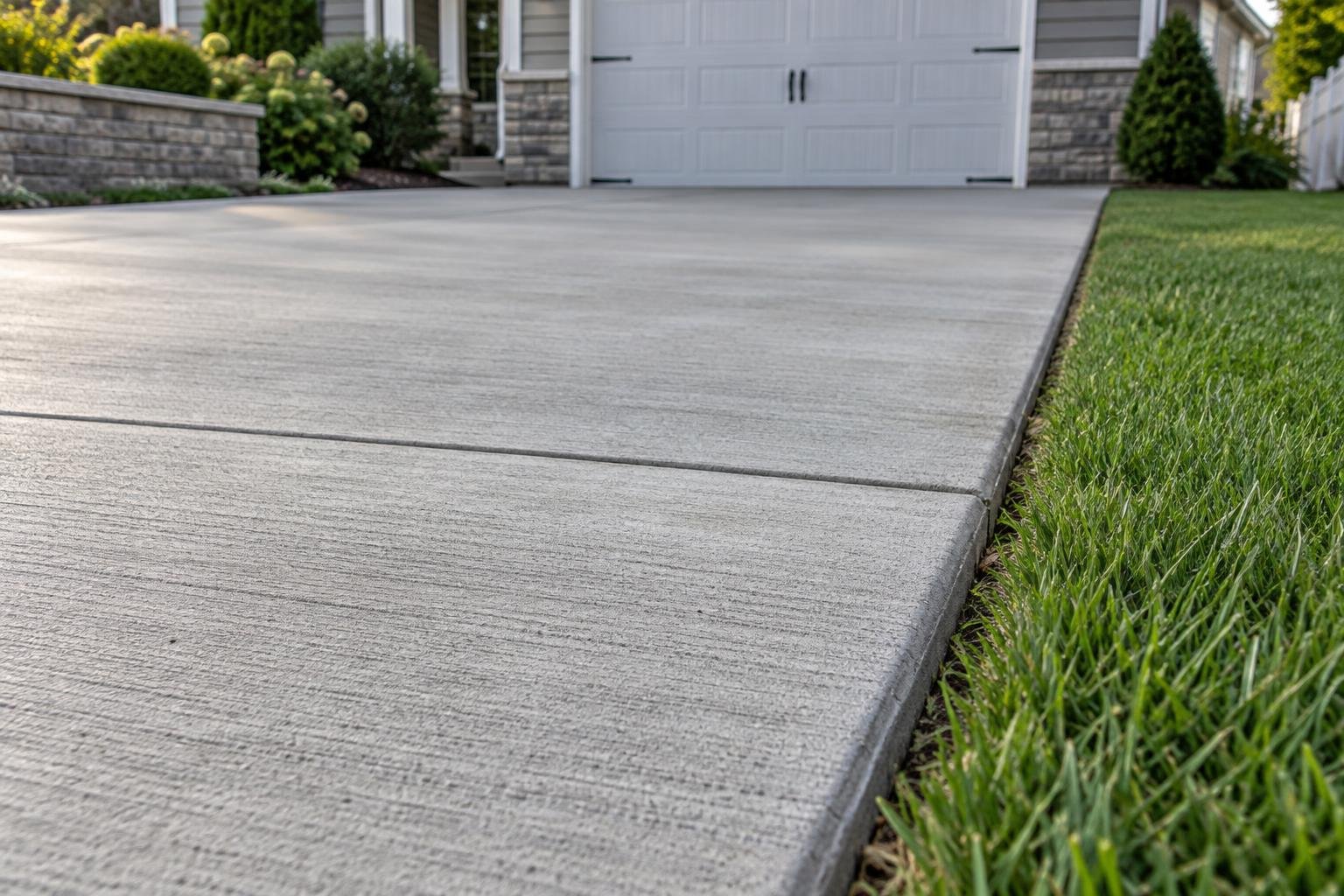
Repair or Replace the Existing Concrete?
Not every damaged driveway requires complete replacement. A localized defect may justify repair when the surrounding concrete is stable and drainage remains effective. Widespread settlement, repeated cracking, substantial surface deterioration or a layout that directs water toward the house calls for a broader evaluation.
Look at the pattern of damage rather than one crack in isolation. A crack with a vertical offset can indicate movement, while recurring puddles may point to an elevation problem. Patching the visible opening will not necessarily address either condition.
Ask what a proposed repair will accomplish and what limitations remain. If replacement is recommended, the estimate should explain how the new preparation or layout addresses the existing problem rather than simply replacing the visible surface.
What to Review in Your On-Site Estimate
A clear scope makes it easier to understand what is included and prepare for the work. Before authorizing installation, review these items:
- Limits of work: Driveway dimensions, apron, sidewalk crossing and any adjoining walkway sections.
- Preparation: Removal, excavation, base work and handling of unexpected unsuitable ground.
- Concrete details: Planned thickness, reinforcement where applicable, finish and joint layout.
- Water management: Proposed elevations and the intended runoff route.
- Responsibilities: Approvals, utility coordination, access and protection of nearby features.
- Completion: Cleanup, curing instructions and return-to-use guidance.
After installation, keep the driveway clear of debris and monitor drainage through the first rainy and winter seasons. Follow the concrete care instructions, especially regarding deicing products on new concrete. Avoid assuming that sealing or a surface treatment can correct settlement or poor drainage.
Request a Free On-Site Estimate in Massapequa
StoneSky Pavers & Masonry serves Massapequa, Nassau County and surrounding Long Island communities with concrete installation and repair, pavers and masonry services. An on-site visit is the right time to review driveway damage, vehicle use, drainage and connections to the sidewalk or front entrance.
Request a free on-site estimate or call (929) 528-1205 to discuss your concrete driveway project.
Frequently Asked Questions
Do I need a permit to replace a concrete driveway in Massapequa?
Requirements depend on the property's jurisdiction and the scope of work. Confirm with the appropriate Town of Oyster Bay or village office before starting, especially if the project involves widening, a curb opening, an apron or a public sidewalk.
How thick should a residential concrete driveway be?
Thickness should be specified for the expected vehicle loads, ground conditions and applicable local requirements. Ask the contractor to explain the proposed thickness, base preparation and reinforcement rather than relying on one standard detail for every property.
When can I park on a new concrete driveway?
Follow the contractor's instructions for the concrete and curing conditions used on your project. Foot traffic, passenger vehicles and heavier loads may have different waiting periods. A dry-looking surface does not mean it is ready for parking.
Will a new concrete driveway stop water from entering my garage?
Correct driveway elevations may help if runoff is caused by the existing slope, but a new slab alone cannot resolve every drainage problem. Garage threshold height, downspouts, surrounding grades and broader site conditions should be evaluated before installation.
Can cracked driveway concrete be repaired instead of replaced?
Localized damage may be repairable if the surrounding slab is stable. Widespread settlement, uneven cracks, recurring ponding or extensive deterioration may justify replacement. An on-site assessment helps determine whether a repair addresses the cause or only the visible damage.