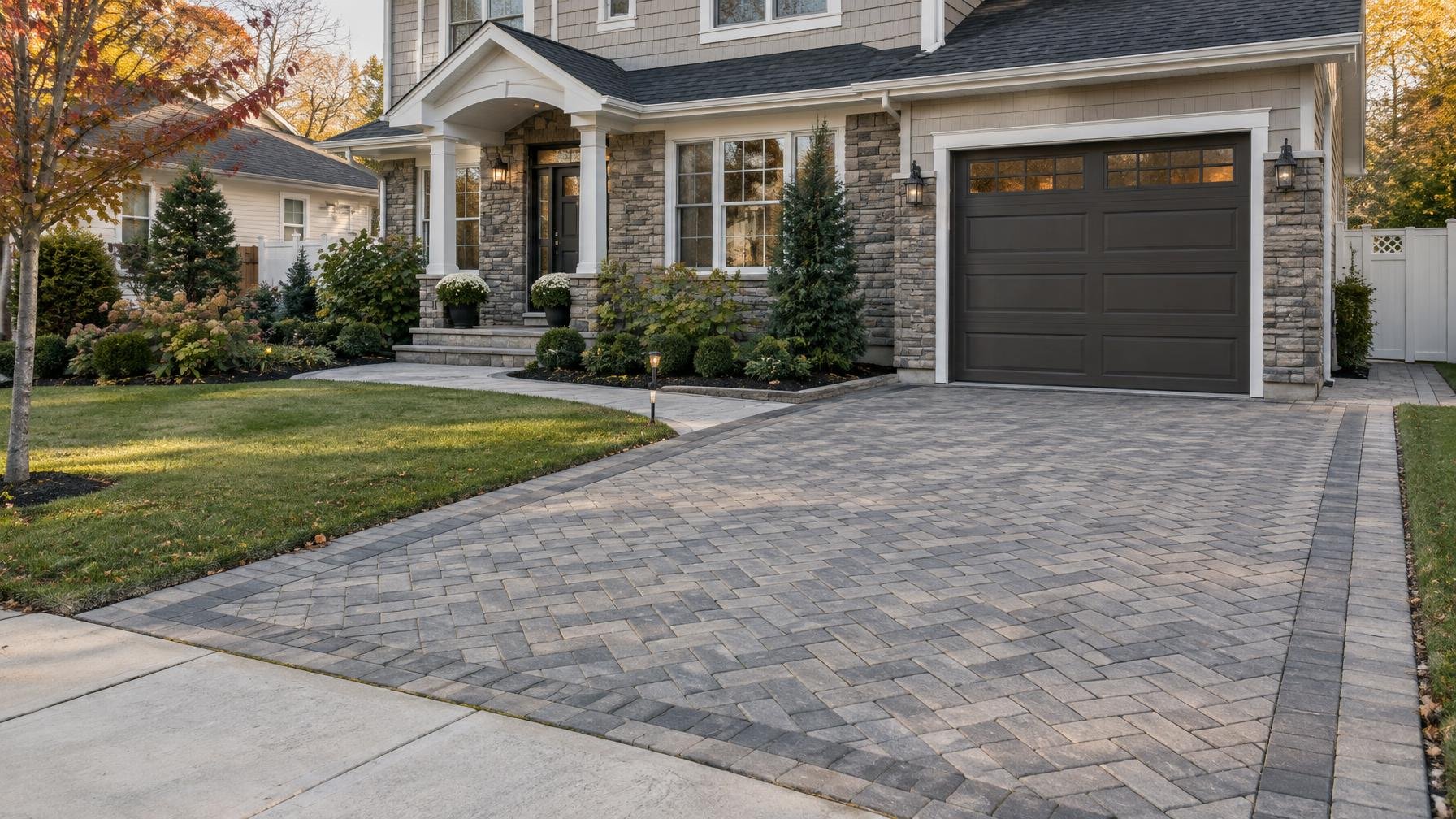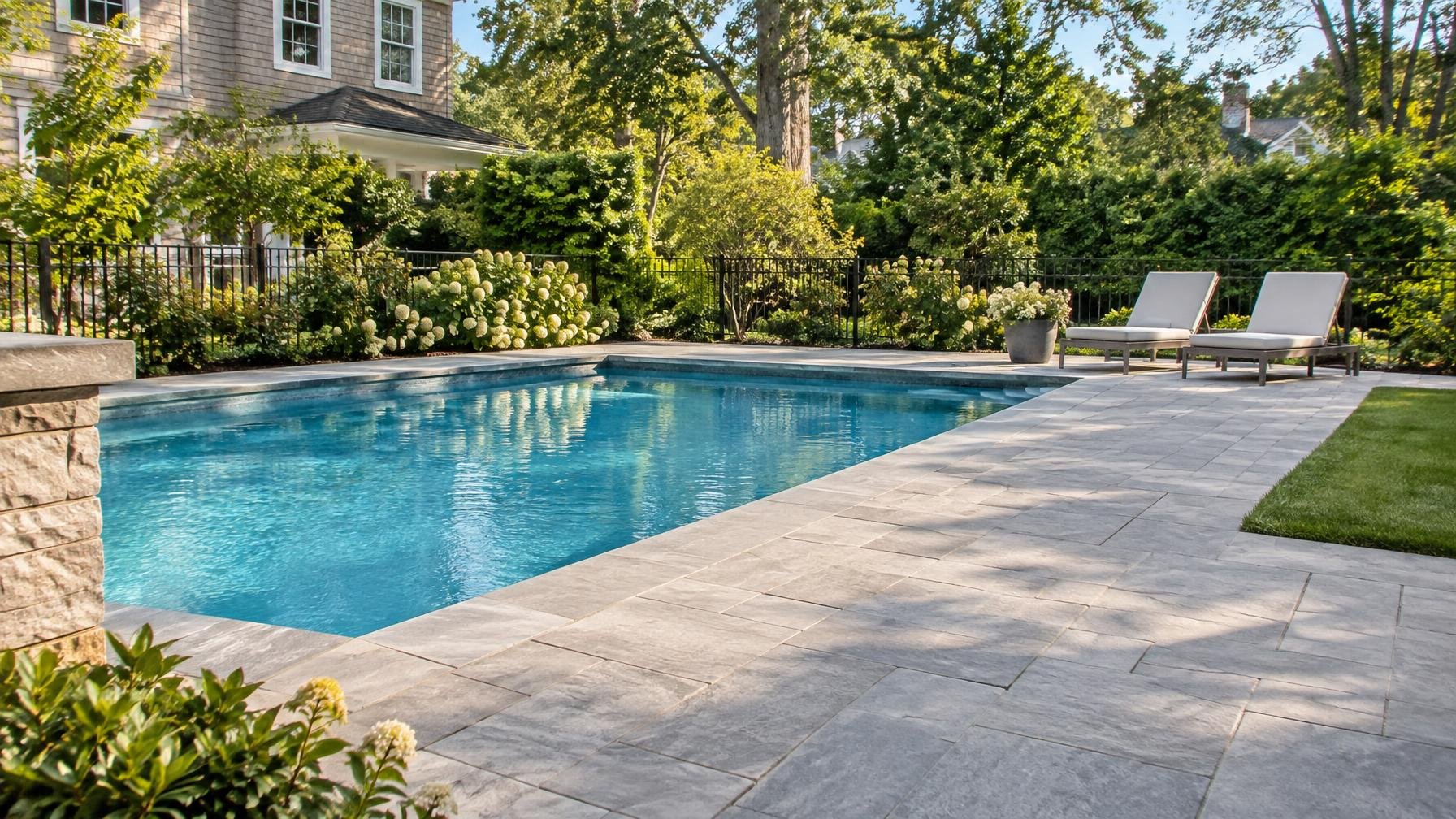
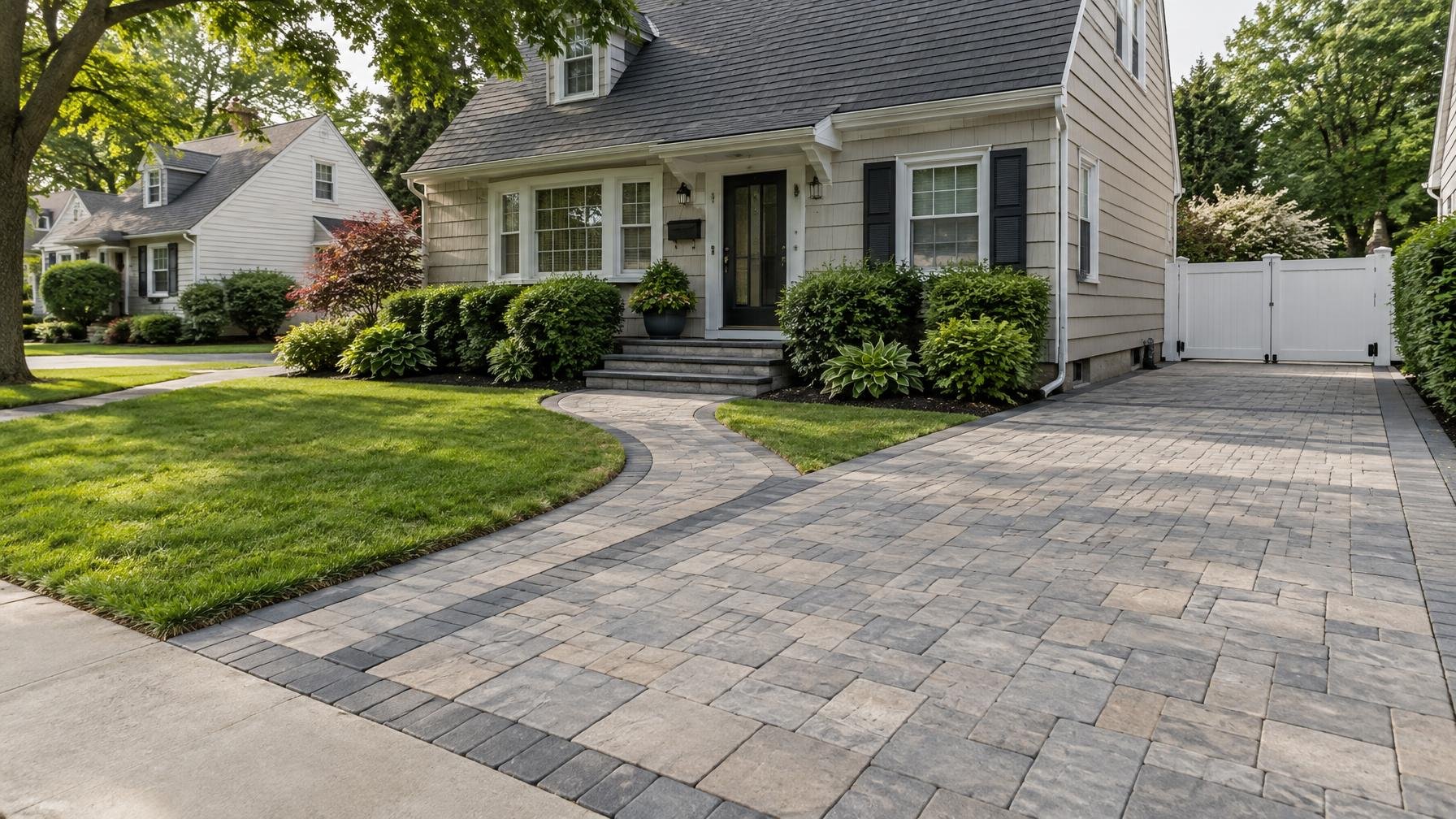
Paver cleaning in Levittown, NY should remove dirt and buildup without damaging the surface or washing out the joints. StoneSky Pavers & Masonry provides paver cleaning and sealing in Nassau County, with free on-site estimates to evaluate stains, existing coatings and any areas that need repair before cleaning begins.
For a driveway, backyard patio or front walkway, the right approach starts with identifying what is on the pavers—and why it keeps coming back.
What Makes Levittown Pavers Look Dirty?
Different parts of the same property can develop different cleaning problems. A driveway collects tire residue and vehicle drips, while a backyard patio beneath trees collects leaves, pollen and organic staining. A narrow side walkway may stay damp longer than an open front entrance.
On Levittown properties with paved areas beside lawns, garden beds and downspouts, runoff can carry soil onto the surface. Long Island’s humid summer weather encourages biological growth in damp, shaded areas, while winter freeze-thaw cycles can expose problems with loose joints or settled sections.
- General dirt: A dull film from soil, dust and foot traffic that often responds to routine cleaning.
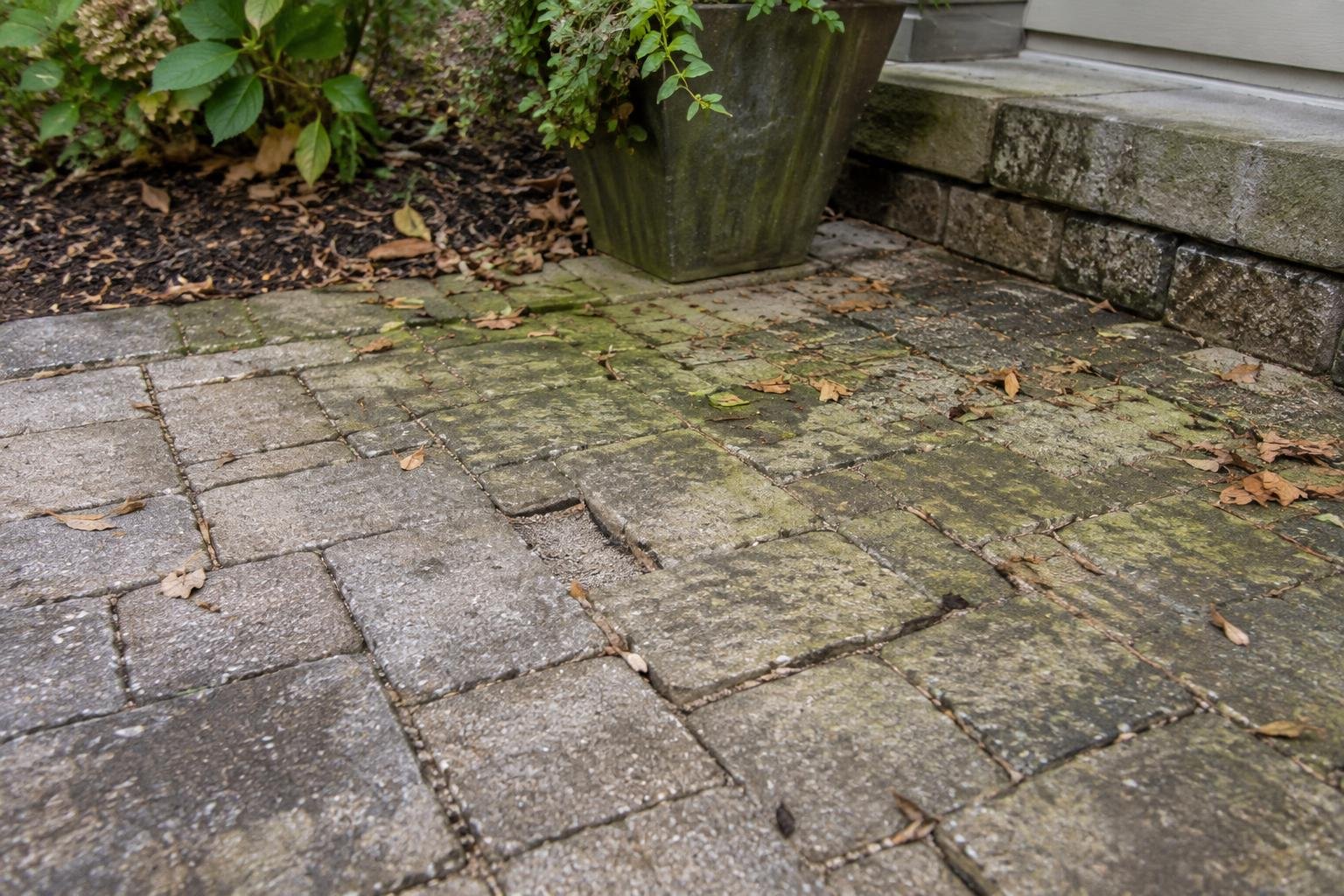
- Green growth or moss: Common in areas that remain shaded or wet; these surfaces may become slippery.
- Leaf and plant stains: Dark marks beneath fallen leaves, planters or overhanging vegetation.
- Oil and grease: Localized spots near parked vehicles, grills or outdoor cooking areas.
- White deposits: Possible efflorescence, which is mineral residue rather than ordinary dirt.
Identifying the stain matters because one cleaner will not handle every condition. Aggressive treatment of an unidentified mark can leave the pavers looking more uneven than before.
Inspect the Pavers Before Choosing a Cleaning Method
Confirm the material and surface finish
Concrete pavers, clay brick, natural stone and porcelain do not all tolerate the same products or equipment settings. Some concrete pavers have a decorative face that can be damaged by aggressive washing. Certain natural stones are sensitive to acidic cleaners.
If you know the paver manufacturer or have leftover pieces, share that information during the estimate. Also mention whether the surface has been sealed, when it was treated and which product was used, if known. An existing sealer can affect both stain removal and future coating choices.
Look at joints, edges and low spots
Cleaning should not be used to disguise an installation problem. Loose pavers, missing joint sand and spreading edges need attention. A low spot that holds water will often become dirty again faster than surrounding areas, even after thorough washing.
Check the transition at the garage, the bottom of the stoop and the path between the driveway and front door. If pavers rock underfoot or create a trip edge, discuss paver repair and resetting as part of the project rather than treating cleaning as the complete solution.
A Practical Paver Cleaning Sequence
1. Clear the area and plan runoff
Move furniture, planters, doormats and portable grills so the full surface can be inspected. Sweep away grit and leaves before applying water. This helps prevent loose material from being pushed into joints or washed toward the garage.
Identify nearby planting beds, basement entrances, door thresholds and drainage points. Cleaning water should not be directed onto neighboring property or allowed to carry sediment and cleaning chemicals into street drains. Product directions and applicable local requirements should guide protection and runoff handling.
2. Test the treatment in a small area
A discreet test patch helps establish whether a cleaner or washing method changes the paver’s color or texture. Let the test area dry before judging it; wet pavers naturally appear darker and can hide uneven results.
Cleaning products should be labeled for the material and the stain involved. Avoid improvised chemical mixtures, and never mix cleaning chemicals. More concentrated treatment is not automatically more effective or safer for the surface.
3. Clean with controlled equipment settings
The goal is to lift buildup without etching the pavers or excavating the joints. Pressure, nozzle selection, working distance and movement all matter. Holding a concentrated stream too close can leave visible lines or expose aggregate on concrete pavers.
A surface-cleaning attachment may help create a more consistent result on suitable paved areas, but equipment alone does not prevent damage. Edges, transitions and weakened joints still require care. Avoid assuming that the highest pressure produces the best finish.
4. Reassess stains after the surface dries
General washing may not completely remove oil, rust or long-standing plant stains. These can require a separate, compatible treatment, and some discoloration may remain. A realistic scope should distinguish ordinary soil removal from stain treatment rather than promise a uniformly new-looking surface.
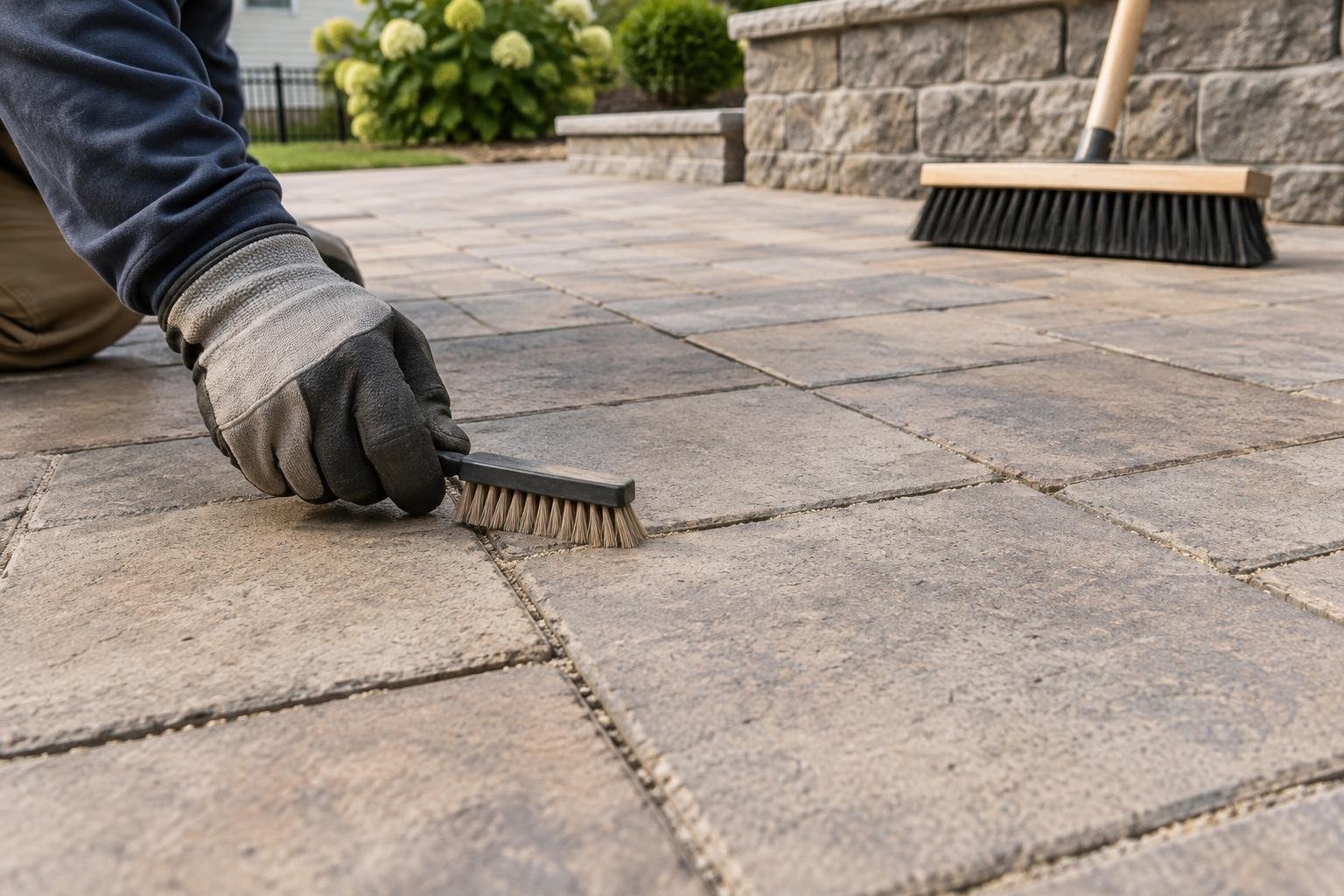
Joint Sand Needs Attention After Cleaning
The joints between pavers help the paved surface function as a system. If cleaning removes joint material, or the joints were already low, that condition should be addressed before the job is considered complete.
Ordinary joint sand and polymeric sand are not interchangeable in every application. The appropriate material depends on the paver system, joint width, drainage conditions and manufacturer requirements. Ask whether joint replenishment is needed and whether it is included in the proposed scope.
When polymeric sand is appropriate, installation conditions matter. Residue must be removed from the paver faces, and placement and activation must follow the product instructions. Poor handling can leave haze or weak joints. Simply scattering sand across wet pavers is not a substitute for the required process.
Should You Seal Pavers After Cleaning?
Cleaning and sealing are separate decisions. Cleaning removes buildup; a suitable sealer may help limit absorption of certain stains and change the appearance of the surface. Sealing does not correct settlement, eliminate maintenance or guarantee that oil and leaf stains will never occur.
Before choosing a sealer, discuss the following:
- Appearance: Some products enhance color or add sheen, while others aim for a less noticeable finish.
- Traction: Wet walkways, steps and poolside surfaces need particular attention to finish selection.
- Compatibility: A new product must be suitable for the paver material and any existing coating.
- Moisture: The surface and joints must meet the product’s drying requirements before application.
- Maintenance: Future cleaning and recoating should follow the selected product’s guidance.
StoneSky’s paver sealing and cleaning services cover both parts of the maintenance discussion. During the estimate, ask whether cleaning alone makes sense or whether sealing is appropriate for the condition and use of your paved area.
Planning Around Levittown Weather and Property Access
Choose the work window based on the treatment, not just the calendar. Spring cleaning can address accumulated winter debris, and fall maintenance can remove leaves before stains become established. However, rain, temperature and drying conditions determine whether a particular day is suitable, especially for joint work or sealing.
A shaded backyard may dry much more slowly than a sunny driveway. Do not assume that both areas will be ready for the next step at the same time. Product-specific temperature limits and rain-free intervals should control the schedule.
For driveways, arrange parking before work starts. For patios and walkways, identify an alternate route for household members and pets. Ask when furniture, foot traffic and vehicles can return; these timing requirements vary with the work and products involved.
Keep the Surface Cleaner Between Visits
Regular sweeping is a useful first step. Remove wet leaves promptly, clean up spills before they soak in and avoid leaving soil-filled containers directly on the surface for extended periods. Use suitable planter supports where practical, and check underneath them periodically.
If the same patch repeatedly grows moss or collects silt, look beyond cleaning. A downspout discharge, overflowing garden bed or settled section may be contributing. Repeatedly washing that spot without addressing the cause is unlikely to provide a lasting improvement.
After winter, inspect edges and joints for movement or missing material. Follow the paver manufacturer’s guidance for deicing products rather than assuming every ice melt is suitable for every surface.
Request a Free On-Site Estimate in Levittown
StoneSky Pavers & Masonry serves Levittown and surrounding Nassau County communities with paver cleaning, sealing, repair and resetting. An on-site review can help separate surface buildup from problems involving joints, settlement or existing coatings.
Request a free on-site estimate or call (929) 528-1205. Point out recurring wet spots, stubborn stains and any previous sealing so the proposed work addresses the condition of your driveway, patio or walkway.
Frequently Asked Questions
Can pressure washing damage pavers?
Yes. Excessive pressure, a concentrated nozzle or working too close can etch paver faces and remove joint sand. The method should match the material and condition, with a small test area checked before cleaning the full surface.
Will paver cleaning remove every oil stain?
Not necessarily. Oil can penetrate porous pavers, especially when it has remained on the surface for a long time. A compatible stain treatment may improve the appearance, but complete removal cannot be assumed.
Do pavers need new joint sand after cleaning?
The joints should be inspected after cleaning. If material has washed out or was already missing, replenishment may be needed. The correct sand depends on the paver system, joint dimensions and product requirements.
Is sealing required after paver cleaning?
No. Sealing is a separate maintenance choice based on the material, existing coating, desired appearance and surface use. Cleaning alone may be appropriate, while sealing requires suitable drying conditions and a compatible product.
Why does moss return to the same part of my walkway?
Persistent shade, moisture, trapped debris or a low spot can encourage recurring growth. Cleaning removes the buildup, but drainage or settlement issues may also need attention to reduce recurrence.
Does StoneSky offer free paver cleaning estimates in Levittown?
Yes. StoneSky Pavers & Masonry serves Levittown and offers free on-site estimates. Call (929) 528-1205 or use the contact page to request an assessment.