Paver driveway installation in Garden City, NY, starts with checking the driveway’s grades, drainage and vehicle use—not just choosing a color. StoneSky Pavers & Masonry installs paver driveways in Nassau County, including Garden City, and offers free on-site estimates to review the layout, materials and preparation your property needs.
This guide explains what to look at before installation, which details belong in the project scope and how to plan a driveway that works with your garage, front entrance and street connection.
Start With How Your Garden City Driveway Works
A driveway has to handle daily parking, turning movements, deliveries and foot traffic. Before discussing patterns, walk the property and identify what makes the current driveway inconvenient. A replacement is the opportunity to address those issues rather than repeat them with a new surface.
Check parking and access
Measure the usable space with vehicles parked where they normally sit. Account for open doors, access to the garage and the route from the driveway to the front steps. On a narrower lot, a decorative border should not come at the expense of comfortable walking space.
- Garage clearance: Check where the finished driveway will meet the garage slab and door opening.
- Turning space: Consider where tires turn repeatedly, especially near the garage and street.
- Pedestrian access: Keep a practical route to the house without requiring people to squeeze between vehicles.
- Edges and landscaping: Identify trees, planting beds and lawn areas that could affect excavation or edge support.
For Garden City properties with established trees, roots deserve attention before demolition begins. Do not assume a raised driveway edge can be corrected by cutting roots; significant root conflicts may require advice from a qualified tree professional.
Plan Drainage Before Choosing the Pavers
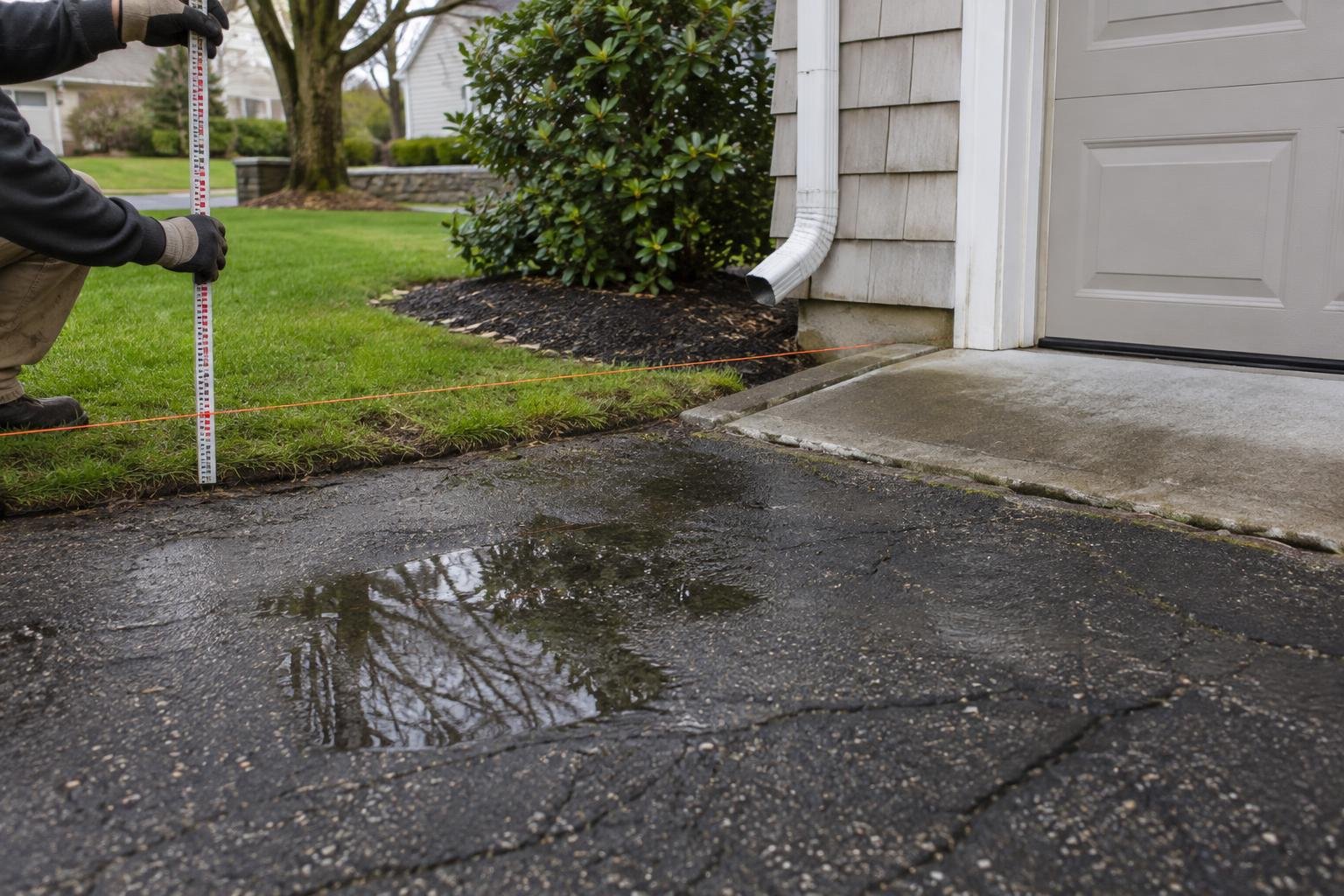
Long Island rain, snowmelt and winter freeze-thaw cycles make water management a central part of driveway planning. Water trapped in the pavement structure can contribute to movement, while low spots at the surface can leave puddles that freeze.
The proposed grades should direct runoff away from the garage and foundation without creating a problem for neighboring properties or the public walkway. That requires checking elevations across the entire driveway, not simply adding slope near the house.
What to document before the estimate
Photograph puddles after rain and note how long they remain. Point out water entering the garage, downspouts emptying onto the driveway and soil washing out along the edges. These observations help distinguish an isolated surface depression from a broader grading problem.
Standard paver joints do not automatically make a driveway a drainage system. A permeable paver installation uses an intentionally designed pavement structure, including appropriate joint material and aggregate layers. Its suitability depends on soil conditions, available storage, groundwater considerations and a workable plan for excess water.
If drainage improvements are needed, ask for the proposed approach to be clearly identified in the scope. Do not assume that replacing the surface alone will solve water coming from another part of the property.
Choose Pavers Rated for Driveway Traffic
Not every paver suitable for a patio is suitable for vehicles. Product selection needs to account for vehicle loading, unit thickness, shape and the manufacturer’s installation requirements. Share whether the driveway will carry passenger cars only or regularly accommodate heavier vehicles.
Concrete pavers
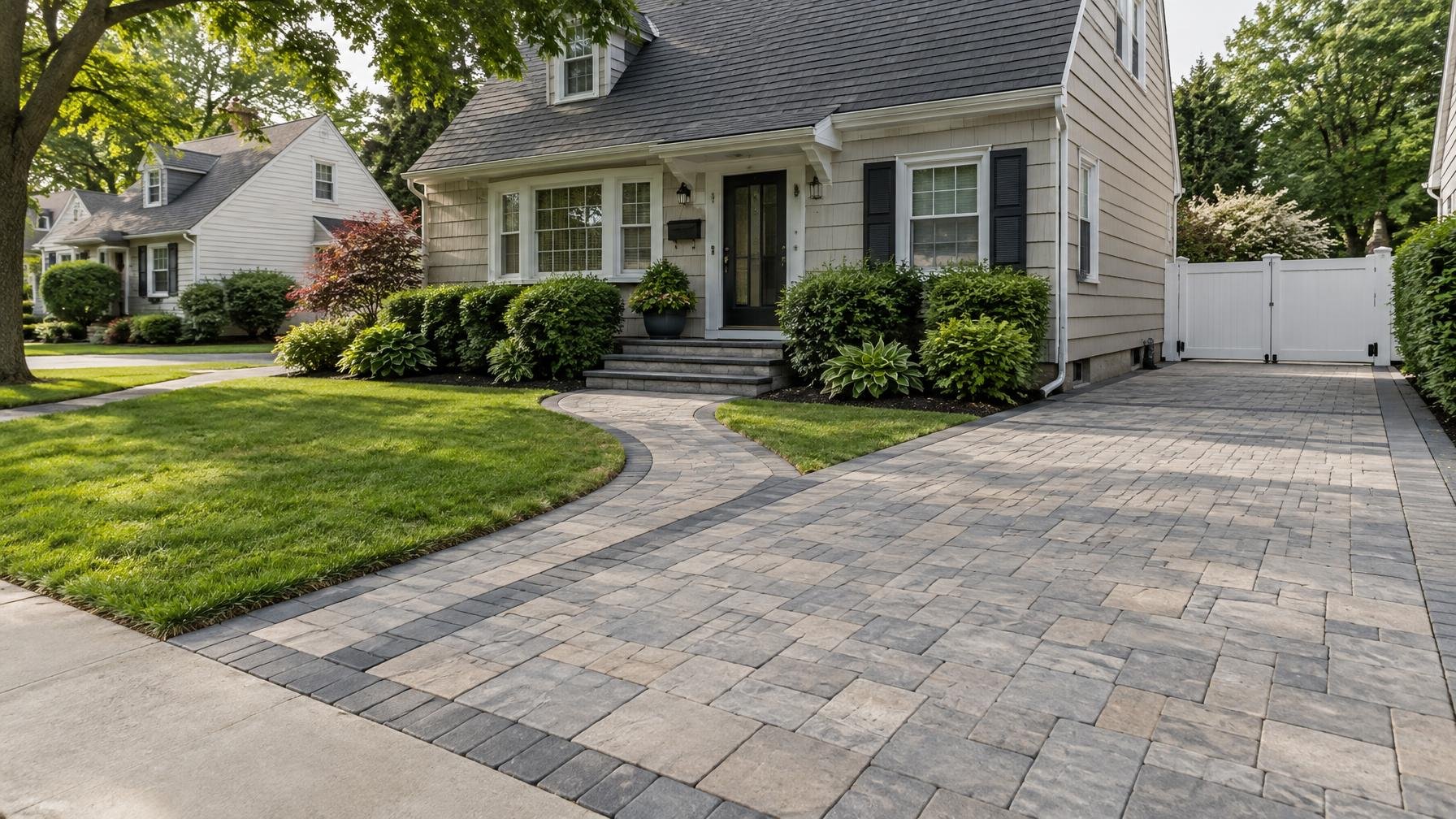
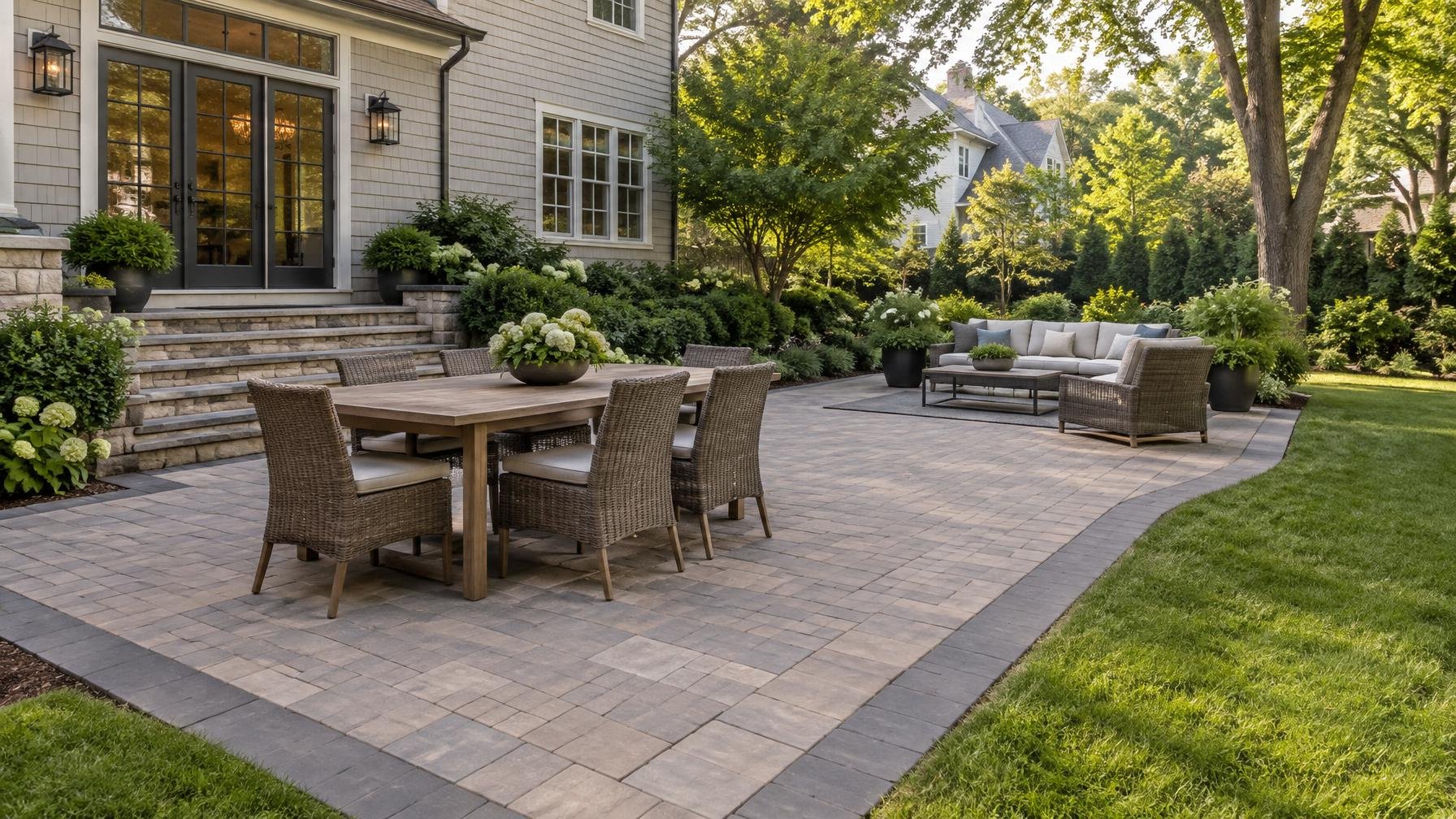
Concrete pavers offer a broad range of colors, textures and sizes. For driveways, the right product and laying pattern should be selected together. Larger units require particular attention to load suitability and support; a large-format patio look should not be copied into a driveway without checking the product specifications.
Brick pavers
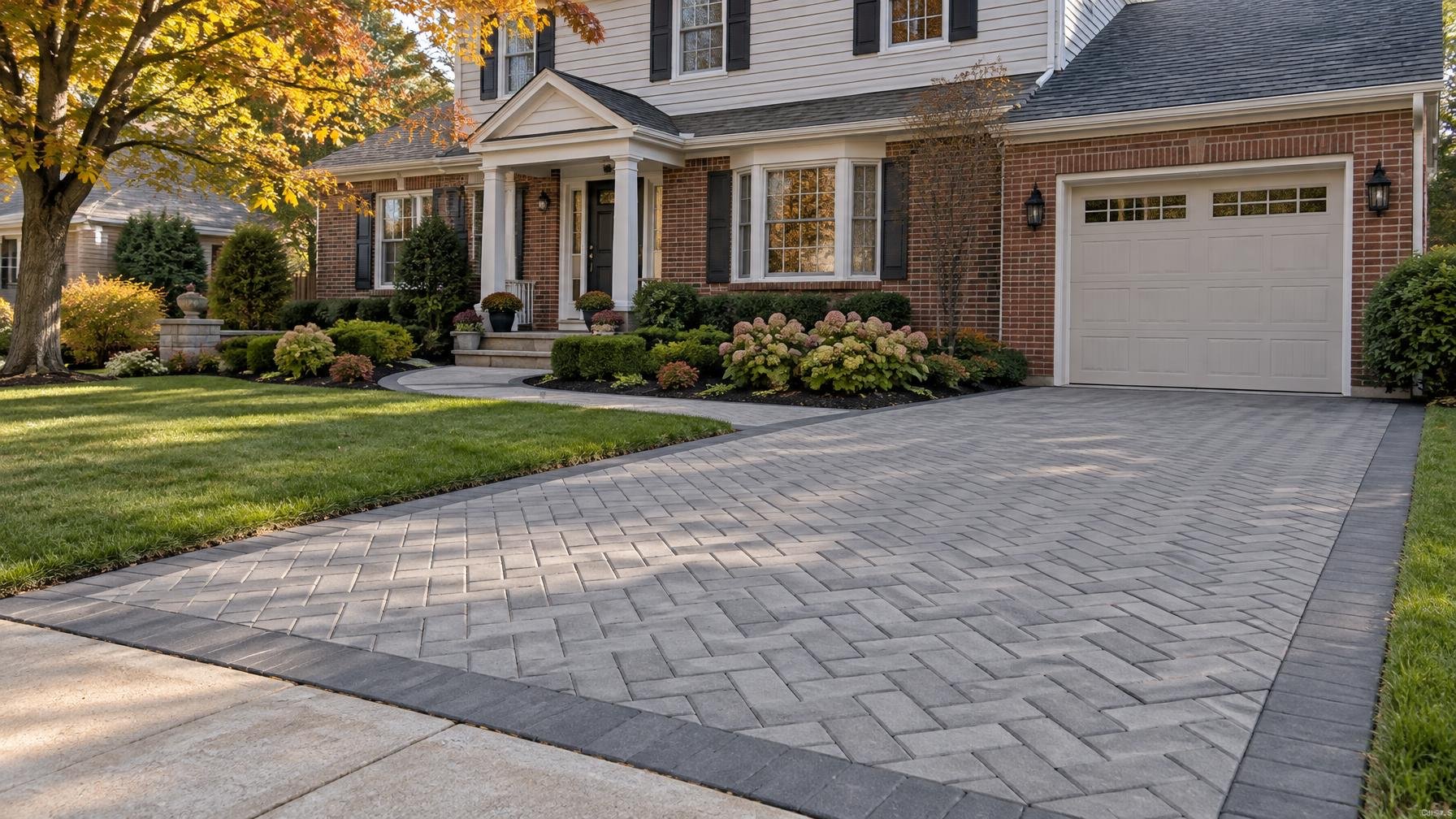
Brick pavers can complement brick facades and traditional entrances found on Garden City homes. Specify paving units rated for the intended use rather than assuming any brick will work under tires. Color variation and the relationship between the driveway and existing masonry are worth reviewing with physical samples.
Patterns and borders
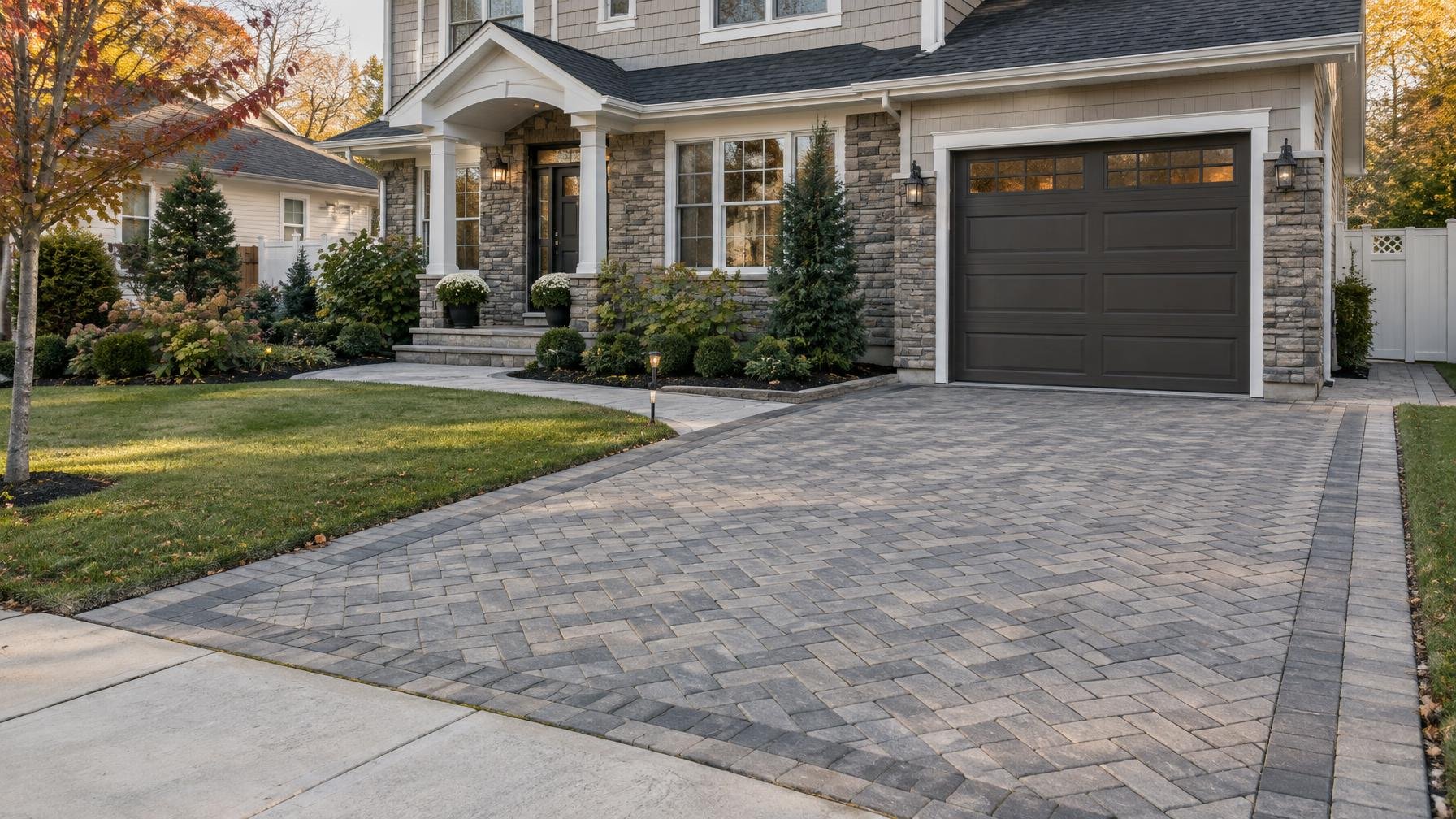
A herringbone layout is often considered for interlocking driveway pavers because it helps resist movement under turning and braking forces. Other patterns may also be appropriate, depending on the product and installation design.
Keep the border proportional to the driveway. One contrasting course may provide enough definition without making a narrow parking area look crowded. Review samples outdoors beside the house, preferably in both dry and wet conditions, before making the final selection.
What Proper Driveway Preparation Should Address
The finished pavers are only one part of the installation. Excavation, subgrade preparation, compacted base material and edge restraint determine how well the surface stays supported. StoneSky’s paver driveway services cover projects in Queens and Long Island, including Garden City; an on-site assessment is the starting point for defining the work.
Removal and excavation
The scope should identify the existing materials to be removed and how the excavation will accommodate the new pavement structure. There is no single base depth that fits every property. Soil strength, drainage, expected loads and product requirements all affect the design.
Soft areas exposed during excavation need attention before being covered. Ask how unexpected unsuitable soil or buried material would be documented and discussed if discovered.
Base placement and compaction
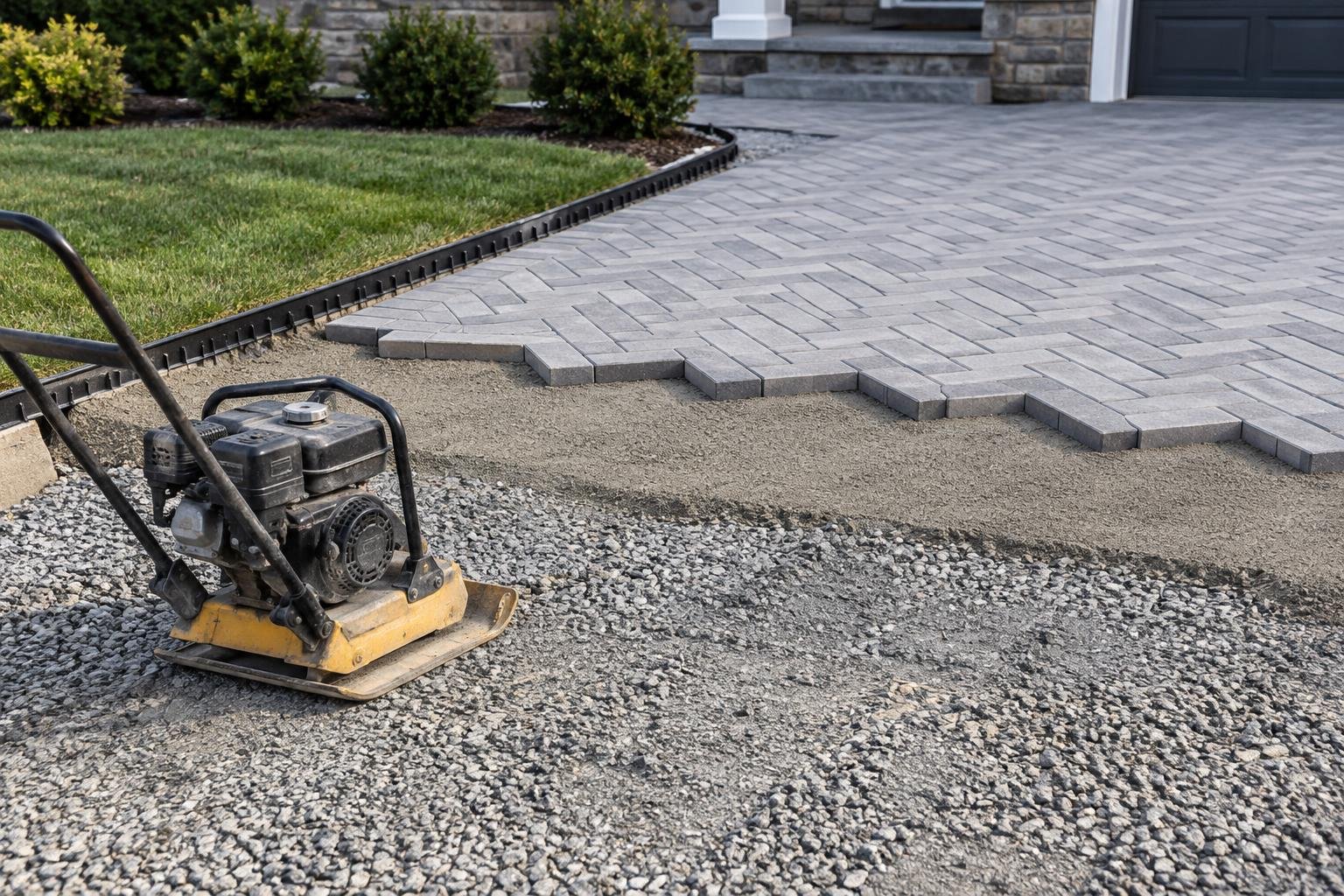
Base material should be appropriate for the selected pavement system and compacted in manageable layers. Placing a deep layer all at once can leave inadequate support below the surface. The base should establish the intended grade rather than relying on extra bedding material to correct major unevenness.
Bedding, restraints and joints
The bedding layer provides uniform support beneath the pavers. Secure perimeter restraints help prevent the field from spreading, particularly along lawn edges and areas where vehicles turn.
Joint material and final consolidation must match the chosen system. Conventional interlocking pavers and permeable installations have different joint requirements, so materials should not be substituted casually. Ask when the completed driveway can accept vehicles based on the actual products and installation conditions.
Check the Apron, Sidewalk and Local Requirements
The driveway’s connection to the street may involve a public sidewalk, curb or apron. These transitions need separate attention because replacing private driveway paving does not automatically authorize changes within the public right-of-way.
Before work begins, confirm applicable requirements with the Village of Garden City if your property is within village jurisdiction, or with the governing municipality otherwise. A Garden City mailing address alone should not be the basis for deciding which office has authority.
- Does the project require approval for replacement, widening or a change in materials?
- Are there requirements affecting the curb cut, apron or sidewalk crossing?
- Could changes to paved area or runoff require additional review?
- Who will confirm approvals and arrange any required inspections?
Also clarify who will coordinate utility marking before excavation. Tell the contractor about private irrigation lines, landscape lighting and other underground features that may not be covered by a standard utility-marking request.
Compare Written Scopes, Not Just Finished Photos
A useful driveway proposal explains what is being built beneath the surface as well as what it will look like. When reviewing the scope, look for enough detail to understand the work and identify exclusions before demolition.
- Layout: Driveway limits, parking areas, borders and connections to walks or steps.
- Materials: Paver product, color, pattern and suitability for vehicle traffic.
- Preparation: Removal, excavation, base construction and treatment of unsuitable conditions.
- Drainage: Intended grades and any specific measures included in the project.
- Completion: Edge restraints, joint material, cleanup and treatment of disturbed adjacent areas.
Ask how weather could affect the sequence and how you should arrange parking while access is restricted. Do not plan vehicle use around an assumed completion time; follow the contractor’s instructions for the installed system.
Keep the New Driveway Serviceable Through the Seasons
After installation, sweep away leaves and soil before they accumulate in joints. Check for loose edge restraints, joint-material loss and new depressions, especially after winter. A small area of movement is easier to assess before it spreads or becomes a trip hazard.
Use snow-removal equipment carefully to avoid catching paver edges. Follow the paver manufacturer’s guidance for deicing products and cleaning methods. Sealing may be an option for some products, but it is not a substitute for sound installation or a requirement for every driveway.
Request a Free On-Site Estimate in Garden City
Ready to plan your paver driveway? StoneSky Pavers & Masonry serves Garden City and surrounding Nassau County communities with paver installation and related concrete and masonry services.
Request a free on-site estimate or call (929) 528-1205. Have your parking needs, drainage concerns and preferred materials ready so the visit can focus on a practical plan for your property.
Frequently Asked Questions
What should I consider before installing a paver driveway in Garden City?
Start with vehicle use, parking space, garage clearance and drainage. The installation plan should also address soil conditions, base preparation, driveway-rated pavers and the transitions to the sidewalk and street.
Do I need approval to replace or widen my driveway?
Requirements depend on your property’s jurisdiction and the scope of work. Confirm with the Village of Garden City if the property is within village jurisdiction, or the governing municipality otherwise. Ask specifically about widening, curb cuts, aprons, sidewalks and runoff changes.
Are all pavers suitable for a driveway?
No. Choose a product rated for the expected vehicle loads and install it according to its requirements. Thickness, dimensions, laying pattern and the supporting pavement structure all matter.
Will a paver driveway fix standing water?
Not automatically. Standing water can result from poor grading, settlement, runoff from nearby areas or underlying drainage conditions. Those causes need to be addressed in the installation plan rather than simply covered with new pavers.
How soon can I park on a newly installed paver driveway?
Follow the installer’s instructions for the specific pavement system. Joint products, any concrete components and site conditions can affect when vehicle traffic is appropriate.
Does StoneSky offer free driveway estimates in Garden City?
Yes. StoneSky Pavers & Masonry serves Garden City and offers free on-site estimates. Call (929) 528-1205 or use the contact page to request a visit.