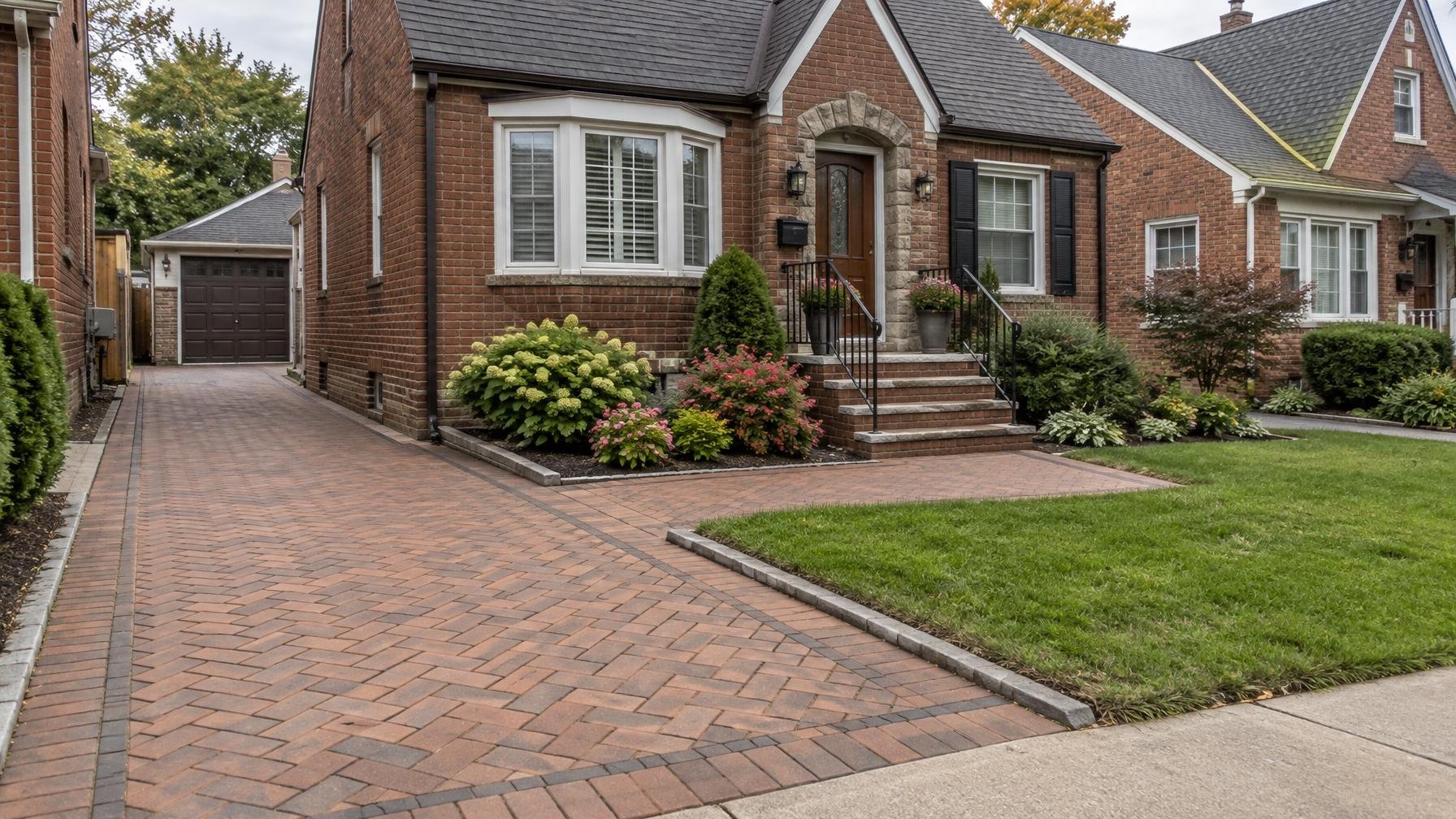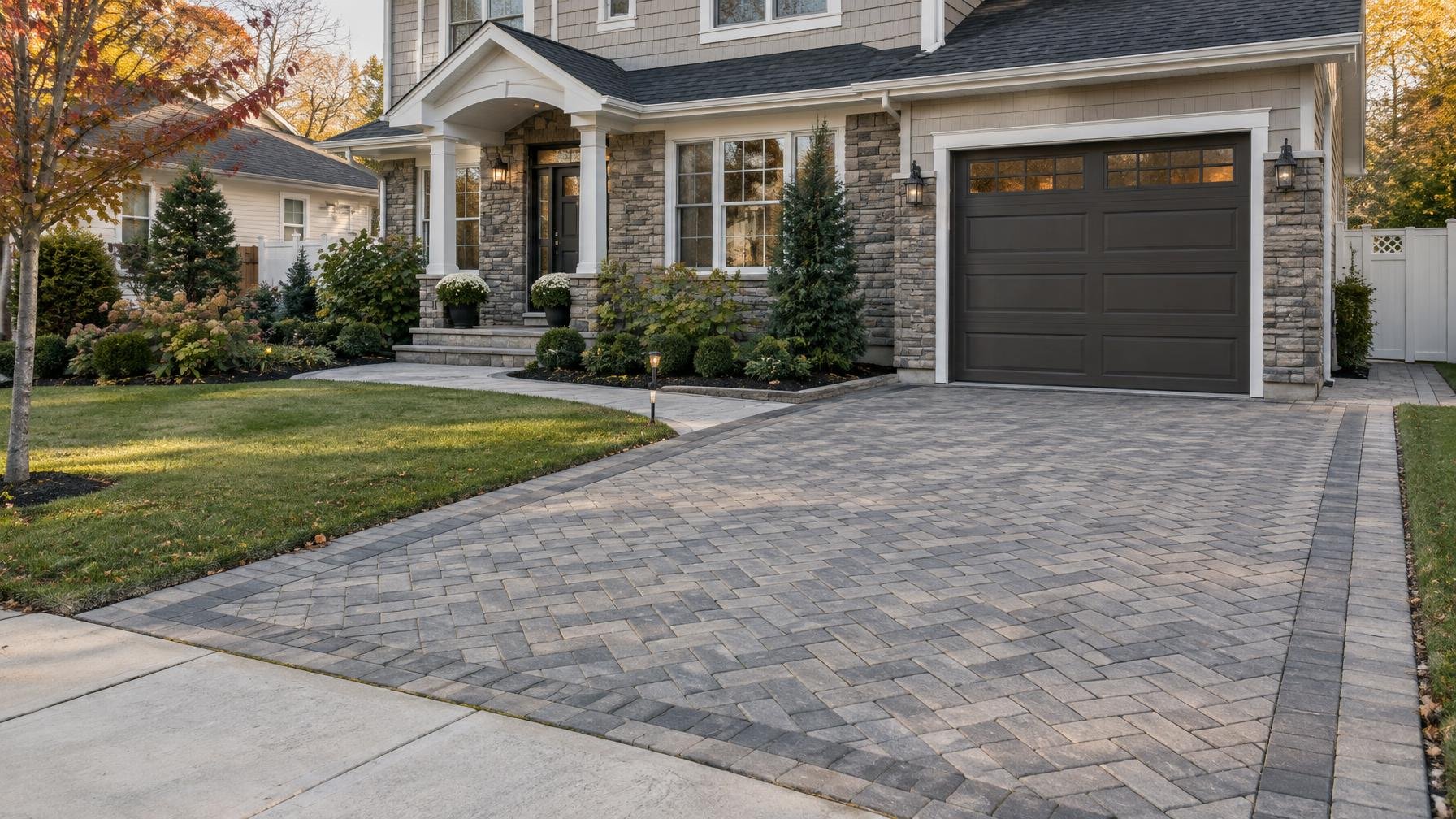
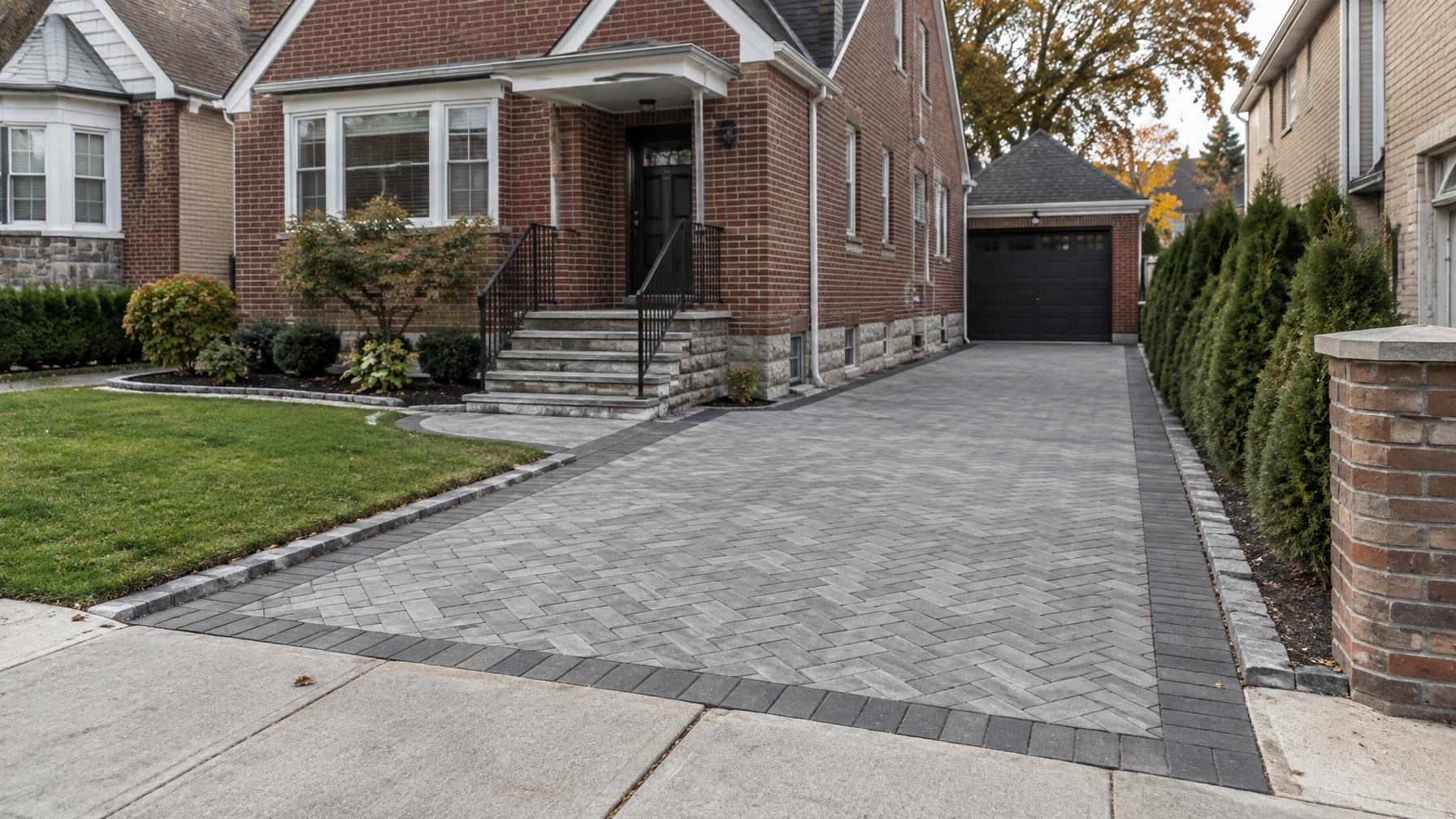
If you are looking for a paver driveway contractor in Whitestone, NY, start with a site assessment that covers vehicle loads, drainage, base conditions and the connection to the street. StoneSky Pavers & Masonry provides paver driveway installation and repair in Whitestone and across Queens, with free on-site estimates to review the work your property needs.
The right plan should make parking easier, direct water appropriately and account for the driveway’s connections to your garage, walkway and front entrance.
Start With How Your Whitestone Driveway Actually Works
A driveway is more than a paved rectangle. On a property with a narrow side drive, vehicles may repeatedly travel over the same wheel paths. A wider parking area may need room for turning, opening doors and reaching the house without walking through planting beds.
Before choosing colors, walk the site with your contractor and identify everyday problems. Does a car scrape near the sidewalk? Does water collect outside the garage? Is the edge spreading where a tire regularly rides over it? These details should shape the installation plan.
- Parking needs: Discuss the vehicles that regularly use the driveway, including heavier SUVs or work vehicles.
- Usable width: Allow for doors, mirrors, fences, steps and access to trash bins.
- Pedestrian access: Keep a practical route between parked cars and the front door.
- Existing elevations: Check garage thresholds, sidewalk connections and adjoining paved areas.
- Construction access: Identify where equipment can enter and where materials can be staged.
For Whitestone properties with limited frontage or closely spaced neighboring driveways, access and staging deserve attention early. Ask how demolition and deliveries will affect your ability to park during construction.
Base Preparation Matters More Than the Surface Pattern
Pavers distribute vehicle loads through a prepared system beneath them. Even a suitable driveway paver can settle or shift if the underlying soil is weak, the aggregate base is inadequate or the edges are not restrained.
Excavation and Subgrade Assessment
The contractor should evaluate what is underneath the existing driveway rather than assume it can remain. Old concrete, asphalt, loose fill and previous patches can complicate excavation. Soft or disturbed areas may need additional preparation before base material is placed.
There is no single excavation depth that fits every Whitestone property. The assembly should account for soil conditions, expected traffic, drainage and the selected paving product. Ask what conditions could change the proposed scope after removal begins.
Compaction, Bedding and Edge Restraints
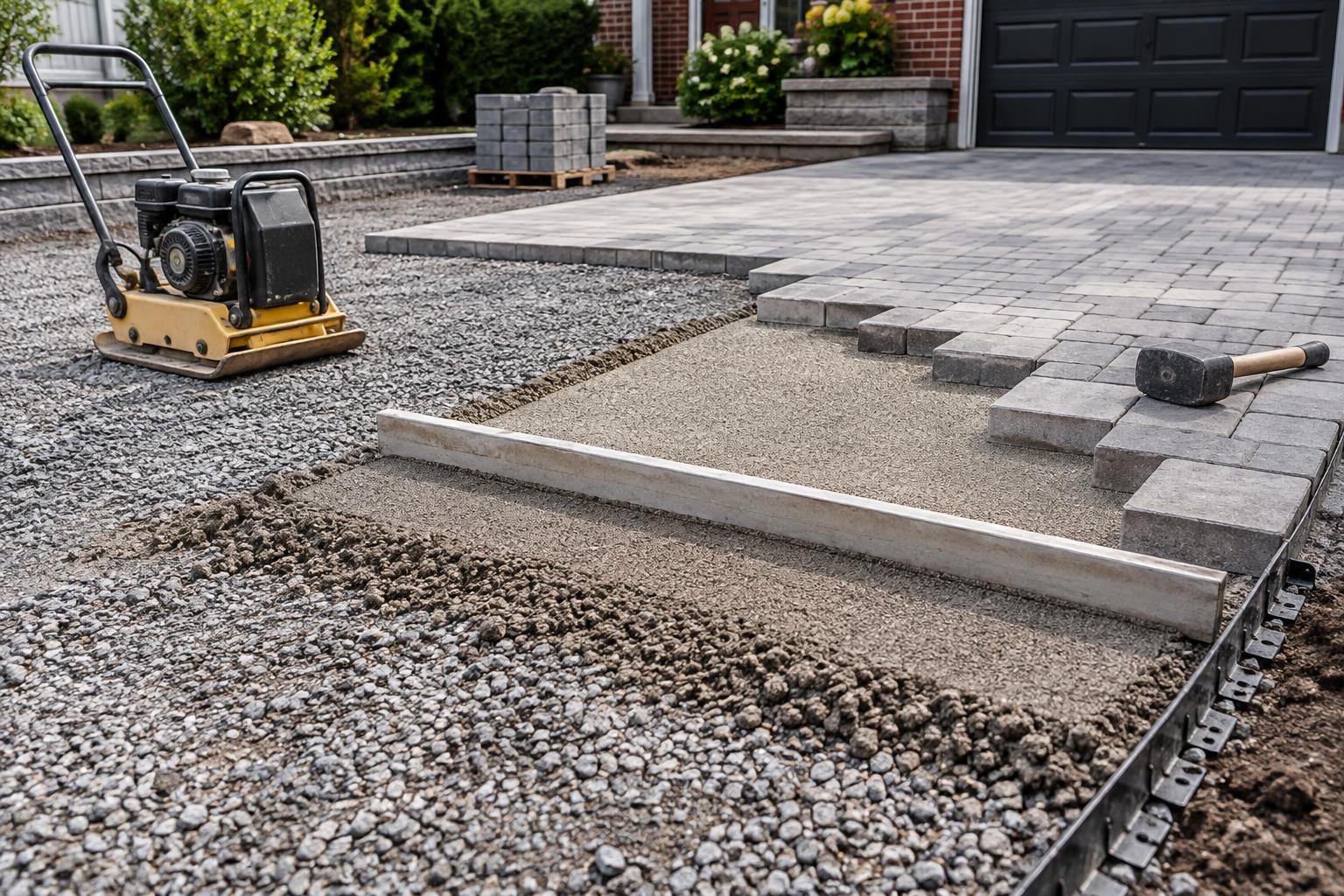
Aggregate base material should be installed and compacted in appropriate lifts, not simply dumped into a deep layer and covered. The bedding layer provides a uniform setting surface; it should not be used to compensate for major low spots in the base.
Edge restraints help hold the paving field in place under braking and turning forces. Joint material also needs to suit the paver system. A useful estimate explains these components instead of describing the project only as “new driveway pavers.”
Plan Drainage Before Setting Finished Heights
Whitestone driveways must handle rain, snowmelt and winter freeze-thaw cycles. Water that repeatedly collects in low spots can create slippery conditions and contribute to movement when the underlying materials stay wet.
The drainage plan starts with elevations. The finished driveway should guide water away from vulnerable building openings without creating a new problem at a neighboring property, sidewalk or street connection. A driveway that slopes toward a garage needs particular attention; changing the paving surface alone may not solve the underlying drainage issue.
Before the estimate, take photographs during or immediately after rain. Note puddles, runoff from downspouts and water entering from adjacent surfaces. These observations can help explain conditions that are not visible on a dry inspection day.
Would Permeable Pavers Make Sense?
A permeable paver system allows water to pass through designed joints into an open-graded stone assembly. It is not a conventional driveway with wider gaps, and it is not automatically suitable for every site.
Suitability depends on soil infiltration, available depth, nearby foundations and how excess water will be managed. Ask whether the property can support the full system and what maintenance is needed to keep the joints functioning. Do not assume permeable paving eliminates drainage planning or municipal review.
Choose Pavers Rated for Vehicle Traffic
Appearance matters, but driveway materials must first be suitable for vehicle loads. StoneSky’s paver driveway services give homeowners a starting point for discussing materials, layout and installation requirements.
Concrete and Brick Pavers
Concrete pavers offer a range of shapes, textures and colors. Select a product and thickness specifically intended for driveway use, with installation details that follow the manufacturer’s requirements. “Interlocking” describes how a paving system works; it is not a separate raw material.
Clay brick pavers can complement brick homes and traditional front entrances, but the selected product must also be rated for vehicular paving. Wall brick is not a substitute for a driveway paving unit.
Natural Stone and Porcelain Options
If you prefer natural stone or porcelain, confirm the suitability of the specific product and installation assembly. Not every stone slab or porcelain paver used on a patio can support cars. Thickness, dimensions, support conditions and manufacturer guidance all matter.
Evaluate samples outdoors beside the house. Look at them dry and wet, and consider how the texture will perform around leaves, slush and routine driveway use. A small sample viewed indoors can look different across a full driveway.
Patterns, Borders and Practical Layout
A herringbone pattern is often considered for interlocking driveway pavers because it helps resist movement under vehicle traffic. The final pattern still needs to suit the product and installation design.
Keep borders proportional to the driveway. On a narrow Whitestone side drive, an oversized border can make the center feel cramped. Plan cuts at the garage, sidewalk and edges so the layout does not depend on unnecessary thin pieces in heavily traveled areas.
When Repair and Resetting May Be Enough
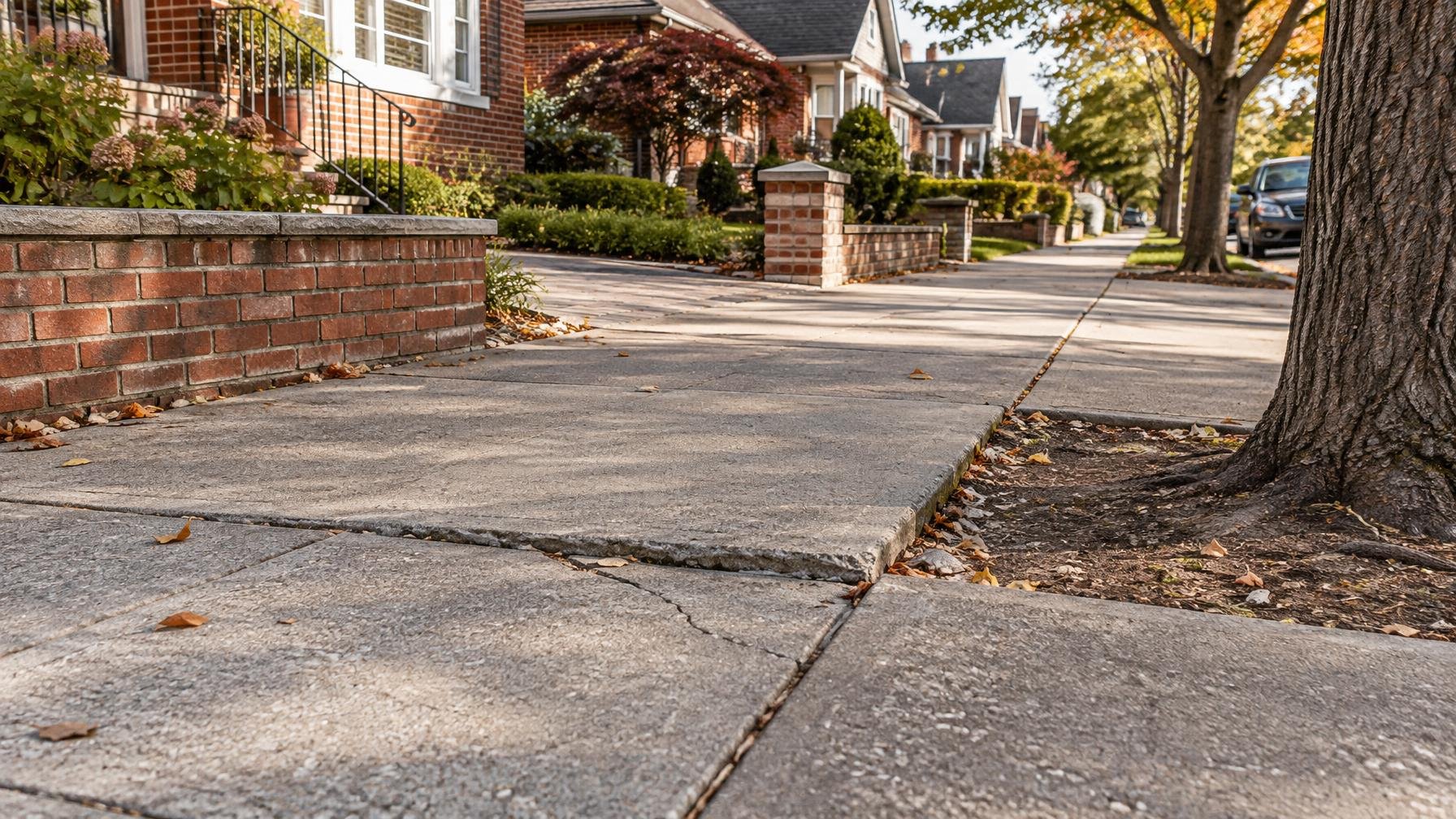
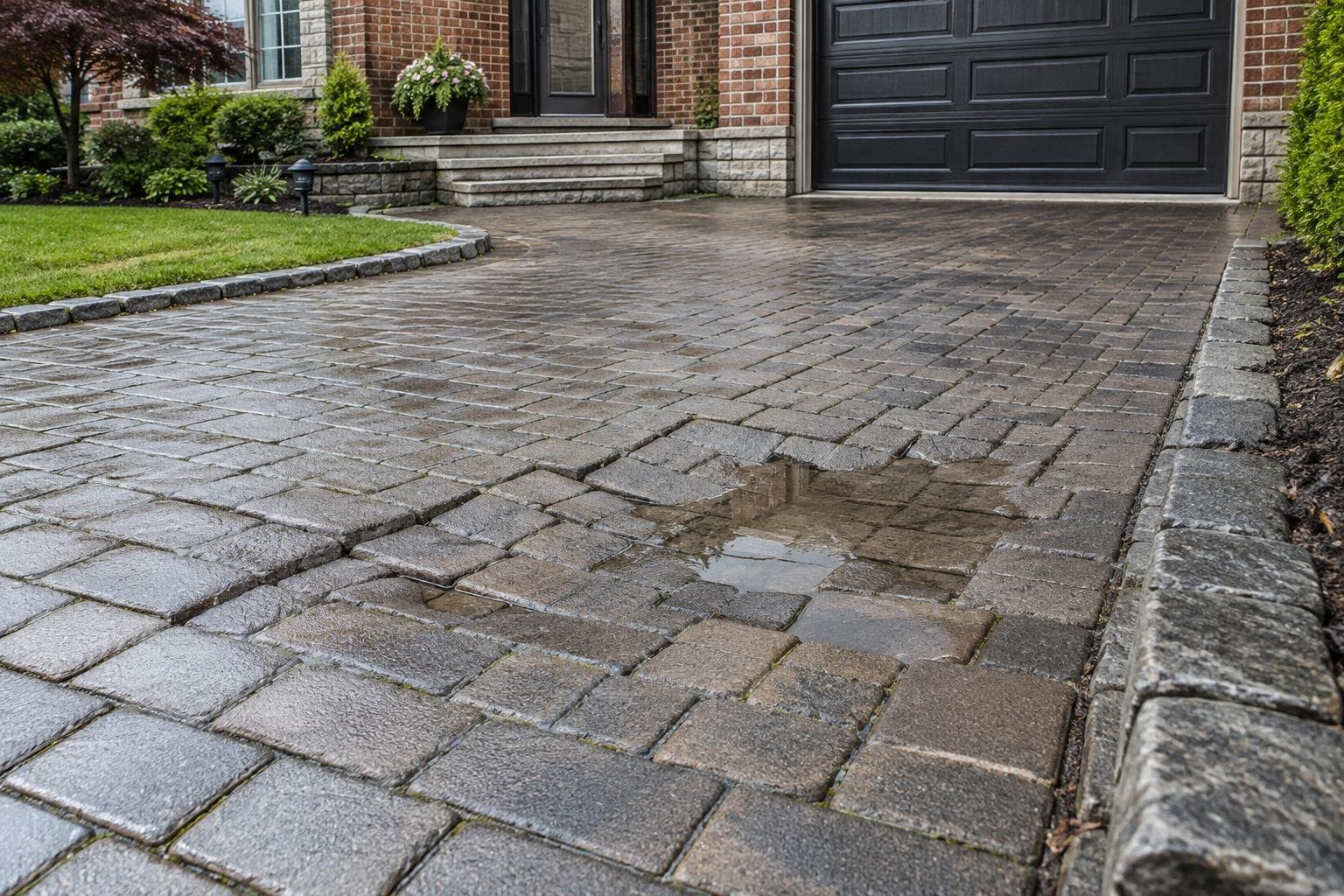
An uneven driveway does not always need complete replacement. If the pavers are sound and movement is limited to a few areas, lifting the affected units, correcting the supporting layers and resetting them may be a practical option.
StoneSky offers paver repair and resetting for issues such as sunken pavers. The important question is why the movement occurred. Resetting the surface without addressing poor support, failed edge restraints or recurring runoff may leave the original problem unresolved.
- Localized settlement: May be suitable for targeted repair after the supporting layers are inspected.
- Widespread wheel ruts: Can indicate that a larger portion of the base needs evaluation.
- Spreading edges: Require inspection of the restraint and adjacent support.
- Repeated puddling: Calls for checking elevations and drainage, not simply adding joint sand.
- Damaged or mismatched units: Make replacement availability part of the repair discussion.
Cleaning and sealing serve different purposes from structural repair. Neither will level a settled driveway. Resolve movement and drainage concerns before deciding whether sealing is appropriate for the material.
Check the Sidewalk, Curb and Project Scope
A private driveway project can meet public-space requirements where it crosses the sidewalk or connects to the curb. In Whitestone, verify applicable NYC requirements before changing a curb cut, widening street access or altering sidewalk elevations. Do not assume an existing driveway opening authorizes an expansion.
Ask who will confirm any required approvals and how work at the sidewalk connection is handled. If street-tree roots are affecting the driveway, confirm applicable tree-protection requirements before excavation or root cutting.
A written proposal should clearly identify demolition, disposal, base preparation, paving materials, edge restraints and transition details. It should also explain exclusions and how unexpected underground conditions will be addressed. Establish when vehicles can return to the driveway based on the actual installation system, rather than assuming it will be ready immediately.
Request a Free On-Site Estimate in Whitestone
StoneSky Pavers & Masonry serves Whitestone, surrounding Queens neighborhoods, Nassau County and Long Island. Whether you need a new paver driveway or an assessment of sunken and shifting sections, start by reviewing the site conditions and project scope.
Request a free on-site estimate or call (929) 528-1205. Have your driveway concerns, parking requirements and any drainage photos ready so you can discuss the work your property needs.
Frequently Asked Questions
Can existing driveway pavers be reused during repairs?
Often, intact pavers can be lifted and reset after the underlying problem is corrected. Reuse depends on their condition, the extent of settlement and whether matching replacements are available for damaged units.
How deep should the base be for a Whitestone paver driveway?
There is no universal depth for every property. Soil conditions, vehicle loads, drainage and the selected paving system determine the required preparation. Ask the contractor to explain the proposed base assembly during the on-site assessment.
Do I need approval to widen my driveway in Whitestone?
Widening a driveway may involve NYC requirements, especially if it changes the curb cut, sidewalk crossing or street access. Confirm the applicable approvals before work begins; an existing opening does not automatically authorize expansion.
Will sealing fix a sunken paver driveway?
No. Sealing does not correct settlement, failed edge restraints or poor drainage. Affected pavers may need to be lifted so the supporting layers can be inspected and corrected before resetting.
Does StoneSky offer free driveway estimates in Whitestone?
Yes. StoneSky Pavers & Masonry offers free on-site estimates in Whitestone. Call (929) 528-1205 or use the contact page to request an assessment.