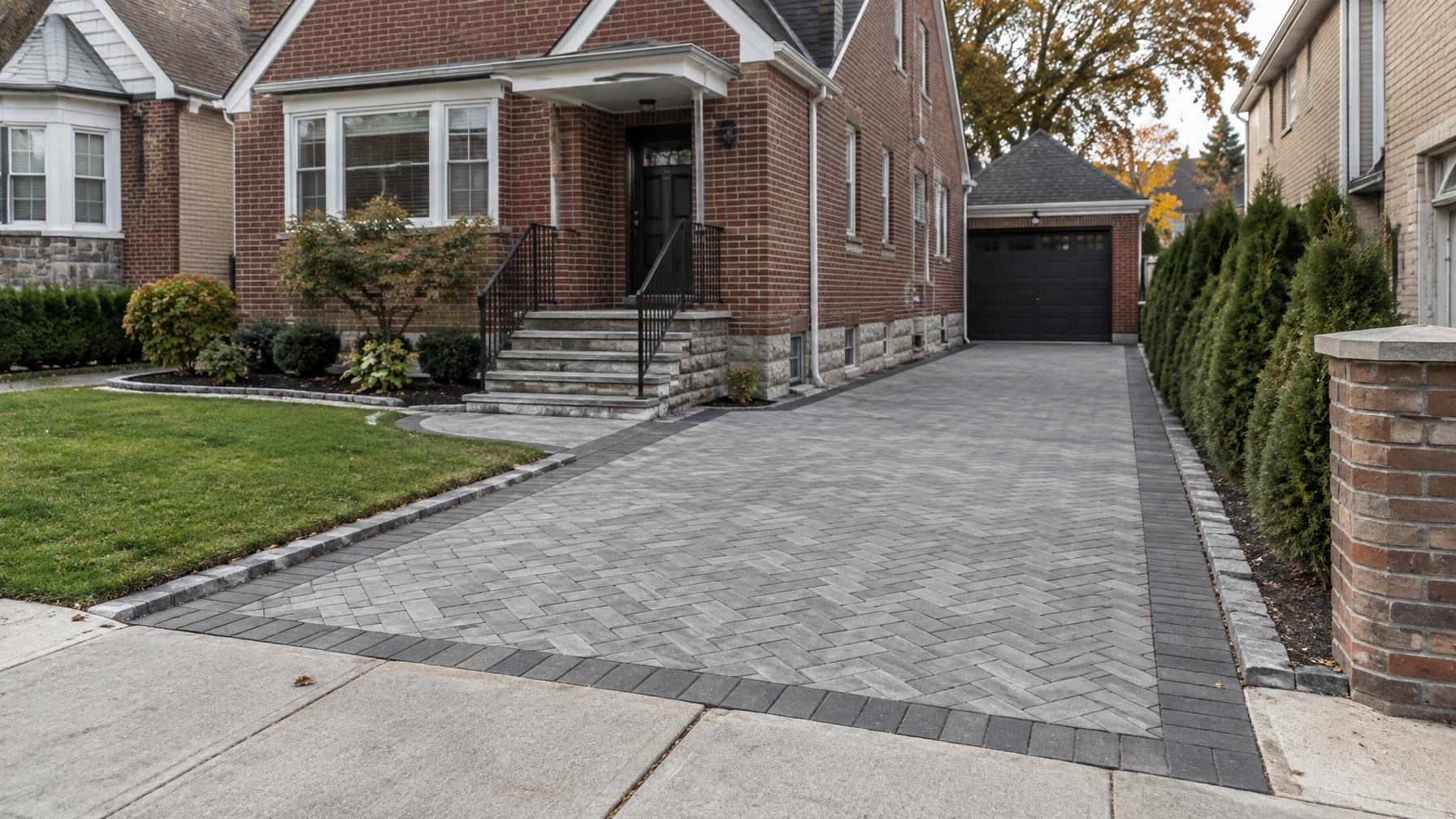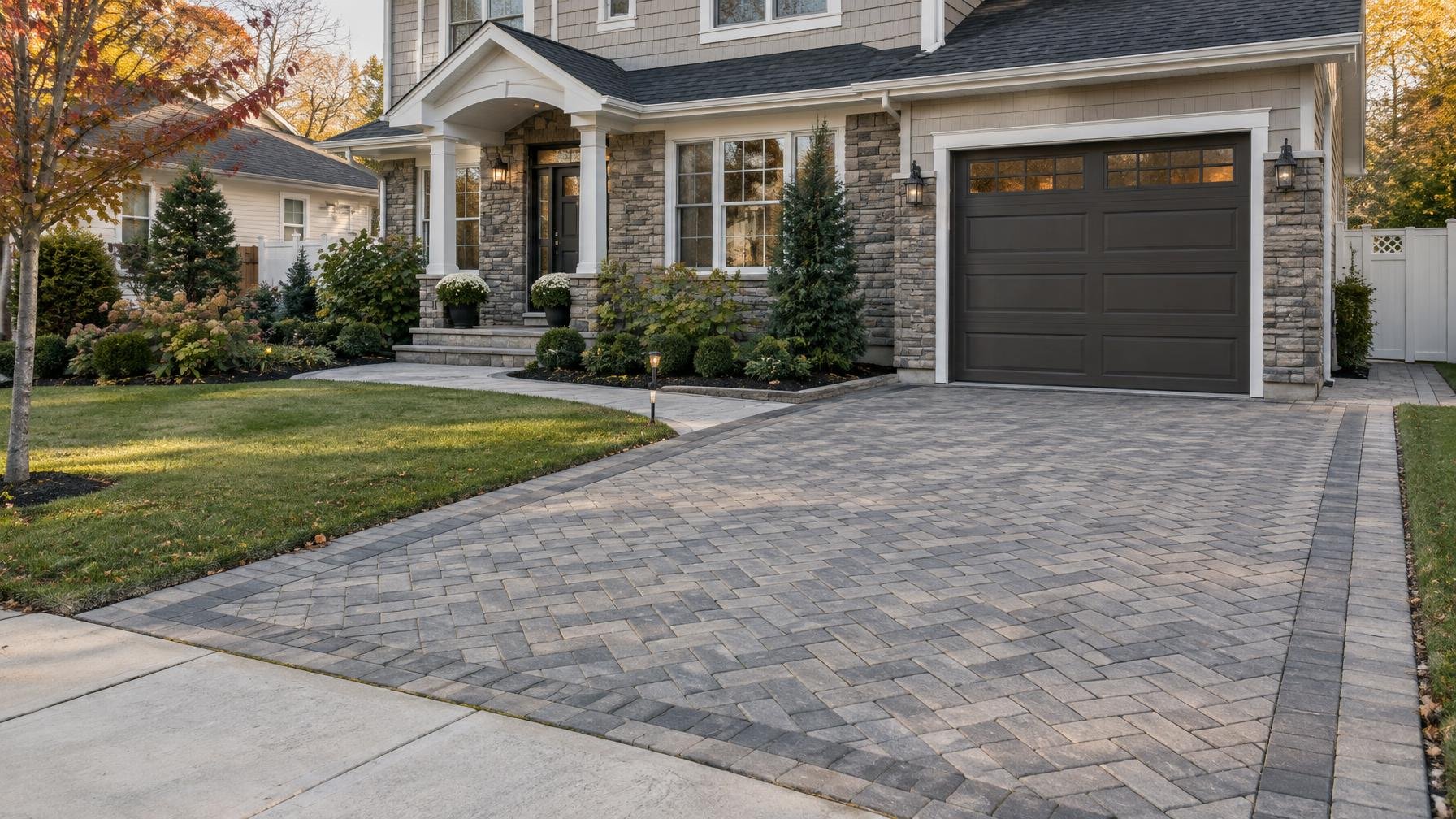
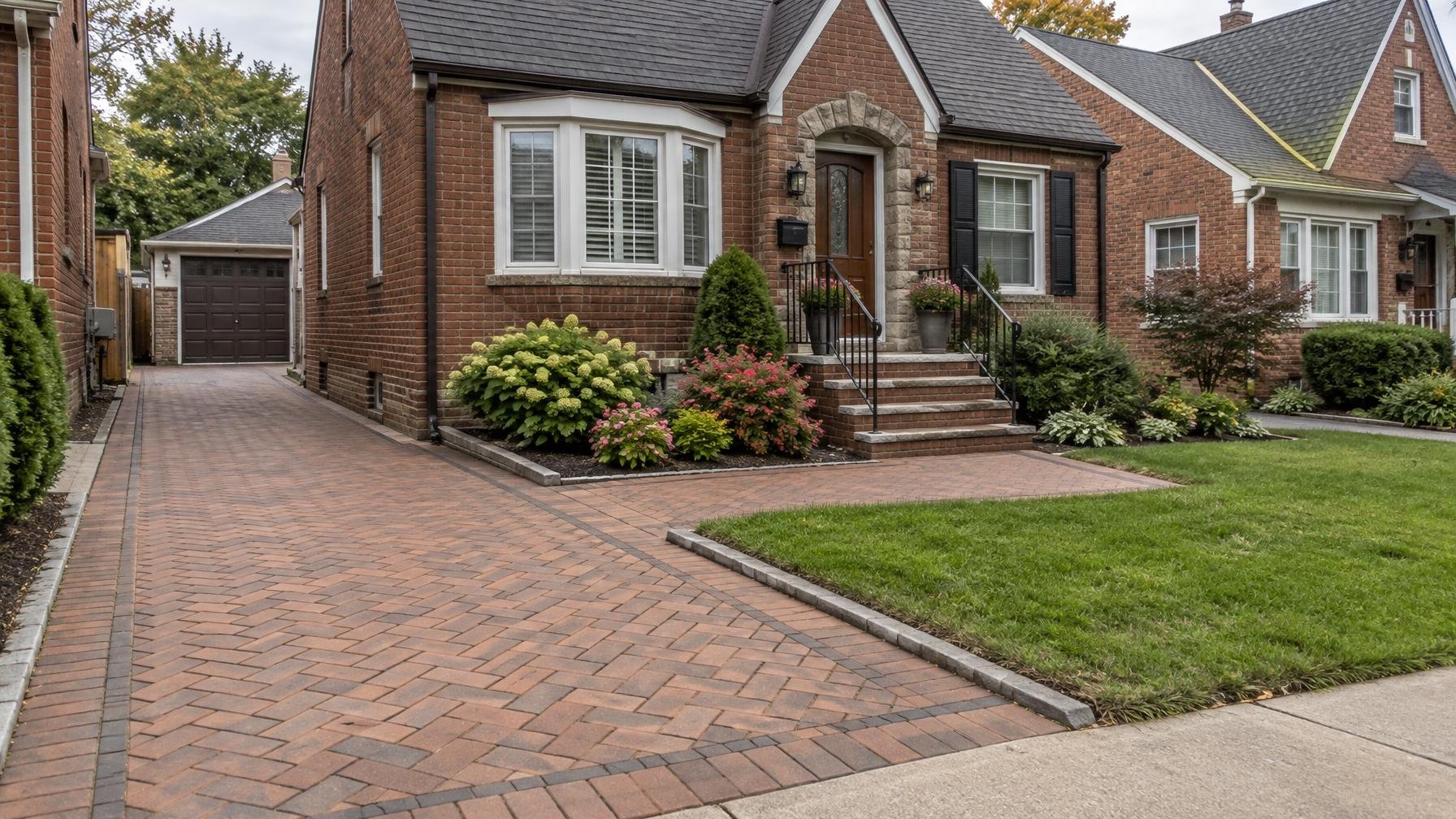
If you are looking for a brick paver contractor in Queens, NY, focus on more than the color and laying pattern: the material, base preparation, drainage and finished elevations all matter. StoneSky Pavers & Masonry offers brick paver installation and related paving services across Queens, with free on-site estimates for driveways, patios, walkways and front entrances.
Before choosing a layout, use this guide to identify the site conditions and scope details that should be discussed at your property.
Start by Clarifying What “Brick Pavers” Means
The term brick pavers can describe different products in everyday conversation. Traditional clay paving brick is different from a concrete paver made in a rectangular, brick-style shape. Neither should be confused with ordinary wall brick, which may not be suitable for ground contact, repeated freezing or vehicle traffic.
Ask to see the proposed product information, not just a color sample. The product needs to suit its intended use and outdoor exposure. A patio material is not automatically appropriate for a driveway, and a matching appearance does not mean matching performance.
- Clay paving brick: Offers a traditional appearance; confirm that the selected product is intended for the proposed paving application.
- Brick-style concrete pavers: Provide another way to achieve a rectangular pattern, with product-specific choices in dimensions, texture and color.
- Existing salvaged units: May be reusable during repairs if their condition and suitability allow, but damaged or unsuitable pieces should not simply be reset.
StoneSky’s brick paver services are a starting point for discussing the look you want and the paving application you need.
Plan Around Your Queens Property, Not a Catalog Photo
Driveways and Shared Access
On a narrow Queens lot, driveway planning starts with actual vehicle movement. Measure the usable width between the house, fence and planting areas. Account for opening car doors, moving trash bins and reaching a garage without driving over an unsupported edge.
Where a driveway is shared or close to a property line, clarify boundaries and access arrangements before work begins. The paving layout should not assume that a neighboring strip is available for widening or construction staging.
Patios and Backyard Access
For a backyard in Flushing, Fresh Meadows or Forest Hills, check how workers and materials will reach the project. A narrow side passage, steps or a fenced entrance can affect excavation and debris removal. Discuss where materials can be staged without blocking daily access.
Lay out furniture before settling on patio dimensions. Allow space to pull out chairs and walk past occupied seating. Keep a practical route between the back door, storage area and any existing outdoor features.
Walkways and Front Entrances
At front entrances in Bayside or Whitestone, the critical details often sit where new paving meets old construction. Check the bottom stair riser, door threshold, public sidewalk and any basement entrance. Raising a walkway to hide a low spot can create a new problem at the stoop.
What the Installation Plan Should Address
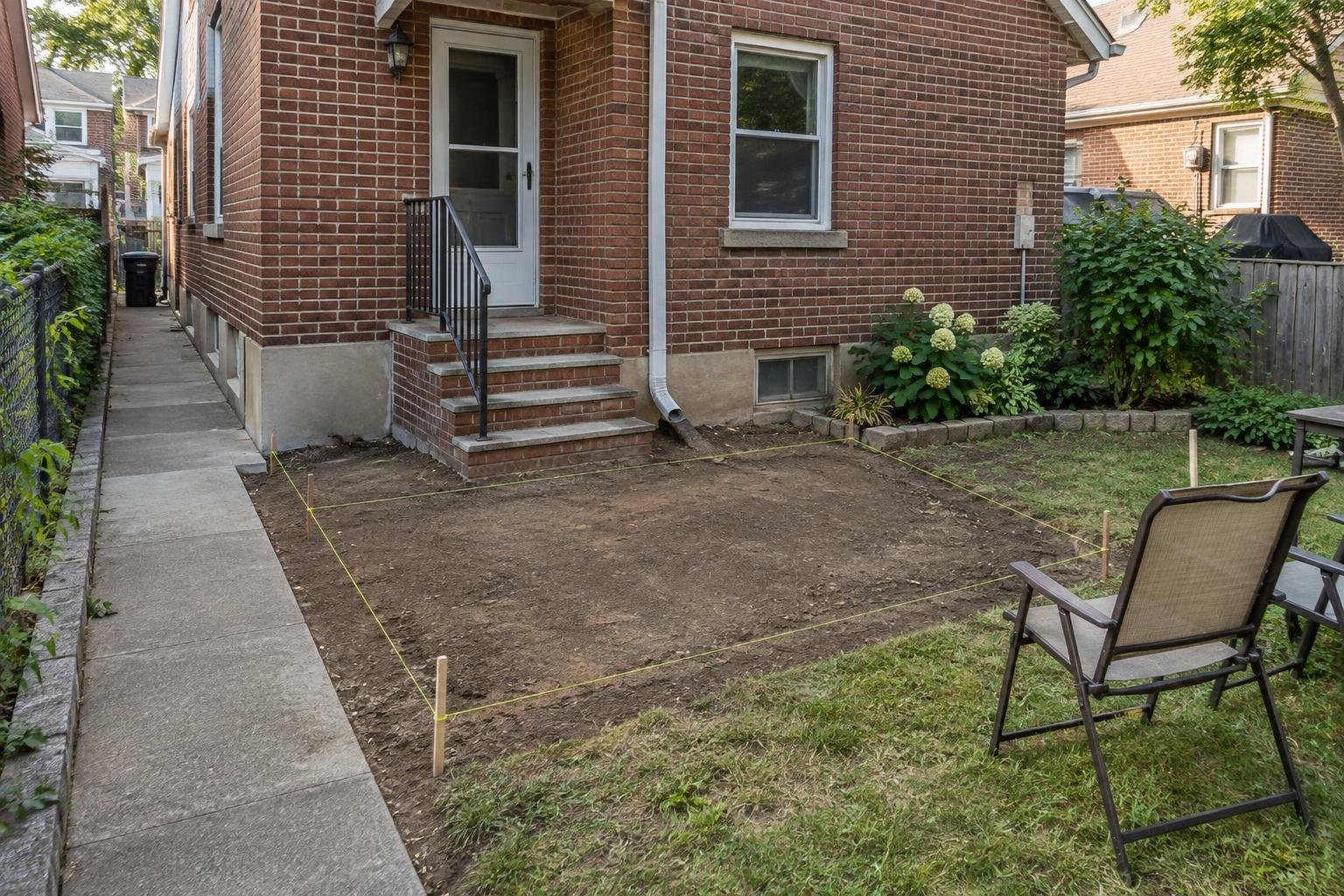
Excavation and Base Preparation
A durable surface needs support below the visible pavers. Ask what will be removed, how unsuitable or soft material will be handled, and how the supporting base will be placed and compacted. The required assembly depends on soil conditions, the paving system and whether the area carries pedestrians or vehicles.
There is no single base depth that suits every Queens property. A driveway that carries turning vehicles places different demands on the installation than a small garden path. The proposal should describe the intended build-up rather than relying on a vague promise of a “heavy-duty base.”
Bedding, Joints and Edge Restraints
For a typical flexible paver installation, the bedding layer provides a consistent setting surface; it should not be used to disguise major unevenness in the base. Joint material and installation methods should be compatible with the selected pavers and system.
Edge restraint also deserves attention. Without adequate support at the perimeter, pavers can move outward and joints can widen. Ask how edges beside lawns, planting beds and driveway openings will be secured, including areas that may receive wheel loads.
Drainage and Finished Heights
Queens rainstorms and winter freeze-thaw cycles make water management an essential part of paving work. The contractor should evaluate where water comes from, how it crosses the proposed surface and where it can appropriately discharge. Do not assume that joints alone will absorb runoff.
Identify downspouts, low areas, garage thresholds and basement steps during the estimate. Finished paving should not trap water against the house, cover drainage openings or create runoff problems for neighboring property. A permeable surface requires a purpose-designed system, not simply wider joints between ordinary pavers.
Choose a Pattern That Fits the Use
Pattern affects both appearance and installation details. Herringbone is often considered for vehicle areas because of its interlocking arrangement, but pattern alone cannot compensate for inadequate base preparation or edge support. Running bond and basketweave can work visually with traditional brick homes, subject to the selected product and application.
Look at the pattern in relation to the full space. A narrow walkway may benefit from a straightforward layout with balanced cuts. A small patio can become visually crowded when several contrasting borders are added. Ask where cut pieces will fall, especially near steps, curves and drain openings.
For vehicle areas, review StoneSky’s paver driveway services and discuss the complete installation rather than choosing on appearance alone.
Repair and Resetting May Be Enough
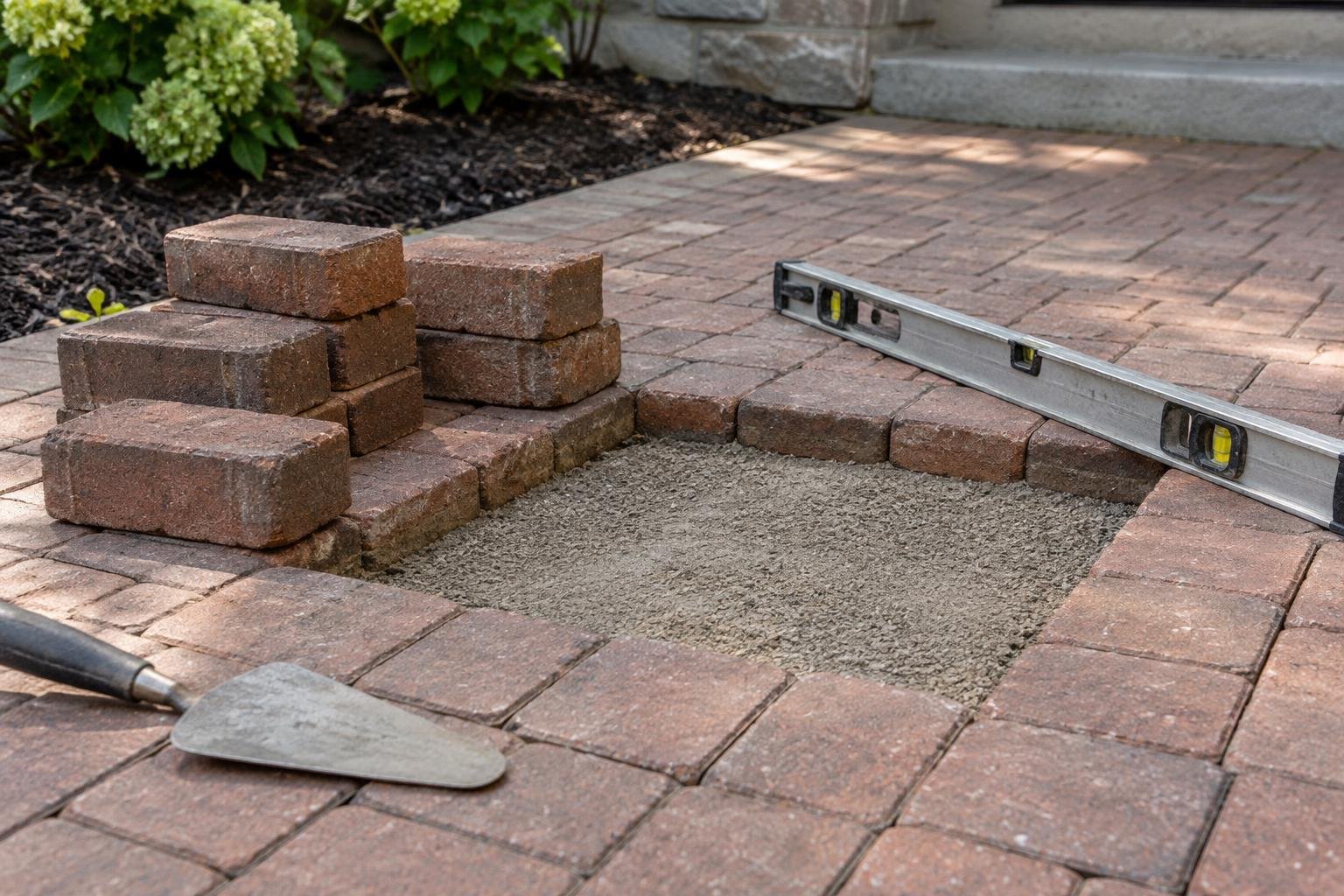
An uneven brick paver surface does not always need full replacement. If the units remain serviceable and the problem is localized, lifting and resetting the affected area may be appropriate. The important question is why it moved.
- A dip near a downspout: Look for concentrated runoff and possible loss of supporting material.
- Spreading along a lawn edge: Check the edge restraint and support below the outer row.
- A raised section near a tree: Evaluate possible root involvement before deciding on excavation; do not cut roots without appropriate guidance.
- Widespread settlement: Investigate the underlying installation rather than repeatedly leveling small patches.
StoneSky offers paver repair and resetting. During an inspection, discuss which units can be reused, whether replacement pieces will match, and whether the repair needs to extend beyond the visibly uneven area. New and weathered pavers may differ in appearance even when their dimensions are similar.
Compare Written Scopes, Not Just Finished Looks
A useful estimate separates the visible design from the work required underneath it. Before authorizing installation, ask for a clear description of the following:
- The project area, boundaries and intended use.
- The paver product, dimensions, color and laying pattern.
- Removal of existing paving and handling of debris.
- Base preparation, bedding, edge restraints and joint material.
- Drainage direction and transitions at doors, steps and sidewalks.
- Access, material staging, cleanup and when the surface can be used.
Ask how unexpected conditions will be handled if excavation exposes soft ground, buried concrete or other obstructions. Clarify what is included and what would require a separate decision before additional work proceeds.
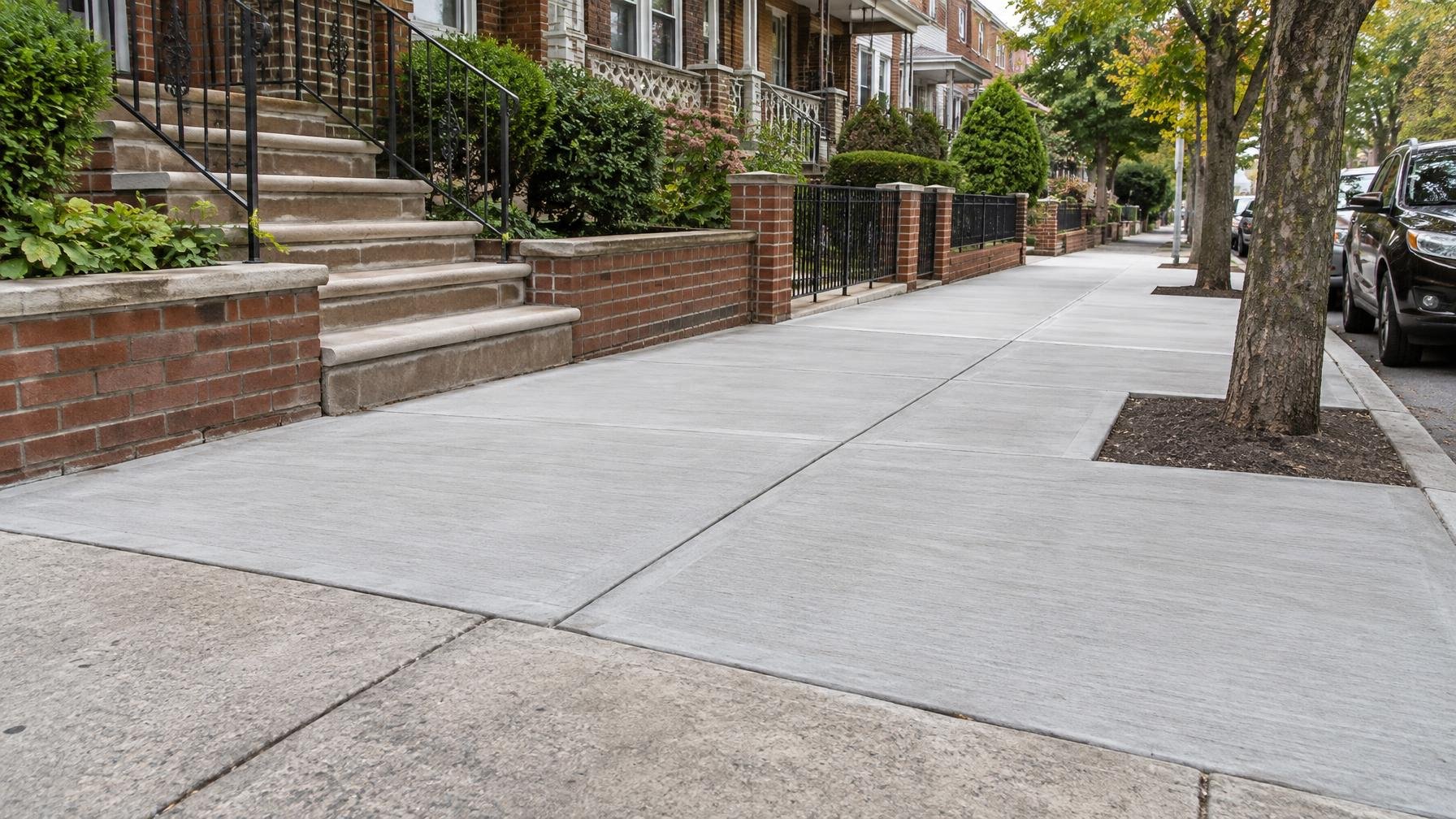
If work affects a public sidewalk, curb or driveway entrance, confirm applicable NYC requirements before starting. Private-property paving and work in the public right-of-way are not interchangeable. For properties outside Queens, requirements should be checked with the relevant Long Island municipality.
Keep Maintenance Appropriate to the Material
After installation, sweep away debris and inspect joints and edges periodically, especially after winter. Report new low spots or shifting units before they become larger trip hazards. Avoid aggressive pressure washing that can remove joint material or damage the surface.
Sealing is a separate maintenance decision, not a fix for settlement or drainage. Ask whether a sealer is appropriate for the selected clay or concrete product, how it could change the appearance, and whether it could affect traction. Use cleaning products and winter deicers consistent with the paver manufacturer’s guidance.
Request a Free On-Site Estimate in Queens
StoneSky Pavers & Masonry serves Queens neighborhoods including Bayside, Whitestone, Flushing, Fresh Meadows, Forest Hills, Douglaston and Astoria, along with Nassau County and Long Island. Whether you are planning a new brick paver surface or addressing an uneven existing area, an on-site visit lets you discuss access, materials, drainage and scope together.
Request a free on-site estimate or call (929) 528-1205. Have a few photos, your intended use and any known drainage concerns ready for the conversation.
Frequently Asked Questions
Are clay brick pavers and brick-style concrete pavers the same?
No. Clay paving brick and concrete pavers are different materials, even when they have similar shapes or colors. Ask for the specific product information and confirm its suitability for outdoor exposure and the intended pedestrian or vehicle use.
Can brick pavers be used for a driveway in Queens?
Yes, when the selected paving product is suitable for vehicle traffic and the installation is designed for the site. Base preparation, edge restraint, drainage and the laying pattern all need to be considered.
Do sunken brick pavers need complete replacement?
Not always. Serviceable units can sometimes be lifted and reset after the underlying issue is corrected. Widespread settlement, unsuitable materials or extensive damage may require a broader repair or replacement.
Do I need approval for a paver project in Queens?
Requirements depend on the scope and location of the work. Projects affecting a public sidewalk, curb or driveway entrance should be checked against applicable NYC requirements before construction. Do not assume private-property paving and public right-of-way work follow the same process.
Does StoneSky offer free brick paver estimates in Queens?
Yes. StoneSky Pavers & Masonry offers free on-site estimates in Queens and its listed Long Island service areas. Call (929) 528-1205 or use the contact page to request a visit.