Brick repointing in Huntington, NY involves removing deteriorated mortar from between bricks and replacing it with compatible mortar. It can be the right repair for weathered joints in otherwise sound brickwork, but loose bricks, leaning walls and recurring moisture problems need a closer assessment. StoneSky Pavers & Masonry offers brick repointing and free on-site estimates in Huntington and across its Long Island service area.
What Repointing Fixes—and What It Does Not
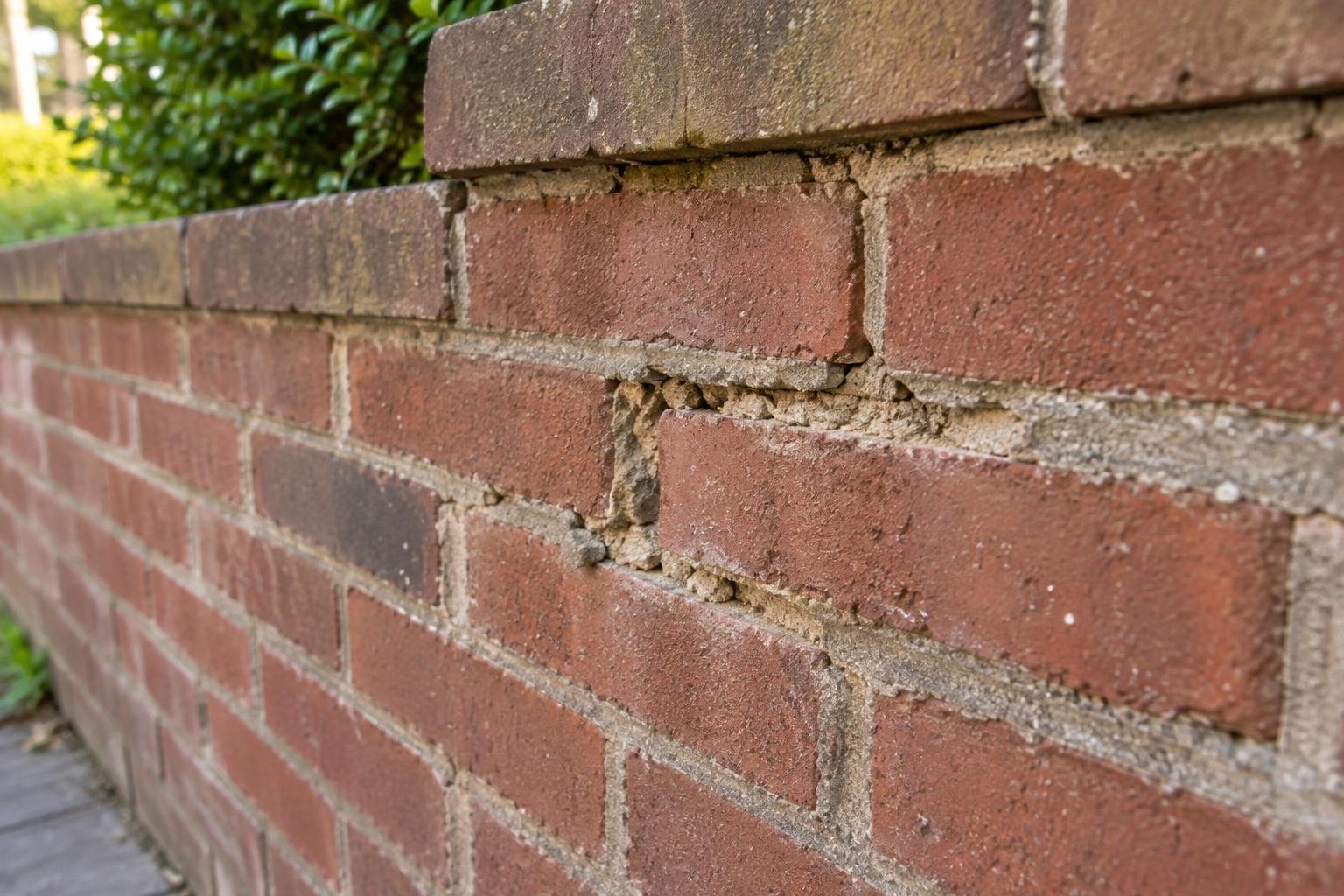
Mortar joints help hold masonry together and limit water entry between bricks. Over time, joints can erode, crack or separate from the brick edges. Repointing renews those failing joints while retaining sound brickwork.
The important distinction is between damaged joints and damaged masonry. A brick garden wall with firm bricks and washed-out mortar presents a different problem from a stoop with moving treads or a wall that has started to bow. Covering either condition with fresh mortar does not make them equivalent repairs.
- Repointing may be appropriate: recessed, crumbling or open joints where the surrounding bricks remain sound and stable.
- Additional masonry work may be needed: loose or broken bricks, deteriorated step edges or missing masonry units.
- Further evaluation comes first: leaning, bulging, significant displacement or cracks that continue to widen.
If a wall or entrance appears unstable, keep people away from the affected area until it has been assessed. Do not test stability by pushing on it or pulling at loose bricks.
Why Huntington Brickwork Develops Mortar Damage
Long Island masonry faces rain, snow, freezing temperatures and repeated wetting and drying. Water that enters open joints can freeze and expand, contributing to further deterioration. Horizontal surfaces and joints near grade often stay wet longer than sheltered vertical walls.
On Huntington properties, check exposed brick steps, low landscape walls and the lower courses of brickwork beside driveways or walkways. These areas may receive roof runoff, snowmelt, irrigation spray or splashback. Shaded entrances can also dry more slowly after a storm.
Look for the water source, not just the missing mortar
A downspout discharging beside a stoop or soil piled against brickwork can keep repaired joints wet. Before planning repointing, note whether gutters overflow, sprinklers repeatedly soak the wall or a nearby paved surface sends water toward the masonry.
White powdery deposits, known as efflorescence, can indicate moisture moving through masonry and carrying salts to the surface. They do not automatically mean the wall needs repointing. Their location, recurrence and relationship to damaged joints are more useful than their presence alone.
Signs Worth Checking Before Requesting an Estimate
Walk around accessible brickwork from ground level and take photographs of anything that has changed. Avoid ladders, aggressive scraping or digging into joints; a visual record is enough to start a productive discussion.
- Missing mortar: visible gaps or deep recesses between bricks.
- Cracked joints: breaks running along horizontal or vertical mortar lines.
- Edge separation: a visible gap where mortar meets the brick.
- Brick face damage: flaking or pieces breaking away from the exposed face.
- Movement: displaced bricks, shifting steps or cracks extending across several courses.
Photograph the whole structure as well as close-ups. A close-up shows joint condition; the wider view shows nearby paving, drainage and changes in alignment. If possible, also note which areas remain damp after the rest of the masonry dries.
What a Proper Repointing Scope Should Address
A useful estimate should explain which areas need work and how the repair will be approached. “Patch mortar” is not enough detail to distinguish a surface touch-up from removal and replacement of deteriorated joints.
Remove failing mortar without unnecessary brick damage
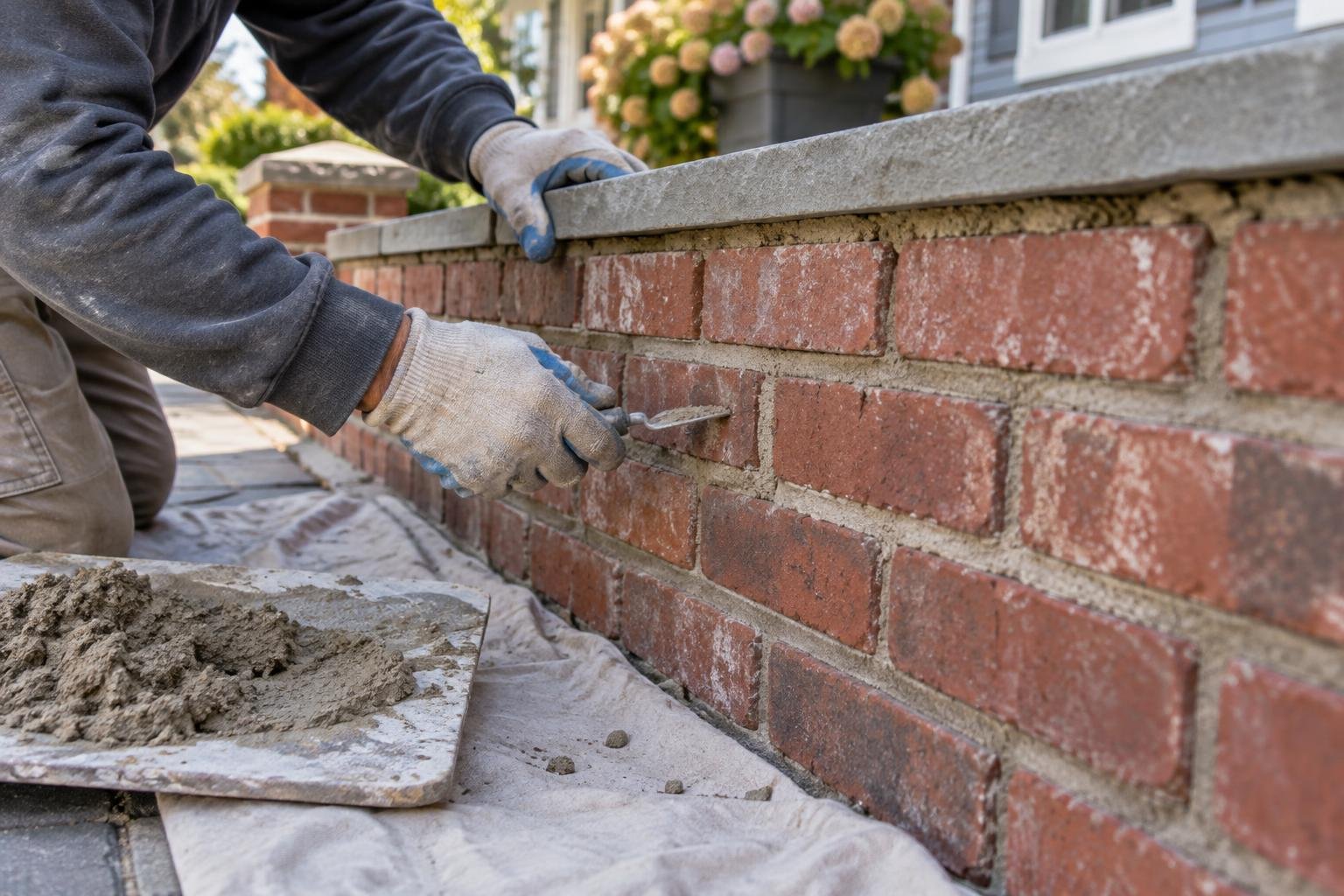
Deteriorated mortar needs to be removed to a suitable depth so replacement mortar can bond within the joint. The required depth and removal method depend on joint width, existing mortar and brick condition. A thin smear over loose material is not a substitute for preparing the joint.
Care matters at brick edges, particularly where older or softer units are present. Ask how removal will be handled around fragile bricks, narrow joints and previous patches.
Prepare, fill and finish the joints
Prepared joints should be cleared of loose debris and conditioned appropriately before new mortar is installed. Replacement mortar needs to be packed into the joint, not simply spread across the face. The finishing profile should suit the existing masonry and help avoid ledges that collect water.
Adjacent paving, doors and planted areas also need consideration. Ask how the work area will be protected and how mortar residue will be cleaned without damaging brick faces or nearby surfaces.
Allow for curing and weather protection
Mortar needs controlled curing conditions. Freezing weather, strong sun, drying wind and heavy rain can interfere with the work or require protection. Scheduling should account for overnight conditions and the curing period, not just the forecast during installation hours.
Mortar Compatibility Matters More Than a Quick Color Match
New mortar should be compatible with the existing bricks and masonry assembly. Stronger is not automatically better: overly hard or unsuitable mortar can contribute to damage in softer brickwork by changing how the assembly handles moisture and movement.
For older Huntington brickwork, discuss the condition of the original mortar and any previous repairs. The age of the house alone does not establish the correct mix, and a photograph cannot reliably identify mortar composition. Some situations may warrant further material evaluation before a repair specification is chosen.
Appearance matters too. Sand, mortar composition, joint shape and curing all affect the finished result. Fresh mortar can look different while wet, and weathered existing joints may not match new work exactly. Ask whether a small sample area makes sense before repointing a prominent front entrance.
Steps, Stoops and Nearby Pavers Need Separate Checks
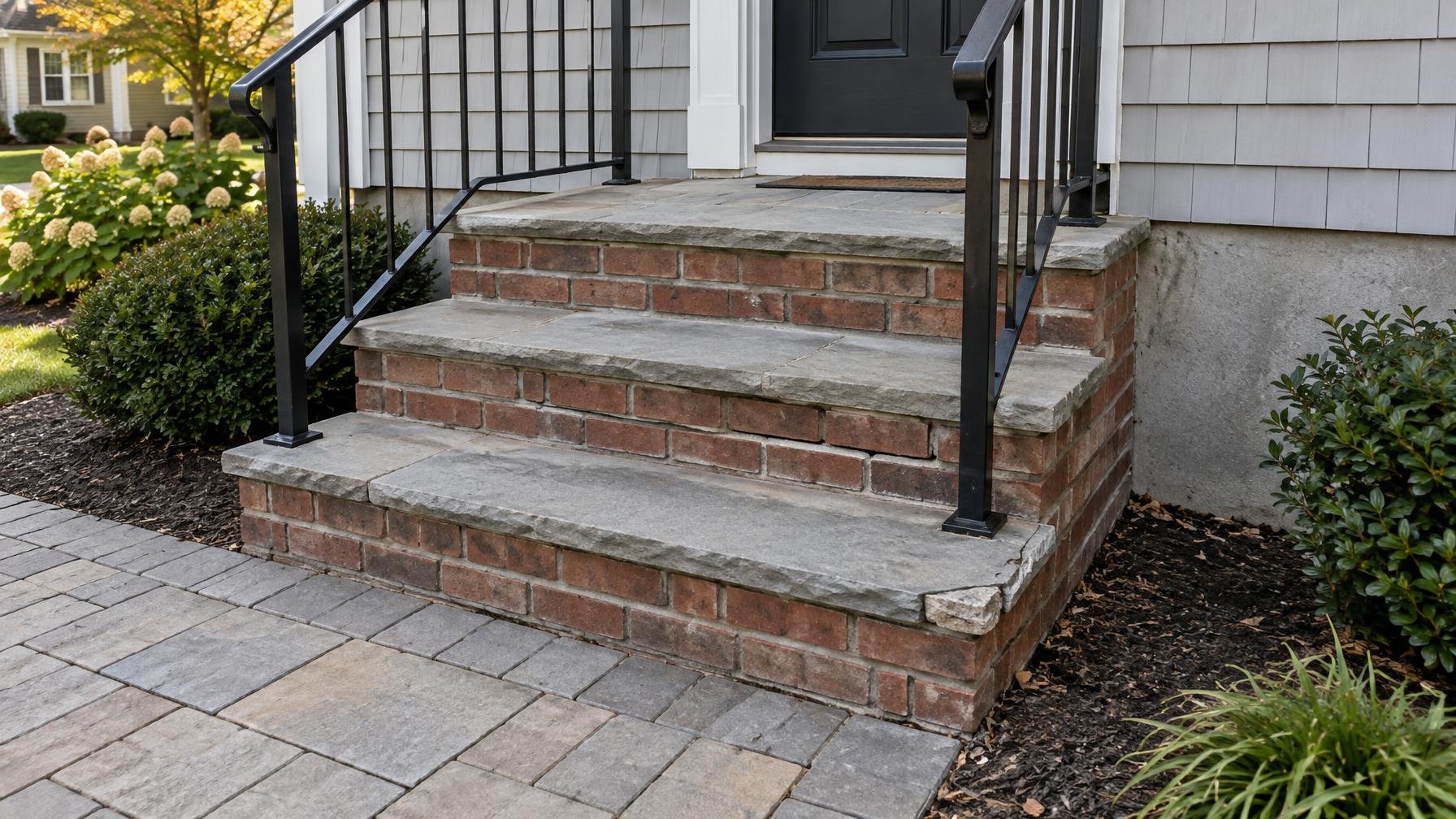
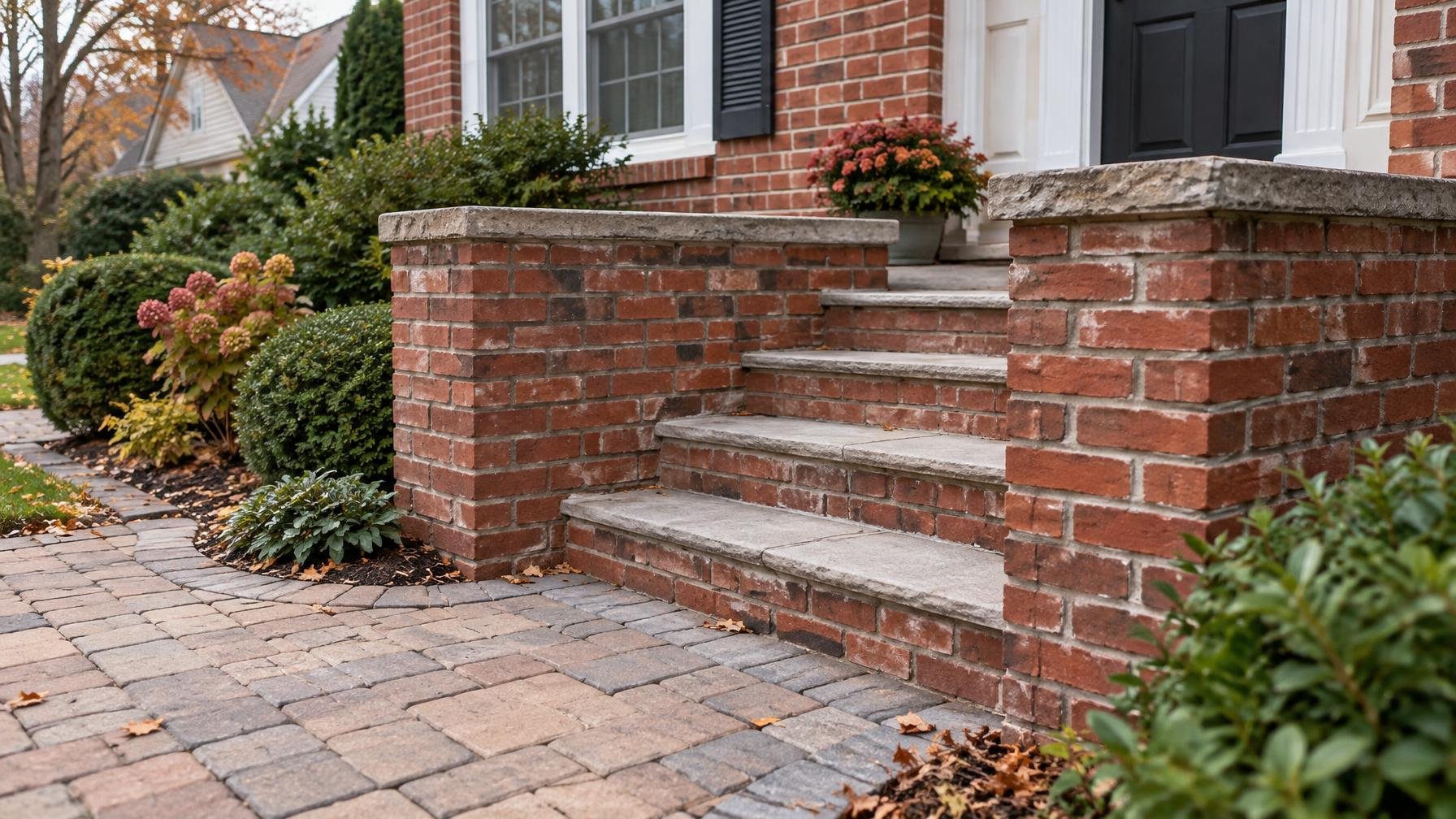
Brick entrance repairs should include a look at the whole assembly. Open mortar joints beneath a tread are one issue; a tread that rocks underfoot is another. Ask whether the proposed work covers only repointing or also addresses identified loose units and damaged masonry.
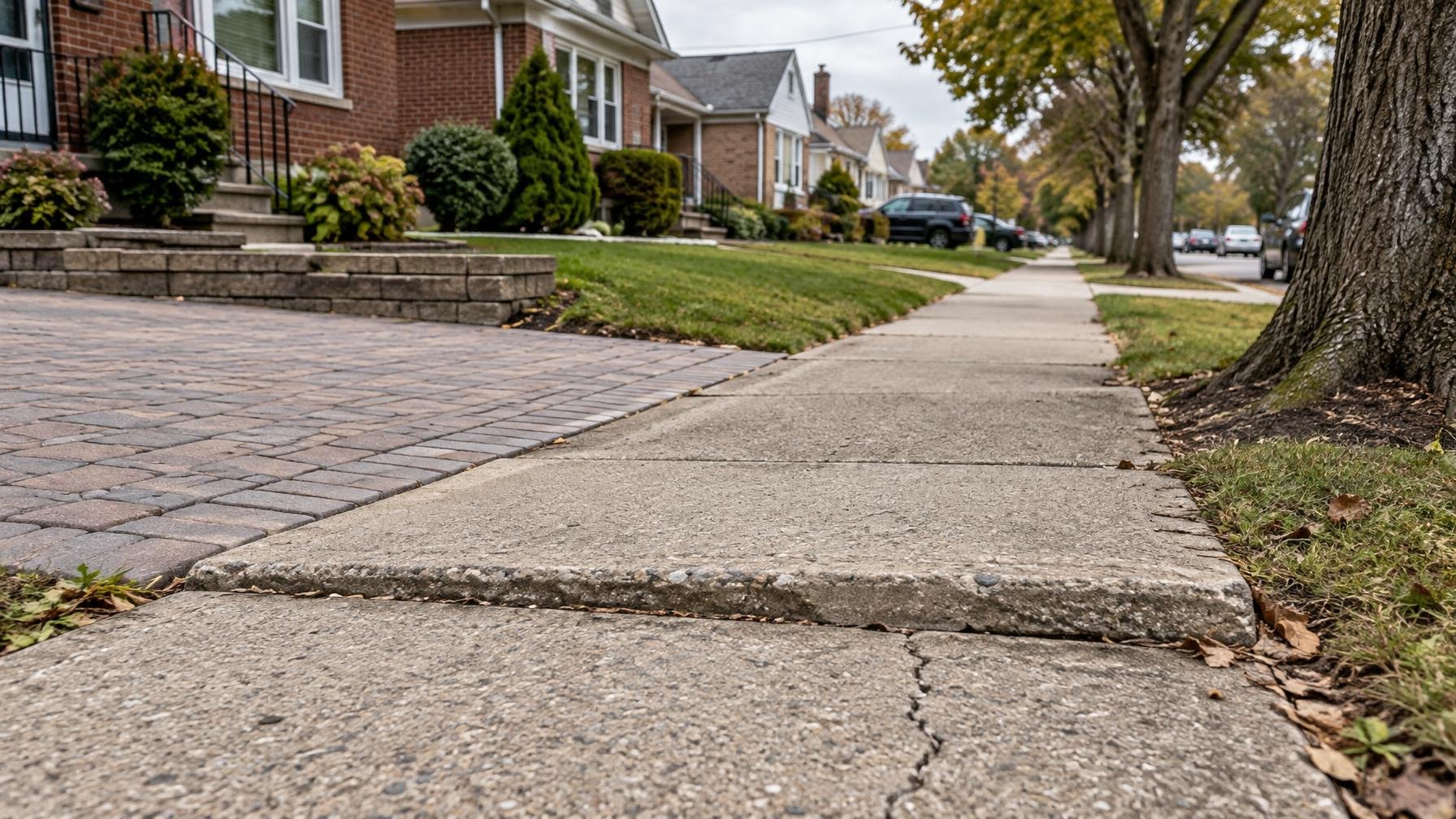
Where a paver walkway meets a brick stoop, settlement can create a trip edge or direct water toward the entrance. Repointing the brick will not correct the walkway’s elevation. StoneSky also offers paver repair and resetting, which can be discussed separately when adjoining pavers have shifted or sunk.
Likewise, a retaining wall needs more than a cosmetic assessment if it is leaning or holding back persistently wet soil. Joint repair cannot replace a suitable solution for movement, drainage or structural concerns.
Planning a Brick Repointing Project in Huntington
Access and daily use affect how a masonry project should be organized. A front stoop may be the main household entrance, while a side-yard wall may sit beside a narrow passage. Explain how people use the area so access restrictions can be discussed before work begins.
For properties in Huntington and nearby Melville, Dix Hills or Commack, provide the exact address rather than relying only on the neighborhood name. Municipal requirements can differ by location and scope. Do not assume that replacing damaged masonry, changing steps or rebuilding a wall follows the same requirements as limited joint maintenance.
If the property has historic designation or another applicable restriction, confirm whether approvals are needed before changing mortar appearance or masonry details. Verify requirements with the relevant local authority rather than treating a repair estimate as permit approval.
Prepare these details for the site visit
- Which walls, steps or stoops have damaged joints.
- When you first noticed the problem and whether it is spreading.
- Any previous patching, rebuilding or water-related repairs.
- Where runoff collects during or after rainfall.
- Access constraints, nearby planting and the need to keep an entrance usable.
- Whether matching the existing joint profile is a priority.
StoneSky’s paver, concrete and masonry services cover related exterior work, but the estimate should identify the specific repairs recommended for your property. Keep repointing, brick replacement and adjoining surface repairs clearly separated in the scope.
After the Repair: Watch for Recurring Moisture
Follow the curing and access instructions provided for the completed work. Avoid pressure washing fresh joints or applying sealers without a clear, material-specific recommendation. Sealing is not a substitute for repairing defective joints or correcting a water source.
Once the work has cured, periodically check the repaired area after heavy rain and after winter. Keep drainage paths clear and avoid piling soil or mulch against brickwork. If cracking returns, document its location instead of repeatedly covering it with surface patches; recurrence may point to a condition beyond the mortar itself.
Request a Free On-Site Estimate in Huntington
If your brick steps, stoop or wall has crumbling mortar or open joints, start with an assessment of the masonry and the conditions around it. StoneSky Pavers & Masonry serves Huntington and surrounding Long Island communities with brick repointing and related masonry services.
Request a free on-site estimate or call (929) 528-1205 to discuss the damaged areas and the next steps for your property.
Frequently Asked Questions
How do I know whether my brickwork needs repointing or rebuilding?
Open or crumbling mortar joints in otherwise stable brickwork may be suitable for repointing. Loose bricks, leaning walls, bulging or significant displacement need further assessment and may require additional masonry work. An on-site inspection helps distinguish these conditions.
Can new mortar be applied over the old joints?
A thin surface layer over deteriorated mortar is not a proper substitute for repointing. Failing material needs to be removed to a suitable depth, and the joints need preparation before compatible replacement mortar is installed.
Will repointing stop water from entering my brick stoop?
Repointing can reduce water entry through defective joints, but it will not necessarily resolve other sources. Runoff, damaged treads, adjoining paving and drainage conditions should also be checked.
Can brick repointing be done during a Huntington winter?
Freezing temperatures can interfere with mortar installation and curing. Suitability depends on actual conditions, overnight temperatures and available protection. The schedule should be based on appropriate curing conditions rather than the calendar alone.
Does StoneSky offer free estimates for brick repointing in Huntington?
Yes. StoneSky Pavers & Masonry offers free on-site estimates and serves Huntington. Call (929) 528-1205 or use the contact page to request an assessment.